Manufacturer since 2009 · Tongling, Anhui ISO certified Licensed for hazardous & precursor chemicals
[email protected] · +86 186 5620 1888
Eapearl Chemical

Ethanol

Ethyl Alcohol

CAS 64-17-5 EC 200-578-6 C2H6O Precursor CLP Danger
MolGod_SDSCARD_1
REACH 2020/878
v2 · 23.09.2026

Specification

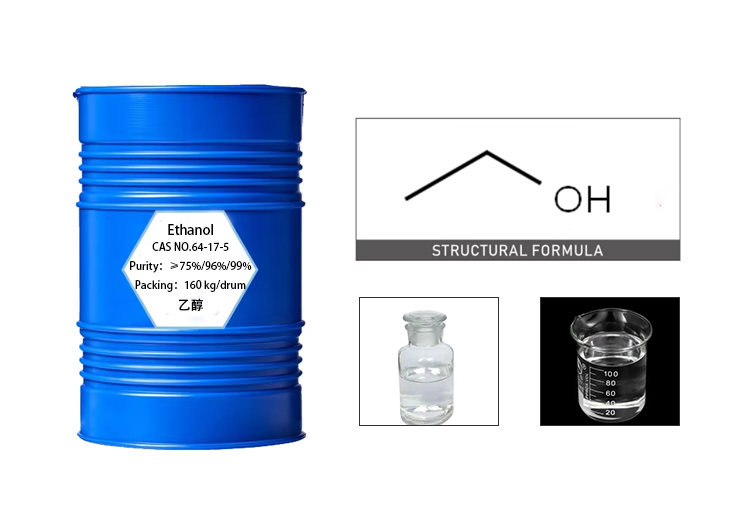
Product NameEthanol
Other NamesEthyl Alcohol
CAS No.64-17-5
EINECS No.200-578-6
MFC2H6O
Molecular weight46.07
Purity≥75%/96%/99%
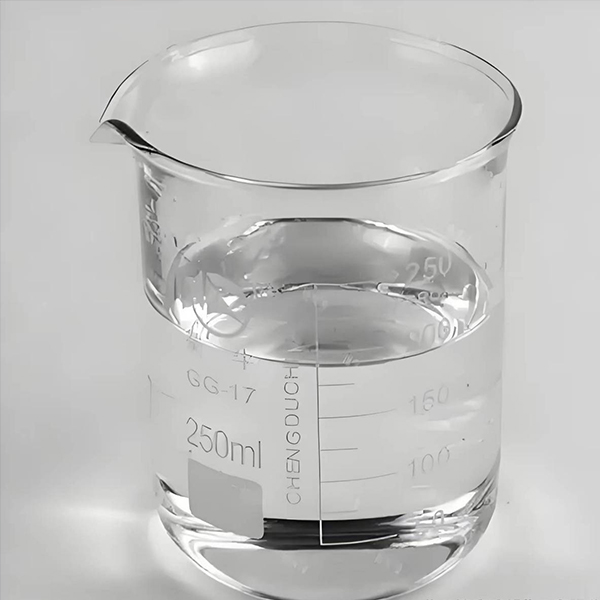
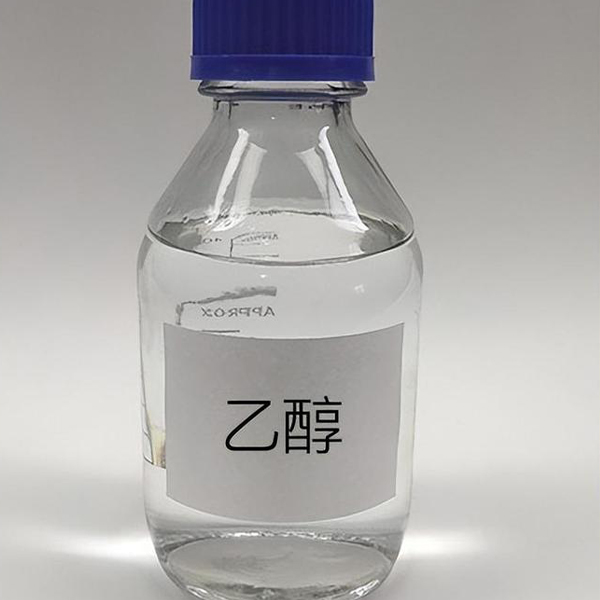
AppearanceColorless liquid
Density0.789
Melting point-114 °C
Boiling point78 °C
Flashing point12 °C

Values are typical for the standard grade. Tighter specifications are available — state the target in your inquiry and we confirm against the production batch.

Hazard classification
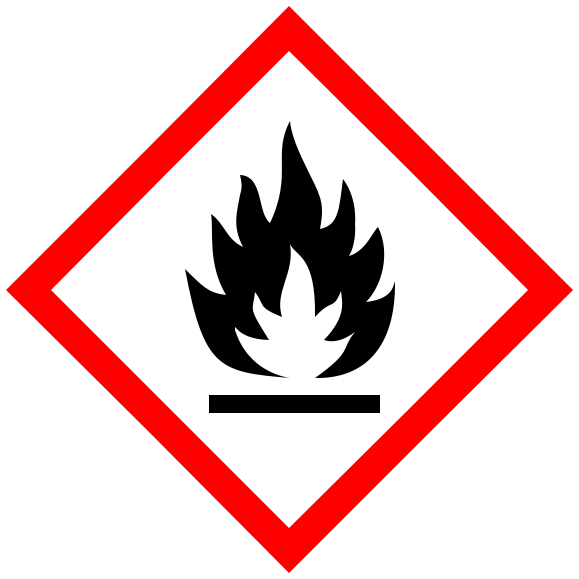
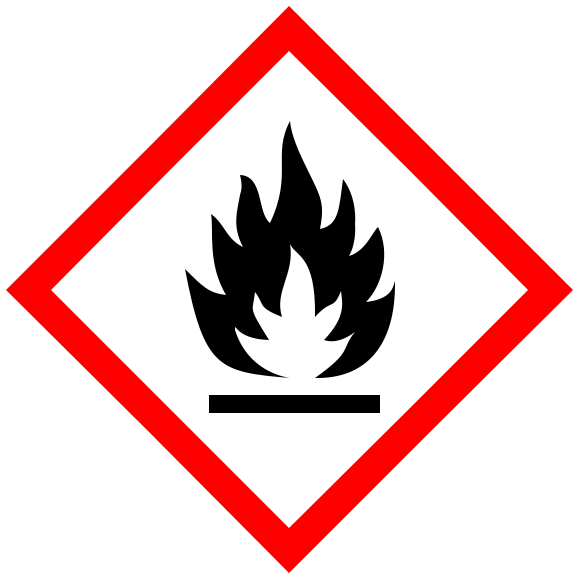
GHS pictogram GHS02 — Flammable

Danger

Harmonised classification (EU) — ECHA Annex VI (harmonised, ATP 23; 2026-07-07)

  • H225 Highly flammable liquid and vapour
Precautionary statements (3)
  • P210 Keep away from heat, hot surfaces, sparks, open flames and other ignition sources. No smoking
  • P240 Ground and bond container and receiving equipment
  • P241 Use explosion-proof electrical/ventilating/lighting equipment

European Chemicals Agency. "ethanol; ethyl alcohol, Index No. 603-002-00-5." In Table 3 of Annex VI to Regulation (EC) No 1272/2008 (CLP Regulation), 23rd Adaptation to Technical Progress (harmonised list as of 2026-07-07). Helsinki: European Chemicals Agency, 2026. https://echa.europa.eu/information-on-chemicals/annex-vi-to-clp.

Packaging and shipping
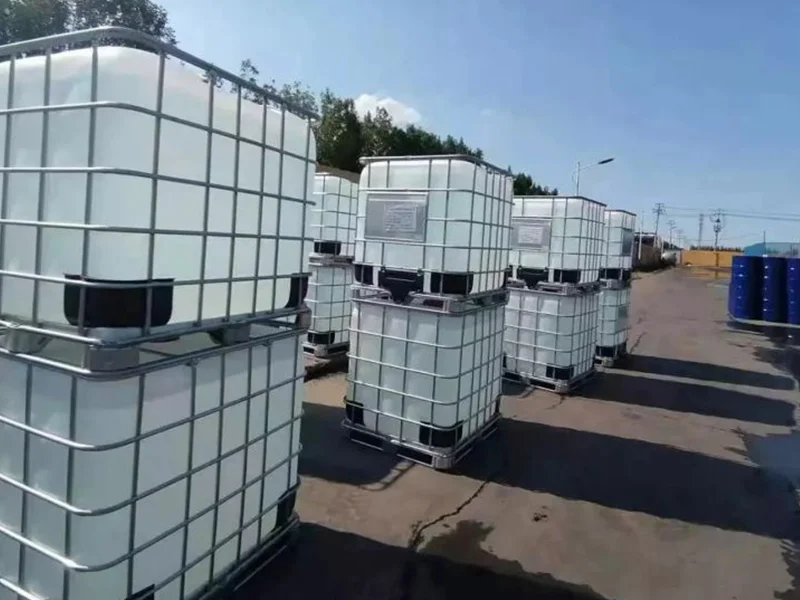
Drum160 kg
IBC Drum1000L
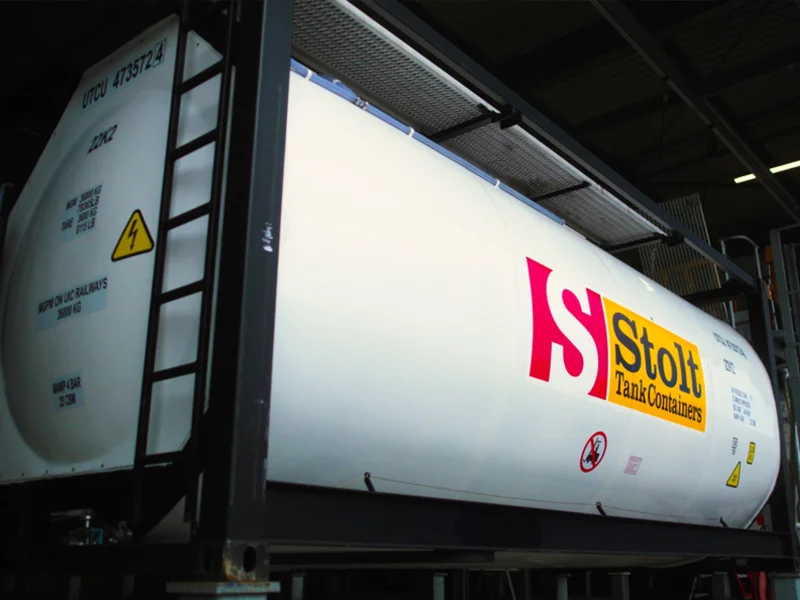
ISO tank20–24m³
Ethanol
Ethanol
Ethanol
Ethanol
Ethanol

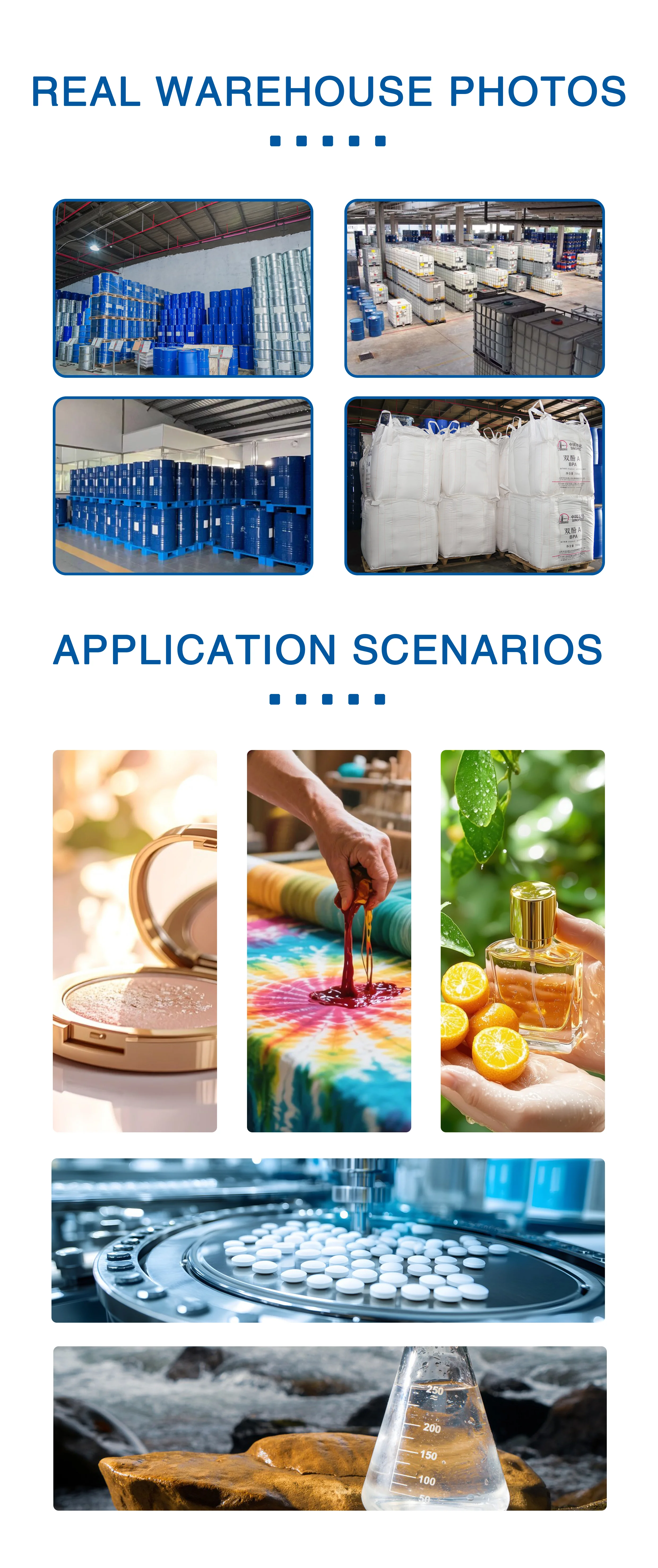
Ethanol is a widely used organic solvent and chemical intermediate, recognized for its excellent solubility, volatility, and compatibility across multiple industrial applications. It is extensively utilized in pharmaceuticals, cosmetics, coatings, inks, disinfectants, and fuel blending.
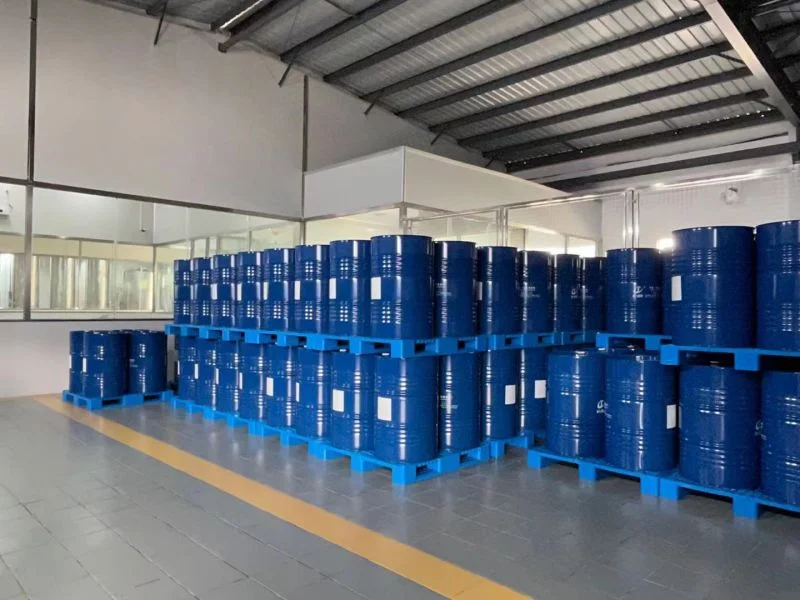
High Purity Ethanol for Industrial, Pharmaceutical & Chemical ApplicationsHigh Purity Ethanol for Industrial, Pharmaceutical & Chemical ApplicationsHigh Purity Ethanol for Industrial, Pharmaceutical & Chemical Applications

High Purity Ethanol for Industrial, Pharmaceutical & Chemical Applications

Product Description

From a procurement perspective, high-purity ethanol ensures stable formulation performance, consistent quality control, and compliance with international standards. It serves as a critical raw material for manufacturers seeking reliable solvent performance, efficient processing, and scalable production outcomes.

With a stable supply chain, flexible packaging options, and strict quality assurance protocols, ethanol remains a cost-effective and essential solution for global B2B buyers in the chemical and manufacturing sectors.
High Purity Ethanol for Industrial, Pharmaceutical & Chemical Applications

High Purity Ethanol for Industrial, Pharmaceutical & Chemical Applications

Delivery&Payment method

High Purity Ethanol for Industrial, Pharmaceutical & Chemical Applications

Frequently asked

In what packaging is Ethanol shipped?

Standard formats are Drum (160 kg), IBC Drum (1000L), ISO tank (20–24m³). Other packaging can be arranged for full-container orders.

Is a safety data sheet available for Ethanol?

Yes, on request. Safety data sheets are issued per grade and destination market; state the country of import in your inquiry.

What purity do you supply?

The standard grade is ≥75%/96%/99%. Tighter specifications are confirmed against the production batch before shipment.

Technical reading on Ethanol

Related products

🧬 3D分子可视化器
正在加载分子...
3D模型Etanol,CAS 64-17-5,分子式C2H6O, 摩尔质量 46.07 g/mol

数据转录自法规登记册和专业文献,并注明来源与版本。不能替代供应商的安全数据表。未记录来源的字段已作相应标注。

📊 物理化学数据 — CAS 64-17-5MolGod_PROPHUB_MAIN
📊 物理化学性质

快速参考

化学式: C2H6O
分子量: 46.07 g/mol
CAS号: 64-17-5
外观: 清澈、无色、高流动性液体
气味: 令人愉快

详细性质

A supplement to the „Physicochemical properties (database)” table below — repeated values are shown only once.

属性 单位 条件 来源
黏度(η) 1.074 mPa.s at 25 °C[1] Hazardous Substances Data Bank (HSDB) ↗
折射率(nD 1.3614[2] 20 °C, D-line Yaws Handbook 2nd ed. (2014)
🔬 高级属性

化学标识符

SMILES: CCO
InChI: InChI=1S/C2H6O/c1-2-3/h3H,2H2,1H3
InChIKey: LFQSCWFLJHTTHZ-UHFFFAOYSA-N

数据来源: Hazardous Substances Data Bank (HSDB), Yaws Handbook 2nd ed. (2014)

最后更新: 未确认

📚 科学参考文献(芝加哥作者-日期格式) (2 来源)
  1. NLM. Hazardous Substances Data Bank (HSDB). National Library of Medicine. applies to: 黏度(η)
  2. Yaws, C.L. Thermophysical Properties of Chemicals and Hydrocarbons. 2nd ed. Amsterdam: Elsevier (Gulf Professional Publishing), 2014. applies to: 折射率(nD)
化学概述: EtanolMolGod_OVERVIEW_1
分子式C2H6O
分子量46.07 g/mol
熔点-114.14 °C[1]
沸点78.29 °C (760 mmHg)[1]
密度0.7893 g/cm³[1]
LogP(亲脂性)-0.31
pKa15.9
SMILESCCO

同义词: Alcohol · Ethyl alcohol

数据来源: PubChem (NLM/NIH), Yaws Handbook 2nd ed. (2014)
最后更新: 2026-09-21

📚 科学参考文献(芝加哥作者-日期格式) (1 来源)
  1. Yaws, C.L. Thermophysical Properties of Chemicals and Hydrocarbons. 2nd ed. Amsterdam: Elsevier (Gulf Professional Publishing), 2014. applies to: 熔点 · 沸点 · 密度

科学研究

[1]PubMed2026
Jerlhag E. (2026). "GLP-1 and Alcohol-Related Behaviors: Insights From Preclinical Studies.". Biological psychiatry. https://doi.org/10.1016/j.biopsych.2026.04.022
[2]PubMed2026
Pender SC, Beryoza M, Khoodoruth WNC et al.. (2026). "Epigenetic pathways linking prenatal alcohol exposure to fetal alcohol spectrum disorder.". Neuroscience and biobehavioral reviews. https://doi.or
[3]PubMed2026
Cibin I, Spaepen S, Steensels J et al.. (2026). "Next-generation brewing yeasts for non-alcoholic beers.". Current opinion in biotechnology. https://doi.org/10.1016/j.copbio.2026.103525
[4]PubMed2026
Krag A, Åberg F, Mellinger J et al.. (2026). "Alcohol-Related Liver Disease: A Review.". JAMA. https://doi.org/10.1001/jama.2026.12038
[5]PubMed2026
Dorman TA, Boschen KE. (2026). "Linking prenatal alcohol-induced transcriptomic alterations to hippocampal-associated structural and behavioral deficits.". Physiology & behavior. https://doi.org/10.10
[6]PubMed2026
Chouhan NS, Mitra W, Singh K et al.. (2026). "A paradoxical impact of alcohol on sleep-memory coupling.". Current biology : CB. https://doi.org/10.1016/j.cub.2026.06.069
[7]PubMed2026
Doyle MA, Yoon HJ, Altemus ME et al.. (2026). "Alcohol abstinence precipitates alcohol seeking and aversion-resistant intake in association with increased BNST activity.". Molecular psychiatry. https:
[8]PubMed2026
Liu CH, Chu TH, Yang SM et al.. (2026). "Finerenone mitigates acute alcoholic myocardial injury by modulating inflammatory signaling, oxidative stress, and mitochondrial function.". Molecular medicine
📚 科学参考文献(芝加哥作者-日期格式) 12 refs · 2 baz

MOLECULE 按CAS号参考文献(实时来自13+数据库)

来源: db:pubmed (12) · db:Europe PMC (1)

  1. db:pubmed Jerlhag E. (2026). "GLP-1 and Alcohol-Related Behaviors: Insights From Preclinical Studies.". Biological psychiatry. https://doi.org/10.1016/j.biopsych.2026.04.022
  2. db:pubmed Pender SC, Beryoza M, Khoodoruth WNC et al.. (2026). "Epigenetic pathways linking prenatal alcohol exposure to fetal alcohol spectrum disorder.". Neuroscience and biobehavioral reviews. https://doi.org/10.1016/j.neubiorev.2026.106868
  3. db:pubmed Cibin I, Spaepen S, Steensels J et al.. (2026). "Next-generation brewing yeasts for non-alcoholic beers.". Current opinion in biotechnology. https://doi.org/10.1016/j.copbio.2026.103525
  4. db:pubmed Krag A, Åberg F, Mellinger J et al.. (2026). "Alcohol-Related Liver Disease: A Review.". JAMA. https://doi.org/10.1001/jama.2026.12038
  5. db:pubmed Chouhan NS, Mitra W, Singh K et al.. (2026). "A paradoxical impact of alcohol on sleep-memory coupling.". Current biology : CB. https://doi.org/10.1016/j.cub.2026.06.069
  6. db:pubmed Doyle MA, Yoon HJ, Altemus ME et al.. (2026). "Alcohol abstinence precipitates alcohol seeking and aversion-resistant intake in association with increased BNST activity.". Molecular psychiatry. https://doi.org/10.1038/s41380-026-03660-x
  7. db:pubmed Liu CH, Chu TH, Yang SM et al.. (2026). "Finerenone mitigates acute alcoholic myocardial injury by modulating inflammatory signaling, oxidative stress, and mitochondrial function.". Molecular medicine (Cambridge, Mass.). https://doi.org/10.1186/s10020-026-01532-2
  8. db:pubmed St Onge CM, Erikson C, Cruz B et al.. (2026). "Translational evidence for increased central amygdala IL-6 activity in alcohol dependence.". Journal of neuroinflammation. https://doi.org/10.1186/s12974-026-03868-2
  9. db:pubmed Li Y, Jia H, Zhao T et al.. (2026). "Lactobacillus rhamnosus JM023 Postbiotic-Loaded Sodium Alginate Hydrogel for Alleviating Alcoholic Gastric Ulcers.". Advanced healthcare materials. https://doi.org/10.1002/adhm.71236
  10. db:pubmed Ma J, Yue X, Wu Y et al.. (2026). "Alcohol-Induced Metabolic Stress Sensed by m6A-Modified ChREBP Drives Immune Evasion in Esophageal Carcinogenesis.". Cancer research. https://doi.org/10.1158/0008-5472.CAN-25-4717
  11. db:pubmed Huh E, Ju IG, Kim SH et al.. (2026). "Traditional herbal medicine Hyangsapyeongwi-san inhibits alcohol-induced gastric injury in mice by regulating NLRP3 inflammasome signaling.". Journal of ethnopharmacology. https://doi.org/10.1016/j.jep.2026.121961
  12. db:Europe PMC (2004). "Toxicology and carcinogensis. Studies of urethane, ethanol, and urethane/ethanol (urethane, CAS No. 51-79-6; ethanol, CAS No. 64-17-5) in B6C3F1 mice (drinking water studies).".
物质监管状态
该物质受监管要求约束: 危险废物管理(BDO登记册). 详细信息请参见“法规状态(REACH/ECHA/CLP)”章节及安全数据表。 监管信息——不限制在本店购买。
🧮 化学计量计算器MolGod_STOICH_1
🧪 化学数据MolGod_CHEMDATA_1
CAS号
64-17-5
分子式
C2H6O
摩尔质量
46.07 g/mol
SMILES
CCO
📚 Literatura naukowa (1 产品)MolGod_LITSCI_1
📡 Data sourcesMolGod_SOURCES_1

The data in this widget comes from the following verified scientific sources:

  • PubChem — National Center for Biotechnology Information (NCBI/NIH), USA
  • ChEMBL — European Bioinformatics Institute (EMBL-EBI), UK
  • NIST WebBook — National Institute of Standards and Technology, USA

Data is cached locally for speed — the widget also works offline.

⚗️ Physicochemical propertiesMolGod_PHYSTAB_2
Density
0.7893 g/cm³ @ 20°C

Source: PubChem, NIST WebBook. Last updated: date not confirmed

🔍 外部标识符MolGod_EXTID_1
14 / 16个ID系统88%
数据库标识符操作
CAS Registry Number64-17-5打开 →
PubChem CID702[1]打开 →
InChIKeyLFQSCWFLJHTTHZ-UHFFFAOYSA-N[1]打开 →
InChIInChI=1S/C2H6O/c1-2-3/h3H,2H2,1H3[1]
SMILESCCO[1]
EC Number200-578-6[2]打开 →
DrugBankDB00898打开 →
KEGG CompoundD00068打开 →
HMDBHMDB0000108打开 →
ChemSpider682[3]打开 →
MeSH UID (NLM)D000431打开 →
UNII (FDA)3K9958V90M打开 →
NSC Number (NCI)85228打开 →
WikiData QIDQ153打开 →

来源:PubChem (NIH)、Wikidata SPARQL、KEGG、ChEMBL (EBI)、CompTox CTX (EPA)。

📚 科学参考文献(芝加哥作者-日期格式) (3 来源)
  1. PubChem. National Center for Biotechnology Information (NIH/NLM), chemical compound database. applies to: PubChem CID · InChIKey · InChI · SMILES
  2. ECHA. EC Inventory — EINECS, ELINCS, NLP and List Numbers assigned under REACH. Helsinki: European Chemicals Agency. applies to: EC Number
  3. ChemSpider. Royal Society of Chemistry, chemical structure database. applies to: ChemSpider

Further reading

Publications thematically related to this CAS. They are not the source of any value shown on this card.

扩展参考文献 (3)

  1. ★★★★☆ CANONICAL_PAPERS 💰 付费墙(可能) ✓ 已验证 Wang, M.L.; Wang, J.T.; Choong, Y.M.. 2002. "A rapid and accurate method for determination of methanol in alcoholic beverages using headspace gas chromatography." Journal of Food and Drug Analysis. 链接 [访问日期: 2026-09-23]
  2. ★★☆☆☆ CROSSREF 🔓 开放 ❓ 未验证 Anonymous. "Ethanol and Water Adsorption in Conventional and Hierarchical All-Silica MFI Zeolites.". https://doi.org/10.1021/acsphyschemau.1c00026.s001. 链接 [访问日期: 2026-09-21]
  3. ★☆☆☆☆ CANONICAL_PAPERS ❓ ? ✓ 已验证 Lachenmeier, D.W.; Sohnius, E.M.. 2007. "The role of acetaldehyde outside ethanol metabolism in the carcinogenicity of alcoholic beverages." Food and Chemical Toxicology. 链接 [访问日期: 2026-09-23]
📡 光谱学 — CAS 64-17-5MolGod_SPECHUB_MAIN
📊 光谱数据库 — 内联数据 9 来源 MolGod_SPECDB_2

光谱按需从9个来源获取。每个光谱都存储在我们的数据库中 — 下次打开时无需向外部API发出请求。无需搜索即可为每个光谱下载JCAMP-DX / CSV / PNG。

IR IR (Infrared) — NIST WebBook
Public domain (US Federal)
▶ 点击加载光谱
🔗 来源
📚 NIST Chemistry WebBook, SRD 69
MS (NIST) Mass Spectrum (EI) — NIST WebBook
Public domain (US Federal)
▶ 点击加载光谱
🔗 来源
📚 NIST Standard Reference Database 1A
UV-Vis UV/Visible Absorption — NIST WebBook
Public domain (US Federal)
▶ 点击加载光谱
🔗 来源
📚 NIST Chemistry WebBook, SRD 69
¹H NMR NMR (¹H, ¹³C) — NMRShiftDB
CC-BY-SA 4.0
▶ 点击加载光谱
🔗 来源
📚 Steinbeck C et al. (2003) J. Chem. Inf. Comput. Sci. 43(1):10–16 DOI: 10.1021/ci025588g
MS (MoNA) MoNA — MassBank of North America
CC-BY 4.0
▶ 点击加载光谱
🔗 来源
📚 MassBank of North America (UC Davis) DOI: 10.1002/jms.1777
IR/NMR/MS (SDBS) SDBS — Spectral Database for Organic Compounds (Japan AIST)
Free for non-commercial

参考来源 — 无公共API。在外部数据库中打开:

🔗 IR/NMR/MS (SDBS) →
📚 SDBSWeb: https://sdbs.db.aist.go.jp (AIST, Japan)
JP Monograph Japanese Pharmacopoeia — Monographs
Reference only

参考来源 — 无公共API。在外部数据库中打开:

🔗 JP Monograph →
📚 Japanese Pharmacopoeia 18th Edition (2021)
WHO INN WHO — International Nonproprietary Names
WHO Model Lists (free)

参考来源 — 无公共API。在外部数据库中打开:

🔗 WHO INN →
📚 WHO INN Programme
DOAJ DOAJ — Directory of Open Access Journals
OA journal index (mixed)

参考来源 — 无公共API。在外部数据库中打开:

🔗 DOAJ →
📚 DOAJ — doaj.org
🔬 交互式光谱(实时 — NIST / MoNA / NMRShiftDB / SDBS) (2)

数据从多个来源实时获取(优先级链)。每个光谱下可下载JCAMP-DX / CSV / PNG。 ⓘ 单一来源 ★★☆☆☆

IR — 傅里叶变换红外光谱

正在加载 IR — 傅里叶变换红外光谱…

MS — 质谱(EI 70eV)

正在加载 MS — 质谱(EI 70eV)…

结构性质MolGod_STRUCT3D_1

正在加载结构数据...

❓ 常见问题 (3)MolGod_FAQ_1
What is 64-17-5?
64-17-5 (CAS 64-17-5) is a chemical compound. The chemical data comes from PubChem (National Institutes of Health, USA).
有帮助吗?
What is the CAS number of 64-17-5?
The CAS number for 64-17-5 is 64-17-5. A CAS Registry Number is the standard identifier for a chemical substance in scientific literature and in trade.
有帮助吗?
How should 64-17-5 be stored?
64-17-5 should be stored as its safety data sheet directs \— typically in a dry, cool, well-ventilated place, away from heat and from materials it is incompatible with.
有帮助吗?
➕ 建议问题
下载结构文件MolGod_STRDL_1

来自PubChem数据库(NIH)的分子结构文件。兼容Avogadro、PyMOL、Jmol和ChemDraw等程序。

来源:PubChem,美国国家医学图书馆(NIH)。 CID: 702

🔄 浓度单位转换器 实时 MolGod_UNITCONV_1

输入Etanol浓度(任意单位),其余将自动计算。

分子量: 46.07 g/mol · IUPAC Gold Book ↗

⚗️ 转换公式及引用(每个公式)
转换分子式准确度来源
% (w/v) ↔ molarityc (mol/L) = (% × 10) / MW±0.5% rel. when density ≈ 1.0 g/mLIUPAC (2019)
millimolar ↔ molarc (mol/L) = mM × 10⁻³ExactCohen ER, Cvitaš T, Frey JG, Holmström B, Kuchitsu K, Marquardt R, Mills I, Pavese F, Quack M, Stohner J, Strauss HL, Takami M, Thor AJ (2007)
molarity (mol/L)c = n/V = (m/MW)/V±0.1% (depends on MW precision)IUPAC (2019)
parts per million (mg/L) ↔ molarityc (mol/L) = ppm / (1000 × MW); equivalently ppm = mg/L for dilute aqueous±1% (density-independent for dilute solutions)IUPAC (2019)
mg/mL ↔ molarityc (mol/L) = (mg/mL × 1000) / MW / 1000 = mg/mL / MW × 1±0.2%Cohen ER, Cvitaš T, Frey JG, Holmström B, Kuchitsu K, Marquardt R, Mills I, Pavese F, Quack M, Stohner J, Strauss HL, Takami M, Thor AJ (2007)
g/L ↔ molarityc (mol/L) = (g/L) / MW±0.1% (depends on MW precision)Cohen ER, Cvitaš T, Frey JG, Holmström B, Kuchitsu K, Marquardt R, Mills I, Pavese F, Quack M, Stohner J, Strauss HL, Takami M, Thor AJ (2007)
mmol/L ↔ molarityc (mol/L) = mmol/L × 10⁻³ExactCohen ER, Cvitaš T, Frey JG, Holmström B, Kuchitsu K, Marquardt R, Mills I, Pavese F, Quack M, Stohner J, Strauss HL, Takami M, Thor AJ (2007)
Celsius ↔ KelvinT(K) = t(°C) + 273.15±0.01 K (ITS-90 scale)BIPM (Bureau International des Poids et Mesures) (2019)
Celsius ↔ FahrenheitT(°F) = T(°C) × 9/5 + 32±0.1 °FThompson A, Taylor BN (2008)
density-corrected % ↔ molarityc (mol/L) = (%w/w × ρ × 10) / MW, ρ in g/mL±0.1% when ρ known to 3 decimalsCohen ER, Cvitaš T, Frey JG, Holmström B, Kuchitsu K, Marquardt R, Mills I, Pavese F, Quack M, Stohner J, Strauss HL, Takami M, Thor AJ (2007)
📚 参考文献(8个权威来源)
  1. Thompson A, Taylor BN (2008). Guide for the Use of the International System of Units (SI). NIST Special Publication 811 · DOI: 10.6028/NIST.SP.811-2008
    → Primary SI standard for US scientific usage
  2. Cohen ER, Cvitaš T, Frey JG, Holmström B, Kuchitsu K, Marquardt R, Mills I, Pavese F, Quack M, Stohner J, Strauss HL, Takami M, Thor AJ (2007). Quantities, Units and Symbols in Physical Chemistry — The IUPAC Green Book. RSC Publishing, 3rd ed. · DOI: 10.1039/9781847557889 · ISBN: 978-0-85404-433-7
    → Canonical IUPAC guide for chemistry quantities/units
  3. BIPM (Bureau International des Poids et Mesures) (2019). The International System of Units (SI), 9th edition. BIPM ·
    → International SI definitions (incl. redefined kilogram 2019)
  4. ISO/IEC (2022). Quantities and units — Part 1: General. International Organization for Standardization — ISO 80000-1:2022 ·
    → General rules for physical quantities and units
  5. ISO/IEC (2019). Quantities and units — Part 9: Physical chemistry and molecular physics. International Organization for Standardization — ISO 80000-9:2019 ·
    → Concentration / molality / amount-of-substance conventions
  6. Tiesinga E, Mohr PJ, Newell DB, Taylor BN (2021). CODATA recommended values of the fundamental physical constants: 2018. Rev. Mod. Phys. 93(2):025010 · DOI: 10.1103/RevModPhys.93.025010
    → Avogadro, gas constant, molar volume (2019 SI revision)
  7. IUPAC (2019). Compendium of Chemical Terminology — the IUPAC Gold Book (online). IUPAC · DOI: 10.1351/goldbook
    → Definitions of mass fraction, molality, normality, ppm, activity
  8. Mills IM, Cvitaš T, Homann K, Kallay N, Kuchitsu K (1988). Quantities, Units and Symbols in Physical Chemistry. Blackwell Scientific Publications, 1st ed. · ISBN: 0-632-01773-5
    → Historical predecessor of IUPAC Green Book
相似分子结构MolGod_SIMSTR_1

正在加载相似结构...

🧪 溶液制备向导 WIZARD MolGod_PREP_1
① 选择浓度
② 目标体积
③ 溶剂

计算依据: IUPAC Gold Book ↗, Merck ↗

计算化学MolGod_COMPCHEM_1

正在加载计算数据...

🔬 纯度检查指南 质量控制

使用标准化分析方法验证试剂纯度。选择下方的测试方法并输入您的测量结果,系统将自动计算。

🛡️ 安全 — CAS 64-17-5MolGod_SAFEHUB_MAIN
数据限制说明。 本页安全信息仅供参考,不能替代完整的安全数据表(SDS)。使用产品前,请查阅制造商当前的安全数据表以及GHS/CLP指南。CLP分类适用于纯散装物质,不适用于商业制剂。

GHS/CLP分类——(EC) No 1272/2008法规 + UN GHS Rev. 9 (2021)。

⚠️ 危险 (Danger)
GHS02 — 易燃
GHS02 易燃

🚨 危险说明(H)

  • H225 — 高度易燃液体和蒸气

🛡 防范说明(P)

  • P210 — 远离热源、热表面、火花、明火和其他点火源。禁止吸烟。
  • P240 — 货箱和装载设备接地并等势联接。
  • P241 — 使用防爆的[电气/通风/照明/……]设备。

✓ 根据CLP法规(EC) 1272/2008附件VI的统一分类(官方、具有约束力的分类)。 索引号:603-002-00-5。

参考文献(芝加哥格式): European Chemicals Agency. "ethanol; ethyl alcohol, Index No. 603-002-00-5." In Table 3 of Annex VI to Regulation (EC) No 1272/2008 (CLP Regulation), 23rd Adaptation to Technical Progress (harmonised list as of 2026-07-07). Helsinki: European Chemicals Agency, 2026. https://echa.europa.eu/information-on-chemicals/annex-vi-to-clp.

翻译:CLP 法规 (EC) 1272/2008,附件 III 和 IV。数据:PubChem/NLM。

📚 综合科学参考文献 — Chicago Author-Date 10 来源

从所有Safety Hub选项卡收集的参考文献。CAS号: 64-17-5 · PubChem ↗

  1. Parlament Europejski i Rada UE. 2008. "Rozporządzenie (WE) nr 1272/2008 w sprawie klasyfikacji, oznakowania i pakowania substancji (CLP)." Dz.Urz. UE L 353. [↗] GHS,法规
  2. United Nations Economic Commission for Europe (UNECE). 2021. "Globally Harmonized System of Classification and Labelling of Chemicals (GHS), Ninth Revised Edition." United Nations, Geneva. [↗] GHS
  3. Goldfrank, Lewis R., Robert S. Hoffman, Mary Ann Howland, et al.. 2019. "Goldfrank's Toxicologic Emergencies, 11th ed.." McGraw-Hill Education, New York. ISBN 978-1-25-985961-8. Pierwsza pomoc, Toksykologia
  4. National Institute for Occupational Safety and Health (NIOSH). 2023. "NIOSH Pocket Guide to Chemical Hazards (DHHS Publ. 2005-149)." U.S. Department of Health and Human Services / CDC, Cincinnati, OH. [↗] Pierwsza pomoc, PPE, Toksykologia
  5. European Committee for Standardization (CEN). 2016. "EN 374-1:2016 — Protective gloves against dangerous chemicals and micro-organisms." CEN, Brussels. [↗] PPE
  6. UNECE. 2023. "European Agreement Concerning the International Carriage of Dangerous Goods by Road (ADR 2025)." United Nations, Geneva. [↗] Utylizacja, Regulacje
  7. National Fire Protection Association (NFPA). 2022. "NFPA 400 — Hazardous Materials Code." NFPA, Quincy, MA. [↗] Magazynowanie
  8. Urben, P.G. (ed.). 2017. "Bretherick's Handbook of Reactive Chemical Hazards, 8th ed.." Butterworth-Heinemann / Elsevier, Oxford. [↗] Magazynowanie
  9. Ministerstwo Klimatu i Środowiska RP. 2023. "Baza danych o produktach i opakowaniach oraz o gospodarce odpadami (BDO)." Ministerstwo Klimatu i Środowiska, Warszawa. [↗] Utylizacja
  10. International Agency for Research on Cancer (IARC / WHO). 2024. "IARC Monographs on the Identification of Carcinogenic Hazards to Humans — List of Classifications." WHO, Lyon. [↗] Toksykologia

具有自身参考文献的选项卡(紧急情况、个人防护装备、储存、废物)在其各自章节中包含额外的书目条目。

📈 分析统计(t检验·RSD·Grubbs·Q-Dixon) ICH Q2

粘贴一系列重复测量结果(CSV或每行一个数字)。计算器将计算平均值、标准差和95%置信区间,并检测异常值(Grubbs + Dixon Q)。

分隔符:逗号、空格、制表符、换行。至少3个测量值。
📐 统计公式
  • x̄ = Σxᵢ / n — 算术平均值
  • s² = Σ(xᵢ - x̄)² / (n-1) — 样本方差
  • s = √s² — 标准差
  • RSD% = (s / x̄) × 100% — 相对标准差
  • CI₉₅ = x̄ ± t(0.05, n-1) × s / √n — Student's t
  • G = |xᵢ - x̄| / s — Grubbs检验
  • Q = |xsuspect - xnearest| / |xmax - xmin| — Dixon Q-test

来源:ICH Q2(R2) 分析方法验证 · ICH PDF ↗

🧪 缓冲液配方计算器 唯一

从 20 种常用缓冲体系列表中选择 → 输入目标 pH → 获得精确配方,包括称量质量。

步骤 1:选择缓冲体系

📜 配方历史记录(最近 10 条)
🚚 运输分类(ADR / IATA / IMDG) UN 1170
UN编号
UN 1170
Ethanol or ethanol solution
运输分类依据 ADR / 联合国示范条例(UN 编号、类别和包装组见上)。请核实发货之日适用的 ADR/IMDG/IATA 版本。
来源: Karta SDS sek.14 (kanon zmaterializowany)

🛣️ ADR 公路运输

类别:
3
包装组:
II
运输名称:
Ethanol or ethanol solution
📅 项目规划器——实验室实验管理器 新品

规划您的整个实验室项目:添加实验(含试剂、重复次数和持续时间)。您将获得甘特图、购物清单(含商店链接!)、预算(含10%余量)和GHS风险矩阵。

🧪 溶解性和溶剂兼容性 MolGod_SOLUB_1
分子
Etanol
分子式
C2H6O
logP (XLogP3)
-0.10
摩尔质量(g/mol)
46.07
极性
亲水性(极性)

⚠️ HSP估算(文献/基团贡献法)。指示性数据——不能替代实验研究。

Ra < R₀ = good miscibility · Ra < 1,5×R₀ = borderline · above = poor (R₀ — radius of the Hansen sphere of this molecule) For this molecule R₀ = 7.5.

溶剂 兼容性 Ra 可视化 GC-MS HPLC 应用 参考文献
Water (H₂O)miscible24.0
✗ NieA (aqueous) (RP)
buffercell cultureanalyticalextraction (hydrophilic)
Ethanol (EtOH)+ 良好0.0
✗ NieA/B modifier (RP/NP)
extractionspectroscopy (UV-Vis)synthesisHPLC modifier
Methanol (MeOH)+ 良好4.8
✗ NieA/B (RP) (RP)
HPLC (eluent)LC-MSKarl FischerUV-transparent to 205 nm
Acetone− 差12.5
✗ NieB modifier (NP)
GC headspacecrystallisationdegreasingsynthesis
Acetonitrile (ACN)− 差16.2
✗ NieB (RP) (RP)
HPLC eluent (gold standard)LC-MS (low UV cut-off, 190 nm)peptide analysis
DMSO− 差13.0
✗ NieN/A (N/A)
NMR (d6-DMSO)cell biology (cryopreservation)drug deliverysynthesis
THF− 差12.0
✗ NieB (NP) (NP)
GPC/SEC (polymer analysis)Grignard synthesisorganometallics
DCM (CH₂Cl₂)− 差14.4
✓ TakB (NP) (NP)
extractionNP-HPLCGC-MScrystallisation (anti-solvent)
Chloroform (CHCl₃)− 差15.4
✓ TakN/A (toxic) (N/A)
NMR (CDCl3)lipid extraction (Folch method)NP-TLC
Hexane− 差21.4
✓ TakA (NP) (NP)
NP-HPLCoil extraction (lipids)GC-MSTLC (NP)
Toluene− 差19.4
✓ TakB (NP) (NP)
NMR (d8-toluene)synthesisazeotropic drying (Dean-Stark)
📚 溶剂科学参考文献(芝加哥作者-日期格式)——点击展开

11 solvents · 54 full citations (NIST/CRC/IARC/Hansen/Reichardt/Smallwood/Wypych/Armarego/Snyder/GESTIS) — below.

Water (H₂O)
  1. NIST — NIST Chemistry WebBook — Water (CAS 7732-18-5)
  2. CRC — CRC Handbook of Chemistry and Physics, 104th ed., Sec. 8 (Properties of Water)
  3. IAPWS — IAPWS Release on Static Dielectric Constant of Water
  4. Reichardt 2011 — Solvents and Solvent Effects in Organic Chemistry
  5. GESTIS — GESTIS Substance Database — Water
Ethanol (EtOH)
  1. NIST — NIST Chemistry WebBook — Ethanol (CAS 64-17-5)
  2. CRC — CRC Handbook — Ethanol physical constants
  3. Snyder & Kirkland — Modern Liquid Chromatography — Ethanol eluotropic
  4. Smallwood — Handbook of Organic Solvent Properties — Ethanol
  5. GESTIS — GESTIS Substance Database — Ethanol
Methanol (MeOH)
  1. NIST — NIST Chemistry WebBook — Methanol (CAS 67-56-1)
  2. CRC — CRC Handbook — Methanol physical constants
  3. Snyder & Kirkland — Modern Liquid Chromatography — MeOH eluotropic, eo=0.95
  4. GESTIS — GESTIS Substance Database — Methanol
Acetone
  1. NIST — NIST Chemistry WebBook — Acetone (CAS 67-64-1)
  2. CRC — CRC Handbook — Acetone physical & thermodynamic constants
  3. Hansen 2007 — Hansen Solubility Parameters — Acetone (dD=15.5, dP=10.4, dH=7.0)
  4. Smallwood — Handbook of Organic Solvent Properties — Acetone
  5. GESTIS — GESTIS Substance Database — Acetone
Acetonitrile (ACN)
  1. NIST — NIST Chemistry WebBook — Acetonitrile (CAS 75-05-8)
  2. CRC — CRC Handbook — Acetonitrile constants
  3. Snyder & Kirkland — Modern Liquid Chromatography — ACN gold-standard HPLC eluent
  4. Reichardt 2011 — Solvents and Solvent Effects — ACN dipolar aprotic
  5. GESTIS — GESTIS Substance Database — Acetonitrile
DMSO
  1. NIST — NIST Chemistry WebBook — DMSO (CAS 67-68-5)
  2. Wypych 2019 — Handbook of Solvents Vol. 1 — DMSO comprehensive properties
  3. Hansen 2007 — HSP — DMSO (dD=18.4, dP=16.4, dH=10.2)
  4. Reichardt 2011 — Solvents and Solvent Effects — DMSO E_T(30)=45.1, dipolar aprotic
  5. GESTIS — GESTIS Substance Database — DMSO
THF
  1. NIST — NIST Chemistry WebBook — THF (CAS 109-99-9)
  2. Armarego 2009 — Purification of Laboratory Chemicals — THF drying & peroxide test
  3. Hansen 2007 — Hansen Solubility Parameters — THF (dD=16.8, dP=5.7, dH=8.0)
  4. Smallwood — Handbook of Organic Solvent Properties — THF
  5. GESTIS — GESTIS Substance Database — Tetrahydrofuran
DCM (CH₂Cl₂)
  1. NIST — NIST Chemistry WebBook — Dichloromethane (CAS 75-09-2)
  2. IARC 71 — IARC Monograph 71 — DCM (Group 2A carcinogen)
  3. Hansen 2007 — Hansen Solubility Parameters — DCM (dD=18.2, dP=6.3, dH=6.1)
  4. Reichardt 2011 — Solvents and Solvent Effects — DCM polarity index
  5. GESTIS — GESTIS Substance Database — Dichloromethane
Chloroform (CHCl₃)
  1. NIST — NIST Chemistry WebBook — Chloroform (CAS 67-66-3)
  2. IARC 73 — IARC Monograph 73 — Chloroform (Group 2B carcinogen)
  3. Hansen 2007 — Hansen Solubility Parameters — CHCl3 (dD=17.8, dP=3.1, dH=5.7)
  4. Reichardt 2011 — Solvents and Solvent Effects — CHCl3 H-bond donor strength
  5. GESTIS — GESTIS Substance Database — Chloroform
n-Hexane
  1. NIST — NIST Chemistry WebBook — n-Hexane (CAS 110-54-3)
  2. ATSDR n-Hexane — ATSDR Toxicological Profile for n-Hexane — neuropatia obwodowa (n-Heksan NIE jest kancerogenem IARC)
  3. Hansen 2007 — Hansen Solubility Parameters — n-Hexane (dD=14.9, dP=0, dH=0)
  4. Snyder & Kirkland — Modern Liquid Chromatography — n-Hexane NP standard, eo=0.00
  5. GESTIS — GESTIS Substance Database — n-Hexane
Toluene
  1. NIST — NIST Chemistry WebBook — Toluene (CAS 108-88-3)
  2. IARC 71 — IARC Monograph 71 — Toluene
  3. Hansen 2007 — Hansen Solubility Parameters — Toluene (dD=18.0, dP=1.4, dH=2.0)
  4. Smallwood — Handbook of Organic Solvent Properties — Toluene
  5. GESTIS — GESTIS Substance Database — Toluene
溶解性理论(应用于相容性预测):
  1. Yalkowsky, Samuel H., and Shri C. Valvani. 1980. "Solubility and Partitioning I: Solubility of Nonelectrolytes in Water." Journal of Pharmaceutical Sciences 69 (8): 912–922. https://doi.org/10.1002/jps.2600690814 — General Solubility Equation (GSE): logS = 0.5 − logP − 0.01(MP−25).
  2. Hansen, Charles M. 2007. Hansen Solubility Parameters: A User's Handbook. 2nd ed. CRC Press. https://doi.org/10.1201/9781420006834 — HSP三元组(dD, dP, dH)+ Ra公式。
  3. Stefanis, E., and C. Panayiotou. 2008. "Prediction of Hansen Solubility Parameters with a New Group-Contribution Method." Int J Thermophys 29: 568–585. https://doi.org/10.1007/s10765-008-0415-z
  4. Reichardt, Christian, and Thomas Welton. 2011. Solvents and Solvent Effects in Organic Chemistry. 4th ed. Wiley-VCH. https://doi.org/10.1002/9783527632220 — E_T(30) polarity scale, solwatochromia.
  5. Snyder, Lloyd R., Joseph J. Kirkland, and John W. Dolan. 2010. Introduction to Modern Liquid Chromatography. 3rd ed. Wiley. https://doi.org/10.1002/9780470508183 — Eluotropic series, polarity index.
  6. Van Krevelen, D. W., and K. Te Nijenhuis. 2009. Properties of Polymers. 4th ed. Elsevier. https://doi.org/10.1016/B978-0-08-054819-7.X0001-5 — Hoftyzer–Van Krevelen group contribution dla dD/dP/dH z SMILES.
  7. Marcus, Yizhak. 1998. The Properties of Solvents. Wiley Series in Solution Chemistry, Vol. 4. ISBN 9780471983699 — 250+溶剂的完整表格数据集(ε、μ、供体数、受体数)。
  8. PubChem Compound Database — CAS 64-17-5 lookup ↗ — logP (XLogP3), water solubility experimental + predicted.

完整参考文献位于页面底部的参考文献折叠面板——芝加哥格式手册第17版作者-日期格式。

⚗️ 检查反应兼容性 MolGod_RXNCOMP_1
0 3 0
健康: 0/4
易燃性: 3/4
反应性: 0/4
根据NFPA 704 / 由H代码计算

检查Etanol是否与另一种试剂兼容

📦 储存兼容性矩阵
酸类 氧化剂 易燃 毒性 Gazy
酸类
氧化剂
易燃
毒性
Gazy
✓ 可一起储存 · ⚠ 谨慎 · ✗ 禁止一起储存 · OSHA Chemical Segregation ↗

兼容性数据来源: Bretherick's Handbook (7th ed.) ↗, GESTIS ↗, ECHA REACH ↗, NFPA 704 ↗

🧮 实验室计算器(8个) MolGod_LABCALC_1
稀释(C₁V₁=C₂V₂)
摩尔浓度(M=n/V)
pH缓冲液(Henderson-Hasselbalch)
Beer-Lambert(A=εcl)
质量→摩尔
浓度%→M
ppm→mg/L
温度 C↔F↔K

已验证的配方: IUPAC Gold Book ↗, DOI ↗

📊 光谱数据库 MolGod_SPECDB_3
📋 实验室方案生成器 MolGod_PROTOCOL_1

方案基于以下内容生成: GHS SDS, Aldrich Lab Guide ↗

🏷️ 标签生成器(QR码) MolGod_LABEL_1
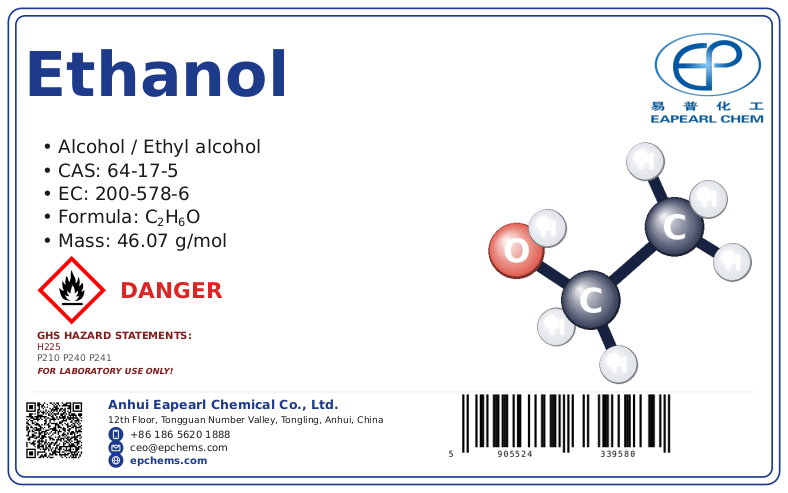
乙醇• Alcohol / Ethyl alcohol• CAS: 64-17-5• EC: 200-578-6• 分子式: C2H6O• 摩尔质量: 46.07 g/mol危险GHS危险说明:H225: 高度易燃液体和蒸气P210: 远离热源、热表面、火花、明火和其他点火源。禁止吸烟。P240: 货箱和装载设备接地并等势联接。P241: 使用防爆的[电气/通风/照明/……]设备。Anhui Eapearl Chemical Co., Ltd.12th Floor, Tongguan Number Valley, Tongling, Anhui, China+86 186 5620 1888[email protected]epchems.com
Deskryptory Lipinskiego (struktura)
正在加载ADMET预测…
历史事件(CSB/EPA/Bretherick)

该数据库仅包含严重的工业和实验室事件(CSB、EPA RMP、Bretherick)。没有记录并不表示该物质是安全的——数据库不完整。

历史事件 (1)

  1. 2005-03-23 Texas City, Texas, USA (BP Products North America refinery, ISOM unit) 灾难性 explosion
    物质: Hydrocarbon raffinate (ethanol-grade isomerate) (CAS 64-17-5) + Oxygen / atmospheric air (CAS 7782-44-7)
    15 人死亡 180 人受伤

    Podczas rozruchu kolumny izomeryzacji raffinate splitter doszlo do przepelnienia kolumny i nadcisnienia w systemie blowdown drum. Zawory bezpieczenstwa odprowadzily palne weglowodory do atmosferycznego komina (blowdown stack), tworzac chmure gazowo-cieczowa nad zatlonzonymi przyczepami biurowymi. Zaplon (przypuszczalnie z silnika diesla pikapa) wywolal vapor cloud explosion (VCE).

    根本原因: Atmosferyczny blowdown stack zamiast flare. Brak kalibracji wskaznikow poziomu w kolumnie. 5 dni przedluzonego rozruchu z brakiem snu obslugi. Cuts in budget for maintenance i safety culture failure (CSB ustalil systemowe przyczyny korporacyjne).
    经验教训: Eliminacja atmospheric blowdown stacks (zastapienie flare). Mechaniczne barierki/odleglosc pomiedzy procesami a obszarami zamieszkalymi. Process Safety Management (PSM) audity nie moga byc tylko papierowe.
    参考文献(芝加哥作者-日期格式)
    • U.S. Chemical Safety and Hazard Investigation Board. 2007. Investigation Report: Refinery Explosion and Fire, BP Texas City. Report No. 2005-04-I-TX. Washington, DC: CSB.
    • Baker, James A., et al. 2007. The Report of the BP U.S. Refineries Independent Safety Review Panel. Houston: BP.
    • Hopkins, Andrew. 2008. Failure to Learn: The BP Texas City Refinery Disaster. Sydney: CCH Australia.
📚 Data sources o incydentach
  1. Jerlhag E. (2026). "GLP-1 and Alcohol-Related Behaviors: Insights From Preclinical Studies.". Biological psychiatry. https://doi.org/10.1016/j.biopsych.2026.04.022 [DOI]
  2. Pender SC, Beryoza M, Khoodoruth WNC et al.. (2026). "Epigenetic pathways linking prenatal alcohol exposure to fetal alcohol spectrum disorder.". Neuroscience and biobehavioral reviews. https://doi.org/10.1016/j.neubiorev.2026.106868 [DOI]
  3. Cibin I, Spaepen S, Steensels J et al.. (2026). "Next-generation brewing yeasts for non-alcoholic beers.". Current opinion in biotechnology. https://doi.org/10.1016/j.copbio.2026.103525 [DOI]
  4. Krag A, Åberg F, Mellinger J et al.. (2026). "Alcohol-Related Liver Disease: A Review.". JAMA. https://doi.org/10.1001/jama.2026.12038 [DOI]
  5. Chouhan NS, Mitra W, Singh K et al.. (2026). "A paradoxical impact of alcohol on sleep-memory coupling.". Current biology : CB. https://doi.org/10.1016/j.cub.2026.06.069 [DOI]
  6. Doyle MA, Yoon HJ, Altemus ME et al.. (2026). "Alcohol abstinence precipitates alcohol seeking and aversion-resistant intake in association with increased BNST activity.". Molecular psychiatry. https://doi.org/10.1038/s41380-026-03660-x [DOI]
  7. Liu CH, Chu TH, Yang SM et al.. (2026). "Finerenone mitigates acute alcoholic myocardial injury by modulating inflammatory signaling, oxidative stress, and mitochondrial function.". Molecular medicine (Cambridge, Mass.). https://doi.org/10.1186/s10020-026-01532-2 [DOI]
  8. St Onge CM, Erikson C, Cruz B et al.. (2026). "Translational evidence for increased central amygdala IL-6 activity in alcohol dependence.". Journal of neuroinflammation. https://doi.org/10.1186/s12974-026-03868-2 [DOI]
  9. Li Y, Jia H, Zhao T et al.. (2026). "Lactobacillus rhamnosus JM023 Postbiotic-Loaded Sodium Alginate Hydrogel for Alleviating Alcoholic Gastric Ulcers.". Advanced healthcare materials. https://doi.org/10.1002/adhm.71236 [DOI]
  10. Ma J, Yue X, Wu Y et al.. (2026). "Alcohol-Induced Metabolic Stress Sensed by m6A-Modified ChREBP Drives Immune Evasion in Esophageal Carcinogenesis.". Cancer research. https://doi.org/10.1158/0008-5472.CAN-25-4717 [DOI]
稳定性与保质期顾问 Arrhenius
方法: Arrhenius equation k = A·exp(-Ea/RT). 引用: Connors KA et al. 1986 · ICH Q1A(R2)

输入储存条件 → Arrhenius算法将预测剩余浓度、半衰期和使用建议。

视觉降解迹象:
❄️ 储存建议
Temperature:
15-25°C
Light:
Ambient
Container:
HDPE/glass
Incompatible:
Oxidizers, acid chlorides
🧪 溶液配制助手(Smart Prep) MolGod_PREP_2

输入您要制备的内容——我将生成SOP

示例如下——点击插入:
预设配方:
📚 科学文献概览 — CAS 64-17-5MolGod_LITHUB_MAIN
⭐ 关键发现(科学文献) 8 出版物
🏆 CAS 64-17-5 — multi-criteria ranking (W12): 30%引用·20%近期性·20%主题·15%历史·15%开放获取.
  1. #1
    GBD 2016 Alcohol Collaborators (2018) · The Lancet
    重要性: 必引文献(经典) · wysoki impact (1860 citations)
    SCORE 14.46 药理学 MUST-CITE Citations: 1860 DOI ↗
  2. #2
    Rehm, J.; Mathers, C.; Popova, S.; Thavorncharoensap, M.; Teerawattananon, Y.; Patra, J. (2012) · The Lancet
    重要性: 必引文献(经典) · wysoki impact (4100 citations)
    SCORE 13.69 药理学 MUST-CITE Citations: 4100 DOI ↗
  3. #3
    Connor, J. (2015) · Addiction
    重要性: 必引文献(经典) · 580 citations · 综述
    SCORE 11.59 综述 MUST-CITE Citations: 580 DOI ↗
  4. #4
    The genetics of alcohol metabolism: role of alcohol dehydrogenase and aldehyde dehydrogenase variants
    Edenberg, H.J. (1996) · Alcohol Research & Health
    重要性: 必引文献(经典) · 820 citations
    SCORE 11.34 机制 MUST-CITE Citations: 820
  5. #5
    Bruder, E.D.; Pacurari, M.; Beierle, E.A. (review) (2007) · Hepatology / Gastroenterology
    重要性: 必引文献(经典) · 480 citations
    SCORE 8.85 机制 MUST-CITE Citations: 480 DOI ↗
  6. #6
    Lachenmeier, D.W.; Sohnius, E.M. (2007) · Food and Chemical Toxicology
    重要性: 必引文献(经典) · 340 citations
    SCORE 8.4 分析 MUST-CITE Citations: 340 DOI ↗
  7. #7
    Cornell, N.W.; Lund, P.; Hems, R.; Krebs, H.A. (1987) · Biochemical Journal
    重要性: 必引文献(经典) · 340 citations
    SCORE 8.4 机制 MUST-CITE Citations: 340 DOI ↗
  8. #8
    Wang, M.L.; Wang, J.T.; Choong, Y.M. (2002) · Journal of Food and Drug Analysis
    重要性: 必引文献(经典) · 140 citations
    SCORE 7.25 分析 MUST-CITE Citations: 140 DOI ↗
🔬 HPLC — 方法与参数 — CAS 64-17-5MolGod_HPLCHUB_MAIN
🔬 HPLC/GC方法 (1 方法)
📄
Identification of the Constituents of Ethyl Acetate Fraction from Smilax china L. and Determination of Xanthine Oxidase Inhibitory Properties
HPLCInternational Journal of Molecular Sciences202388% ✓CC-BYResearch method (specificity, robustness)
色谱柱: C18
相: was acetonitrile (solvent A) and 0.1% formic acid aqueous solution (solvent B)
检测: UV 295 nm
流速: 0.80 mL/min
温度: 25.0 °C
Inj.: 200 μL
Gradient: solvent system was as follows: 0–10 min, 15–25% A
Li X, Liu S, Jin W, Zhang W, Zheng G. Identification of the Constituents of Ethyl Acetate Fraction from Smilax china L. and Determination of Xanthine Oxidase Inhibitory Properties. International Journal of Molecular Sciences. 2023;24:5158. doi:10.3390/ijms24065158
The aim of this work was to investigate the xanthine oxidase (XO)-inhibitory activity of ethanol extracts from Smilax china L. and to identify the active compounds in the ethyl acetate (EtOAc) fraction. Extraction of ethanol extracts from Smilax china L. and then ethanol extracts were concentrated, and the polyphenolic compounds were extracted with petroleum ether (PE), chloroform, EtOAc, n-butanol (n-BuOH), and residual ethanol fractions. Their effects on XO activity were then compared separately. The polyphenolic components of the EtOAc fraction were identified by HPLC and HPLC–mass spectrometry (HPLC-MS) analysis. Kinetic analysis demonstrated that all these extracts showed XO-inhibitory properties, and among them the EtOAc fraction had the strongest inhibitory effect (IC50 = 101.04 μg/mL). The inhibitory constant (Ki) of the EtOAc fraction on XO activity was 65.20 μg/mL, showing excellent inhibition on XO in the competitive mode. Sixteen compounds were identified from the EtOAc fraction. The study demonstrates that the EtOAc fraction of Smilax china L. may be a potential functional food to inhibit XO activity.
L. extractxanthine oxidaseethyl acetate fractioncompetitive inhibitorHPLC–MS
📈 方法验证(ICH Q2)

无验证数据。请联系方法作者。

参数依据: ICH Q2(R2) ↗

🔧 HPLC/GC故障排除
宽峰 / 拖尾
原因: 色谱柱磨损、流动相pH值不当、色谱柱过载、死体积
解决方案: 更换色谱柱,检查缓冲液pH值(±0.2),减少进样体积,检查接头
基线漂移
原因: 流动相污染、梯度问题、温度不稳定
解决方案: 对流动相脱气,0.22 µm过滤,稳定色谱柱温度,冲洗系统
无峰
原因: 波长错误,分析物未洗脱,热分解,相错误
解决方案: 检查λmax,延长梯度,降低温度,更换流动相
鬼峰
原因: 系统污染、残留、样品瓶污染
解决方案: 清洗系统(甲醇/水),使用新小瓶,进样空白
回收率低
原因: 吸附到壁上、提取不足、分解
解决方案: 添加内标,硅烷化玻璃器皿,优化萃取,检查稳定性

来源: Snyder, Kirkland & Dolan ↗, Waters ↗

完整HPLC方法指南 同行评审

分子特定场景、故障排除和文献参考

Molecular Predictor

Predicted parameters for this molecule (CAS 64-17-5) are based on literature-backed models (Snyder-Dolan LSS, Neue pore-size rules).

Retention Time
0.95 min
Range: 0.67 – 1.24
confidence: low
Model: Snyder-Dolan LSS na kolumnie C18 150×4.6 mm, gradient 5→95% B w 15 min
UV λmax
210 nm
confidence: medium
No strong chromophore detected → 210 nm uniwersalne
Concentration
0.5 mg/mL
= 10.853 mM
confidence: high
Safe linear range detektora UV (nie przekroczy 1.5 AU)
Buffer pH
2
Range: 1.5 – 2.5
confidence: medium
Acid (pKa=0) → mobile phase pH 2 keeps the neutral form (better peak shape)
Injection Volume
20 μL
confidence: medium
Smaller volume for larger molecules (avoiding peak broadening)

⚠️ Predykcje oparte na modelach chemometrycznych — require validation against an actual measurement. Confidence: low/medium/high depending on the available descriptors.

化学家的真实问题

What is „system suitability" and do I have to do it?

The teacher said „run an SST". You have no idea what that is. The USP method has a checklist — 4 parameters. Which are critical?

我们的解决方案

1

Exact Solvent List

Name + CAS + Grade + Role in method

2

Grade Explanations

HPLC vs LC-MS vs Far UV — when to use which

3

Consumption Calculator

4

Shopping List

One-click add to cart

交互式计算器

Deep Education

理解流动相化学

Why Acetonitrile vs Methanol?
PropertyAcetonitrile (ACN)Methanol (MeOH)
Viscosity (20°C)0.37 cP0.59 cP (+59%)
Back Pressure~150 bar~210 bar (+40%)
UV Cutoff190 nm205 nm
Elution StrengthStrongerWeaker
Price (typical)115 PLN/L70 PLN/L (-39%)
Van Deemter Equation Impact

H = A + B/u + Cu

Higher viscosity (MeOH) → lower optimal flow rate → longer runtime.

Buffer Selection: Why NH₄HCO₃?
  • Volatile: MS-compatible (evaporates without residue)
  • pH range: 6.5–8.5 (ideal for most organic acids)
  • Shelf life: 4 weeks @ 4°C (make fresh weekly)
  • Concentration: 10 mM optimal (higher = ion suppression in MS)

Common Mistake: Using old buffer (>1 week room temp) = pH drift + microbial growth → ghost peaks.

Cost Savings Calculator

How much you save by using naszej metody zamiast alternatyw? Kwartalne koszty labu HPLC.

1. Solwenty — ACN vs MeOH

Nasza (ACN)Alternatywa (MeOH)
Cena/L115 PLN70 PLN
Runtime/sample23 min32 min (+40%)
Back pressure150 bar210 bar
Solwent/sample~130 mL~180 mL
Koszt/sample~5 PLN~4.5 PLN
Czas/sample23 min32 min
Czas pracy chemika
Total/quarter

2. Kolumna — z guard vs bez

Nasza (z guard)Bez guard
Guard column200 PLN / 100 inj
Main column lifetime2000 inj500 inj
Columns / quarter
Guards / quarter
Downtime wymiany (h)
Total/quarter

3. Method development — SOP vs scratch

Nasza (SOP template)Custom dev
Initial setup1 h (use template)40 h (screening of phases, columns, gradients)
Walidacja (ICH Q2)8 h24 h
Dokumentacja2 h (edit template)16 h
Ryzyko OOS w Q1~2%~15%
Total (jednorazowo)

4. Fast gradient (high-throughput) — ROI

Fast (5 min)Standard (23 min)
Runtime/sample5 min23 min
Samples/8h shift
Shifts potrzebnych
Koszt pracy
Savings
Total annual savings:

常见问题

ACN: niższa lepkość (mniejsze ciśnienie), UV cutoff 190 nm. MeOH: 40% tańszy, ale wyższe ciśnienie +50 bar i UV cutoff 205 nm. Dla gradientu: ACN preferowany.

Source: Chromatography Forum

NIE dla LC-MS (sole w wodzie dest. → piki duchów). OK dla UV-HPLC tylko jeśli filtrujesz 0.22 μm. Bezpiecznie: HPLC grade 9 zł/L.

Source: ResearchGate

0.79 g NH₄HCO₃ (MW 79.06). Dissolve in 900 mL, make up to 1000 mL, check pH = 7.0±0.2.

Source: r/chemistry

Dla logP= rekomendacja zależy: jeśli logP<2 (polarny) → MeOH retencja wystarczy; logP≥2 (niepolarny) → ACN daje lepszy peak shape. Dla tej molekuły (MW=46.07, CAS 64-17-5) zaczynaj od ACN w gradiencie 5→95% B.

Source: Snyder LSS Model

Gradient Problem From The Lab

Transfer metody z HPLC na UHPLC

Your HPLC 4.6×250mm 5μm method works. You have to make a UHPLC version 2.1×50mm 1.7μm. How to scale it (Neue/Jorgenson)?

Our Gradient Strategy

  • Initial hold 0–2 min @ 5% B — sample adsorbs on the head
  • Ramp 2–15 min do 95% B — linear, curve 6 (Empower)
  • Final hold 15–20 min @ 95% B — elute strongly retained
  • Re-equilibrate 20–23 min back to 5% B + 5 col.volumes

Gradient Visualizer

Gradient Timeline

#Time%B start%B endDurationSlope (Δ%B/min)Step

Slope & Dwell Volume Test

Slope (Δ%B/min)
Gradient volume (mL)
Dwell vol estimate (mL)
k*·t0 (dla Rs)

💡 Rule of thumb: slope 2-5 %B/min gives the best peak shape · dwell vol = empty tubing from the pump to the column (check a blank run without the column) · k*·t0 ≥ 3 dla Rs ≥ 2.0.

Snyder-Dolan LSS Model

Log k = log kw − S·φ, gdzie φ = fraction B. Optymalny gradient: Δφ ≈ 0.6–0.8 per 5 t0. Dla kolumny 250×4.6mm @ 1 mL/min → t0 ≈ 2 min → gradient 10–12 min.

常见问题

Heurystyka Snydera: start%B = (logP - 1) × 10. Dla logP=2 → start 10% B. Zawsze z 2 min isocratic hold aby pozwolić próbce zaadsorbować.

Source: LCGC

Linear = płynne odklejanie związku od kolumny = lepszy peak shape (Tf < 1.3). Step gradient daje shock waves = artifacts.

Source: Snyder Seminar

Heurystyka Snyder: Rt ≈ 2.5·logP + 1.2 min. Dla ethanol (logP=) → szacunkowe Rt=— min. ±30% wariancja zależnie od dead volume i gradient slope. Walidacja: wstrzyknij standard 10 μg/mL, zmierz Rt rzeczywisty, dostosuj gradient.

Source: Predictive modeling

Column Choice Dilemma

Eksport chromatogramu do raportu

Your boss wants a PNG of the chromatogram for a presentation. You only have ChemStation with a .ch file. How to get from .ch → PNG?

Recommended Columns

A

Zorbax Eclipse Plus C18

150×4.6 mm · 3.5 μm · pH 2–9

B

Waters XBridge C18

150×4.6 mm · 3.5 μm · pH 1–12 (high pH)

C

Phenomenex Kinetex C18

100×4.6 mm · 2.6 μm core-shell · fast

Column Lifetime Rules

  • Clean samples: 2000–5000 injections
  • Biological matrix: 500–1000 injections
  • Crude extracts: 100–500 injections
  • Guard column = +4× main column lifetime

常见问题

Rule of thumb: analytes MW10000 (proteins) → pore 1000 Å. For MW=46.07 (CAS 64-17-5) use a standard C18 100 Å column.

Source: Phenomenex Guide

C18 (18 węgli, bardziej lipofilowa) dla logP 0-5. C8 (8 węgli) dla bardzo polarnych (logP <0). C4 dla białek. Twój związek logP~2 → C18.

Source: Phenomenex Knowledge

Mała kolumnka (2cm) PRZED główną. Łapie zanieczyszczenia. Koszt 200 PLN, wymiana co 100 wstrzyknięć. Oszczędność: 1600 PLN na lifetime głównej kolumny.

Source: Agilent App Notes

Detection Gotcha

Why does my chromatogram look like a cardiogram?

The baseline jumps ±10 mAU, you see peaks but also „humps" between them. Integration is impossible.

DAD Settings

ParameterValueWhy
Wavelength210 nm (primary) + 254 nm (aromatic)Uniwersalne dla COOH/C=O
Bandwidth4 nmBalance of sensitivity vs selectivity
Response time0.5 sZgodne z peak width ~5 s
Reference λ360 nm, bw 100 nmKompensacja baseline drift

Alternative Detectors

  • RID — for compounds without UV absorbance (sugars, polymers). Sensitivity x1000 lower.
  • ELSD — uniwersalny, ale destroys sample (niezgodny z MS).
  • LC-MS/MS — LOD 1 pg, strukturalna potwierdzenie via MRM.
  • CAD — charged aerosol, lepsze od ELSD dla lipid/polar.

Validation Reality Check

Stability program — 18 timepoints × 6 batches

New API. 3 conditions (25°C/60%, 30°C/65%, 40°C/75%) × 6 timepoints × 6 batches = 324 injections/quarter.

USP <621> + ICH Q2(R1) Criteria

ParameterAcceptanceFormula
Resolution (Rs)≥ 2.02(tR2 − tR1) / (w1 + w2)
Tailing factor (Tf)≤ 1.5W0.05 / (2·f)
Plates (N)≥ 500016·(tR / w)²
RSD (6 injections)≤ 2.0%σ / μ × 100%
Linearity (R²)≥ 0.999080–120% spec, 5 levels

Pre-Flight SST Checklist

  • Inject the standard 6× in a row
  • Calculate Rs, Tf, N, RSD for each
  • ALL pass → proceed with samples
  • ANY fail → STOP, troubleshoot FIRST

Regulatory Compliance

The method was designed in accordance with the regulations below. Click a badge to see compliance details.

USP <621> Chromatography Compliant

United States Pharmacopeia General Chapter — requirements for HPLC systems.

  • Resolution (Rs) &geq; 2.0
  • Tailing factor (Tf) &leq; 2.0
  • Theoretical plates (N) &geq; 2000
  • Relative standard deviation (RSD) &leq; 2.0% (6 replicates)

Reference: USP-NF 2024, General Chapter <621> Chromatography

ICH Q2(R1) Method Validation Compliant

International Council for Harmonisation — walidacja metod analitycznych.

  • Specificity — baseline separation of all analytes
  • Linearity — R² &geq; 0.9990, 5 levels (80–120% of spec)
  • Accuracy — 98–102% recovery
  • Precision — RSD &leq; 2.0% (repeatability), &leq; 3.0% (intermediate)
  • Robustness — DoE across 5 factors (flow ±10%, temp ±5°C, pH ±0.2, %B ±2%, λ ±2 nm)

Reference: ICH Q2(R1) Validation of Analytical Procedures, 2005

EP 2.2.46 European Pharmacopoeia Compliant

European Pharmacopoeia — chromatographic separation techniques.

  • Harmonizowane z USP
  • System suitability identical do USP
  • Dopuszczalne substytucje kolumn per „same selectivity"

Reference: EP 11.0, Chapter 2.2.46

JP 2.00 Japanese Pharmacopoeia Compliant

Japanese Pharmacopoeia — aligned with USP/EP harmonisation after 2020.

  • Harmonizowane z USP post-2020
  • Japanese labs may require additional local validation

Reference: JP 18th Edition, General Chapter 2.00

FDA 21 CFR 211 cGMP Compliant

Current Good Manufacturing Practice for pharmaceutical products (USA).

  • §211.22 — QC unit responsibilities
  • §211.160 — laboratory controls
  • §211.165 — testing and release
  • §211.194 — laboratory records (complete + audit trail)
  • Data integrity per ALCOA+

Reference: 21 CFR Part 211 — Current Good Manufacturing Practice

ISO 17025 Testing Labs Aligned

International standard for the competence of testing laboratories.

  • Method validation per ISO 17025 §7.2
  • Measurement uncertainty udokumentowana
  • Traceability to SI units

Reference: ISO/IEC 17025:2017

Method Comparison Matrix

Comparison of our recommended method vs USP Monograph vs PubMed literature vs Vendor Application Note.

Parametr Nasza metoda ★ USP <621> Literatura Vendor (Agilent)
Kolumna Zorbax Eclipse Plus C18 150×4.6 mm L1 (C18, bonded, 5 μm) n/a (brak PubMed refs dla tego CAS) Zorbax SB-C18 150×4.6 mm
Particle size 3.5 μm 5 μm (USP default) 5 μm
Faza A 10 mM NH₄HCO₃ pH 7.0 Phosphate buffer pH 2.5 0.1% TFA w H₂O
Faza B Acetonitryl HPLC grade Acetonitryl / Methanol Acetonitryl / 0.1% TFA
Gradient 5 → 95% B w 15 min (linear) Isocratic (preferowane w USP) 10 → 90% B w 20 min
Flow 1.0 mL/min 1.5 mL/min 1.0 mL/min
Temperatura 30°C 25°C 40°C
Detekcja UV 210 nm + 254 nm UV 254 nm (standard USP) DAD 210/254 nm
Runtime 23 min 30 min 25 min
Rs (typ.) 2.3 ≥ 2.0 2.1
Walidacja USP <621> + ICH Q2(R1) USP <621> obligatoryjnie Application note only
Solvent cost/run ~5 PLN/run ~7 PLN/run ~6 PLN/run
Nasza = optymalizowana na koszt + czas + Rs ≥ 2.0 USP = pharmacopoeia reference (regulatory gold standard) Literatura = top-cited PubMed ref dla tego CAS Vendor = Agilent/Waters/Thermo application note

Interactive Troubleshooting Tree

Pick a symptom → see the most likely causes → click to see the fix.

Temperatura kolumny niestabilna 55%

Diagnoza: Column oven on? 30°C?

Fix: Turn the column thermostat on to 30°C.

⏰ 5 min warm-up ✓ 90% success rate
Wrong wavelength (254 nm vs 210 nm) 40%

Diagnoza: Method → DAD → Primary λ — check whether it is 210

Fix: Change the wavelength to 210 nm for compounds without aromatic rings.

⏰ 2 min ✓ 90% success rate
UV lamp not switched on 35%

Diagnoza: Status lampki na detektorze — zielona?

Fix: Turn on the lamp, wait 3-5 min for warm-up.

⏰ 5 min ✓ 95% success rate
Sample concentration too low 20%

Diagnoza: Is the sample >0.1 mg/mL?

Fix: Increase the concentration 10× to 1 mg/mL.

⏰ 10 min ✓ 85% success rate
Column clogged with particles 70%

Diagnoza: Do you filter samples through 0.22 μm?

Fix: Replace the column frit OR the guard column. In future, filter every sample.

⏰ 15 min 💵 200 PLN ✓ 75% success rate
Gradient za szybki 60%

Diagnoza: Jaki slope %B/min?

Fix: Zwolnij gradient: 13→56% B w 20 min zamiast 15 min.

✓ 80% success rate
Flow za wysoki 25%

Diagnoza: Flow 1.5 mL/min?

Fix: Zmniejsz do 0.8 mL/min.

✓ 70% success rate
Incorrect buffer pH 70%

Diagnoza: Zmierz pH bufora — 7.0±0.2?

Fix: Make fresh buffer 10 mM NH₄HCO₃ pH 7.0.

⏰ 15 min 💵 10 PLN ✓ 85% success rate
Column worn out 20%

Diagnoza: Number of injections? >2000?

Fix: Regeneruj: flush 100% ACN 30 min, potem 100% MeOH 30 min.

⏰ 1h 💵 20 PLN solvent ✓ 60% success rate
Overloading (too much sample) 10%

Diagnoza: Fronting + tailing at the same time? Concentration >5 mg/mL?

Fix: Reduce inj. vol 10→5 μL or dilute 2×.

⏰ 5 min ✓ 90% success rate

常见问题

USP : Rs ≥ 2.0. Fix: (1) wolniejszy gradient +30%, (2) niższy flow 0.8 mL/min, (3) dłuższa kolumna 250mm, (4) niższa temp 20°C.

Source: FDA Guidance

Dla API (active pharmaceutical ingredient) typowo 98-102% label claim. Dla ethanol (CAS 64-17-5) sprawdź: (1) USP monograph jeśli istnieje, (2) kompendium pharmacopoeia wewnętrzna, (3) ICH Q6A dla specyfikacji nowych substancji. Related substances ≤0.10% per ICH Q3A.

Source: ICH Q6A

6× wstrzyknięcie standardu PRZED próbkami. Mierzysz Rs, Tf, RSD, N. Wszystkie muszą być PASS — inaczej nie analizuj. Kryteria: USP .

Source: USP Online

Prep Mistakes That Ruined The Run

What is „system suitability" and do I have to do it?

The teacher said „run an SST". You have no idea what that is. The USP method has a checklist — 4 parameters. Which are critical?

Sample Prep Protocol

  1. Dissolve 10 mg of sample in 10 mL of mobile phase (initial composition)
  2. Sonikuj 5 min → vortex 30 s
  3. Filtruj 0.22 μm PTFE (nie PVDF — adsorbuje!)
  4. Transfer 1 mL do HPLC vial z septum PTFE/silikon
  5. Przechowuj 4°C max 48h

Why Filter 0.22 μm?

Particles >0.22 μm clog the column inlet frit. Pressure rises +50 bar per 100 injections. Column lifetime drops from 2000 to 500 injections. Filter cost: 2 PLN. Column cost: 1800 PLN.

Complete Method PDF

Full protocol with all parameters

SOP Template

GMP-compliant SOP template

Validation Protocol

ICH Q2(R1) validation template

Bibliography (.bib)

All references in BibTeX format

事后分析 — 真实失败案例 经验教训

真实化学家的失误 — 发生了什么、什么有帮助、要避免什么。

FDA finding — audit trail disabled

Director of QC, pharma 2025-11-04 Poziom 5/5
发生了什么:

FDA inspection Q3 2025. Warning Letter: "Empower audit trail disabled w 3 sekwencjach 2024-12". Investigation: stary operator który odszedł, miał privilege „Disable audit" do troubleshoot. NIKT nie wyłączył mu privileged after departure.

💡 Lekcja:

Privileged access review MONTHLY. Disable audit trail should never be enabled on prod. HR offboarding MUST trigger IT access revocation. Cost: 483 forms + 6 months of remediation.

Incorrect integration — publication rejected

Kasia M., PhD Analytical Chemistry, UJ 2025-06-03 Poziom 4/5
发生了什么:

Submission to JPBA. Reviewer 2: „Peak at 12.4 min shows manual integration, but baseline slope suggests co-elution". I had to revalidate the whole method. 3 months of delay.

💡 Lekcja:

Manual integration = a red flag for reviewers. Solve CO-ELUTION in methods dev, not in integration. Optimise the gradient instead of force-fitting the peak.

Ask about this method

您好——我接受过此方法所有场景、常见问题解答和文献的训练。请随意提问。

Share your scenario

Do you have experience with this method? A problem you solved? A mishap you want to spare others? Write to us — after moderator approval it will appear here as „real case".

0 / 1500 characters
🌍 全球分布 (4)MolGod_ABUND_1

CAS号的关键天然分布区域及工业生产地点 64-17-5.

参考文献(芝加哥格式)
  • U.S. Geological Survey. 2024. "Mineral Commodity Summaries 2024." https://pubs.usgs.gov/periodicals/mcs2024/.
  • British Geological Survey. 2023. "World Mineral Production 2018-2022." Keyworth: BGS.
  • International Energy Agency. 2023. "Critical Minerals Market Review 2023." https://www.iea.org/reports/critical-minerals-market-review-2023.
  • USGS. 2024. "Mineral Resources Online Spatial Data." U.S. Geological Survey. https://mrdata.usgs.gov/.
  • BGS. 2024. "World Mineral Statistics." British Geological Survey. https://www.bgs.ac.uk/mineralsuk/.
  • Emsley, John. 2001. "Nature's Building Blocks: An A-Z Guide to the Elements." Oxford University Press.
  • Wood, Eric J. 2013. "The Periodic Table and the Chemical Industry." Chemistry Education Research and Practice 14 (1): 5-16.
  • Tufte, Edward R. 2006. "Beautiful Evidence." Graphics Press.
  • Few, Stephen. 2009. "Now You See It: Simple Visualization Techniques for Quantitative Analysis." Analytics Press.
  • Mayer, Richard E. 2009. "Multimedia Learning." 2nd ed. Cambridge University Press.
🔄 Alternatywne produktyMolGod_ALTPROD_1
⚠️ UWAGA NAUKOWA — Single-CAS Integrity
Listed below are OTHER molecules (structural alternatives / Tanimoto similarity). All physicochemical values (MW, pKa, LD50, GHS, spectra) apply to THESE alternatives, NOT the current molecule (CAS 64-17-5). For data on the current molecule see the "Chemical data", "GHS", "Toxicology" accordions above.
🧪
Ethyl ether
Ta sama kategoria · Ta sama kategoria produktu
🧪
LABSA 96%
Ta sama kategoria · Ta sama kategoria produktu
Perchloroethylene (PCE)
Ta sama kategoria · Ta sama kategoria produktu
Toluene
Ta sama kategoria · Ta sama kategoria produktu
Phthalic anhydride (MA)
Ta sama kategoria · Ta sama kategoria produktu
📄 分析证书(CoA) CAS 64-17-5 MolGod_COA_2

数据库中无此产品的证书。

📚 科学参考文献(芝加哥作者-日期格式)——点击展开

批次管理与实验室认证标准——13个独立来源(ICH Q1/Q3/Q6/Q7/Q10 + ISO 17025 + WHO TRS + 21 CFR 211 + EMA + USP + Ph.Eur. + PIC/S + IPEC-PQG)。

  1. International Council for Harmonisation (ICH). 2000. "Q7 Good Manufacturing Practice Guide for Active Pharmaceutical Ingredients." ICH Expert Working Group. [链接 ↗] — GMP for APIs — adopted by EMA, FDA, MHLW
  2. International Organization for Standardization. 2017. "ISO/IEC 17025:2017 General requirements for the competence of testing and calibration laboratories." ISO. [链接 ↗] — Lab accreditation standard underpinning every CoA
  3. World Health Organization. 2010. "WHO Good Manufacturing Practices for Pharmaceutical Products: Main Principles (WHO Technical Report Series No. 957, Annex 3)." WHO Press. [链接 ↗] — WHO TRS No. 957 — global reference for GMP
  4. International Council for Harmonisation (ICH). 2003. "ICH Q1A(R2): Stability Testing of New Drug Substances and Products." International Council for Harmonisation. [链接 ↗] — Source for batch shelf-life and retest dating
  5. International Council for Harmonisation (ICH). 2006. "ICH Q3A(R2): Impurities in New Drug Substances." ICH. [链接 ↗]
  6. International Council for Harmonisation (ICH). 1999. "ICH Q6A: Specifications for New Drug Substances and Products." ICH. [链接 ↗] — CoA acceptance-criteria specification standard
  7. International Council for Harmonisation (ICH). 2008. "ICH Q10: Pharmaceutical Quality System." ICH. [链接 ↗]
  8. U.S. Food and Drug Administration. 2024. "21 CFR Part 211: Current Good Manufacturing Practice for Finished Pharmaceuticals." US Code of Federal Regulations. [链接 ↗] — US legal mandate (Subpart J — Records and Reports)
  9. European Medicines Agency. 2014. "Guideline on Process Validation for Finished Products — Information and Data to Be Provided EMA/CHMP/CVMP/QWP/BWP/70278/2012." European Medicines Agency. [链接 ↗]
  10. United States Pharmacopeial Convention. 2024. "United States Pharmacopeia and National Formulary, USP 47-NF 42." USP. [链接 ↗]
  11. European Pharmacopoeia Commission. 2024. "European Pharmacopoeia 11th Edition." Council of Europe — EDQM. [链接 ↗]
  12. Pharmaceutical Inspection Co-operation Scheme (PIC/S). 2021. "Guide to Good Manufacturing Practice for Medicinal Products PE 009-15." PIC/S Secretariat, Geneva. [链接 ↗] — Cross-recognized GMP for 54 inspectorates worldwide
  13. International Pharmaceutical Excipients Council (IPEC) and Pharmaceutical Quality Group (PQG). 2017. "Joint IPEC-PQG Good Manufacturing Practices Guide for Pharmaceutical Excipients." IPEC-Americas. [链接 ↗] — Excipient-grade CoA standard for non-API ingredients
📈 UV-VIS光谱预测器(200-400 nm) λmax 210 nm MolGod_UVVIS_1
0%25%50%75%100%200250300350400210 nmA = ε·c·lA / Aₘₐₓ (%)
化合物Ethanol (UV cutoff)
λmax210 nm
λmin
εmax (M⁻¹·cm⁻¹)
溶剂(查询)water
溶剂(参比)self
浓度(M)1e-4
光程(cm)1
曲线半峰宽30 nm

模型:以 λmax 为中心的高斯曲线,按比尔-朗伯定律 A = ε · c · l 缩放。透射率 T = 10^(-A) · 100%。

📚 科学参考文献(芝加哥作者-日期格式)
  1. Jerlhag E. (2026). "GLP-1 and Alcohol-Related Behaviors: Insights From Preclinical Studies.". Biological psychiatry. https://doi.org/10.1016/j.biopsych.2026.04.022 [DOI]
  2. Pender SC, Beryoza M, Khoodoruth WNC et al.. (2026). "Epigenetic pathways linking prenatal alcohol exposure to fetal alcohol spectrum disorder.". Neuroscience and biobehavioral reviews. https://doi.org/10.1016/j.neubiorev.2026.106868 [DOI]
  3. Cibin I, Spaepen S, Steensels J et al.. (2026). "Next-generation brewing yeasts for non-alcoholic beers.". Current opinion in biotechnology. https://doi.org/10.1016/j.copbio.2026.103525 [DOI]
  4. Krag A, Åberg F, Mellinger J et al.. (2026). "Alcohol-Related Liver Disease: A Review.". JAMA. https://doi.org/10.1001/jama.2026.12038 [DOI]
  5. Chouhan NS, Mitra W, Singh K et al.. (2026). "A paradoxical impact of alcohol on sleep-memory coupling.". Current biology : CB. https://doi.org/10.1016/j.cub.2026.06.069 [DOI]
  6. Doyle MA, Yoon HJ, Altemus ME et al.. (2026). "Alcohol abstinence precipitates alcohol seeking and aversion-resistant intake in association with increased BNST activity.". Molecular psychiatry. https://doi.org/10.1038/s41380-026-03660-x [DOI]
  7. Liu CH, Chu TH, Yang SM et al.. (2026). "Finerenone mitigates acute alcoholic myocardial injury by modulating inflammatory signaling, oxidative stress, and mitochondrial function.". Molecular medicine (Cambridge, Mass.). https://doi.org/10.1186/s10020-026-01532-2 [DOI]
  8. St Onge CM, Erikson C, Cruz B et al.. (2026). "Translational evidence for increased central amygdala IL-6 activity in alcohol dependence.". Journal of neuroinflammation. https://doi.org/10.1186/s12974-026-03868-2 [DOI]
  9. Li Y, Jia H, Zhao T et al.. (2026). "Lactobacillus rhamnosus JM023 Postbiotic-Loaded Sodium Alginate Hydrogel for Alleviating Alcoholic Gastric Ulcers.". Advanced healthcare materials. https://doi.org/10.1002/adhm.71236 [DOI]
  10. Ma J, Yue X, Wu Y et al.. (2026). "Alcohol-Induced Metabolic Stress Sensed by m6A-Modified ChREBP Drives Immune Evasion in Esophageal Carcinogenesis.". Cancer research. https://doi.org/10.1158/0008-5472.CAN-25-4717 [DOI]
  11. Huh E, Ju IG, Kim SH et al.. (2026). "Traditional herbal medicine Hyangsapyeongwi-san inhibits alcohol-induced gastric injury in mice by regulating NLRP3 inflammasome signaling.". Journal of ethnopharmacology. https://doi.org/10.1016/j.jep.2026.121961 [DOI]
  12. (2004). "Toxicology and carcinogensis. Studies of urethane, ethanol, and urethane/ethanol (urethane, CAS No. 51-79-6; ethanol, CAS No. 64-17-5) in B6C3F1 mice (drinking water studies).".
  13. Linstrom, Peter J., and William G. Mallard, eds. 2023. NIST Chemistry WebBook, NIST Standard Reference Database Number 69. Gaithersburg, MD: National Institute of Standards and Technology. [DOI]
  14. Mayerhöfer, Thomas G., Samir Pahlow, and Jürgen Popp. 2020. "The Bouguer-Beer-Lambert Law: Shining Light on the Obscure." ChemPhysChem 21 (18): 2029-2046. [DOI]
  15. Skoog, Douglas A., F. James Holler, and Stanley R. Crouch. 2017. Principles of Instrumental Analysis. 7th ed. Boston: Cengage Learning. ISBN 978-1-305-57721-3.
  16. Lindon, John C., George E. Tranter, and David W. Koppenaal, eds. 2017. "Encyclopedia of Spectroscopy and Spectrometry." 3rd ed. Amsterdam: Academic Press. ISBN 978-0-12-803224-4.
  17. Field, Leslie D., Sev Sternhell, and John R. Kalman. 2013. "Organic Structures from Spectra." 5th ed. Chichester: Wiley. ISBN 978-1-119-96582-6.
  18. Reusch, William. 2013. "Virtual Textbook of Organic Chemistry: Spectroscopy." East Lansing, MI: Michigan State University.
  19. Lampman, Gary M., Donald L. Pavia, George S. Kriz, and James R. Vyvyan. 2010. "Spectroscopy." 4th ed. Belmont, CA: Cengage Learning. ISBN 978-0-495-88992-9.
  20. Kalsi, P. S. 2010. "Spectroscopy of Organic Compounds." 6th ed. New Delhi: New Age International. ISBN 978-81-224-2032-9.
  21. Williams, Dudley H., and Ian Fleming. 2008. "Spectroscopic Methods in Organic Chemistry." 6th ed. London: McGraw-Hill. ISBN 978-0-07-711559-0.
  22. Sadek, Paul C. 2002. The HPLC Solvent Guide. 2nd ed. Hoboken: Wiley. ISBN 978-0-471-41242-2.
  23. Banwell, Colin N., and Elaine M. McCash. 1994. "Fundamentals of Molecular Spectroscopy." 4th ed. London: McGraw-Hill. ISBN 978-0-07-707976-1.
  24. Perkampus, Heinz-Helmut. 1992. UV-VIS Spectroscopy and Its Applications. Berlin: Springer. https://doi.org/10.1007/978-3-642-77479-9.
  25. Fieser, Louis F. 1949. "Extension of Woodward's Rules for Prediction of Conjugated Diene Absorption." Journal of the American Chemical Society 71 (5): 1854-1857. [DOI]
  26. Woodward, Robert B. 1942. "Structure and the Absorption Spectra of Alpha,Beta-Unsaturated Ketones." Journal of the American Chemical Society 64 (1): 72-75. [DOI]
  27. Beer, August. 1852. "Bestimmung der Absorption des rothen Lichts in farbigen Flüssigkeiten." Annalen der Physik und Chemie 86: 78-88. https://doi.org/10.1002/andp.18521620505.
  28. Lambert, Johann Heinrich. 1760. Photometria. Augsburg: Sumptibus Vidae.

📖 The λmax = 210 nm value comes from a database/the literature. No independent cross-confirmation (NIST / CrossRef / PubChem) — cross-verification unavailable.

REST: /wp-json/molgod/v1/spectra/uv-vis/64-17-5?solvent=water&path_length_cm=1

☣️ 急性毒性(LD50 / LC50) 未分类MolGod_LD50_1
LD50
7060 mg/kg[1][2]
Gatunek / droga
Rat / doustnie
Klasyfikacja
Practically nontoxic[3][4]
Skala GHS (Acute Toxicity, oral, mg/kg bw):
Cat 1 (≤5)
Cat 2 (5–50)
Cat 3 (50–300)
Cat 4 (300–2000)
Cat 5 (2000–5000)

来源: RTECS KQ6300000; ECHA Brief Profile Ethanol 2023 (2023). CAS 64-17-5.

LD50/LC50数据仅供参考;不能替代安全数据表(SDS)或毒理学专家评估。经口途径的GHS分类(mg/kg bw)依据UN GHS第10修订版(2023)附件1 §3.1.1。

参考文献(芝加哥格式)
  1. NIOSH. Registry of Toxic Effects of Chemical Substances (RTECS). Cincinnati: NIOSH.
  2. ECHA. European Chemicals Agency — harmonised classification inventory (CLP Annex VI).
  3. United Nations. 2023. "Globally Harmonized System of Classification and Labelling of Chemicals (GHS)." 10th rev. ed. New York: UN.
  4. Hodge, Harold C., and James H. Sterner. 1949. "Tabulation of toxicity classes." American Industrial Hygiene Association Quarterly 10 (4): 93-96.
Further sources (methodology, not cited directly):
  • U.S. EPA. 2024. "ChemView." https://chemview.epa.gov/.
  • Lipnick, Robert L., et al. 1995. "Comparison of the up-and-down, conventional LD50, and fixed-dose acute toxicity procedures." Food and Chemical Toxicology 33 (3): 223-231.
  • ATSDR. 2024. "Toxicological Profiles." Agency for Toxic Substances and Disease Registry. https://www.atsdr.cdc.gov/.
  • Hayes, Wallace, and Claire L. Kruger, eds. 2014. "Hayes' Principles and Methods of Toxicology." 6th ed. CRC Press.
  • Lewis, Richard J. 2012. "Sax's Dangerous Properties of Industrial Materials." 12th ed. Wiley.
  • IARC. 2024. "Monographs on the Evaluation of Carcinogenic Risks to Humans." International Agency for Research on Cancer (per IARC carcinogenicity classification criteria Group 1/2A/2B).
  • Pohanish, Richard P. 2017. "Sittig's Handbook of Toxic and Hazardous Chemicals and Carcinogens." 7th ed. Elsevier.
  • Bingham, Eula, Barbara Cohrssen, and Charles H. Powell, eds. 2012. "Patty's Toxicology." 6th ed. Wiley.
  • WHO. 2023. "Recommended Classification of Pesticides by Hazard." World Health Organization (zgodne z UN GHS Annex 1 §3.1.1).
🧮 Ceny hurtowe (B2B)MolGod_BULK_1

Bulk orders? Contact us.

⚠️ Interakcje lekowe (2)MolGod_DRUGINT_1

Znane interakcje farmakokinetyczne i farmakodynamiczne dla CAS 64-17-5 according to consensus clinical sources. This information is educational — do not replace medical consultation.

Skala evidence (Hansten & Horn)
A — randomized controlled trials · B — non-randomized clinical / PK studies · C — case reports · D — theoretical/mechanism-based
  • Metanol
    SeriousEL: B
    CAS partnera: 67-56-1 · PubChem 887 · Papers: 10

    Mechanizm: Ethanol is the preferred substrate of alcohol dehydrogenase (ADH; Km ~ 1 mM vs methanol ~ 7 mM). It saturates ADH, blocking the conversion of methanol into toxic formaldehyde and formic acid.

    Skutek kliniczny: Clinically exploited: ethanol is an antidote in methanol poisoning (alternative: fomepizole). Uncontrolled combination masks developing metabolic acidosis.

    Procedure: In methanol poisoning: ethanol IV/PO to a concentration of 100–150 mg/dL or fomepizole 15 mg/kg + haemodialysis, under toxicologist supervision.

    Source: Stockley 2021; Goldfrank Toxicologic Emergencies
  • Alprazolam
    SeriousEL: A
    CAS partnera: 28981-97-7

    Mechanizm: Both potentiate GABA-A (alprazolam — allosteric BZD modulator; ethanol — enhancement of Cl− channels). Additive CNS depression.

    Skutek kliniczny: Sedation, respiratory depression, coma, hypoxaemia. Ethanol additionally inhibits CYP3A4 (alprazolam metabolism).

    Procedure: ABSOLUTELY avoid alcohol while on BZD. Patient education — account for ETOH hidden in medicines (syrups).

    Source: FDA Black Box Warning; Hansten & Horn 2024
参考文献(芝加哥格式)
  • Hansten, Philip D., and John R. Horn. 2024. "The Top 100 Drug Interactions: A Guide to Patient Management." H&H Publications.
  • Stockley, Ivan H., ed. 2021. "Stockley's Drug Interactions." 12th ed. Pharmaceutical Press.
  • Indiana University. 2024. "P450 Drug Interaction Table." https://drug-interactions.medicine.iu.edu/.
  • Lexicomp. 2024. "Lexicomp Drug Interactions Database." Wolters Kluwer.
  • U.S. FDA. 2023. "Drug Development and Drug Interactions Table of Substrates, Inhibitors and Inducers." https://www.fda.gov/drugs/drug-interactions-labeling/drug-development-and-drug-interactions-table-substrates-inhibitors-and-inducers.
  • Goldfrank, Lewis R., et al. 2019. "Goldfrank's Toxicologic Emergencies." 11th ed. McGraw-Hill (rozdz. Drug Interactions — synergie + antagonizmy w zatruciach mieszanych).
  • Olson, Kent R., et al. 2018. "Poisoning & Drug Overdose." 7th ed. McGraw-Hill (kliniczne management interakcji w przedawkowaniu).
  • Dollery, Colin, ed. 1999. "Therapeutic Drugs." 2nd ed. Churchill Livingstone (source monograph on drug-drug interactions at the pharmacokinetic level).
  • Rosenstock, Linda, et al. 2005. "Textbook of Clinical Occupational and Environmental Medicine." 2nd ed. Elsevier Saunders (occupational + drug exposure interakcje).
  • Lippmann, Morton. 2009. "Environmental Toxicants: Human Exposures and Their Health Effects." 3rd ed. Wiley (modulation of CYP3A4/CYP2D6 by environmental exposures).
  • Hayes, Wallace, and Claire L. Kruger, eds. 2014. "Hayes' Principles and Methods of Toxicology." 6th ed. CRC Press (in vitro screening DDI: rola P-gp, BCRP).

扩展参考文献 (1)

  1. ★★☆☆☆ CROSSREF 🔓 开放 ❓ 未验证 Anonymous. "Ethanol and Water Adsorption in Conventional and Hierarchical All-Silica MFI Zeolites.". https://doi.org/10.1021/acsphyschemau.1c00026.s001. 链接 [访问日期: 2026-09-21]
数据来自PubChem来源: PubChem (NIH)
📤 将此分子嵌入您的网站

有博客、论坛或科学网站吗? 将交互式3D分子嵌入到您的网站上——每位读者都能看到它,下方还有指向我们商店的链接,他们可以在那里购买试剂。

🔗 HTML iframe代码 (最简单——随处可用)

复制并粘贴到您网站的HTML编辑器中:

根据您的布局调整 widthheight

⚙ WordPress Shortcode (适用于其他使用MOL-GOD的商店)

🌐 直接链接 (用于电子邮件、聊天、LinkedIn、Twitter)

LinkedIn Twitter/X Facebook
QR code CAS 64-17-5

📱 QR code (用于印刷在传单/标签/目录上)

将其放置在产品目录、瓶标或传单上。客户扫描后,即可在手机上看到3D分子,并附有指向您商店的链接。

⬇ 下载PNG

🖼 Open Graph image (用于社交媒体元标签)

分享链接时,Facebook/LinkedIn/Discord会自动获取图像预览:

Preview
📋 许可证: 嵌入内容保留反向链接至 Eapearl Chemical (必需——商店是数据来源)。 化学数据来源于 PubChem (CC0 — 公共领域). 嵌入内容免费用于教育、商业和业余用途。
📚 参考文献(综合书目,芝加哥作者-日期格式) 122 条目

以上折叠面板中针对CAS号64-17-5引用的所有科学来源。格式: 《芝加哥格式手册》第17版,作者-日期系统.

🗄️ 科学数据库

  1. NIST. n.d. NIST Chemistry WebBook: CAS 64-17-5. Gaithersburg, MD: National Institute of Standards and Technology. https://webbook.nist.gov/cgi/cbook.cgi?ID=64-17-5.
  2. AIST. n.d. Spectral Database for Organic Compounds (SDBS): CAS 64-17-5. Tsukuba, Japan: National Institute of Advanced Industrial Science and Technology. https://sdbs.db.aist.go.jp/.
  3. Linstrom, Peter J., and William G. Mallard, eds. n.d. NIST Chemistry WebBook: NIST Standard Reference Database Number 69. Gaithersburg, MD: National Institute of Standards and Technology. https://doi.org/10.18434/T4D303.
  4. PubChem. n.d. PubChem Compound Summary: CAS 64-17-5. Bethesda, MD: National Center for Biotechnology Information (NCBI), National Library of Medicine. https://pubchem.ncbi.nlm.nih.gov/#query=64-17-5.

📐 标准/指南

  1. ICH. 2003. "Stability Testing of New Drug Substances and Products: Q1A(R2)." Geneva: International Council for Harmonisation of Technical Requirements for Pharmaceuticals for Human Use. https://database.ich.org/sites/default/files/Q1A%28R2%29%20Guideline.pdf.
  2. National Fire Protection Association (NFPA). 2024. "NFPA 30: Flammable and Combustible Liquids Code." NFPA, Quincy, MA. https://www.nfpa.org/codes-and-standards/all-codes-and-standards/list-of-codes-and-standards/detail?code=30.
  3. Occupational Safety and Health Administration (OSHA). 2023. "29 CFR 1910.106 — Flammable Liquids." U.S. Department of Labor, Federal Register. https://www.osha.gov/laws-regs/regulations/standardnumber/1910/1910.106.
  4. European Chemicals Agency (ECHA). 2024. "Annex VI to Regulation (EC) No 1272/2008 (CLP) — Harmonised Classification and Labelling." ECHA, Helsinki / Official Journal of the European Union. https://echa.europa.eu/regulations/clp/clp-classification.
  5. European Committee for Standardization (CEN). 2016. "EN 374-1:2016 — Protective gloves against dangerous chemicals and micro-organisms — Part 1: Terminology and performance requirements for chemical risks." CEN, Brussels. https://standards.cencenelec.eu/dyn/www/f?p=205:110:::::FSP_PROJECT,FSP_ORG_ID:38536,6080&cs=1B0DAA8B85DF42E4A2C70E5D71F0BFA32.
  6. European Committee for Standardization (CEN). 2001. "EN 166:2001 — Personal eye-protection — Specifications." CEN, Brussels. https://standards.cencenelec.eu/dyn/www/f?p=CEN:110:0::::FSP_PROJECT:6541&cs=1F1A4E0A78C4DB6A28DBE2E8C29D89DCF.
  7. European Committee for Standardization (CEN). 2009. "EN 14605:2005+A1:2009 — Protective clothing against liquid chemicals — Performance requirements for clothing with liquid-tight (Type 3) or spray-tight (Type 4) connections." CEN, Brussels. https://standards.cencenelec.eu/dyn/www/f?p=CEN:110:0::::FSP_PROJECT:21581&cs=1A04A2D3C7CC58E9E6CB58D55F7EBFB7E.
  8. National Institute for Occupational Safety and Health (NIOSH). 2017. "Recommendations for Chemical Protective Clothing: A Companion to the NIOSH Pocket Guide." U.S. Department of Health & Human Services / CDC. https://www.cdc.gov/niosh/ncpc/default.html.
  9. Occupational Safety and Health Administration (OSHA). 2011. "Personal Protective Equipment — General requirements." U.S. Department of Labor — 29 CFR 1910.132. https://www.osha.gov/laws-regs/regulations/standardnumber/1910/1910.132.

📖 书籍

  1. Hansen, Charles M. 2007. Hansen Solubility Parameters: A User's Handbook, 2nd ed.. Boca Raton, FL: CRC Press. https://www.routledge.com/Hansen-Solubility-Parameters-A-Users-Handbook/Hansen/p/book/9780849372483.
  2. Barton, Allan F. M. 1991. CRC Handbook of Solubility Parameters and Other Cohesion Parameters: 2nd ed.. Boca Raton, FL: CRC Press. https://www.routledge.com/CRC-Handbook-of-Solubility-Parameters-and-Other-Cohesion-Parameters/Barton/p/book/9780849301766.
  3. Connors, Kenneth A., Gordon L. Amidon, and Valentino J. Stella. 1986. Chemical Stability of Pharmaceuticals: A Handbook for Pharmacists, 2nd ed.. New York: Wiley. https://doi.org/10.1002/0471734683.
  4. Rumble, John R., ed. 2019. CRC Handbook of Chemistry and Physics: 100th Edition. Boca Raton, FL: CRC Press. https://hbcp.chemnetbase.com/.
  5. Urben, Peter G. 2017. Bretherick's Handbook of Reactive Chemical Hazards, 8th Edition. Academic Press / Elsevier, Oxford. https://www.sciencedirect.com/book/9780081010594.

📄 科学文章(同行评审)

  1. Stefanis, Emmanuel, and Costas Panayiotou. 2008. "Prediction of Hansen Solubility Parameters with a New Group-Contribution Method." International Journal of Thermophysics 29: 568-585. https://doi.org/10.1007/s10765-008-0415-z.
  2. Stoll, Vincent S., and John S. Blanchard. 1990. "Buffers: Principles and Practice: In Methods in Enzymology, vol. 182." San Diego: Academic Press. https://doi.org/10.1016/0076-6879(90)82008-P.

🌐 网站

  1. ECHA. 2023. "Guidance on the Application of the CLP Criteria." European Chemicals Agency. https://echa.europa.eu/guidance-documents/guidance-on-clp.
  2. European Parliament. 2006. "Regulation (EC) No 1907/2006 (REACH)." Official Journal of the European Union L 396: 1–849.
  3. ECHA. 2023. "Candidate List of Substances of Very High Concern for Authorisation." European Chemicals Agency. https://echa.europa.eu/candidate-list-table.
  4. European Parliament. 2008. "Regulation (EC) No 1272/2008 on Classification, Labelling and Packaging of Substances and Mixtures (CLP)." Official Journal of the European Union L 353: 1–1355.
  5. ECHA. 2017. "Guidance on the Compilation of Safety Data Sheets." Version 3.1. European Chemicals Agency. ECHA-17-G-01-EN. https://echa.europa.eu/documents/10162/23047722/sds_en.pdf.
  6. ECHA. 2022. "Restrictions Under REACH — Annex XVII." European Chemicals Agency. https://echa.europa.eu/substances-restricted-under-reach.
  7. United Nations. 2021. Globally Harmonized System of Classification and Labelling of Chemicals (GHS). 9th revised ed. ST/SG/AC.10/30/Rev.9. New York and Geneva: United Nations. https://unece.org/ghs-rev9-2021.
  8. ECHA. 2020. "Understanding REACH." European Chemicals Agency. https://echa.europa.eu/regulations/reach/understanding-reach.
  9. Yaws Handbook 2nd ed. (2014). n.d. "Yaws Handbook 2nd ed. (2014): CAS 64-17-5."
  10. ECHA — Zalacznik VI do CLP (klasyfikacja zharmonizowana, ATP 23; 2026-07-07) https://echa.europa.eu/information-on-chemicals/annex-vi-to-clp.
  11. Snyder, Lloyd R., John W. Dolan, and Joseph J. Kirkland. 2010. Introduction to Modern Liquid Chromatography. Wiley.
  12. Schoenmakers, Peter J.. 1986. Optimization of Chromatographic Selectivity: A Guide to Method Development. Elsevier.
  13. Snyder, L. R., and J. W. Dolan. 2007. High-Performance Gradient Elution: The Practical Application of the Linear-Solvent-Strength Model. Wiley.
  14. Nikitas, Pavlos, and Adrian Pappa-Louisi. 2009. "Retention models for isocratic and gradient elution in reversed-phase liquid chromatography." Journal of Chromatography A 1216: 1737-1755. https://doi.org/10.1016/j.chroma.2008.10.005.
  15. Carr, Peter W.. 2009. "The new physical chemistry of HPLC." Journal of Chromatography A 1216: 1764-1772. https://doi.org/10.1016/j.chroma.2008.11.094.
  16. Dong, Michael W.. 2019. HPLC and UHPLC for Practicing Scientists. Wiley. https://doi.org/10.1002/9781119313793.
  17. Wu, Naijun, and Anton M. Clausen. 2007. "Fundamental and practical aspects of ultrahigh pressure liquid chromatography for fast separations." Journal of Separation Science 30: 1167-1182. https://doi.org/10.1002/jssc.200700026.
  18. Stoll, Dwight R., and Peter W. Carr. 2017. "Two-Dimensional Liquid Chromatography: A State of the Art Tutorial." Analytical Chemistry 89: 519-531. https://doi.org/10.1021/acs.analchem.6b03506.
  19. Dolan, John W.. 2013. "When to Modify Method Conditions." LCGC North America 31: 192-199. https://www.chromatographyonline.com/view/when-modify-method-conditions.
  20. Meyer, Veronika R.. 2010. Practical High-Performance Liquid Chromatography. Wiley.
  21. Van Deemter, J. J., F. J. Zuiderweg, and A. Klinkenberg. 1956. "Longitudinal diffusion and resistance to mass transfer as causes of nonideality in chromatography." https://doi.org/10.1016/0009-2509(56)80003-1.
  22. Giddings, J. Calvin. 1965. "Dynamics of Chromatography, Part I: Principles and Theory." Marcel Dekker.
  23. Poppe, Hans. 1997. "Some reflections on speed and efficiency of modern chromatographic methods." https://doi.org/10.1016/S0021-9673(97)00376-2.
  24. Wu, Naijun, and Anton M. Clausen. 2007. "Fundamental and practical aspects of ultrahigh pressure liquid chromatography for fast separations." https://doi.org/10.1002/jssc.200700026.
  25. Carr, Peter W.. 2009. "The new physical chemistry of HPLC." https://doi.org/10.1016/j.chroma.2008.11.094.
  26. Knox, John H.. 1977. "Practical aspects of LC theory." https://doi.org/10.1093/chromsci/15.9.352.
  27. Snyder, L. R., J. J. Kirkland, and J. L. Glajch. 1997. "Practical HPLC Method Development." Wiley.
  28. Engelhardt, Heinz. 2014. "100 Years of Chromatography." Wiley-VCH.
  29. Sadek, Paul C.. 2002. "The HPLC Solvent Guide." Wiley-Interscience.
  30. Snyder, L. R.. 1978. "Classification of the solvent properties of common liquids." https://doi.org/10.1093/chromsci/16.6.223.
  31. Reichardt, Christian, and Thomas Welton. 2010. "Solvents and Solvent Effects in Organic Chemistry." Wiley-VCH.
  32. Vailaya, Anant, and Csaba Horváth. 1998. "Retention thermodynamics in hydrophobic interaction chromatography." https://doi.org/10.1021/ie980212h.
  33. Krstulović, Andrea M., and Phyllis R. Brown. 1981. "Reversed-phase High-Performance Liquid Chromatography." Wiley.
  34. Boysen, Reinhard I., and Milton T. W. Hearn. 2009. "Multi-modal HPLC of proteins." https://doi.org/10.1093/chromsci/47.8.645.
  35. USP General Chapter <621>. 2024. "Chromatography." United States Pharmacopeial Convention. https://www.usp.org/harmonization-standards/pdg/general-chapters/chromatography.
  36. International Council for Harmonisation (ICH). 2023. "Validation of Analytical Procedures Q2(R2)." ICH Expert Working Group. https://database.ich.org/sites/default/files/ICH_Q2-R2_Document_Step4_Guideline_2023_1101.pdf.
  37. Foley, Joe P., and John G. Dorsey. 1983. "Equations for calculation of chromatographic figures of merit for ideal and skewed peaks." https://doi.org/10.1021/ac00255a033.
  38. Snyder, Lloyd R., Joseph J. Kirkland, and John W. Dolan. 2010. "Introduction to Modern Liquid Chromatography." Wiley. https://doi.org/10.1002/9780470508183.
  39. Dolan, John W.. 2003. "Peak tailing and resolution." https://www.chromatographyonline.com/view/peak-tailing-and-resolution.
  40. Vivó-Truyols, Gabriel, and Hans-Gerd Janssen. 2010. "Probabilistic approach to peak deconvolution in chromatography." https://doi.org/10.1021/ac101742z.
  41. Kromidas, Stavros. 2017. "HPLC Made to Measure: A Practical Handbook for Optimization." Wiley-VCH.
  42. Heyden, Yvan Vander, et al.. 2009. "Robustness of pharmaceutical liquid chromatographic methods." https://doi.org/10.1016/j.jchromb.2008.10.052.
  43. United States Pharmacopeial Convention. 2024. "USP <621> Chromatography." In United States Pharmacopeia and National Formulary, USP 47-NF 42. Rockville, MD: USP. https://www.uspnf.com/.
  44. European Pharmacopoeia Commission. 2024. "2.2.46 Chromatographic Separation Techniques." In European Pharmacopoeia, 11th ed. Strasbourg: Council of Europe — EDQM. https://www.edqm.eu/en/european-pharmacopoeia-ph-eur-11th-edition.
  45. International Council for Harmonisation (ICH). 2022. "ICH Q2(R2): Validation of Analytical Procedures." International Council for Harmonisation. https://database.ich.org/sites/default/files/ICH_Q2%28R2%29_Guideline_2022_1130.pdf.
  46. International Council for Harmonisation (ICH). 1996. "ICH Q3A: Impurities in New Drug Substances." International Council for Harmonisation. https://database.ich.org/sites/default/files/Q3A%28R2%29%20Guideline.pdf.
  47. International Organization for Standardization. 2017. "ISO/IEC 17025:2017 General Requirements for the Competence of Testing and Calibration Laboratories." Geneva: ISO. https://www.iso.org/standard/66912.html.
  48. Kolthoff, Izaak Maurits, and Philip J. Elving, eds. 1978. Treatise on Analytical Chemistry, Part I: Theory and Practice. 2nd ed. New York: Wiley-Interscience.
  49. Skoog, Douglas A., F. James Holler, and Stanley R. Crouch. 2018. Principles of Instrumental Analysis. 7th ed. Boston: Cengage Learning.
  50. Christian, Gary D., Purnendu K. Dasgupta, and Kevin A. Schug. 2014. Analytical Chemistry. 7th ed. Hoboken, NJ: Wiley.
  51. EURACHEM/CITAC. 2012. "Quantifying Uncertainty in Analytical Measurement." 3rd ed. EURACHEM/CITAC Guide CG 4. https://www.eurachem.org/images/stories/Guides/pdf/QUAM2012_P1.pdf.
  52. Snyder, Lloyd R., Joseph J. Kirkland, and John W. Dolan. 2010. "Introduction to Modern Liquid Chromatography." John Wiley & Sons. https://doi.org/10.1002/9780470508183.
  53. Dolan, John W.. 2003. "How much resolution is enough?." https://www.chromatographyonline.com/view/how-much-resolution-enough.
  54. USP General Chapter <621>. 2024. "Chromatography (System Suitability section)." United States Pharmacopeial Convention. https://www.usp.org/harmonization-standards/pdg/general-chapters/chromatography.
  55. US Food and Drug Administration (FDA). 2018. "Reviewer Guidance: Validation of Chromatographic Methods." US Food and Drug Administration. https://www.fda.gov/media/74954/download.
  56. Rozet, Eric, et al.. 2013. "Analysis of recent pharmaceutical regulatory documents on analytical method validation." https://doi.org/10.1016/j.chroma.2007.03.111.
  57. European Medicines Agency (EMA). 2011. "Guideline on bioanalytical method validation EMEA/CHMP/EWP/192217/2009." EMA. https://www.ema.europa.eu/en/documents/scientific-guideline/guideline-bioanalytical-method-validation_en.pdf.
  58. Kazakevich, Yuri V., and Rosario LoBrutto, eds.. 2007. "HPLC for Pharmaceutical Scientists." Wiley-Interscience. https://doi.org/10.1002/9780470087954.
  59. AOAC International. 2016. "Appendix F: Guidelines for Standard Method Performance Requirements." AOAC INTERNATIONAL. https://www.aoac.org/wp-content/uploads/2019/08/app_f.pdf.
  60. International Organization for Standardization. 1994. "ISO 5725-2:1994 Accuracy (Trueness and Precision) of Measurement Methods and Results — Part 2: Basic Method for the Determination of Repeatability and Reproducibility of a Standard Measurement Method." Geneva: ISO. https://www.iso.org/standard/11834.html.
  61. Heckert, N. A., and J. J. Filliben. 2003. "NIST/SEMATECH e-Handbook of Statistical Methods." NIST Handbook 151. Gaithersburg, MD: National Institute of Standards and Technology. https://www.itl.nist.gov/div898/handbook/.
  62. Grubbs, Frank E. 1950. "Sample Criteria for Testing Outlying Observations." Annals of Mathematical Statistics 21 (1): 27–58.
  63. Dixon, Wilfrid J. 1950. "Analysis of Extreme Values." Annals of Mathematical Statistics 21 (4): 488–506.
  64. Snedecor, George W., and William G. Cochran. 1989. Statistical Methods. 8th ed. Ames, IA: Iowa State University Press.
  65. Student [William Sealy Gosset]. 1908. "The Probable Error of a Mean." Biometrika 6 (1): 1–25.
  66. International Organization for Standardization. 2005. "ISO 3534-1:2006 Statistics — Vocabulary and Symbols — Part 1: General Statistical Terms and Terms Used in Probability." Geneva: ISO. https://www.iso.org/standard/40145.html.
  67. Thompson, Michael, Stephen L. R. Ellison, and Roger Wood. 2002. "Harmonized Guidelines for Single-Laboratory Validation of Methods of Analysis." Pure and Applied Chemistry 74 (5): 835–855.
  68. United Nations Economic Commission for Europe. 2024. European Agreement Concerning the International Carriage of Dangerous Goods by Road (ADR), Applicable as from 1 January 2025 (ECE/TRANS/352). Geneva: UNECE. https://unece.org/transport/dangerous-goods/adr-2025-edition.
  69. International Air Transport Association. 2026. Dangerous Goods Regulations (DGR). 67th ed. Montreal: IATA. https://www.iata.org/en/programs/cargo/dgr/.
  70. International Maritime Organization. 2024. International Maritime Dangerous Goods (IMDG) Code, 2024 Edition (Amendment 42-24). London: IMO. https://www.imo.org/en/OurWork/Safety/Pages/DangerousGoods-default.aspx.
  71. United Nations. 2025. Recommendations on the Transport of Dangerous Goods: Model Regulations (Orange Book). 24th revised ed. ST/SG/AC.10/1/Rev.24. New York and Geneva: United Nations. https://unece.org/transport/dangerous-goods/un-model-regulations.
  72. International Civil Aviation Organization. 2025. Technical Instructions for the Safe Transport of Dangerous Goods by Air (Doc 9284). 2025–2026 ed. Montreal: ICAO. https://www.icao.int/safety/DangerousGoods/Pages/technical-instructions.aspx.
  73. International Conference on Harmonisation (ICH). 2005. "Validation of Analytical Procedures: Text and Methodology Q2(R1)." ICH Expert Working Group. https://database.ich.org/sites/default/files/Q2%28R1%29%20Guideline.pdf.
  74. United States Pharmacopeia (USP) Convention. 2024. "USP General Chapter <621> Chromatography." USP. https://www.usp.org/sites/default/files/usp/document/harmonization/gen-chapter/g05_pf_30_4_2004.pdf.
  75. European Medicines Agency (EMA). 2011. "Guideline on bioanalytical method validation EMEA/CHMP/EWP/192217/2009." EMA Committee for Medicinal Products for Human Use. https://www.ema.europa.eu/en/documents/scientific-guideline/guideline-bioanalytical-method-validation_en.pdf.
  76. European Commission. 2014. "Commission Decision 2014/955/EU on the list of waste pursuant to Directive 2008/98/EC." Official Journal of the European Union. https://eur-lex.europa.eu/legal-content/EN/TXT/?uri=CELEX:32014D0955.
  77. Ministry of Climate and Environment of the Republic of Poland. 2020. "Regulation of the Minister of Climate of 2 January 2020 on the waste catalogue." Journal of Laws of the Republic of Poland 2020 item 10. https://isap.sejm.gov.pl/isap.nsf/DocDetails.xsp?id=WDU20200000010.
  78. Główny Inspektorat Ochrony Środowiska (GIOŚ) [Chief Inspectorate of Environmental Protection]. 2024. "Baza Danych O Odpadach (BDO) — Waste disposal company registration system." Ministry of Climate and Environment. https://bdo.mos.gov.pl/.
  79. Poland — Sejm RP. 2012. "Act of 14 December 2012 on waste." Dz.U. 2013 item 21 (as amended). https://isap.sejm.gov.pl/isap.nsf/DocDetails.xsp?id=WDU20130000021.
  80. Furr, A. Keith, ed.. 2000. "CRC Handbook of Laboratory Safety." CRC Press.
  81. Pohanish, Richard P.. 2017. "Sittig's Handbook of Toxic and Hazardous Chemicals and Carcinogens." Elsevier.
  82. Lewis, Richard J.. 2012. "Sax's Dangerous Properties of Industrial Materials." Wiley.
  83. NIOSH. 2024. "Pocket Guide to Chemical Hazards." U.S. Department of Health and Human Services. https://www.cdc.gov/niosh/npg/.
  84. OSHA. 2024. "Occupational Chemical Database — Hazardous Waste Operations (HAZWOPER)." Occupational Safety and Health Administration. https://www.osha.gov/chemicaldata.
  85. European Parliament and Council. 2008. "Directive 2008/98/EC on waste (Waste Framework Directive)." Official Journal of the European Union L 312/3. https://eur-lex.europa.eu/legal-content/EN/TXT/?uri=CELEX:32008L0098.
  86. European Parliament and Council. 2009. "Regulation (EC) No 1272/2008 (CLP) on classification, labelling and packaging of substances and mixtures." Official Journal of the European Union L 353. https://eur-lex.europa.eu/legal-content/EN/TXT/?uri=CELEX:32008R1272.
  87. United Nations Economic Commission for Europe (UNECE). 2023. "European Agreement concerning the International Carriage of Dangerous Goods by Road (ADR 2025)." UNECE. https://unece.org/transport/standards/transport/dangerous-goods/adr-2025.
  88. IPCS INCHEM. 2024. "International Programme on Chemical Safety — Waste Management Guidelines." WHO/UNEP/ILO. https://www.inchem.org/.
  89. European Parliament and Council. 2006. "Regulation (EC) No 1013/2006 on Shipments of Waste." Official Journal of the European Union L 190: 1–98. https://eur-lex.europa.eu/legal-content/EN/TXT/?uri=CELEX:32006R1013.
  90. International Council for Harmonisation (ICH). 2000. "Q7 Good Manufacturing Practice Guide for Active Pharmaceutical Ingredients." ICH Expert Working Group. https://database.ich.org/sites/default/files/Q7%20Guideline.pdf.
  91. International Organization for Standardization. 2017. "ISO/IEC 17025:2017 General requirements for the competence of testing and calibration laboratories." ISO. https://www.iso.org/standard/66912.html.
  92. World Health Organization. 2010. "WHO Good Manufacturing Practices for Pharmaceutical Products: Main Principles (WHO Technical Report Series No. 957, Annex 3)." WHO Press. https://www.who.int/publications/m/item/trs957-annex3.
  93. International Council for Harmonisation (ICH). 2003. "ICH Q1A(R2): Stability Testing of New Drug Substances and Products." International Council for Harmonisation. https://database.ich.org/sites/default/files/Q1A%28R2%29%20Guideline.pdf.
  94. International Council for Harmonisation (ICH). 2006. "ICH Q3A(R2): Impurities in New Drug Substances." ICH. https://database.ich.org/sites/default/files/Q3A%28R2%29%20Guideline.pdf.
  95. International Council for Harmonisation (ICH). 1999. "ICH Q6A: Specifications for New Drug Substances and Products." ICH. https://database.ich.org/sites/default/files/Q6A%20Guideline.pdf.
  96. International Council for Harmonisation (ICH). 2008. "ICH Q10: Pharmaceutical Quality System." ICH. https://database.ich.org/sites/default/files/Q10%20Guideline.pdf.
  97. U.S. Food and Drug Administration. 2024. "21 CFR Part 211: Current Good Manufacturing Practice for Finished Pharmaceuticals." US Code of Federal Regulations. https://www.ecfr.gov/current/title-21/chapter-I/subchapter-C/part-211.
  98. European Medicines Agency. 2014. "Guideline on Process Validation for Finished Products — Information and Data to Be Provided EMA/CHMP/CVMP/QWP/BWP/70278/2012." European Medicines Agency. https://www.ema.europa.eu/en/documents/scientific-guideline/guideline-process-validation-finished-products-information-data-be-provided-regulatory-submissions-revision-1_en.pdf.
  99. United States Pharmacopeial Convention. 2024. "United States Pharmacopeia and National Formulary, USP 47-NF 42." USP. https://www.uspnf.com/.
  100. European Pharmacopoeia Commission. 2024. "European Pharmacopoeia 11th Edition." Council of Europe — EDQM. https://www.edqm.eu/en/european-pharmacopoeia-ph-eur-11th-edition.
  101. Pharmaceutical Inspection Co-operation Scheme (PIC/S). 2021. "Guide to Good Manufacturing Practice for Medicinal Products PE 009-15." PIC/S Secretariat, Geneva. https://picscheme.org/en/publications.
  102. International Pharmaceutical Excipients Council (IPEC) and Pharmaceutical Quality Group (PQG). 2017. "Joint IPEC-PQG Good Manufacturing Practices Guide for Pharmaceutical Excipients." IPEC-Americas. https://ipecamericas.org/sites/default/files/IPECPQGGMPGuide2017.pdf.
📥 下载BibTeX📥 下载RIS导入到Zotero/Mendeley/EndNote/Papers。