Manufacturer since 2009 · Tongling, Anhui ISO certified Licensed for hazardous & precursor chemicals
[email protected] · +86 186 5620 1888
Eapearl Chemical

Dodecylbenzenesulphonic Acid

n-Hexane

CAS 27176-87-0 EC 248-289-4 C18H30O3S Precursor SDS published CLP Danger

Specification

Product NameDodecylbenzenesulphonic Acid
Other Namesn-Hexane
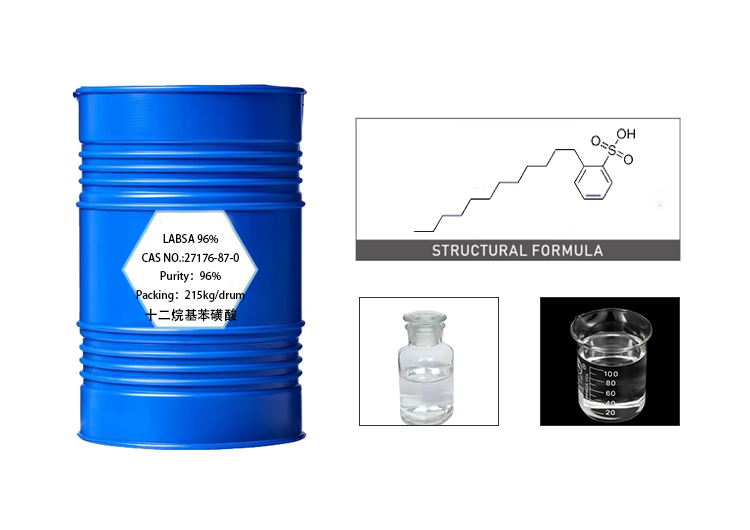
CAS No.27176-87-0
EINECS No.248-289-4
MFC18H30O3S
Molecular weight326.49
Purity96.0%
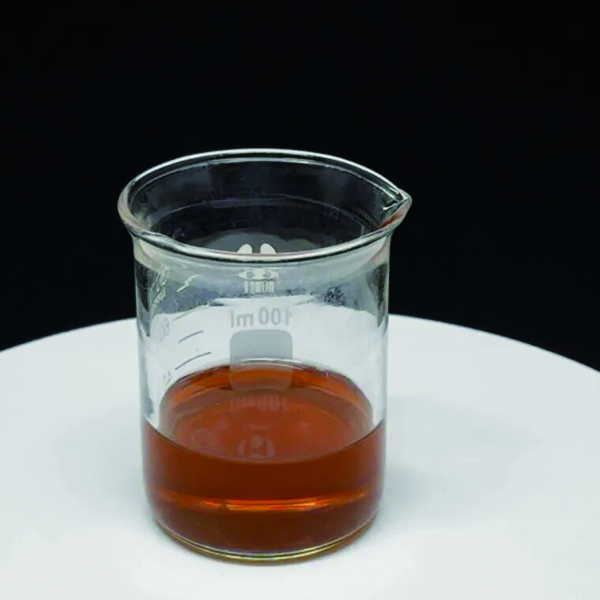
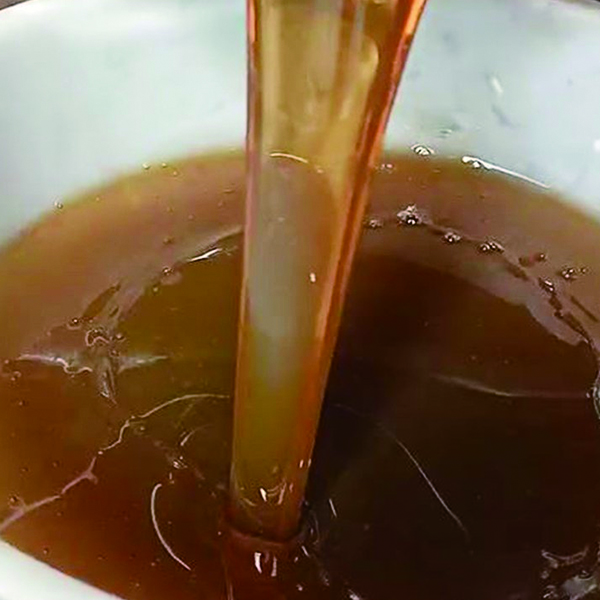
AppearanceBrownish-yellow to dark brown viscous liquid
Density1.05 - 1.07 g/cm³
Melting point315 °C
Boiling point315 °C
Sulfuric acid (free acid)≤1.5%

Values are typical for the standard grade. Tighter specifications are available — state the target in your inquiry and we confirm against the production batch.

Hazard classification
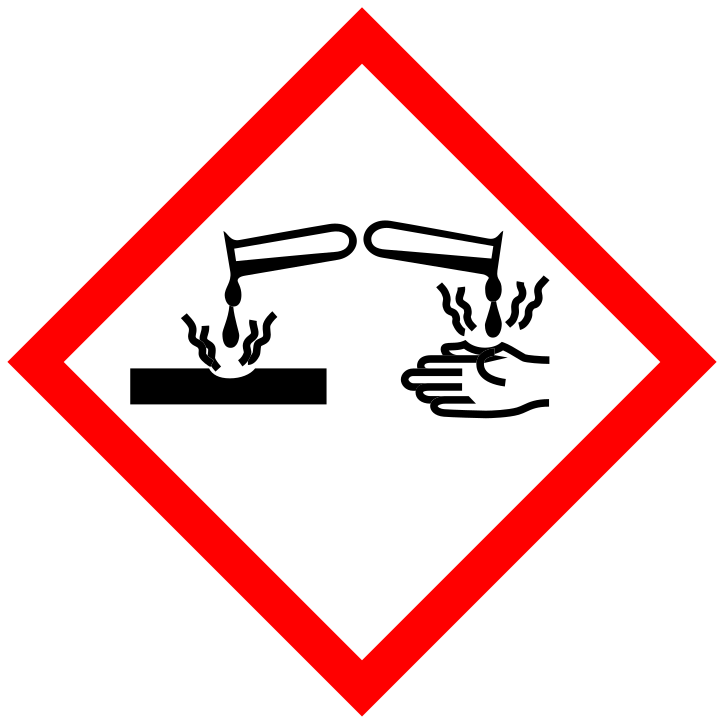
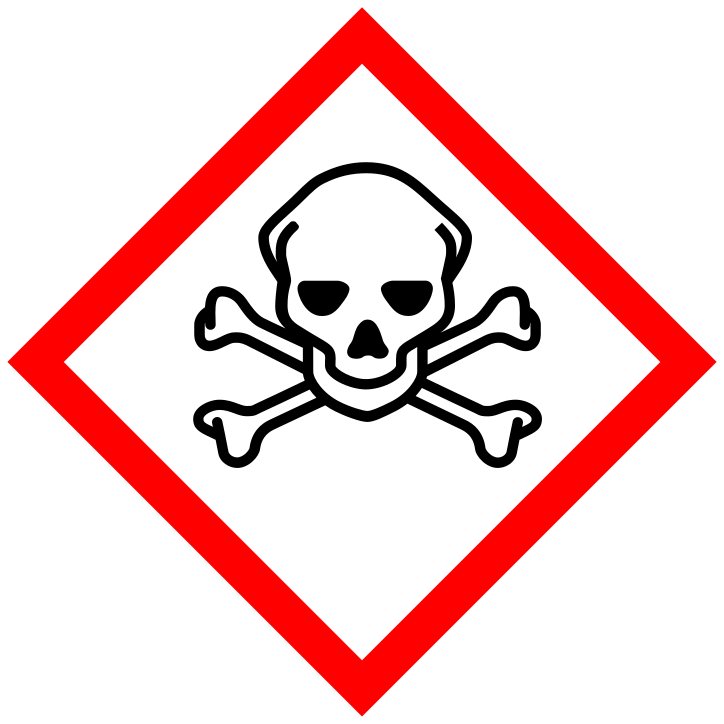
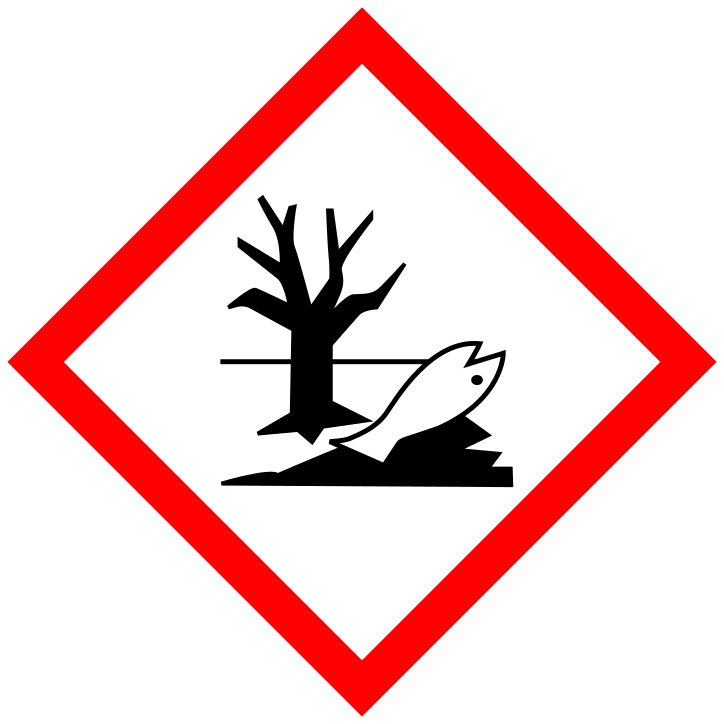
GHS pictogram GHS05 — Corrosive GHS pictogram GHS06 — Acute toxicity GHS pictogram GHS07 — Irritant / harmful GHS pictogram GHS09 — Hazardous to the environment

Danger

Classification source — PubChem C&L (consensus filter, not harmonised)

No harmonised entry exists for this substance; the classification shown is the supplier consensus reported to ECHA and should be confirmed for your intended use.

  • H302 Harmful if swallowed
  • H311 Toxic in contact with skin
  • H314 Causes severe skin burns and eye damage
  • H318 Causes serious eye damage
  • H411 Toxic to aquatic life with long lasting effects
  • H412 Harmful to aquatic life with long lasting effects
  • H315 Causes skin irritation
  • H401 Toxic to aquatic life
Precautionary statements (24)
  • P260 Do not breathe dust/fume/gas/mist/vapours/spray
  • P262 Do not get in eyes, on skin, or on clothing
  • P264 Wash thoroughly after handling
  • P264+P265
  • P270 Do not eat, drink or smoke when using this product
  • P273 Avoid release to the environment
  • P280 Wear protective gloves/protective clothing/eye protection/face protection
  • P301+P317
  • P301+P330+P331
  • P302+P352
  • P302+P361+P354
  • P304+P340
  • P305+P354+P338
  • P316
  • P317
  • P321 Specific treatment
  • P330 Rinse mouth
  • P361+P364
  • P363 Wash contaminated clothing before reuse
  • P391 Collect spillage
  • P405 Store locked up
  • P501 Dispose of contents/container to an approved waste collection point
  • P332+P317
  • P362+P364

Substance identity verified against the registry entry on 2026-09-02.

Packaging and shipping
Drum215kg
IBC Drum1127 kg
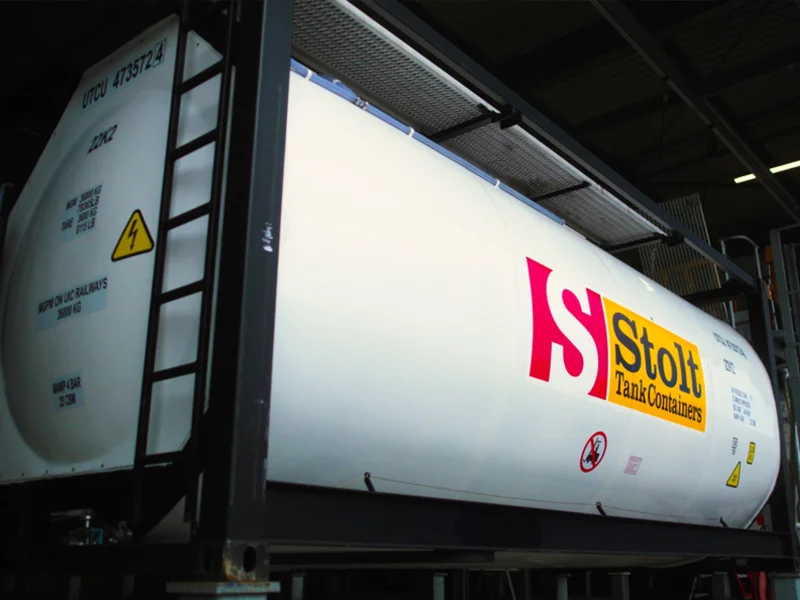
ISO tank (20ft)24–26 m³
ISO tank (40ft)48–50 m³
Dodecylbenzenesulphonic Acid

Dodecylbenzenesulphonic Acid (abbreviated as DBSA or LABSA) is a strong acidic organic compound obtained by the sulfonation reaction of straight-chain alkylbenzene (LAB). Its chemical formula is C₁₈H₃₀O₃S and its molecular weight is 326.49. The product provided by Anhui Yipu Chemical has a high active substance content (≥96%), strict impurity control, and appears as a brownish-yellow to dark brown viscous liquid with a slightly irritating odor. It is a key precursor for the production of sodium dodecylbenzenesulfonate (LAS/SDBS), and due to its outstanding cleaning power, excellent foaming properties, good emulsification and dispersion performance, and relatively good biodegradability, it has become an indispensable basic raw material for household cleaning, industrial cleaning, personal care, and multiple industrial fields.
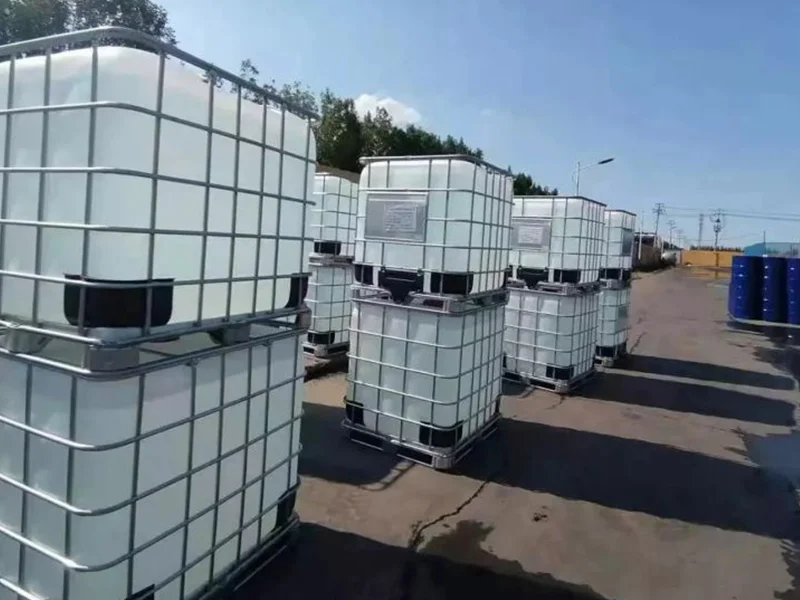
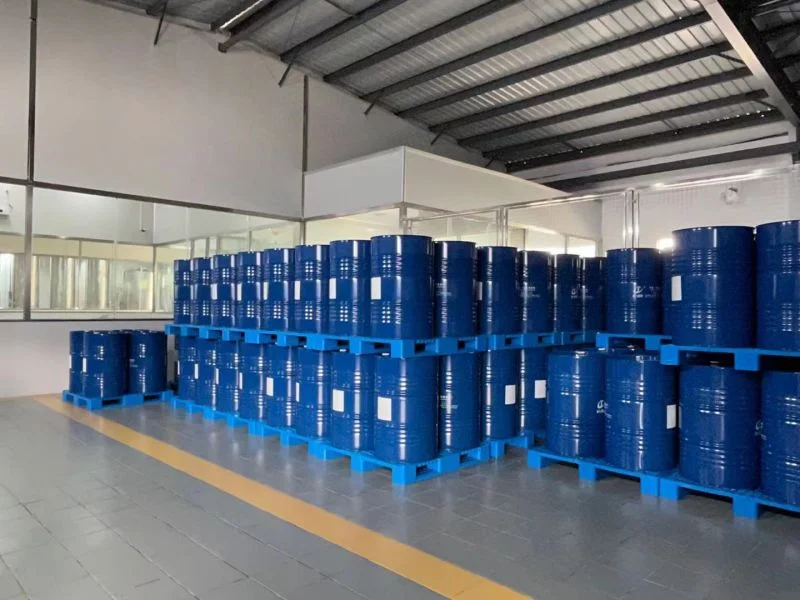
Dodecylbenzenesulfonic acid (LABSA) 96% Supplier of highly active anionic surfactants, providing comprehensive application solutions for industrial cleaning, textile auxiliaries, and other fields.Dodecylbenzenesulfonic acid (LABSA) 96% Supplier of highly active anionic surfactants, providing comprehensive application solutions for industrial cleaning, textile auxiliaries, and other fields.Dodecylbenzenesulfonic acid (LABSA) 96% Supplier of highly active anionic surfactants, providing comprehensive application solutions for industrial cleaning, textile auxiliaries, and other fields.

Dodecylbenzenesulfonic acid (LABSA) 96% Supplier of highly active anionic surfactants, providing comprehensive application solutions for industrial cleaning, textile auxiliaries, and other fields.

Product Description

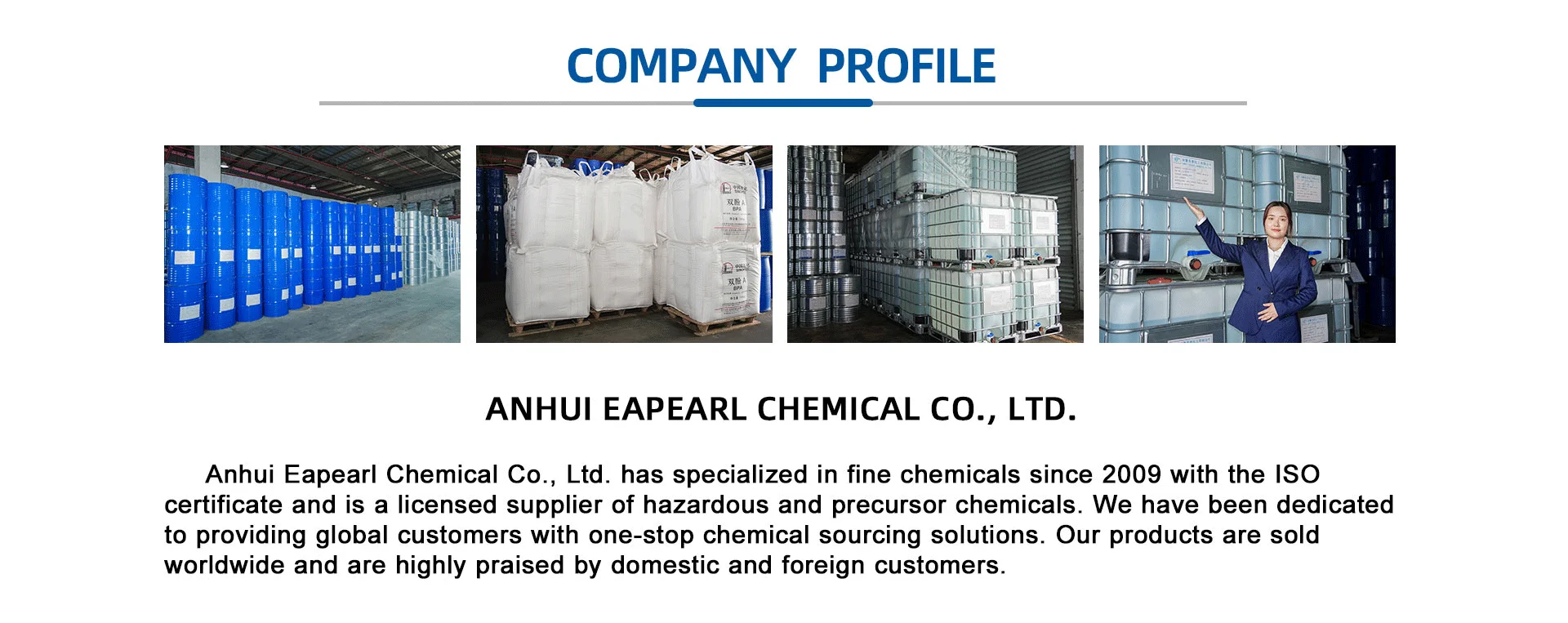
Anhui Eapearl Chemical Co., Ltd., as a professional chemical supplier in China, strictly adheres to all the national laws and regulations regarding the management of hazardous chemicals. We are committed to providing our customers with high-quality, stable and reliable twelve alkybenzenesulfonic acid (DBSA/LABSA) products, and emphasize its core value as the core raw material for the largest global usage and the most cost-effective anionic surfactant. At the same time, safety, compliance and sustainability are placed at the top of our operations.

Dodecylbenzenesulfonic acid (Dodecylbenzenesulphonic Acid, abbreviated as DBSA or LABSA) is a strong acidic organic compound obtained by sulfonation reaction of straight-chain alkylbenzene (LAB). Its molecular formula is C₁₈H₃₀O₃S and its molecular weight is 326.49. The products provided by Anhui Yipu Chemical have a high active substance content (≥96%), strict impurity control, and an appearance of brownish-yellow to dark brown viscous liquid with a slight irritating odor. It is a key precursor for the production of twelve alkybenzenesulfonate (LAS/SDBS), and due to its outstanding cleaning power, excellent foaming performance, good emulsification and dispersion properties, and relatively good biodegradability, it becomes an indispensable basic raw material for household cleaning, industrial cleaning, personal care and multiple industrial fields.

The core value of dodecylbenzenesulfonic acid lies in its efficient surface activity, strong decontamination and degreasing ability, excellent foaming performance, as well as good formulation compatibility and cost-effectiveness.

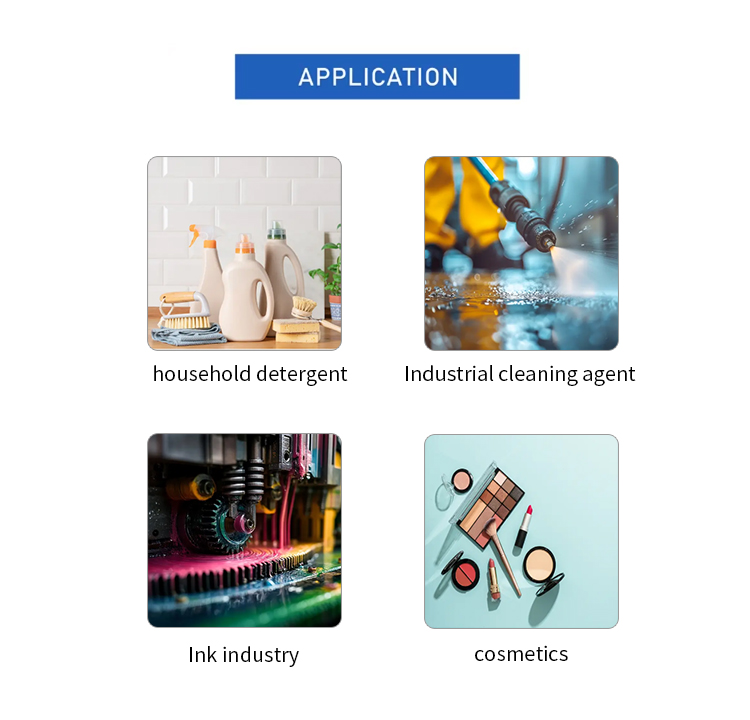
Household and industrial detergents (dominant application):

Core raw material for laundry powder/liquid: As the main anionic surfactant precursor, the LAS generated after neutralization is the core decontaminating component of various laundry powders, laundry liquids, and detergents, capable of quickly penetrating and decomposing oil stains. Dishwashing liquid and tableware cleaner: Highly efficient in removing oil stains, with abundant foam and easy to rinse.

General cleaning agents: Used for hard surface cleaning in households and public facilities such as hotels and restaurants.

Personal care products:

Shampoo, body wash, hand sanitizer: As the main surfactant or as a compound component, they provide cleaning power and abundant foam.

Industrial and professional fields:

Textile printing and dyeing auxiliaries: Used as a penetrating agent, leveling agent, and detergent

Pesticide emulsifiers: Used to prepare pesticide formulations such as emulsions and water emulsions, improving dispersion and adhesion

Emulsion polymerization: As an emulsifier for synthesizing rubber, resin, etc. Metal cleaning agents and degreasers: Utilizing their strong emulsifying ability to remove oils. Others: Used as curing catalysts for amino varnishes, foaming agents for concrete, paper pulp removal agents, etc.
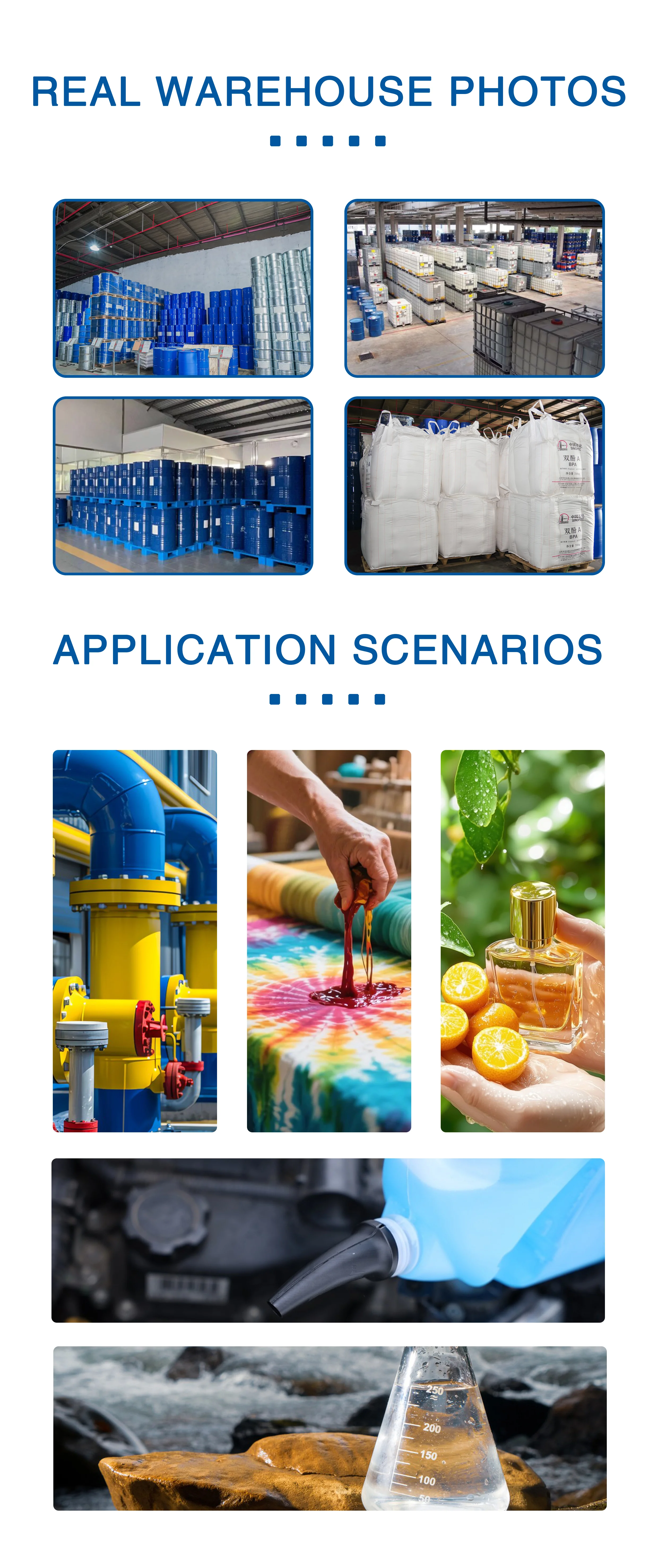
Dodecylbenzenesulfonic acid (LABSA) 96% Supplier of highly active anionic surfactants, providing comprehensive application solutions for industrial cleaning, textile auxiliaries, and other fields.

Dodecylbenzenesulfonic acid (LABSA) 96% Supplier of highly active anionic surfactants, providing comprehensive application solutions for industrial cleaning, textile auxiliaries, and other fields.

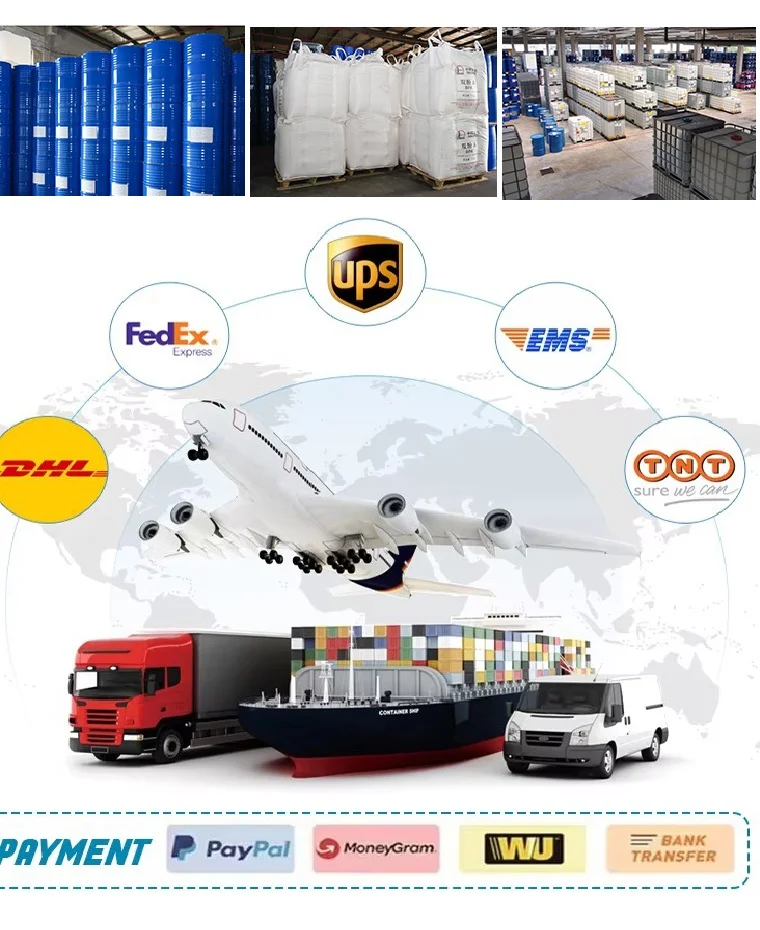
Delivery&Payment method

Dodecylbenzenesulfonic acid (LABSA) 96% Supplier of highly active anionic surfactants, providing comprehensive application solutions for industrial cleaning, textile auxiliaries, and other fields.

Frequently asked

In what packaging is Dodecylbenzenesulphonic Acid shipped?

Standard formats are Drum (215kg), IBC Drum (1127 kg), ISO tank (20ft) (24–26 m³), ISO tank (40ft) (48–50 m³). Other packaging can be arranged for full-container orders.

Is a safety data sheet available for Dodecylbenzenesulphonic Acid?

Yes. A full safety data sheet for CAS 27176-87-0 is published and linked from this page; a signed copy is issued with the shipping documents.

What purity do you supply?

The standard grade is 96.0%. Tighter specifications are confirmed against the production batch before shipment.
Related products

🧬 3D Molecule Visualizer
Loading molecule...
3D model Dodecylbenzenesulfonic acid, CAS 27176-87-0, molecular formula C₁₈H₃₀O₃S, molar mass 326.5 g/mol

Data transcribed from regulatory registers and technical literature, with the source and edition stated. It does not replace the supplier's safety data sheet. Fields without a recorded source are marked as such.

📊 Physicochemical data — CAS 27176-87-0MolGod_PROPHUB_MAIN
📊 Physicochemical properties

Quick Reference

Formula: C₁₈H₃₀O₃S
MW: 326.5 g/mol
CAS: 27176-87-0
🔬 Advanced Properties

Chemical Identifiers

SMILES: CCCCCCCCCCCCC1=CC=CC=C1S(=O)(=O)O

Last updated: unconfirmed

Chemical Overview: Dodecylbenzenesulfonic acidMolGod_OVERVIEW_1
Molecular formulaC₁₈H₃₀O₃S
Molecular weight326.5 g/mol
IUPAC name2-dodecylbenzenesulfonic acid
SMILESCCCCCCCCCCCCC1=CC=CC=C1S(=O)(=O)O
InChIKeyWBIQQQGBSDOWNP-UHFFFAOYSA-N

Data sources: PubChem (NLM/NIH)
Last updated: 2026-09-17

SCIENTIFIC RESEARCH

[1]CrossRef2025
Xinyuan Gao, Shining Ma, Gen Li et al.. (2025). "Perceived white region of displays with varied color gamuts". Optics Express. https://doi.org/10.1364/oe.565249
[2]CrossRef2025
Mudasir Farooq, Mir Hashim Rasool. (2025). "Optimized photoluminescence in NaCaPO4 phosphors by rare-earth tuning towards white light emission". Ceramics International. https://doi.org/10.1016/j.ceram
[3]CrossRef2025
Bekir Sami Yilbas, Ghassan Hassan, Abdullah Al-Sharafi et al.. (2025). "Dynamics of ferro fluid droplet impact on hydrophobic mesh surface". RSC Advances. https://doi.org/10.1039/d5ra02833g
[4]PubMed2025
Zhang H, Li Z, Mu Z et al.. (2025). "The anionic surfactant Sodium Dodecyl Benzene Sulfonate alleviates inflammatory responses in atopic dermatitis via NFκB/MAPK pathways in a STAT3-dependent manner."
[5]CrossRef2025
Yutong Hu, Shaohua Wang, Qingwu Hu et al.. (2025). "A Spatiotemporal Decoupled Framework Incorporating Contrastive Learning for RGB-D Gesture Recognition". IEEE Sensors Journal. https://doi.org/10.110
[6]CrossRef2024
Ekaterina Sobakinskaya, Frank Müh. (2024). "Physical mechanisms of the Sec machinery operation". Physical Chemistry Chemical Physics. https://doi.org/10.1039/d4cp03201b
[7]PubMed2024
Li Z, Wang L, Tang M et al.. (2024). "SDBS-AEO Mixture for Triton X-100 Replacement: Surface Activity and Application in Biosensors.". Biosensors. https://doi.org/10.3390/bios14100505
[8]PubMed2024
Ko K, Lokteva LM, Akuffo GA et al.. (2024). "A comparative study of extraction free detection of HBV DNA using sodium dodecyl sulfate, N-lauroylsarcosine sodium salt, and sodium dodecyl benzene sulfon
📚 Scientific references (Chicago Author-Date) 20 refs · 2 baz

MOLECULE Per-CAS bibliography (live from 13+ databases)

Sources: db:crossref (9) · db:pubmed (11)

  1. db:crossref Xinyuan Gao, Shining Ma, Gen Li et al.. (2025). "Perceived white region of displays with varied color gamuts". Optics Express. https://doi.org/10.1364/oe.565249
  2. db:crossref Mudasir Farooq, Mir Hashim Rasool. (2025). "Optimized photoluminescence in NaCaPO4 phosphors by rare-earth tuning towards white light emission". Ceramics International. https://doi.org/10.1016/j.ceramint.2025.03.392
  3. db:crossref Bekir Sami Yilbas, Ghassan Hassan, Abdullah Al-Sharafi et al.. (2025). "Dynamics of ferro fluid droplet impact on hydrophobic mesh surface". RSC Advances. https://doi.org/10.1039/d5ra02833g
  4. db:pubmed Zhang H, Li Z, Mu Z et al.. (2025). "The anionic surfactant Sodium Dodecyl Benzene Sulfonate alleviates inflammatory responses in atopic dermatitis via NFκB/MAPK pathways in a STAT3-dependent manner.". Scientific reports. https://doi.org/10.1038/s41598-025-12776-z
  5. db:crossref Yutong Hu, Shaohua Wang, Qingwu Hu et al.. (2025). "A Spatiotemporal Decoupled Framework Incorporating Contrastive Learning for RGB-D Gesture Recognition". IEEE Sensors Journal. https://doi.org/10.1109/jsen.2025.3576794
  6. db:crossref Ekaterina Sobakinskaya, Frank Müh. (2024). "Physical mechanisms of the Sec machinery operation". Physical Chemistry Chemical Physics. https://doi.org/10.1039/d4cp03201b
  7. db:pubmed Li Z, Wang L, Tang M et al.. (2024). "SDBS-AEO Mixture for Triton X-100 Replacement: Surface Activity and Application in Biosensors.". Biosensors. https://doi.org/10.3390/bios14100505
  8. db:pubmed Ko K, Lokteva LM, Akuffo GA et al.. (2024). "A comparative study of extraction free detection of HBV DNA using sodium dodecyl sulfate, N-lauroylsarcosine sodium salt, and sodium dodecyl benzene sulfonate.". Scientific reports. https://doi.org/10.1038/s41598-024-75944-7
  9. db:pubmed Zhu R, Wang R, Li J et al.. (2024). "An artificial liquid-liquid phase separation-driven silk fibroin-based adhesive for rapid hemostasis and wound sealing.". Acta biomaterialia. https://doi.org/10.1016/j.actbio.2024.05.024
  10. db:pubmed Sun G, Jia R, Zhang Y et al.. (2024). "Mechanisms of the novel pesticide sodium dodecyl benzene sulfonate in the mitigation of protozoan ciliated pathogens during microalgal cultivation.". Marine pollution bulletin. https://doi.org/10.1016/j.marpolbul.2024.116204
  11. db:crossref Marina Toplak, Raspudin Saleem‐Batcha, Jörn Piel et al.. (2021). "Catalytic Control of Spiroketal Formation in Rubromycin Polyketide Biosynthesis". Angewandte Chemie. https://doi.org/10.1002/ange.202109384
  12. db:pubmed Harjo M, Järvekülg M, Tamm T et al.. (2020). "Concept of an artificial muscle design on polypyrrole nanofiber scaffolds.". PloS one. https://doi.org/10.1371/journal.pone.0232851
  13. db:pubmed Parrilla M, Guinovart T, Ferré J et al.. (2019). "A Wearable Paper-Based Sweat Sensor for Human Perspiration Monitoring.". Advanced healthcare materials. https://doi.org/10.1002/adhm.201900342
  14. db:crossref Jing Gao, Yinghui Zhang, Yang Liu. (2018). "A Novel Diversity Receiver Design for Cooperative Transmission System". IEEE Access. https://doi.org/10.1109/access.2018.2832189
  15. db:crossref Wolfgang Dreyer, Clemens Guhlke, Rüdiger Müller. (2015). "Modeling of electrochemical double layers in thermodynamic non-equilibrium". Physical Chemistry Chemical Physics. https://doi.org/10.1039/c5cp03836g
  16. db:crossref Karmella A. Haynes, Pamela A. Silver. (2011). "Synthetic Reversal of Epigenetic Silencing". Journal of Biological Chemistry. https://doi.org/10.1074/jbc.c111.229567
  17. db:pubmed Keskinen LA, Annous BA. (2011). "Efficacy of adding detergents to sanitizer solutions for inactivation of Escherichia coli O157:H7 on Romaine lettuce.". International journal of food microbiology. https://doi.org/10.1016/j.ijfoodmicro.2011.04.002
  18. db:pubmed Becker LC, Bergfeld WF, Belsito DV et al.. (2010). "Amended safety assessment of dodecylbenzenesulfonate, decylbenzenesulfonate, and tridecylbenzenesulfonate salts as used in cosmetics.". International journal of toxicology. https://doi.org/10.1177/1091581810386124
  19. db:pubmed Pankey JW, Eberhart RJ, Cuming AL et al.. (1984). "Uptake on postmilking teat antisepsis.". Journal of dairy science. https://doi.org/10.3168/jds.S0022-0302(84)81443-5
  20. db:pubmed Pankey JW. (1984). "Postmilking teat antisepsis.". The Veterinary clinics of North America. Large animal practice. https://doi.org/10.1016/s0196-9846(17)30027-7
Regulatory status of the substance
No entries for this CAS in the restriction lists checked (SVHC candidate list, REACH Annex XVII; datasets incomplete — this is not a confirmation of compliance). CLP classification and transport status (ADR): see the GHS section and the safety data sheet (SDS).
🧮 Stoichiometry CalculatorMolGod_STOICH_1
🧪 Chemical DataMolGod_CHEMDATA_1
CAS Number
27176-87-0
Molecular formula
C₁₈H₃₀O₃S
Molar mass
326.5 g/mol
IUPAC name (EN)
2-dodecylbenzenesulfonic acid
SMILES
CCCCCCCCCCCCC1=CC=CC=C1S(=O)(=O)O
InChIKey
WBIQQQGBSDOWNP-UHFFFAOYSA-N
📡 Data sourcesMolGod_SOURCES_1

The data in this widget comes from the following verified scientific sources:

  • PubChem — National Center for Biotechnology Information (NCBI/NIH), USA
  • ChEMBL — European Bioinformatics Institute (EMBL-EBI), UK
  • NIST WebBook — National Institute of Standards and Technology, USA

Data is cached locally for speed — the widget also works offline.

🔍 External identifiersMolGod_EXTID_1
4 of 16 ID systems25%
DatabaseIdentifierActions
CAS Registry Number27176-87-0Open →
PubChem CID25457[1]Open →
InChIKeyWBIQQQGBSDOWNP-UHFFFAOYSA-N[1]Open →
SMILESCCCCCCCCCCCCC1=CC=CC=C1S(=O)(=O)O[1]

Sources: PubChem (NIH), Wikidata SPARQL, KEGG, ChEMBL (EBI), CompTox CTX (EPA).

📚 Scientific references (Chicago Author-Date) (1 sources)
  1. PubChem. National Center for Biotechnology Information (NIH/NLM), chemical compound database. dotyczy: PubChem CID · InChIKey · SMILES
📡 Spectroscopy — CAS 27176-87-0MolGod_SPECHUB_MAIN
📊 Spectroscopic spectra databases — inline data 9 sources MolGod_SPECDB_2

Spectra are fetched on demand from 9 sources. Each spectrum is stored in our database — the next time it is opened there are zero requests to the external API. Download JCAMP-DX / CSV / PNG for every spectrum without searching.

IR IR (Infrared) — NIST WebBook
Public domain (US Federal)
▶ Click to load spectrum
🔗 Source
points
📚 NIST Chemistry WebBook, SRD 69
MS (NIST) Mass Spectrum (EI) — NIST WebBook
Public domain (US Federal)
▶ Click to load spectrum
🔗 Source
points
📚 NIST Standard Reference Database 1A
UV-Vis UV/Visible Absorption — NIST WebBook
Public domain (US Federal)
▶ Click to load spectrum
🔗 Source
points
📚 NIST Chemistry WebBook, SRD 69
¹H NMR NMR (¹H, ¹³C) — NMRShiftDB
CC-BY-SA 4.0
▶ Click to load spectrum
🔗 Source
points
📚 Steinbeck C et al. (2003) J. Chem. Inf. Comput. Sci. 43(1):10–16 DOI: 10.1021/ci025588g
MS (MoNA) MoNA — MassBank of North America
CC-BY 4.0
▶ Click to load spectrum
🔗 Source
points
📚 MassBank of North America (UC Davis) DOI: 10.1002/jms.1777
IR/NMR/MS (SDBS) SDBS — Spectral Database for Organic Compounds (Japan AIST)
Free for non-commercial

Reference source — no public API. Open in an external database:

🔗 IR/NMR/MS (SDBS) →
📚 SDBSWeb: https://sdbs.db.aist.go.jp (AIST, Japan)
JP Monograph Japanese Pharmacopoeia — Monographs
Reference only

Reference source — no public API. Open in an external database:

🔗 JP Monograph →
📚 Japanese Pharmacopoeia 18th Edition (2021)
WHO INN WHO — International Nonproprietary Names
WHO Model Lists (free)

Reference source — no public API. Open in an external database:

🔗 WHO INN →
📚 WHO INN Programme
DOAJ DOAJ — Directory of Open Access Journals
OA journal index (mixed)

Reference source — no public API. Open in an external database:

🔗 DOAJ →
📚 DOAJ — doaj.org
🔬 Interactive spectra (live — NIST / MoNA / NMRShiftDB / SDBS) (2)

Data retrieved live from multiple sources (priority chain). JCAMP-DX / CSV / PNG available for download under each spectrum.

IR — Fourier-transform infrared

Loading IR — Fourier-transform infrared…

MS — Mass spectrometry (EI 70eV)

Loading MS — Mass spectrometry (EI 70eV)…

Structural propertiesMolGod_STRUCT3D_1

Loading structural data...

❓ Frequently asked questions (3)MolGod_FAQ_1
What is 27176-87-0?
27176-87-0 (CAS 27176-87-0) is a chemical compound. The chemical data comes from PubChem (National Institutes of Health, USA).
Helpful?
What is the CAS number of 27176-87-0?
The CAS number for 27176-87-0 is 27176-87-0. A CAS Registry Number is the standard identifier for a chemical substance in scientific literature and in trade.
Helpful?
How should 27176-87-0 be stored?
27176-87-0 should be stored as its safety data sheet directs \— typically in a dry, cool, well-ventilated place, away from heat and from materials it is incompatible with.
Helpful?
➕ Suggest a question
Download structure filesMolGod_STRDL_1

Molecular structure files from the PubChem database (NIH). Compatible with Avogadro, PyMOL, Jmol, and ChemDraw.

Source: PubChem, National Library of Medicine (NIH). CID: 25457

🔄 Concentration unit converter LIVE MolGod_UNITCONV_1

Enter the Dodecylbenzenesulfonic acid concentration in any unit — the rest will be calculated automatically.

MW: 326.5 g/mol · IUPAC Gold Book ↗

⚗️ Conversion formulas + citations (per formula)
ConversionFormulaAccuracySource
% (w/v) ↔ molarityc (mol/L) = (% × 10) / MW±0.5% rel. when density ≈ 1.0 g/mLIUPAC (2019)
millimolar ↔ molarc (mol/L) = mM × 10⁻³ExactCohen ER, Cvitaš T, Frey JG, Holmström B, Kuchitsu K, Marquardt R, Mills I, Pavese F, Quack M, Stohner J, Strauss HL, Takami M, Thor AJ (2007)
molarity (mol/L)c = n/V = (m/MW)/V±0.1% (depends on MW precision)IUPAC (2019)
parts per million (mg/L) ↔ molarityc (mol/L) = ppm / (1000 × MW); equivalently ppm = mg/L for dilute aqueous±1% (density-independent for dilute solutions)IUPAC (2019)
mg/mL ↔ molarityc (mol/L) = (mg/mL × 1000) / MW / 1000 = mg/mL / MW × 1±0.2%Cohen ER, Cvitaš T, Frey JG, Holmström B, Kuchitsu K, Marquardt R, Mills I, Pavese F, Quack M, Stohner J, Strauss HL, Takami M, Thor AJ (2007)
g/L ↔ molarityc (mol/L) = (g/L) / MW±0.1% (depends on MW precision)Cohen ER, Cvitaš T, Frey JG, Holmström B, Kuchitsu K, Marquardt R, Mills I, Pavese F, Quack M, Stohner J, Strauss HL, Takami M, Thor AJ (2007)
mmol/L ↔ molarityc (mol/L) = mmol/L × 10⁻³ExactCohen ER, Cvitaš T, Frey JG, Holmström B, Kuchitsu K, Marquardt R, Mills I, Pavese F, Quack M, Stohner J, Strauss HL, Takami M, Thor AJ (2007)
Celsius ↔ KelvinT(K) = t(°C) + 273.15±0.01 K (ITS-90 scale)BIPM (Bureau International des Poids et Mesures) (2019)
Celsius ↔ FahrenheitT(°F) = T(°C) × 9/5 + 32±0.1 °FThompson A, Taylor BN (2008)
density-corrected % ↔ molarityc (mol/L) = (%w/w × ρ × 10) / MW, ρ in g/mL±0.1% when ρ known to 3 decimalsCohen ER, Cvitaš T, Frey JG, Holmström B, Kuchitsu K, Marquardt R, Mills I, Pavese F, Quack M, Stohner J, Strauss HL, Takami M, Thor AJ (2007)
📚 Bibliography (8 authoritative sources)
  1. Thompson A, Taylor BN (2008). Guide for the Use of the International System of Units (SI). NIST Special Publication 811 · DOI: 10.6028/NIST.SP.811-2008
    → Primary SI standard for US scientific usage
  2. Cohen ER, Cvitaš T, Frey JG, Holmström B, Kuchitsu K, Marquardt R, Mills I, Pavese F, Quack M, Stohner J, Strauss HL, Takami M, Thor AJ (2007). Quantities, Units and Symbols in Physical Chemistry — The IUPAC Green Book. RSC Publishing, 3rd ed. · DOI: 10.1039/9781847557889 · ISBN: 978-0-85404-433-7
    → Canonical IUPAC guide for chemistry quantities/units
  3. BIPM (Bureau International des Poids et Mesures) (2019). The International System of Units (SI), 9th edition. BIPM ·
    → International SI definitions (incl. redefined kilogram 2019)
  4. ISO/IEC (2022). Quantities and units — Part 1: General. International Organization for Standardization — ISO 80000-1:2022 ·
    → General rules for physical quantities and units
  5. ISO/IEC (2019). Quantities and units — Part 9: Physical chemistry and molecular physics. International Organization for Standardization — ISO 80000-9:2019 ·
    → Concentration / molality / amount-of-substance conventions
  6. Tiesinga E, Mohr PJ, Newell DB, Taylor BN (2021). CODATA recommended values of the fundamental physical constants: 2018. Rev. Mod. Phys. 93(2):025010 · DOI: 10.1103/RevModPhys.93.025010
    → Avogadro, gas constant, molar volume (2019 SI revision)
  7. IUPAC (2019). Compendium of Chemical Terminology — the IUPAC Gold Book (online). IUPAC · DOI: 10.1351/goldbook
    → Definitions of mass fraction, molality, normality, ppm, activity
  8. Mills IM, Cvitaš T, Homann K, Kallay N, Kuchitsu K (1988). Quantities, Units and Symbols in Physical Chemistry. Blackwell Scientific Publications, 1st ed. · ISBN: 0-632-01773-5
    → Historical predecessor of IUPAC Green Book
Similar molecular structuresMolGod_SIMSTR_1

Loading similar structures...

🧪 Solution Preparation Wizard WIZARD MolGod_PREP_1
① Select concentration
② Target volume
③ Solvent

Calculations per: IUPAC Gold Book ↗, Merck ↗

Computational chemistryMolGod_COMPCHEM_1

Loading computational data...

🛡️ Safety — CAS 27176-87-0MolGod_SAFEHUB_MAIN
Data limitations notice. The safety information on this page is for reference only and does not replace a full safety data sheet (SDS). Before using the product, consult the manufacturer's current safety data sheet and the GHS/CLP guidance. The CLP classification applies to the pure bulk substance, not to commercial formulations.

No harmonised GHS classification for this substance — see the supplier's current safety data sheet (SDS).

📚 Consolidated scientific references — Chicago Author-Date 10 sources

References collected from all Safety Hub tabs. CAS: 27176-87-0 · PubChem ↗

  1. Parlament Europejski i Rada UE. 2008. "Rozporządzenie (WE) nr 1272/2008 w sprawie klasyfikacji, oznakowania i pakowania substancji (CLP)." Dz.Urz. UE L 353. [↗] GHS, Regulations
  2. United Nations Economic Commission for Europe (UNECE). 2021. "Globally Harmonized System of Classification and Labelling of Chemicals (GHS), Ninth Revised Edition." United Nations, Geneva. [↗] GHS
  3. Goldfrank, Lewis R., Robert S. Hoffman, Mary Ann Howland, et al.. 2019. "Goldfrank's Toxicologic Emergencies, 11th ed.." McGraw-Hill Education, New York. ISBN 978-1-25-985961-8. Pierwsza pomoc, Toksykologia
  4. National Institute for Occupational Safety and Health (NIOSH). 2023. "NIOSH Pocket Guide to Chemical Hazards (DHHS Publ. 2005-149)." U.S. Department of Health and Human Services / CDC, Cincinnati, OH. [↗] Pierwsza pomoc, PPE, Toksykologia
  5. European Committee for Standardization (CEN). 2016. "EN 374-1:2016 — Protective gloves against dangerous chemicals and micro-organisms." CEN, Brussels. [↗] PPE
  6. UNECE. 2023. "European Agreement Concerning the International Carriage of Dangerous Goods by Road (ADR 2025)." United Nations, Geneva. [↗] Utylizacja, Regulacje
  7. National Fire Protection Association (NFPA). 2022. "NFPA 400 — Hazardous Materials Code." NFPA, Quincy, MA. [↗] Magazynowanie
  8. Urben, P.G. (ed.). 2017. "Bretherick's Handbook of Reactive Chemical Hazards, 8th ed.." Butterworth-Heinemann / Elsevier, Oxford. [↗] Magazynowanie
  9. Ministerstwo Klimatu i Środowiska RP. 2023. "Baza danych o produktach i opakowaniach oraz o gospodarce odpadami (BDO)." Ministerstwo Klimatu i Środowiska, Warszawa. [↗] Utylizacja
  10. International Agency for Research on Cancer (IARC / WHO). 2024. "IARC Monographs on the Identification of Carcinogenic Hazards to Humans — List of Classifications." WHO, Lyon. [↗] Toksykologia

Tabs with their own references (Emergency, PPE, Storage, Waste) contain additional bibliographic entries within their respective sections.

📈 Analytical statistics (t-test · RSD · Grubbs · Q-Dixon) ICH Q2

Paste a series of replicate measurements (CSV, or one number per line). The calculator computes the mean, standard deviation and 95% CI, and detects outliers (Grubbs + Dixon Q).

Separator: comma, space, tab, new line. Minimum 3 measurements.
📐 Statistical formulas
  • x̄ = Σxᵢ / n — arithmetic mean
  • s² = Σ(xᵢ - x̄)² / (n-1) — sample variance
  • s = √s² — standard deviation
  • RSD% = (s / x̄) × 100% — relative standard deviation
  • CI₉₅ = x̄ ± t(0.05, n-1) × s / √n — Student's t
  • G = |xᵢ - x̄| / s — Grubbs' test
  • Q = |xsuspect - xnearest| / |xmax - xmin| — Dixon Q-test

Source: ICH Q2(R2) Validation of Analytical Procedures · ICH PDF ↗

🧪 Buffer Recipe Calculator UNIQUE

Choose a buffer from the list of 20 popular systems → enter the target pH → get an exact recipe with the masses to weigh out.

Step 1: Choose a buffer system

📜 Recipe history (last 10)
📅 Project Planner — Lab Experiment Manager NEW

Plan your entire laboratory project: add experiments with reagents, replicates, and duration. You'll get a Gantt chart, a shopping list (with links to the store!), a budget with a 10% margin, and a GHS risk matrix.

🧪 Solubility and solvent compatibility MolGod_SOLUB_1
Molecule
Dodecylbenzenesulfonic acid
Formula
C₁₈H₃₀O₃S
logP (XLogP3)
Mass (g/mol)
326.5
Polarity

⚠️ GC estimate (Hoftyzer–Van Krevelen). No literature HSP data for this CAS — precision ±2 MPa½. Verify experimentally.

Solvent compatibility table not available for this substance.
The Hansen parameters fall outside the range of the method, so the distance Ra cannot be calculated, and the database holds no solubility measurement to put in its place. Rather than eleven ratings with nothing behind them, we show none. Base the solvent choice on the safety data sheet and on experimental data.
📚 Scientific references for solvents (Chicago Author-Date) — click to expand

11 solvents · 54 full citations (NIST/CRC/IARC/Hansen/Reichardt/Smallwood/Wypych/Armarego/Snyder/GESTIS) — below.

Water (H₂O)
  1. NIST — NIST Chemistry WebBook — Water (CAS 7732-18-5)
  2. CRC — CRC Handbook of Chemistry and Physics, 104th ed., Sec. 8 (Properties of Water)
  3. IAPWS — IAPWS Release on Static Dielectric Constant of Water
  4. Reichardt 2011 — Solvents and Solvent Effects in Organic Chemistry
  5. GESTIS — GESTIS Substance Database — Water
Ethanol (EtOH)
  1. NIST — NIST Chemistry WebBook — Ethanol (CAS 64-17-5)
  2. CRC — CRC Handbook — Ethanol physical constants
  3. Snyder & Kirkland — Modern Liquid Chromatography — Ethanol eluotropic
  4. Smallwood — Handbook of Organic Solvent Properties — Ethanol
  5. GESTIS — GESTIS Substance Database — Ethanol
Methanol (MeOH)
  1. NIST — NIST Chemistry WebBook — Methanol (CAS 67-56-1)
  2. CRC — CRC Handbook — Methanol physical constants
  3. Snyder & Kirkland — Modern Liquid Chromatography — MeOH eluotropic, eo=0.95
  4. GESTIS — GESTIS Substance Database — Methanol
Acetone
  1. NIST — NIST Chemistry WebBook — Acetone (CAS 67-64-1)
  2. CRC — CRC Handbook — Acetone physical & thermodynamic constants
  3. Hansen 2007 — Hansen Solubility Parameters — Acetone (dD=15.5, dP=10.4, dH=7.0)
  4. Smallwood — Handbook of Organic Solvent Properties — Acetone
  5. GESTIS — GESTIS Substance Database — Acetone
Acetonitrile (ACN)
  1. NIST — NIST Chemistry WebBook — Acetonitrile (CAS 75-05-8)
  2. CRC — CRC Handbook — Acetonitrile constants
  3. Snyder & Kirkland — Modern Liquid Chromatography — ACN gold-standard HPLC eluent
  4. Reichardt 2011 — Solvents and Solvent Effects — ACN dipolar aprotic
  5. GESTIS — GESTIS Substance Database — Acetonitrile
DMSO
  1. NIST — NIST Chemistry WebBook — DMSO (CAS 67-68-5)
  2. Wypych 2019 — Handbook of Solvents Vol. 1 — DMSO comprehensive properties
  3. Hansen 2007 — HSP — DMSO (dD=18.4, dP=16.4, dH=10.2)
  4. Reichardt 2011 — Solvents and Solvent Effects — DMSO E_T(30)=45.1, dipolar aprotic
  5. GESTIS — GESTIS Substance Database — DMSO
THF
  1. NIST — NIST Chemistry WebBook — THF (CAS 109-99-9)
  2. Armarego 2009 — Purification of Laboratory Chemicals — THF drying & peroxide test
  3. Hansen 2007 — Hansen Solubility Parameters — THF (dD=16.8, dP=5.7, dH=8.0)
  4. Smallwood — Handbook of Organic Solvent Properties — THF
  5. GESTIS — GESTIS Substance Database — Tetrahydrofuran
DCM (CH₂Cl₂)
  1. NIST — NIST Chemistry WebBook — Dichloromethane (CAS 75-09-2)
  2. IARC 71 — IARC Monograph 71 — DCM (Group 2A carcinogen)
  3. Hansen 2007 — Hansen Solubility Parameters — DCM (dD=18.2, dP=6.3, dH=6.1)
  4. Reichardt 2011 — Solvents and Solvent Effects — DCM polarity index
  5. GESTIS — GESTIS Substance Database — Dichloromethane
Chloroform (CHCl₃)
  1. NIST — NIST Chemistry WebBook — Chloroform (CAS 67-66-3)
  2. IARC 73 — IARC Monograph 73 — Chloroform (Group 2B carcinogen)
  3. Hansen 2007 — Hansen Solubility Parameters — CHCl3 (dD=17.8, dP=3.1, dH=5.7)
  4. Reichardt 2011 — Solvents and Solvent Effects — CHCl3 H-bond donor strength
  5. GESTIS — GESTIS Substance Database — Chloroform
n-Hexane
  1. NIST — NIST Chemistry WebBook — n-Hexane (CAS 110-54-3)
  2. ATSDR n-Hexane — ATSDR Toxicological Profile for n-Hexane — neuropatia obwodowa (n-Heksan NIE jest kancerogenem IARC)
  3. Hansen 2007 — Hansen Solubility Parameters — n-Hexane (dD=14.9, dP=0, dH=0)
  4. Snyder & Kirkland — Modern Liquid Chromatography — n-Hexane NP standard, eo=0.00
  5. GESTIS — GESTIS Substance Database — n-Hexane
Toluene
  1. NIST — NIST Chemistry WebBook — Toluene (CAS 108-88-3)
  2. IARC 71 — IARC Monograph 71 — Toluene
  3. Hansen 2007 — Hansen Solubility Parameters — Toluene (dD=18.0, dP=1.4, dH=2.0)
  4. Smallwood — Handbook of Organic Solvent Properties — Toluene
  5. GESTIS — GESTIS Substance Database — Toluene
Solubility theory (applied in compatibility prediction):
  1. Yalkowsky, Samuel H., and Shri C. Valvani. 1980. "Solubility and Partitioning I: Solubility of Nonelectrolytes in Water." Journal of Pharmaceutical Sciences 69 (8): 912–922. https://doi.org/10.1002/jps.2600690814 — General Solubility Equation (GSE): logS = 0.5 − logP − 0.01(MP−25).
  2. Hansen, Charles M. 2007. Hansen Solubility Parameters: A User's Handbook. 2nd ed. CRC Press. https://doi.org/10.1201/9781420006834 — HSP triplet (dD, dP, dH) + Ra formula.
  3. Stefanis, E., and C. Panayiotou. 2008. "Prediction of Hansen Solubility Parameters with a New Group-Contribution Method." Int J Thermophys 29: 568–585. https://doi.org/10.1007/s10765-008-0415-z
  4. Reichardt, Christian, and Thomas Welton. 2011. Solvents and Solvent Effects in Organic Chemistry. 4th ed. Wiley-VCH. https://doi.org/10.1002/9783527632220 — E_T(30) polarity scale, solwatochromia.
  5. Snyder, Lloyd R., Joseph J. Kirkland, and John W. Dolan. 2010. Introduction to Modern Liquid Chromatography. 3rd ed. Wiley. https://doi.org/10.1002/9780470508183 — Eluotropic series, polarity index.
  6. Van Krevelen, D. W., and K. Te Nijenhuis. 2009. Properties of Polymers. 4th ed. Elsevier. https://doi.org/10.1016/B978-0-08-054819-7.X0001-5 — Hoftyzer–Van Krevelen group contribution dla dD/dP/dH z SMILES.
  7. Marcus, Yizhak. 1998. The Properties of Solvents. Wiley Series in Solution Chemistry, Vol. 4. ISBN 9780471983699 — Complete tabular set of 250+ solvents (ε, μ, donicity, acceptor numbers).
  8. PubChem Compound Database — CAS 27176-87-0 lookup ↗ — logP (XLogP3), water solubility experimental + predicted.

Full bibliography in the REFERENCES accordion (at the bottom of the page) — Chicago Manual of Style 17th ed., Author-Date.

⚗️ Check reaction compatibility MolGod_RXNCOMP_1

Check whether Dodecylbenzenesulfonic acid is compatible with another reagent

📦 Storage compatibility matrix
Acids Bases Oxidizers Flammable Toxic Gazy
Acids
Bases
Oxidizers
Flammable
Toxic
Gazy
✓ Can be stored together · ⚠ Caution · ✗ Do NOT store together · OSHA Chemical Segregation ↗

Compatibility data from: Bretherick's Handbook (7th ed.) ↗, GESTIS ↗, ECHA REACH ↗, NFPA 704 ↗

🧮 Laboratory calculators (8) MolGod_LABCALC_1
Dilution (C₁V₁=C₂V₂)
Molarity (M=n/V)
pH Buffer (Henderson-Hasselbalch)
Beer-Lambert (A=εcl)
Mass → Moles
Concentration % → M
ppm → mg/L
Temperature C↔F↔K

Verified formulas: IUPAC Gold Book ↗, DOI ↗

📊 Spectroscopic Databases MolGod_SPECDB_3
📋 Laboratory protocol generator MolGod_PROTOCOL_1

Protocol generated based on: GHS SDS, Aldrich Lab Guide ↗

🏷️ Label generator (QR) MolGod_LABEL_1
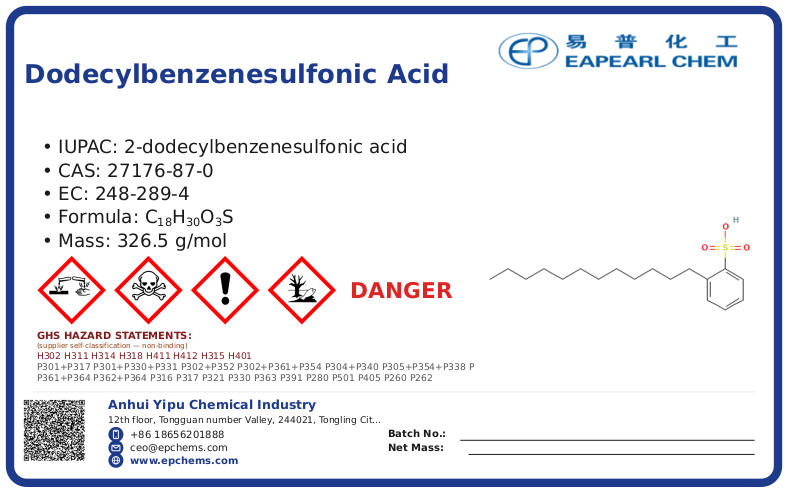
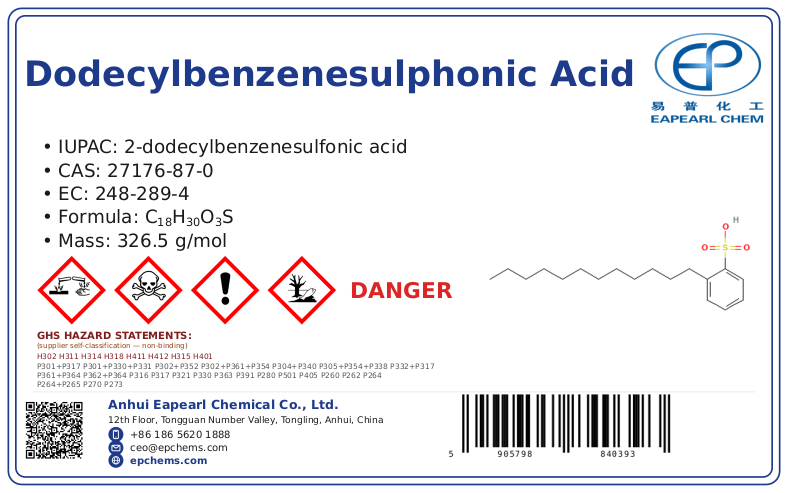
Dodecylbenzenesulphonic Acid• IUPAC: 2-dodecylbenzenesulfonic acid• CAS: 27176-87-0• EC: 248-289-4• Formula: C18H30O3S• Mass: 326.5 g/molDANGERGHS HAZARD STATEMENTS:(supplier self-classification — non-binding)H302 H311 H314 H318 H411 H412 H315 H401P301+P317 P301+P330+P331 P302+P352 P302+P361+P354 P304+P340 P305+P354+P338 P332+P317P361+P364 P362+P364 P316 P317 P321 P330 P363 P391 P280 P501 P405 P260 P262 P264P264+P265 P270 P273Anhui Eapearl Chemical Co., Ltd.12th Floor, Tongguan Number Valley, Tongling, Anhui, China+86 186 5620 1888[email protected]epchems.com
🧪 Solution preparation assistant (Smart Prep) MolGod_PREP_2

Enter what you want to prepare — I'll generate an SOP

Examples below — click to insert:
Preset recipes:
📚 Scientific literature overview — CAS 27176-87-0MolGod_LITHUB_MAIN
⭐ Key findings (scientific literature) 15 publications
🏆 CAS 27176-87-0 — multi-criteria ranking (W12): 30% citations · 20% recency · 20% topic · 15% historical · 15% open access.
  1. #1
    Zora Hajduchova (2018) · Ceramics - Silikaty
    Why it matters: Open access
    SCORE 8.34 Mechanism Citations: 16 Open Access DOI ↗
  2. #2
    Alexandra Alegría, Jorge Cuellar (2015) · Applied Catalysis B: Environmental
    Why it matters: Selected by multi-criteria score (citations + recency + topic + historical + OA).
    SCORE 7.16 Industrial Citations: 76 DOI ↗
  3. #3
    Zhenzhen Li, Wei Liu, Guolong Yang (2021) · Catalysts
    Why it matters: Open access
    SCORE 6.98 Mechanism Citations: 2 Open Access DOI ↗
  4. #4
    Subrahmanya Shreepathi, Rudolf Holze (2006) · Langmuir
    Why it matters: Selected by multi-criteria score (citations + recency + topic + historical + OA).
    SCORE 6.3 Analytics Citations: 36 DOI ↗
  5. #5
    Janaina I. S. Aguiar, Jonathan Rogers, Amir Mahmoudkhani (2020) · Offshore Technology Conference
    Why it matters: Selected by multi-criteria score (citations + recency + topic + historical + OA).
    SCORE 5.9 Industrial Citations: 4 DOI ↗
  6. #6
    Noriyuki Kuramoto, Atsuro Tomita (1997) · Synthetic Metals
    Why it matters: Selected by multi-criteria score (citations + recency + topic + historical + OA).
    SCORE 4.74 Mechanism Citations: 37 DOI ↗
  7. #7
    N. Rocoby (2020) · Catalysis from A to Z
    Why it matters: Selected by multi-criteria score (citations + recency + topic + historical + OA).
    SCORE 3 Mechanism DOI ↗
  8. #8
    (2017) · Chemical Effects in Biological Systems (CEBS)
    Why it matters: Selected by multi-criteria score (citations + recency + topic + historical + OA).
    SCORE 2.1 Mechanism DOI ↗
  9. #9
    Isamu Akiba, Hiroyasu Masunaga, Kanako Sasaki (2004) · Soft Materials
    Why it matters: Selected by multi-criteria score (citations + recency + topic + historical + OA).
    SCORE 0.9 Mechanism Citations: 1 DOI ↗
  10. #10
    Why it matters: Selected by multi-criteria score (citations + recency + topic + historical + OA).
    SCORE 0.8 Mechanism DOI ↗
  11. #11
    (2007) · Hawley's Condensed Chemical Dictionary
    Why it matters: Selected by multi-criteria score (citations + recency + topic + historical + OA).
    SCORE 0 Mechanism DOI ↗
  12. #12
    Why it matters: Selected by multi-criteria score (citations + recency + topic + historical + OA).
    SCORE 0 Mechanism DOI ↗
  13. #13
    Tse‐Lok Ho, Mary Fieser, Louis Fieser (2006) · Fieser and Fieser's Reagents for Organic Synthesis
    Why it matters: Selected by multi-criteria score (citations + recency + topic + historical + OA).
    SCORE 0 Mechanism DOI ↗
  14. #14
    Why it matters: Selected by multi-criteria score (citations + recency + topic + historical + OA).
    SCORE 0 Mechanism DOI ↗
  15. #15
    Why it matters: Selected by multi-criteria score (citations + recency + topic + historical + OA).
    SCORE 0 Mechanism DOI ↗
🔬 HPLC — methods & parameters — CAS 27176-87-0MolGod_HPLCHUB_MAIN
📈 HPLC gradient — optimizer (LSS) TEMPLATE

logP unknown — PubChem did not return an XLogP value. The gradient below is a generic 5–95% MeCN/H2O template over 15 min; verify parameters before use.

⚠ logP unavailable. PubChem did not return an XLogP3 value for this CAS number. The gradient values below are a generic template — not an LSS fit for this compound.
  • Column: C18
  • Buffer: phosphate
  • Flow: 1 mL/min
  • logP: logP unavailable
  • Ramp: 21% → 95% B, 15 min
  • Total analysis time: 28 min
t (min) %A %B flow (mL/min) Comment
0 79 21 1 start (equilibrium)
2 79 21 1 end of initial hold
17 5 95 1 end of LSS ramp
22 5 95 1 column wash
23 79 21 1 return to init
28 79 21 1 re-equilibration
📚 Scientific references (Chicago Author-Date)
  1. Snyder, Lloyd R., John W. Dolan, and Joseph J. Kirkland. 2010. Introduction to Modern Liquid Chromatography. Wiley. — Chapter 9 — gradient elution, LSS theory (cited as Snyder et al. 2010 in tool description).
  2. Schoenmakers, Peter J. 1986. Optimization of Chromatographic Selectivity: A Guide to Method Development. Elsevier. — Numerical optimization of gradient programs.
  3. Snyder, L. R., and J. W. Dolan. 2007. High-Performance Gradient Elution: The Practical Application of the Linear-Solvent-Strength Model. Wiley. — Foundational LSS reference for the %B_init = 5 + 8·logP heuristic implemented here.
  4. Nikitas, Pavlos, and Adrian Pappa-Louisi. 2009. "Retention models for isocratic and gradient elution in reversed-phase liquid chromatography." Journal of Chromatography A 1216: 1737-1755. [DOI ↗] — Modern review of gradient retention models — basis for non-LSS extensions.
  5. Carr, Peter W.. 2009. "The new physical chemistry of HPLC." Journal of Chromatography A 1216: 1764-1772. [DOI ↗]
  6. Dong, Michael W. 2019. HPLC and UHPLC for Practicing Scientists. Wiley. https://doi.org/10.1002/9781119313793. — Modern UHPLC gradient programming, sub-2 µm scaling rules.
  7. Wu, Naijun, and Anton M. Clausen. 2007. "Fundamental and practical aspects of ultrahigh pressure liquid chromatography for fast separations." Journal of Separation Science 30: 1167-1182. [DOI ↗]
  8. Stoll, Dwight R., and Peter W. Carr. 2017. "Two-Dimensional Liquid Chromatography: A State of the Art Tutorial." Analytical Chemistry 89: 519-531. [DOI ↗] — Reference for orthogonal gradient design (2D-LC second dimension).
  9. Dolan, John W.. 2013. "When to Modify Method Conditions." LCGC North America 31: 192-199.
  10. Meyer, Veronika R. 2010. Practical High-Performance Liquid Chromatography. Wiley. — Chapter 7 — practical gradient design with isokratyczny scouting.

REST: /wp-json/molgod/v1/hplc/gradient/27176-87-0

📐 Column dimensions — van Deemter calculator N=12,466

Formula: H = A + B/u + C·u (Van Deemter et al. 1956), N = L/H, ΔP ≈ η·L·u / (K_p·dp²) (Knox 1977). u_opt = √(B/C) (Giddings 1965).

Dimensions150 × 4.6 mm, 5 µm
Theoretical plates (N)12,466
N at u_opt12,500
HETP (current)12.032 µm
Min. HETP12 µm
Linear velocity (u)0.1003 cm/s
u_opt (van Deemter)0.12 cm/s
Back pressure (ΔP)42.1 bar
Analysis time (dead volume)2.49 min
📚 Scientific references (Chicago Author-Date)
  1. Van Deemter, J. J., F. J. Zuiderweg, and A. Klinkenberg. 1956. "Longitudinal diffusion and resistance to mass transfer as causes of nonideality in chromatography." Chemical Engineering Science 5: 271-289. https://doi.org/10.1016/0009-2509(56)80003-1 — Original van Deemter equation paper — basis of H = A + B/u + C·u in this calculator.
  2. Giddings, J. Calvin. 1965. "Dynamics of Chromatography, Part I: Principles and Theory.". Marcel Dekker. — Theoretical underpinning of HETP minimum and u_opt = sqrt(B/C).
  3. Poppe, Hans. 1997. "Some reflections on speed and efficiency of modern chromatographic methods." Journal of Chromatography A 778: 3-21. https://doi.org/10.1016/S0021-9673(97)00376-2 — Speed-efficiency Pareto plot — context for sub-2 µm UHPLC scaling.
  4. Wu, Naijun, and Anton M. Clausen. 2007. "Fundamental and practical aspects of ultrahigh pressure liquid chromatography for fast separations." Journal of Separation Science 30: 1167-1182. https://doi.org/10.1002/jssc.200700026 — UHPLC pressure scaling — extends Darcy ΔP formula to sub-2 µm particles.
  5. Carr, Peter W.. 2009. "The new physical chemistry of HPLC." Journal of Chromatography A 1216: 1764-1772. https://doi.org/10.1016/j.chroma.2008.11.094 — Modern reinterpretation of A, B, C terms (eddy diffusion vs. b-term).
  6. Knox, John H.. 1977. "Practical aspects of LC theory." Journal of Chromatographic Science 15: 352-364. https://doi.org/10.1093/chromsci/15.9.352 — Reduced plate height equation h = a·v^(1/3) + b/v + c·v.
  7. Dong, Michael W.. 2019. "HPLC and UHPLC for Practicing Scientists.". Wiley (2nd ed.). https://doi.org/10.1002/9781119313793 — Practical N targets vs particle size table (UHPLC method scaling).
  8. Snyder, L. R., J. J. Kirkland, and J. L. Glajch. 1997. "Practical HPLC Method Development.". Wiley (2nd ed.). — Column dimensioning rules of thumb (L, dp, dc) for given α and N.
  9. Engelhardt, Heinz. 2014. "100 Years of Chromatography.". Wiley-VCH (2nd ed.).
  10. Meyer, Veronika R.. 2010. "Practical High-Performance Liquid Chromatography.". Wiley (5th ed.).

REST: /wp-json/molgod/v1/hplc/column/27176-87-0

🧪 Mobile phase — compatibility matrix MISCIBLE
Component Name UV cutoff (nm) P' Detectors
Solv. Acetonitrile (MeCN) 190 5.8 UV, MS, ELSD, RID, FLD
Solv. Water 190 10.2 UV, MS, ELSD, RID, FLD
Buffer Phosphate (KH2PO4 / K2HPO4) 195 pH 2.0-3.0 / 6.5-8.0 / 11.0-12.5 MS ✗

Detector: UV — compatible with both solvents.

📚 Scientific references (Chicago Author-Date)
  1. Sadek, Paul C.. 2002. "The HPLC Solvent Guide.". Wiley-Interscience (2nd ed.).
  2. Snyder, L. R.. 1978. "Classification of the solvent properties of common liquids." Journal of Chromatographic Science 16: 223-234. https://doi.org/10.1093/chromsci/16.6.223
  3. Reichardt, Christian, and Thomas Welton. 2010. "Solvents and Solvent Effects in Organic Chemistry.". Wiley-VCH (4th ed.).
  4. Vailaya, Anant, and Csaba Horváth. 1998. "Retention thermodynamics in hydrophobic interaction chromatography." Industrial & Engineering Chemistry Research 37: 4040-4055. https://doi.org/10.1021/ie980212h
  5. Krstulović, Andrea M., and Phyllis R. Brown. 1981. "Reversed-phase High-Performance Liquid Chromatography.". Wiley.
  6. Snyder, L. R., J. J. Kirkland, and J. L. Glajch. 1997. "Practical HPLC Method Development.". Wiley (2nd ed.).
  7. Carr, Peter W.. 2009. "The new physical chemistry of HPLC." Journal of Chromatography A 1216: 1764-1772. https://doi.org/10.1016/j.chroma.2008.11.094
  8. Boysen, Reinhard I., and Milton T. W. Hearn. 2009. "Multi-modal HPLC of proteins." Journal of Chromatographic Science 47: 645-654. https://doi.org/10.1093/chromsci/47.8.645
  9. Dong, Michael W.. 2019. "HPLC and UHPLC for Practicing Scientists.". Wiley (2nd ed.). https://doi.org/10.1002/9781119313793
  10. Meyer, Veronika R.. 2010. "Practical High-Performance Liquid Chromatography.". Wiley (5th ed.).

REST: /wp-json/molgod/v1/hplc/mobile-phase?solvent_a=...&solvent_b=...

Complete HPLC Method Guide Peer-Reviewed

Molecule-specific scenarios, troubleshooting, and literature references

Molecular Predictor

The predicted parameters for this molecule (CAS 27176-87-0) are based on literature-backed models (Snyder-Dolan LSS, Neue pore-size rules).

Retention Time
1.2 min
Range: 0.84 – 1.56
confidence: low
Model: Snyder-Dolan LSS na kolumnie C18 150×4.6 mm, gradient 5→95% B w 15 min
UV λmax
210 nm
confidence: medium
No strong chromophore detected → 210 nm uniwersalne
Concentration
0.5 mg/mL
confidence: low
Brak MW
Buffer pH
2
Range: 1.5 – 2.5
confidence: medium
Acid (pKa=0) → mobile phase pH 2 keeps the neutral form (better peak shape)
Injection Volume
10 μL
confidence: low

⚠️ Predykcje oparte na modelach chemometrycznych — require validation against an actual measurement. Confidence: low/medium/high depending on the available descriptors.

Real Chemist Problem

Dissolving the sample — in what?

Standard in an ampoule. Dissolve it in water? ACN? Methanol? The protocol does not say. The wrong solvent → smeared peaks.

How We Solve This

1

Exact Solvent List

Name + CAS + Grade + Role in method

2

Grade Explanations

HPLC vs LC-MS vs Far UV — when to use which

3

Consumption Calculator

4

Shopping List

One-click add to cart

Interactive Calculator

Deep Education

Understanding Mobile Phase Chemistry

Why Acetonitrile vs Methanol?
PropertyAcetonitrile (ACN)Methanol (MeOH)
Viscosity (20°C)0.37 cP0.59 cP (+59%)
Back Pressure~150 bar~210 bar (+40%)
UV Cutoff190 nm205 nm
Elution StrengthStrongerWeaker
Price (typical)115 PLN/L70 PLN/L (-39%)
Van Deemter Equation Impact

H = A + B/u + Cu

Higher viscosity (MeOH) → lower optimal flow rate → longer runtime.

Buffer Selection: Why NH₄HCO₃?
  • Volatile: MS-compatible (evaporates without residue)
  • pH range: 6.5–8.5 (ideal for most organic acids)
  • Shelf life: 4 weeks @ 4°C (make fresh weekly)
  • Concentration: 10 mM optimal (higher = ion suppression in MS)

Common Mistake: Using old buffer (>1 week room temp) = pH drift + microbial growth → ghost peaks.

Cost Savings Calculator

How much you save by using naszej metody zamiast alternatyw? Kwartalne koszty labu HPLC.

1. Solwenty — ACN vs MeOH

Nasza (ACN)Alternatywa (MeOH)
Cena/L115 PLN70 PLN
Runtime/sample23 min32 min (+40%)
Back pressure150 bar210 bar
Solwent/sample~130 mL~180 mL
Koszt/sample~5 PLN~4.5 PLN
Czas/sample23 min32 min
Czas pracy chemika
Total/quarter

2. Kolumna — z guard vs bez

Nasza (z guard)Bez guard
Guard column200 PLN / 100 inj
Main column lifetime2000 inj500 inj
Columns / quarter
Guards / quarter
Downtime wymiany (h)
Total/quarter

3. Method development — SOP vs scratch

Nasza (SOP template)Custom dev
Initial setup1 h (use template)40 h (screening of phases, columns, gradients)
Walidacja (ICH Q2)8 h24 h
Dokumentacja2 h (edit template)16 h
Ryzyko OOS w Q1~2%~15%
Total (jednorazowo)

4. Fast gradient (high-throughput) — ROI

Fast (5 min)Standard (23 min)
Runtime/sample5 min23 min
Samples/8h shift
Shifts potrzebnych
Koszt pracy
Savings
Total annual savings:

Frequently Asked Questions

ACN: niższa lepkość (mniejsze ciśnienie), UV cutoff 190 nm. MeOH: 40% tańszy, ale wyższe ciśnienie +50 bar i UV cutoff 205 nm. Dla gradientu: ACN preferowany.

Source: Chromatography Forum

0.79 g NH₄HCO₃ (MW 79.06). Dissolve in 900 mL, make up to 1000 mL, check pH = 7.0±0.2.

Source: r/chemistry

Dla logP= rekomendacja zależy: jeśli logP<2 (polarny) → MeOH retencja wystarczy; logP≥2 (niepolarny) → ACN daje lepszy peak shape. Dla tej molekuły (MW=, CAS 27176-87-0) zaczynaj od ACN w gradiencie 5→95% B.

Source: Snyder LSS Model

NIE dla LC-MS (sole w wodzie dest. → piki duchów). OK dla UV-HPLC tylko jeśli filtrujesz 0.22 μm. Bezpiecznie: HPLC grade 9 zł/L.

Source: ResearchGate

Gradient Problem From The Lab

MS/MS for trace impurities

You need an LOQ of 0.01%. UV cannot manage it. Triple quad — which MRM transitions to choose without an impurity standard?

Our Gradient Strategy

  • Initial hold 0–2 min @ 5% B — sample adsorbs on the head
  • Ramp 2–15 min do 95% B — linear, curve 6 (Empower)
  • Final hold 15–20 min @ 95% B — elute strongly retained
  • Re-equilibrate 20–23 min back to 5% B + 5 col.volumes

Gradient Visualizer

Gradient Timeline

#Time%B start%B endDurationSlope (Δ%B/min)Step

Slope & Dwell Volume Test

Slope (Δ%B/min)
Gradient volume (mL)
Dwell vol estimate (mL)
k*·t0 (dla Rs)

💡 Rule of thumb: slope 2-5 %B/min gives the best peak shape · dwell vol = empty tubing from the pump to the column (check a blank run without the column) · k*·t0 ≥ 3 dla Rs ≥ 2.0.

Snyder-Dolan LSS Model

Log k = log kw − S·φ, gdzie φ = fraction B. Optymalny gradient: Δφ ≈ 0.6–0.8 per 5 t0. Dla kolumny 250×4.6mm @ 1 mL/min → t0 ≈ 2 min → gradient 10–12 min.

Frequently Asked Questions

Linear = płynne odklejanie związku od kolumny = lepszy peak shape (Tf < 1.3). Step gradient daje shock waves = artifacts.

Source: Snyder Seminar

Heurystyka Snydera: start%B = (logP - 1) × 10. Dla logP=2 → start 10% B. Zawsze z 2 min isocratic hold aby pozwolić próbce zaadsorbować.

Source: LCGC

Heurystyka Snyder: Rt ≈ 2.5·logP + 1.2 min. Dla (logP=) → szacunkowe Rt=— min. ±30% wariancja zależnie od dead volume i gradient slope. Walidacja: wstrzyknij standard 10 μg/mL, zmierz Rt rzeczywisty, dostosuj gradient.

Source: Predictive modeling

Column Choice Dilemma

Pressure too high — what next?

Pressure rises to 400 bar (max 300 for this column). The system is blaring an alarm. Do you shut the pump down? Yes/no?

Recommended Columns

A

Zorbax Eclipse Plus C18

150×4.6 mm · 3.5 μm · pH 2–9

B

Waters XBridge C18

150×4.6 mm · 3.5 μm · pH 1–12 (high pH)

C

Phenomenex Kinetex C18

100×4.6 mm · 2.6 μm core-shell · fast

Column Lifetime Rules

  • Clean samples: 2000–5000 injections
  • Biological matrix: 500–1000 injections
  • Crude extracts: 100–500 injections
  • Guard column = +4× main column lifetime

Frequently Asked Questions

C18 (18 węgli, bardziej lipofilowa) dla logP 0-5. C8 (8 węgli) dla bardzo polarnych (logP <0). C4 dla białek. Twój związek logP~2 → C18.

Source: Phenomenex Knowledge

Rule of thumb: analytes MW10000 (proteins) → pore 1000 Å. For MW= (CAS 27176-87-0) use a standard C18 100 Å column.

Source: Phenomenex Guide

Mała kolumnka (2cm) PRZED główną. Łapie zanieczyszczenia. Koszt 200 PLN, wymiana co 100 wstrzyknięć. Oszczędność: 1600 PLN na lifetime głównej kolumny.

Source: Agilent App Notes

Detection Gotcha

Eksport chromatogramu do raportu

Your boss wants a PNG of the chromatogram for a presentation. You only have ChemStation with a .ch file. How to get from .ch → PNG?

DAD Settings

ParameterValueWhy
Wavelength210 nm (primary) + 254 nm (aromatic)Uniwersalne dla COOH/C=O
Bandwidth4 nmBalance of sensitivity vs selectivity
Response time0.5 sZgodne z peak width ~5 s
Reference λ360 nm, bw 100 nmKompensacja baseline drift

Alternative Detectors

  • RID — for compounds without UV absorbance (sugars, polymers). Sensitivity x1000 lower.
  • ELSD — uniwersalny, ale destroys sample (niezgodny z MS).
  • LC-MS/MS — LOD 1 pg, strukturalna potwierdzenie via MRM.
  • CAD — charged aerosol, lepsze od ELSD dla lipid/polar.

Validation Reality Check

High-throughput screening 100+ samples/day

Lab QC — 100 samples a day. 23 min per sample = 38h (impossible). You need a fast method <5 min + column switcher.

USP <621> + ICH Q2(R1) Criteria

ParameterAcceptanceFormula
Resolution (Rs)≥ 2.02(tR2 − tR1) / (w1 + w2)
Tailing factor (Tf)≤ 1.5W0.05 / (2·f)
Plates (N)≥ 500016·(tR / w)²
RSD (6 injections)≤ 2.0%σ / μ × 100%
Linearity (R²)≥ 0.999080–120% spec, 5 levels

Pre-Flight SST Checklist

  • Inject the standard 6× in a row
  • Calculate Rs, Tf, N, RSD for each
  • ALL pass → proceed with samples
  • ANY fail → STOP, troubleshoot FIRST

Regulatory Compliance

The method was designed in accordance with the regulations below. Click a badge to see compliance details.

USP <621> Chromatography Compliant

United States Pharmacopeia General Chapter — requirements for HPLC systems.

  • Resolution (Rs) &geq; 2.0
  • Tailing factor (Tf) &leq; 2.0
  • Theoretical plates (N) &geq; 2000
  • Relative standard deviation (RSD) &leq; 2.0% (6 replicates)

Reference: USP-NF 2024, General Chapter <621> Chromatography

ICH Q2(R1) Method Validation Compliant

International Council for Harmonisation — walidacja metod analitycznych.

  • Specificity — baseline separation of all analytes
  • Linearity — R² &geq; 0.9990, 5 levels (80–120% of spec)
  • Accuracy — 98–102% recovery
  • Precision — RSD &leq; 2.0% (repeatability), &leq; 3.0% (intermediate)
  • Robustness — DoE across 5 factors (flow ±10%, temp ±5°C, pH ±0.2, %B ±2%, λ ±2 nm)

Reference: ICH Q2(R1) Validation of Analytical Procedures, 2005

EP 2.2.46 European Pharmacopoeia Compliant

European Pharmacopoeia — chromatographic separation techniques.

  • Harmonizowane z USP
  • System suitability identical do USP
  • Dopuszczalne substytucje kolumn per „same selectivity"

Reference: EP 11.0, Chapter 2.2.46

JP 2.00 Japanese Pharmacopoeia Compliant

Japanese Pharmacopoeia — aligned with USP/EP harmonisation after 2020.

  • Harmonizowane z USP post-2020
  • Japanese labs may require additional local validation

Reference: JP 18th Edition, General Chapter 2.00

FDA 21 CFR 211 cGMP Compliant

Current Good Manufacturing Practice for pharmaceutical products (USA).

  • §211.22 — QC unit responsibilities
  • §211.160 — laboratory controls
  • §211.165 — testing and release
  • §211.194 — laboratory records (complete + audit trail)
  • Data integrity per ALCOA+

Reference: 21 CFR Part 211 — Current Good Manufacturing Practice

ISO 17025 Testing Labs Aligned

International standard for the competence of testing laboratories.

  • Method validation per ISO 17025 §7.2
  • Measurement uncertainty udokumentowana
  • Traceability to SI units

Reference: ISO/IEC 17025:2017

Method Comparison Matrix

Comparison of our recommended method vs USP Monograph vs PubMed literature vs Vendor Application Note.

Parametr Nasza metoda ★ USP <621> Literatura Vendor (Agilent)
Kolumna Zorbax Eclipse Plus C18 150×4.6 mm L1 (C18, bonded, 5 μm) n/a (brak PubMed refs dla tego CAS) Zorbax SB-C18 150×4.6 mm
Particle size 3.5 μm 5 μm (USP default) 5 μm
Faza A 10 mM NH₄HCO₃ pH 7.0 Phosphate buffer pH 2.5 0.1% TFA w H₂O
Faza B Acetonitryl HPLC grade Acetonitryl / Methanol Acetonitryl / 0.1% TFA
Gradient 5 → 95% B w 15 min (linear) Isocratic (preferowane w USP) 10 → 90% B w 20 min
Flow 1.0 mL/min 1.5 mL/min 1.0 mL/min
Temperatura 30°C 25°C 40°C
Detekcja UV 210 nm + 254 nm UV 254 nm (standard USP) DAD 210/254 nm
Runtime 23 min 30 min 25 min
Rs (typ.) 2.3 ≥ 2.0 2.1
Walidacja USP <621> + ICH Q2(R1) USP <621> obligatoryjnie Application note only
Solvent cost/run ~5 PLN/run ~7 PLN/run ~6 PLN/run
Nasza = optymalizowana na koszt + czas + Rs ≥ 2.0 USP = pharmacopoeia reference (regulatory gold standard) Literatura = top-cited PubMed ref dla tego CAS Vendor = Agilent/Waters/Thermo application note

Interactive Troubleshooting Tree

Pick a symptom → see the most likely causes → click to see the fix.

Temperatura kolumny niestabilna 55%

Diagnoza: Column oven on? 30°C?

Fix: Turn the column thermostat on to 30°C.

⏰ 5 min warm-up ✓ 90% success rate
Wrong wavelength (254 nm vs 210 nm) 40%

Diagnoza: Method → DAD → Primary λ — check whether it is 210

Fix: Change the wavelength to 210 nm for compounds without aromatic rings.

⏰ 2 min ✓ 90% success rate
UV lamp not switched on 35%

Diagnoza: Status lampki na detektorze — zielona?

Fix: Turn on the lamp, wait 3-5 min for warm-up.

⏰ 5 min ✓ 95% success rate
Sample concentration too low 20%

Diagnoza: Is the sample >0.1 mg/mL?

Fix: Increase the concentration 10× to 1 mg/mL.

⏰ 10 min ✓ 85% success rate
Column clogged with particles 70%

Diagnoza: Do you filter samples through 0.22 μm?

Fix: Replace the column frit OR the guard column. In future, filter every sample.

⏰ 15 min 💵 200 PLN ✓ 75% success rate
Gradient za szybki 60%

Diagnoza: Jaki slope %B/min?

Fix: Zwolnij gradient: 13→56% B w 20 min zamiast 15 min.

✓ 80% success rate
Flow za wysoki 25%

Diagnoza: Flow 1.5 mL/min?

Fix: Zmniejsz do 0.8 mL/min.

✓ 70% success rate
Incorrect buffer pH 70%

Diagnoza: Zmierz pH bufora — 7.0±0.2?

Fix: Make fresh buffer 10 mM NH₄HCO₃ pH 7.0.

⏰ 15 min 💵 10 PLN ✓ 85% success rate
Column worn out 20%

Diagnoza: Number of injections? >2000?

Fix: Regeneruj: flush 100% ACN 30 min, potem 100% MeOH 30 min.

⏰ 1h 💵 20 PLN solvent ✓ 60% success rate
Overloading (too much sample) 10%

Diagnoza: Fronting + tailing at the same time? Concentration >5 mg/mL?

Fix: Reduce inj. vol 10→5 μL or dilute 2×.

⏰ 5 min ✓ 90% success rate

Frequently Asked Questions

6× wstrzyknięcie standardu PRZED próbkami. Mierzysz Rs, Tf, RSD, N. Wszystkie muszą być PASS — inaczej nie analizuj. Kryteria: USP .

Source: USP Online

Dla API (active pharmaceutical ingredient) typowo 98-102% label claim. Dla (CAS 27176-87-0) sprawdź: (1) USP monograph jeśli istnieje, (2) kompendium pharmacopoeia wewnętrzna, (3) ICH Q6A dla specyfikacji nowych substancji. Related substances ≤0.10% per ICH Q3A.

Source: ICH Q6A

USP : Rs ≥ 2.0. Fix: (1) wolniejszy gradient +30%, (2) niższy flow 0.8 mL/min, (3) dłuższa kolumna 250mm, (4) niższa temp 20°C.

Source: FDA Guidance

Prep Mistakes That Ruined The Run

What is „system suitability" and do I have to do it?

The teacher said „run an SST". You have no idea what that is. The USP method has a checklist — 4 parameters. Which are critical?

Sample Prep Protocol

  1. Dissolve 10 mg of sample in 10 mL of mobile phase (initial composition)
  2. Sonikuj 5 min → vortex 30 s
  3. Filtruj 0.22 μm PTFE (nie PVDF — adsorbuje!)
  4. Transfer 1 mL do HPLC vial z septum PTFE/silikon
  5. Przechowuj 4°C max 48h

Why Filter 0.22 μm?

Particles >0.22 μm clog the column inlet frit. Pressure rises +50 bar per 100 injections. Column lifetime drops from 2000 to 500 injections. Filter cost: 2 PLN. Column cost: 1800 PLN.

Complete Method PDF

Full protocol with all parameters

SOP Template

GMP-compliant SOP template

Validation Protocol

ICH Q2(R1) validation template

Bibliography (.bib)

All references in BibTeX format

Forensic Fix — real failure stories Lessons learned

Real chemists' mishaps — what happened, what helped, what to avoid.

48 godzin stracone na niewidoczne piki

Anna K., studentka 2. rok, PW 2024-11-15 Poziom 2/5
What happened:

Day 1 — I prepared the sample, injected it, baseline flat. Day 2 — I repeated it 6× with different samples. Nothing. Wave check? Professor: "Take a look at the DAD scan". λ_max = 214 nm, and I had 254 nm set.

💡 Lekcja:

ALWAYS run a UV scan of an unknown compound BEFORE the method. 254 nm = aromatics only. 210 nm = universal. Time saved: 2 days of work.

Why am I not seeing any peaks?

Student MSc, UW 2024-10 Poziom 2/5
What happened:

You injected the sample, you wait 23 min and... a flat line. Anxiety is rising.

💡 Lekcja:

Wavelength 254 nm does not work for most carboxylic acids — use 210 nm.

Ask about this method

Hi — I'm trained on all scenarios, FAQ, and literature for this method. Ask me anything.

Share your scenario

Do you have experience with this method? A problem you solved? A mishap you want to spare others? Write to us — after moderator approval it will appear here as „real case".

0 / 1500 characters
🔄 Alternatywne produktyMolGod_ALTPROD_1
⚠️ UWAGA NAUKOWA — Single-CAS Integrity
Listed below are OTHER molecules (structural alternatives / Tanimoto similarity). All physicochemical values (MW, pKa, LD50, GHS, spectra) apply to THESE alternatives, NOT the current molecule (CAS 27176-87-0). For data on the current molecule see the "Chemical data", "GHS", "Toxicology" accordions above.
Phthalic anhydride (MA)
Ta sama kategoria · Ta sama kategoria produktu
🧪
Ethyl ether
Ta sama kategoria · Ta sama kategoria produktu
🧪
LABSA 96%
Ta sama kategoria · Ta sama kategoria produktu
Perchloroethylene (PCE)
Ta sama kategoria · Ta sama kategoria produktu
Toluene
Ta sama kategoria · Ta sama kategoria produktu
📄 Certificates of Analysis (CoA) CAS 27176-87-0 none MolGod_COA_2

No certificates for this product in the database.

📚 Scientific references (Chicago Author-Date) — click to expand

Batch management and laboratory certification standards — 13 independent sources (ICH Q1/Q3/Q6/Q7/Q10 + ISO 17025 + WHO TRS + 21 CFR 211 + EMA + USP + Ph.Eur. + PIC/S + IPEC-PQG).

  1. International Council for Harmonisation (ICH). 2000. "Q7 Good Manufacturing Practice Guide for Active Pharmaceutical Ingredients." ICH Expert Working Group. [link ↗] — GMP for APIs — adopted by EMA, FDA, MHLW
  2. International Organization for Standardization. 2017. "ISO/IEC 17025:2017 General requirements for the competence of testing and calibration laboratories." ISO. [link ↗] — Lab accreditation standard underpinning every CoA
  3. World Health Organization. 2010. "WHO Good Manufacturing Practices for Pharmaceutical Products: Main Principles (WHO Technical Report Series No. 957, Annex 3)." WHO Press. [link ↗] — WHO TRS No. 957 — global reference for GMP
  4. International Council for Harmonisation (ICH). 2003. "ICH Q1A(R2): Stability Testing of New Drug Substances and Products." International Council for Harmonisation. [link ↗] — Source for batch shelf-life and retest dating
  5. International Council for Harmonisation (ICH). 2006. "ICH Q3A(R2): Impurities in New Drug Substances." ICH. [link ↗]
  6. International Council for Harmonisation (ICH). 1999. "ICH Q6A: Specifications for New Drug Substances and Products." ICH. [link ↗] — CoA acceptance-criteria specification standard
  7. International Council for Harmonisation (ICH). 2008. "ICH Q10: Pharmaceutical Quality System." ICH. [link ↗]
  8. U.S. Food and Drug Administration. 2024. "21 CFR Part 211: Current Good Manufacturing Practice for Finished Pharmaceuticals." US Code of Federal Regulations. [link ↗] — US legal mandate (Subpart J — Records and Reports)
  9. European Medicines Agency. 2014. "Guideline on Process Validation for Finished Products — Information and Data to Be Provided EMA/CHMP/CVMP/QWP/BWP/70278/2012." European Medicines Agency. [link ↗]
  10. United States Pharmacopeial Convention. 2024. "United States Pharmacopeia and National Formulary, USP 47-NF 42." USP. [link ↗]
  11. European Pharmacopoeia Commission. 2024. "European Pharmacopoeia 11th Edition." Council of Europe — EDQM. [link ↗]
  12. Pharmaceutical Inspection Co-operation Scheme (PIC/S). 2021. "Guide to Good Manufacturing Practice for Medicinal Products PE 009-15." PIC/S Secretariat, Geneva. [link ↗] — Cross-recognized GMP for 54 inspectorates worldwide
  13. International Pharmaceutical Excipients Council (IPEC) and Pharmaceutical Quality Group (PQG). 2017. "Joint IPEC-PQG Good Manufacturing Practices Guide for Pharmaceutical Excipients." IPEC-Americas. [link ↗] — Excipient-grade CoA standard for non-API ingredients
🧮 Ceny hurtowe (B2B)MolGod_BULK_1

Bulk orders? Contact us.

Data from PubChemSource: PubChem (NIH)
📤 Embed this molecule on your site

Have a blog, forum or scientific service? Embed the interactive 3D molecule on your website — every reader will see it, with a link below to our shop where they can buy the reagent.

🔗 HTML iframe code (easiest — works everywhere)

Copy and paste into your site's HTML editor:

Adjust width and height to your layout.

⚙ WordPress Shortcode (for other shops with MOL-GOD)

🌐 Direct link (for emails, chats, LinkedIn, Twitter)

LinkedIn Twitter/X Facebook
QR code CAS 27176-87-0

📱 QR code (for printing on flyers / labels / catalogs)

Place it in a product catalog, on a bottle label or a flyer. The customer scans it — sees the 3D molecule on their phone, with a link to your shop.

⬇ Download PNG

🖼 Open Graph image (for social media meta tags)

When you share the link, Facebook/LinkedIn/Discord will automatically fetch the image preview:

Preview
📋 License: The embed keeps a backlink to Eapearl Chemical (required — the shop is the data source). Chemical data comes from PubChem (CC0 — public domain). The embed is FREE for educational, commercial and hobby use.
📚 REFERENCES (Aggregate bibliography, Chicago Author-Date) 120 items

All scientific sources cited in the accordions above for CAS 27176-87-0. Format: Chicago Manual of Style 17th ed., Author-Date system.

🗄️ Scientific databases

  1. NIST. n.d. NIST Chemistry WebBook: CAS 27176-87-0. Gaithersburg, MD: National Institute of Standards and Technology. https://webbook.nist.gov/cgi/cbook.cgi?ID=27176-87-0.
  2. AIST. n.d. Spectral Database for Organic Compounds (SDBS): CAS 27176-87-0. Tsukuba, Japan: National Institute of Advanced Industrial Science and Technology. https://sdbs.db.aist.go.jp/.
  3. Linstrom, Peter J., and William G. Mallard, eds. n.d. NIST Chemistry WebBook: NIST Standard Reference Database Number 69. Gaithersburg, MD: National Institute of Standards and Technology. https://doi.org/10.18434/T4D303.
  4. PubChem. n.d. PubChem Compound Summary: CAS 27176-87-0. Bethesda, MD: National Center for Biotechnology Information (NCBI), National Library of Medicine. https://pubchem.ncbi.nlm.nih.gov/#query=27176-87-0.

📐 Standards / Guidelines

  1. ICH. 2003. "Stability Testing of New Drug Substances and Products: Q1A(R2)." Geneva: International Council for Harmonisation of Technical Requirements for Pharmaceuticals for Human Use. https://database.ich.org/sites/default/files/Q1A%28R2%29%20Guideline.pdf.
  2. National Fire Protection Association (NFPA). 2024. "NFPA 30: Flammable and Combustible Liquids Code." NFPA, Quincy, MA. https://www.nfpa.org/codes-and-standards/all-codes-and-standards/list-of-codes-and-standards/detail?code=30.
  3. Occupational Safety and Health Administration (OSHA). 2023. "29 CFR 1910.106 — Flammable Liquids." U.S. Department of Labor, Federal Register. https://www.osha.gov/laws-regs/regulations/standardnumber/1910/1910.106.
  4. European Chemicals Agency (ECHA). 2024. "Annex VI to Regulation (EC) No 1272/2008 (CLP) — Harmonised Classification and Labelling." ECHA, Helsinki / Official Journal of the European Union. https://echa.europa.eu/regulations/clp/clp-classification.
  5. European Committee for Standardization (CEN). 2016. "EN 374-1:2016 — Protective gloves against dangerous chemicals and micro-organisms — Part 1: Terminology and performance requirements for chemical risks." CEN, Brussels. https://standards.cencenelec.eu/dyn/www/f?p=205:110:::::FSP_PROJECT,FSP_ORG_ID:38536,6080&cs=1B0DAA8B85DF42E4A2C70E5D71F0BFA32.
  6. European Committee for Standardization (CEN). 2001. "EN 166:2001 — Personal eye-protection — Specifications." CEN, Brussels. https://standards.cencenelec.eu/dyn/www/f?p=CEN:110:0::::FSP_PROJECT:6541&cs=1F1A4E0A78C4DB6A28DBE2E8C29D89DCF.
  7. European Committee for Standardization (CEN). 2009. "EN 14605:2005+A1:2009 — Protective clothing against liquid chemicals — Performance requirements for clothing with liquid-tight (Type 3) or spray-tight (Type 4) connections." CEN, Brussels. https://standards.cencenelec.eu/dyn/www/f?p=CEN:110:0::::FSP_PROJECT:21581&cs=1A04A2D3C7CC58E9E6CB58D55F7EBFB7E.
  8. National Institute for Occupational Safety and Health (NIOSH). 2017. "Recommendations for Chemical Protective Clothing: A Companion to the NIOSH Pocket Guide." U.S. Department of Health & Human Services / CDC. https://www.cdc.gov/niosh/ncpc/default.html.
  9. Occupational Safety and Health Administration (OSHA). 2011. "Personal Protective Equipment — General requirements." U.S. Department of Labor — 29 CFR 1910.132. https://www.osha.gov/laws-regs/regulations/standardnumber/1910/1910.132.

📖 Books

  1. Hansen, Charles M. 2007. Hansen Solubility Parameters: A User's Handbook, 2nd ed.. Boca Raton, FL: CRC Press. https://www.routledge.com/Hansen-Solubility-Parameters-A-Users-Handbook/Hansen/p/book/9780849372483.
  2. Barton, Allan F. M. 1991. CRC Handbook of Solubility Parameters and Other Cohesion Parameters: 2nd ed.. Boca Raton, FL: CRC Press. https://www.routledge.com/CRC-Handbook-of-Solubility-Parameters-and-Other-Cohesion-Parameters/Barton/p/book/9780849301766.
  3. Connors, Kenneth A., Gordon L. Amidon, and Valentino J. Stella. 1986. Chemical Stability of Pharmaceuticals: A Handbook for Pharmacists, 2nd ed.. New York: Wiley. https://doi.org/10.1002/0471734683.
  4. Rumble, John R., ed. 2019. CRC Handbook of Chemistry and Physics: 100th Edition. Boca Raton, FL: CRC Press. https://hbcp.chemnetbase.com/.
  5. Urben, Peter G. 2017. Bretherick's Handbook of Reactive Chemical Hazards, 8th Edition. Academic Press / Elsevier, Oxford. https://www.sciencedirect.com/book/9780081010594.

📄 Scientific articles (peer-reviewed)

  1. Stefanis, Emmanuel, and Costas Panayiotou. 2008. "Prediction of Hansen Solubility Parameters with a New Group-Contribution Method." International Journal of Thermophysics 29: 568-585. https://doi.org/10.1007/s10765-008-0415-z.
  2. Stoll, Vincent S., and John S. Blanchard. 1990. "Buffers: Principles and Practice: In Methods in Enzymology, vol. 182." San Diego: Academic Press. https://doi.org/10.1016/0076-6879(90)82008-P.

🌐 Websites

  1. ECHA. 2023. "Guidance on the Application of the CLP Criteria." European Chemicals Agency. https://echa.europa.eu/guidance-documents/guidance-on-clp.
  2. European Parliament. 2006. "Regulation (EC) No 1907/2006 (REACH)." Official Journal of the European Union L 396: 1–849.
  3. ECHA. 2023. "Candidate List of Substances of Very High Concern for Authorisation." European Chemicals Agency. https://echa.europa.eu/candidate-list-table.
  4. European Parliament. 2008. "Regulation (EC) No 1272/2008 on Classification, Labelling and Packaging of Substances and Mixtures (CLP)." Official Journal of the European Union L 353: 1–1355.
  5. ECHA. 2017. "Guidance on the Compilation of Safety Data Sheets." Version 3.1. European Chemicals Agency. ECHA-17-G-01-EN. https://echa.europa.eu/documents/10162/23047722/sds_en.pdf.
  6. ECHA. 2022. "Restrictions Under REACH — Annex XVII." European Chemicals Agency. https://echa.europa.eu/substances-restricted-under-reach.
  7. United Nations. 2021. Globally Harmonized System of Classification and Labelling of Chemicals (GHS). 9th revised ed. ST/SG/AC.10/30/Rev.9. New York and Geneva: United Nations. https://unece.org/ghs-rev9-2021.
  8. ECHA. 2020. "Understanding REACH." European Chemicals Agency. https://echa.europa.eu/regulations/reach/understanding-reach.
  9. Snyder, Lloyd R., John W. Dolan, and Joseph J. Kirkland. 2010. Introduction to Modern Liquid Chromatography. Wiley.
  10. Schoenmakers, Peter J.. 1986. Optimization of Chromatographic Selectivity: A Guide to Method Development. Elsevier.
  11. Snyder, L. R., and J. W. Dolan. 2007. High-Performance Gradient Elution: The Practical Application of the Linear-Solvent-Strength Model. Wiley.
  12. Nikitas, Pavlos, and Adrian Pappa-Louisi. 2009. "Retention models for isocratic and gradient elution in reversed-phase liquid chromatography." Journal of Chromatography A 1216: 1737-1755. https://doi.org/10.1016/j.chroma.2008.10.005.
  13. Carr, Peter W.. 2009. "The new physical chemistry of HPLC." Journal of Chromatography A 1216: 1764-1772. https://doi.org/10.1016/j.chroma.2008.11.094.
  14. Dong, Michael W.. 2019. HPLC and UHPLC for Practicing Scientists. Wiley. https://doi.org/10.1002/9781119313793.
  15. Wu, Naijun, and Anton M. Clausen. 2007. "Fundamental and practical aspects of ultrahigh pressure liquid chromatography for fast separations." Journal of Separation Science 30: 1167-1182. https://doi.org/10.1002/jssc.200700026.
  16. Stoll, Dwight R., and Peter W. Carr. 2017. "Two-Dimensional Liquid Chromatography: A State of the Art Tutorial." Analytical Chemistry 89: 519-531. https://doi.org/10.1021/acs.analchem.6b03506.
  17. Dolan, John W.. 2013. "When to Modify Method Conditions." LCGC North America 31: 192-199. https://www.chromatographyonline.com/view/when-modify-method-conditions.
  18. Meyer, Veronika R.. 2010. Practical High-Performance Liquid Chromatography. Wiley.
  19. Van Deemter, J. J., F. J. Zuiderweg, and A. Klinkenberg. 1956. "Longitudinal diffusion and resistance to mass transfer as causes of nonideality in chromatography." https://doi.org/10.1016/0009-2509(56)80003-1.
  20. Giddings, J. Calvin. 1965. "Dynamics of Chromatography, Part I: Principles and Theory." Marcel Dekker.
  21. Poppe, Hans. 1997. "Some reflections on speed and efficiency of modern chromatographic methods." https://doi.org/10.1016/S0021-9673(97)00376-2.
  22. Wu, Naijun, and Anton M. Clausen. 2007. "Fundamental and practical aspects of ultrahigh pressure liquid chromatography for fast separations." https://doi.org/10.1002/jssc.200700026.
  23. Carr, Peter W.. 2009. "The new physical chemistry of HPLC." https://doi.org/10.1016/j.chroma.2008.11.094.
  24. Knox, John H.. 1977. "Practical aspects of LC theory." https://doi.org/10.1093/chromsci/15.9.352.
  25. Snyder, L. R., J. J. Kirkland, and J. L. Glajch. 1997. "Practical HPLC Method Development." Wiley.
  26. Engelhardt, Heinz. 2014. "100 Years of Chromatography." Wiley-VCH.
  27. Sadek, Paul C.. 2002. "The HPLC Solvent Guide." Wiley-Interscience.
  28. Snyder, L. R.. 1978. "Classification of the solvent properties of common liquids." https://doi.org/10.1093/chromsci/16.6.223.
  29. Reichardt, Christian, and Thomas Welton. 2010. "Solvents and Solvent Effects in Organic Chemistry." Wiley-VCH.
  30. Vailaya, Anant, and Csaba Horváth. 1998. "Retention thermodynamics in hydrophobic interaction chromatography." https://doi.org/10.1021/ie980212h.
  31. Krstulović, Andrea M., and Phyllis R. Brown. 1981. "Reversed-phase High-Performance Liquid Chromatography." Wiley.
  32. Boysen, Reinhard I., and Milton T. W. Hearn. 2009. "Multi-modal HPLC of proteins." https://doi.org/10.1093/chromsci/47.8.645.
  33. USP General Chapter <621>. 2024. "Chromatography." United States Pharmacopeial Convention. https://www.usp.org/harmonization-standards/pdg/general-chapters/chromatography.
  34. International Council for Harmonisation (ICH). 2023. "Validation of Analytical Procedures Q2(R2)." ICH Expert Working Group. https://database.ich.org/sites/default/files/ICH_Q2-R2_Document_Step4_Guideline_2023_1101.pdf.
  35. Foley, Joe P., and John G. Dorsey. 1983. "Equations for calculation of chromatographic figures of merit for ideal and skewed peaks." https://doi.org/10.1021/ac00255a033.
  36. Snyder, Lloyd R., Joseph J. Kirkland, and John W. Dolan. 2010. "Introduction to Modern Liquid Chromatography." Wiley. https://doi.org/10.1002/9780470508183.
  37. Dolan, John W.. 2003. "Peak tailing and resolution." https://www.chromatographyonline.com/view/peak-tailing-and-resolution.
  38. Vivó-Truyols, Gabriel, and Hans-Gerd Janssen. 2010. "Probabilistic approach to peak deconvolution in chromatography." https://doi.org/10.1021/ac101742z.
  39. Kromidas, Stavros. 2017. "HPLC Made to Measure: A Practical Handbook for Optimization." Wiley-VCH.
  40. Heyden, Yvan Vander, et al.. 2009. "Robustness of pharmaceutical liquid chromatographic methods." https://doi.org/10.1016/j.jchromb.2008.10.052.
  41. United States Pharmacopeial Convention. 2024. "USP <621> Chromatography." In United States Pharmacopeia and National Formulary, USP 47-NF 42. Rockville, MD: USP. https://www.uspnf.com/.
  42. European Pharmacopoeia Commission. 2024. "2.2.46 Chromatographic Separation Techniques." In European Pharmacopoeia, 11th ed. Strasbourg: Council of Europe — EDQM. https://www.edqm.eu/en/european-pharmacopoeia-ph-eur-11th-edition.
  43. International Council for Harmonisation (ICH). 2022. "ICH Q2(R2): Validation of Analytical Procedures." International Council for Harmonisation. https://database.ich.org/sites/default/files/ICH_Q2%28R2%29_Guideline_2022_1130.pdf.
  44. International Council for Harmonisation (ICH). 1996. "ICH Q3A: Impurities in New Drug Substances." International Council for Harmonisation. https://database.ich.org/sites/default/files/Q3A%28R2%29%20Guideline.pdf.
  45. International Organization for Standardization. 2017. "ISO/IEC 17025:2017 General Requirements for the Competence of Testing and Calibration Laboratories." Geneva: ISO. https://www.iso.org/standard/66912.html.
  46. Kolthoff, Izaak Maurits, and Philip J. Elving, eds. 1978. Treatise on Analytical Chemistry, Part I: Theory and Practice. 2nd ed. New York: Wiley-Interscience.
  47. Skoog, Douglas A., F. James Holler, and Stanley R. Crouch. 2018. Principles of Instrumental Analysis. 7th ed. Boston: Cengage Learning.
  48. Christian, Gary D., Purnendu K. Dasgupta, and Kevin A. Schug. 2014. Analytical Chemistry. 7th ed. Hoboken, NJ: Wiley.
  49. EURACHEM/CITAC. 2012. "Quantifying Uncertainty in Analytical Measurement." 3rd ed. EURACHEM/CITAC Guide CG 4. https://www.eurachem.org/images/stories/Guides/pdf/QUAM2012_P1.pdf.
  50. Snyder, Lloyd R., Joseph J. Kirkland, and John W. Dolan. 2010. "Introduction to Modern Liquid Chromatography." John Wiley & Sons. https://doi.org/10.1002/9780470508183.
  51. Dolan, John W.. 2003. "How much resolution is enough?." https://www.chromatographyonline.com/view/how-much-resolution-enough.
  52. USP General Chapter <621>. 2024. "Chromatography (System Suitability section)." United States Pharmacopeial Convention. https://www.usp.org/harmonization-standards/pdg/general-chapters/chromatography.
  53. US Food and Drug Administration (FDA). 2018. "Reviewer Guidance: Validation of Chromatographic Methods." US Food and Drug Administration. https://www.fda.gov/media/74954/download.
  54. Rozet, Eric, et al.. 2013. "Analysis of recent pharmaceutical regulatory documents on analytical method validation." https://doi.org/10.1016/j.chroma.2007.03.111.
  55. European Medicines Agency (EMA). 2011. "Guideline on bioanalytical method validation EMEA/CHMP/EWP/192217/2009." EMA. https://www.ema.europa.eu/en/documents/scientific-guideline/guideline-bioanalytical-method-validation_en.pdf.
  56. Kazakevich, Yuri V., and Rosario LoBrutto, eds.. 2007. "HPLC for Pharmaceutical Scientists." Wiley-Interscience. https://doi.org/10.1002/9780470087954.
  57. AOAC International. 2016. "Appendix F: Guidelines for Standard Method Performance Requirements." AOAC INTERNATIONAL. https://www.aoac.org/wp-content/uploads/2019/08/app_f.pdf.
  58. International Organization for Standardization. 1994. "ISO 5725-2:1994 Accuracy (Trueness and Precision) of Measurement Methods and Results — Part 2: Basic Method for the Determination of Repeatability and Reproducibility of a Standard Measurement Method." Geneva: ISO. https://www.iso.org/standard/11834.html.
  59. Heckert, N. A., and J. J. Filliben. 2003. "NIST/SEMATECH e-Handbook of Statistical Methods." NIST Handbook 151. Gaithersburg, MD: National Institute of Standards and Technology. https://www.itl.nist.gov/div898/handbook/.
  60. Grubbs, Frank E. 1950. "Sample Criteria for Testing Outlying Observations." Annals of Mathematical Statistics 21 (1): 27–58.
  61. Dixon, Wilfrid J. 1950. "Analysis of Extreme Values." Annals of Mathematical Statistics 21 (4): 488–506.
  62. Snedecor, George W., and William G. Cochran. 1989. Statistical Methods. 8th ed. Ames, IA: Iowa State University Press.
  63. Student [William Sealy Gosset]. 1908. "The Probable Error of a Mean." Biometrika 6 (1): 1–25.
  64. International Organization for Standardization. 2005. "ISO 3534-1:2006 Statistics — Vocabulary and Symbols — Part 1: General Statistical Terms and Terms Used in Probability." Geneva: ISO. https://www.iso.org/standard/40145.html.
  65. Thompson, Michael, Stephen L. R. Ellison, and Roger Wood. 2002. "Harmonized Guidelines for Single-Laboratory Validation of Methods of Analysis." Pure and Applied Chemistry 74 (5): 835–855.
  66. United Nations Economic Commission for Europe. 2024. European Agreement Concerning the International Carriage of Dangerous Goods by Road (ADR), Applicable as from 1 January 2025 (ECE/TRANS/352). Geneva: UNECE. https://unece.org/transport/dangerous-goods/adr-2025-edition.
  67. International Air Transport Association. 2026. Dangerous Goods Regulations (DGR). 67th ed. Montreal: IATA. https://www.iata.org/en/programs/cargo/dgr/.
  68. International Maritime Organization. 2024. International Maritime Dangerous Goods (IMDG) Code, 2024 Edition (Amendment 42-24). London: IMO. https://www.imo.org/en/OurWork/Safety/Pages/DangerousGoods-default.aspx.
  69. United Nations. 2025. Recommendations on the Transport of Dangerous Goods: Model Regulations (Orange Book). 24th revised ed. ST/SG/AC.10/1/Rev.24. New York and Geneva: United Nations. https://unece.org/transport/dangerous-goods/un-model-regulations.
  70. International Civil Aviation Organization. 2025. Technical Instructions for the Safe Transport of Dangerous Goods by Air (Doc 9284). 2025–2026 ed. Montreal: ICAO. https://www.icao.int/safety/DangerousGoods/Pages/technical-instructions.aspx.
  71. International Conference on Harmonisation (ICH). 2005. "Validation of Analytical Procedures: Text and Methodology Q2(R1)." ICH Expert Working Group. https://database.ich.org/sites/default/files/Q2%28R1%29%20Guideline.pdf.
  72. United States Pharmacopeia (USP) Convention. 2024. "USP General Chapter <621> Chromatography." USP. https://www.usp.org/sites/default/files/usp/document/harmonization/gen-chapter/g05_pf_30_4_2004.pdf.
  73. European Medicines Agency (EMA). 2011. "Guideline on bioanalytical method validation EMEA/CHMP/EWP/192217/2009." EMA Committee for Medicinal Products for Human Use. https://www.ema.europa.eu/en/documents/scientific-guideline/guideline-bioanalytical-method-validation_en.pdf.
  74. European Commission. 2014. "Commission Decision 2014/955/EU on the list of waste pursuant to Directive 2008/98/EC." Official Journal of the European Union. https://eur-lex.europa.eu/legal-content/EN/TXT/?uri=CELEX:32014D0955.
  75. Ministry of Climate and Environment of the Republic of Poland. 2020. "Regulation of the Minister of Climate of 2 January 2020 on the waste catalogue." Journal of Laws of the Republic of Poland 2020 item 10. https://isap.sejm.gov.pl/isap.nsf/DocDetails.xsp?id=WDU20200000010.
  76. Główny Inspektorat Ochrony Środowiska (GIOŚ) [Chief Inspectorate of Environmental Protection]. 2024. "Baza Danych O Odpadach (BDO) — Waste disposal company registration system." Ministry of Climate and Environment. https://bdo.mos.gov.pl/.
  77. Poland — Sejm RP. 2012. "Act of 14 December 2012 on waste." Dz.U. 2013 item 21 (as amended). https://isap.sejm.gov.pl/isap.nsf/DocDetails.xsp?id=WDU20130000021.
  78. Furr, A. Keith, ed.. 2000. "CRC Handbook of Laboratory Safety." CRC Press.
  79. Pohanish, Richard P.. 2017. "Sittig's Handbook of Toxic and Hazardous Chemicals and Carcinogens." Elsevier.
  80. Lewis, Richard J.. 2012. "Sax's Dangerous Properties of Industrial Materials." Wiley.
  81. NIOSH. 2024. "Pocket Guide to Chemical Hazards." U.S. Department of Health and Human Services. https://www.cdc.gov/niosh/npg/.
  82. OSHA. 2024. "Occupational Chemical Database — Hazardous Waste Operations (HAZWOPER)." Occupational Safety and Health Administration. https://www.osha.gov/chemicaldata.
  83. European Parliament and Council. 2008. "Directive 2008/98/EC on waste (Waste Framework Directive)." Official Journal of the European Union L 312/3. https://eur-lex.europa.eu/legal-content/EN/TXT/?uri=CELEX:32008L0098.
  84. European Parliament and Council. 2009. "Regulation (EC) No 1272/2008 (CLP) on classification, labelling and packaging of substances and mixtures." Official Journal of the European Union L 353. https://eur-lex.europa.eu/legal-content/EN/TXT/?uri=CELEX:32008R1272.
  85. United Nations Economic Commission for Europe (UNECE). 2023. "European Agreement concerning the International Carriage of Dangerous Goods by Road (ADR 2025)." UNECE. https://unece.org/transport/standards/transport/dangerous-goods/adr-2025.
  86. IPCS INCHEM. 2024. "International Programme on Chemical Safety — Waste Management Guidelines." WHO/UNEP/ILO. https://www.inchem.org/.
  87. European Parliament and Council. 2006. "Regulation (EC) No 1013/2006 on Shipments of Waste." Official Journal of the European Union L 190: 1–98. https://eur-lex.europa.eu/legal-content/EN/TXT/?uri=CELEX:32006R1013.
  88. International Council for Harmonisation (ICH). 2000. "Q7 Good Manufacturing Practice Guide for Active Pharmaceutical Ingredients." ICH Expert Working Group. https://database.ich.org/sites/default/files/Q7%20Guideline.pdf.
  89. International Organization for Standardization. 2017. "ISO/IEC 17025:2017 General requirements for the competence of testing and calibration laboratories." ISO. https://www.iso.org/standard/66912.html.
  90. World Health Organization. 2010. "WHO Good Manufacturing Practices for Pharmaceutical Products: Main Principles (WHO Technical Report Series No. 957, Annex 3)." WHO Press. https://www.who.int/publications/m/item/trs957-annex3.
  91. International Council for Harmonisation (ICH). 2003. "ICH Q1A(R2): Stability Testing of New Drug Substances and Products." International Council for Harmonisation. https://database.ich.org/sites/default/files/Q1A%28R2%29%20Guideline.pdf.
  92. International Council for Harmonisation (ICH). 2006. "ICH Q3A(R2): Impurities in New Drug Substances." ICH. https://database.ich.org/sites/default/files/Q3A%28R2%29%20Guideline.pdf.
  93. International Council for Harmonisation (ICH). 1999. "ICH Q6A: Specifications for New Drug Substances and Products." ICH. https://database.ich.org/sites/default/files/Q6A%20Guideline.pdf.
  94. International Council for Harmonisation (ICH). 2008. "ICH Q10: Pharmaceutical Quality System." ICH. https://database.ich.org/sites/default/files/Q10%20Guideline.pdf.
  95. U.S. Food and Drug Administration. 2024. "21 CFR Part 211: Current Good Manufacturing Practice for Finished Pharmaceuticals." US Code of Federal Regulations. https://www.ecfr.gov/current/title-21/chapter-I/subchapter-C/part-211.
  96. European Medicines Agency. 2014. "Guideline on Process Validation for Finished Products — Information and Data to Be Provided EMA/CHMP/CVMP/QWP/BWP/70278/2012." European Medicines Agency. https://www.ema.europa.eu/en/documents/scientific-guideline/guideline-process-validation-finished-products-information-data-be-provided-regulatory-submissions-revision-1_en.pdf.
  97. United States Pharmacopeial Convention. 2024. "United States Pharmacopeia and National Formulary, USP 47-NF 42." USP. https://www.uspnf.com/.
  98. European Pharmacopoeia Commission. 2024. "European Pharmacopoeia 11th Edition." Council of Europe — EDQM. https://www.edqm.eu/en/european-pharmacopoeia-ph-eur-11th-edition.
  99. Pharmaceutical Inspection Co-operation Scheme (PIC/S). 2021. "Guide to Good Manufacturing Practice for Medicinal Products PE 009-15." PIC/S Secretariat, Geneva. https://picscheme.org/en/publications.
  100. International Pharmaceutical Excipients Council (IPEC) and Pharmaceutical Quality Group (PQG). 2017. "Joint IPEC-PQG Good Manufacturing Practices Guide for Pharmaceutical Excipients." IPEC-Americas. https://ipecamericas.org/sites/default/files/IPECPQGGMPGuide2017.pdf.
📥 Download BibTeX📥 Download RISImport into Zotero/Mendeley/EndNote/Papers.