Manufacturer since 2009 · Tongling, Anhui ISO certified Licensed for hazardous & precursor chemicals
[email protected] · +86 186 5620 1888
Eapearl Chemical
Manufacturer & licensed exporter · since 2009

Industrial chemicals with the paperwork already in order

Most of what goes wrong with a chemical order is not the chemistry. It is a licence nobody checked, a safety data sheet the destination will not accept, or a classification that does not survive customs.

Solvents, intermediates and hazardous materials from our own production and audited partner plants in Anhui — every grade documented with its CAS number, CLP classification and packaging before you ask.

Browse the catalogue Talk to a specialist

17+years in business
2 bn+annual sales
1 000+customers served
135+destination countries
What we ship most

Hot products, by category

Six families, one documentation standard. Each name links to the full data set: CAS, formula, purity, appearance, packaging and — where the EU has harmonised it — the CLP classification.

Where orders stall

The chemistry is the easy part

Buying a hazardous or controlled material is rarely difficult because of the chemistry. It is difficult because four separate things have to line up: the grade, the licence, the packaging and the documents — and any one of them can stop a container at a port.

We handle all four as one job. The grade is confirmed against your specification before a price is quoted, the licence position is checked before the order is taken, the packaging is chosen for your site rather than for our warehouse, and the export documents are prepared alongside the shipment instead of chasing it. Where something cannot be done, you hear it at the quotation stage.

How we ship How we document

Sourcing

Own production and audited partner plants, with the grade confirmed before the quotation goes out.

Compliant warehousing

Hazardous and precursor grades stored and handled under the licence that covers them.

Secure logistics

Drums, IBC totes and ISO tanks, with dangerous-goods classification taken from the safety data sheet.

Global delivery

Export documentation prepared with the shipment, not after it.

Export in practice

135 countries, and the paperwork for every one of them

Trading since 2009, shipping to 135 countries and regions. What that number is worth to you is not the reach itself but what it forces: paperwork that clears customs in jurisdictions with very different rules, and a classification that holds up in each of them.

Two sources for what matters

Own production for part of the catalogue, audited partner plants for the rest. Where a grade is critical to your line, a second qualified source is worth arranging before you need it rather than during a shortage.

The plant is named on the certificate

Every certificate of analysis states which plant produced the lot. You can trace a batch back, and you will be told before the source changes rather than after you notice the material behaving differently.

Accounts measured in years

Repeat business in this trade is not won by the first quotation. It is won by the third shipment arriving with the same numbers on the certificate as the first, and by somebody picking up when a lot does not.

Documentation

Safety data sheets your customs broker will accept

Part of the catalogue is published as full safety data sheets — CLP classification, hazard and precautionary statements, transport data, sourced and reviewed — linked directly from the product page.

Identity verified against CAS

Substance identity is checked against the registry entry, not against a marketing title. Where the two disagreed, we corrected the record and told the client.

Harmonised CLP classification

242 products carry the EU harmonised classification with pictograms, signal word, H statements and the ECHA source and date.

COA per batch

Certificates of analysis issued per production batch, with the shipping documents or in advance on request.

See published safety data sheets How we document a grade

Compliance

Controlled and precursor chemicals, handled properly

Part of the catalogue falls under drug-precursor and explosives-precursor regulation. We supply those grades only against end-use documentation and valid licences — and we say so before you spend time on an inquiry that cannot be fulfilled.

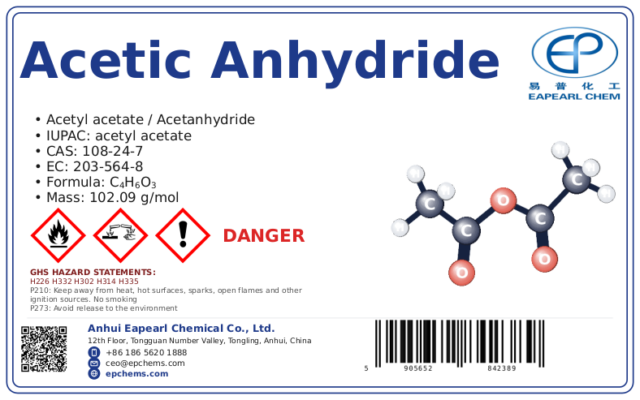
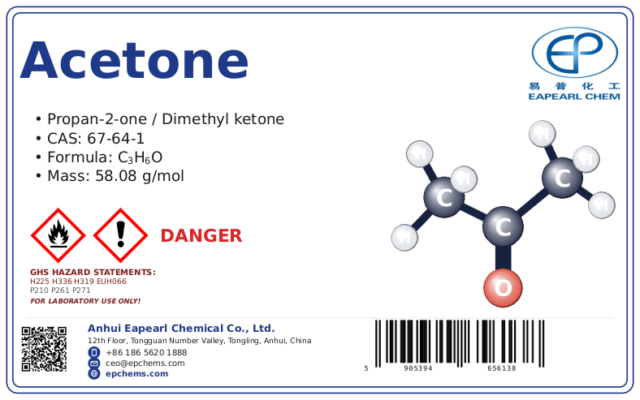
Acetone, acetic anhydride, toluene, hydrochloric acid, MEK, sodium cyanide and related grades require an end-use declaration and, depending on destination, an import licence. Our export licence covers hazardous and precursor chemicals; the paperwork is prepared with the quotation, not after the order.
Who you will be talking to

Named account managers, not a shared inbox

Every enquiry is handled by one person who stays with the account: export documentation, customs clearance and follow-up shipments included. Combined, the team has 37 years in chemical trade.

Lynn Lin — Chemical Trade Manager, Anhui Eapearl Chemical

Lynn Lin

Chemical Trade Manager · 8 years

IELTS 7.5 · UK study background

Team lead. Global accounts, trade risk control, steady long-term growth.

Samantha Su — Chemical Trade Manager, Anhui Eapearl Chemical

Samantha Su

Chemical Trade Manager · 7 years

TEM-8

Global chemical sales, fair marketing, long-term client maintenance.

Jia Zhou — Chemical Trade Manager, Anhui Eapearl Chemical

Jia Zhou

Chemical Trade Manager · 6 years

CET-6 · US study background

Chemical export and customs clearance, high client retention.

Kevin Chen — Chemical Trade Manager, Anhui Eapearl Chemical

Kevin Chen

Chemical Trade Manager · 9 years

IELTS 7.5

Market expansion, risk control, team building, consistently high sales.

Tony Zhao — Chemical Trade Manager, Anhui Eapearl Chemical

Tony Zhao

Chemical Trade Manager · 7 years

Business English

Chemical trade rules, long-term client cooperation, team management.

Ask for a quotation

Judge a chemical supplier on the third shipment, not the first. The first one everybody gets right. The third one tells you whether the certificate still carries the same methods, whether the drums still come from the plant you qualified, and whether anyone calls you when they do not.
How we would like to be assessed — and the standard the pages below are written against
Product families

What each family is for, and what to settle before ordering

Six families cover the catalogue. They are not interchangeable, and the parameter that decides a purchase is rarely the one printed largest on the datasheet.

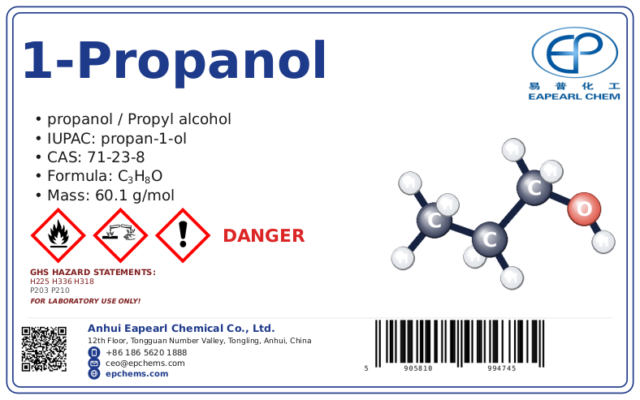
Alcohols

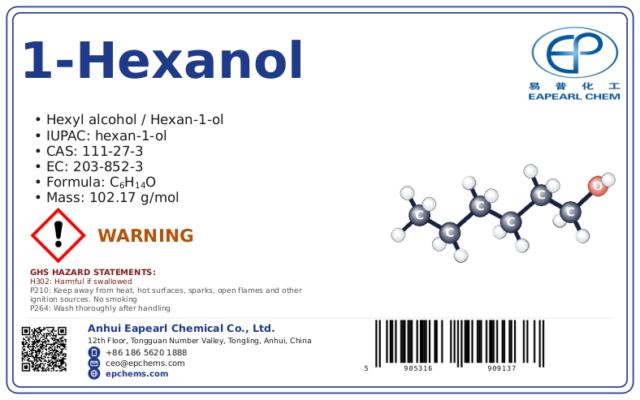
Short-chain alcohols earn their place by evaporating on a useful schedule: long enough to wet a surface and dissolve what sits on it, short enough to leave nothing behind. The second half of that requirement is not a property of the molecule at all. It belongs to the finishing steps, which is why the same substance ships both as a bulk industrial solvent and as a filtered low-residue grade, and why only the certificate of analysis tells them apart.

Settle before you order: Water content and the method used to measure it, non-volatile residue, whether the grade carries a pharmacopoeial or cleanroom claim, and what the drum liner is made of.

Esters

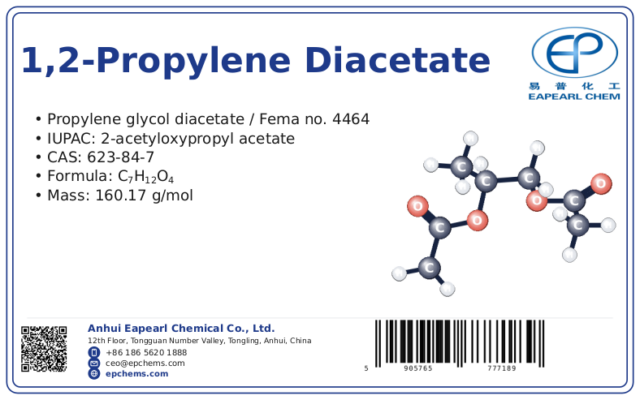
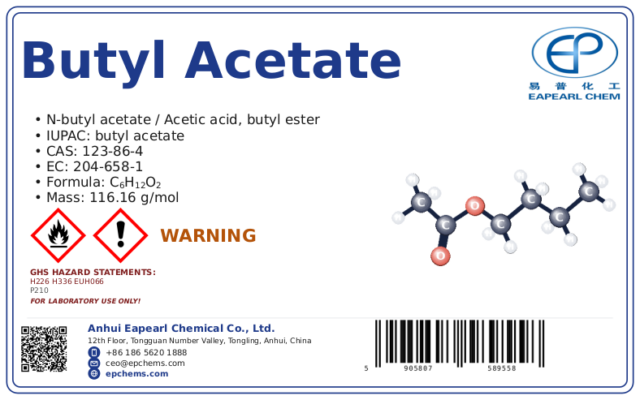
Esters buy balanced solvency with a mild odour profile and a predictable evaporation curve, which is why coatings and printing inks are built around them. Their weakness is the same bond that makes them useful: it hydrolyses. Water and free acid in the drum are therefore not cosmetic specification lines. They are the leading indicators of how the material will behave three months from now, and they move in one direction only.

Settle before you order: Acid number together with its method, water content, and how long the material has already spent in a warehouse before it reaches you.

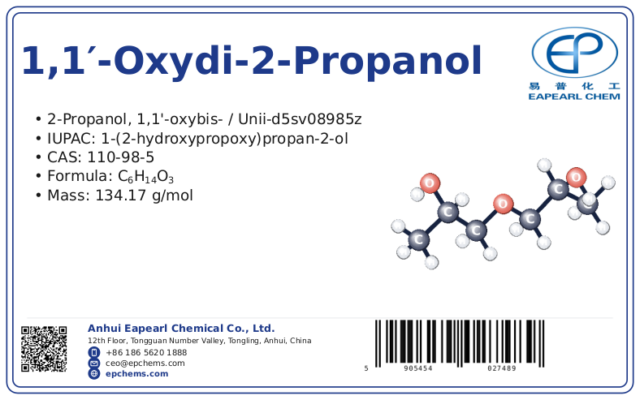
Glycol ethers and their acetates

This family exists to couple things that do not want to mix and to control how a film dries. Two decisions matter more than the rest. The first is which series the material belongs to, because the regulatory histories of the ethylene and propylene series diverged decades ago and statements about one do not transfer to the other. The second is which isomer dominates, because the minor isomer follows a different oxidation pathway and is the one regulators look at.

Settle before you order: Series and isomer distribution stated on the certificate, peroxide handling in storage, and the compatibility of the whole package rather than the bottle alone: liner, gasket and closure.

Solids and powders

With a solid, the specification that decides the process is almost never purity. It is particle size, bulk density, caking behaviour and how much dust the material throws when it is charged. Two lots at the same assay can behave completely differently in a hopper, and the difference shows up on the shop floor rather than in the laboratory, usually on the day nobody has time for it.

Settle before you order: Granulation, moisture with its method, packaging with net weight, and whether the lot was sieved or milled after drying.

Controlled and precursor chemicals

Here the paperwork is part of the product. A supplier who quotes these without asking what you intend to do with them is telling you something about how the rest of their documentation is handled. Expect to state the end use, expect the licence to be checked, and expect the answer to take longer than for an ordinary solvent. That delay is the control working, not the supplier being slow.

Settle before you order: Your own licence status in the destination country, the end-use statement, and the transport classification for the exact concentration being bought rather than for the pure substance.

Specialities and intermediates

Everything that does not sit neatly in the families above: acids, anhydrides, carbonates, surfactant intermediates. These are bought against a named use rather than a general grade, so the most useful opening message is not a product name at all. It is a description of the reaction or the formulation the material has to survive.

Settle before you order: What the material must tolerate in your process, which impurities would be fatal to it, and which analytical method you will use to accept the lot.

Before you order

Questions buyers ask before the first shipment

Eight answers that would otherwise cost an exchange of e-mails. None of them requires a form.

Do you manufacture, or do you trade?

Both, and the distinction matters to you. Part of the catalogue is our own production and part is sourced against a specification we control and verify. Ask about any individual grade and you will get a straight answer, because the certificate of analysis names the producing plant either way.

What documents travel with a shipment?

A certificate of analysis for the actual lot, with the method printed beside every value. A safety data sheet in the language of the destination market. Packing list and transport documents matching the classification of the exact grade shipped. For controlled products, the end-use documentation agreed before the order is confirmed rather than after.
Can I have a sample before committing to a container?

Yes, and a sample should arrive through the declared channel with its own lot number and certificate rather than in hand luggage. A sample without paperwork cannot be used to qualify a supplier, because there is nothing for the production lot to be compared against later.

How tight can the specification be?

Tighter than the standard grade in most cases. State the target and we confirm it against the production batch rather than against a brochure. What we will not do is agree to a number we cannot measure, or accept a limit without naming the method used to check it.

What packaging is available?

Drums, IBC and ISO tank for liquids; bags and big bags for solids. Net weights are printed on each product page rather than hidden behind an enquiry form. If your site has a constraint, such as a lifting limit, a liner requirement or a returnable scheme, say so in the first message. It changes the price and sometimes the lead time.

Do you supply against a pharmacopoeial or food-additive monograph?

For grades where such a monograph applies, we supply against it and the certificate states which edition. What a monograph does not do is make a material suitable for your finished product. The assessment of the product placed on the market belongs to whoever places it there, not to the supplier of the raw material.

How do you handle a change on your side?

A change of plant, synthesis route or specification is notified before it reaches your order, not discovered by you in a certificate. Retained samples let both sides compare the lot in question against earlier ones when a question does arise.

What happens if a lot fails our incoming inspection?

Quarantine it, tell us which method produced the result and send the data. A disagreement about a number is settled by naming an independent laboratory in advance, not by retesting until somebody gets the answer they were hoping for.

Send us the specification, not just the product name

Grade, quantity, packaging, destination port and intended use — that is everything we need to come back with a price, a lead time and the documents that go with it.

Request a quotation

—