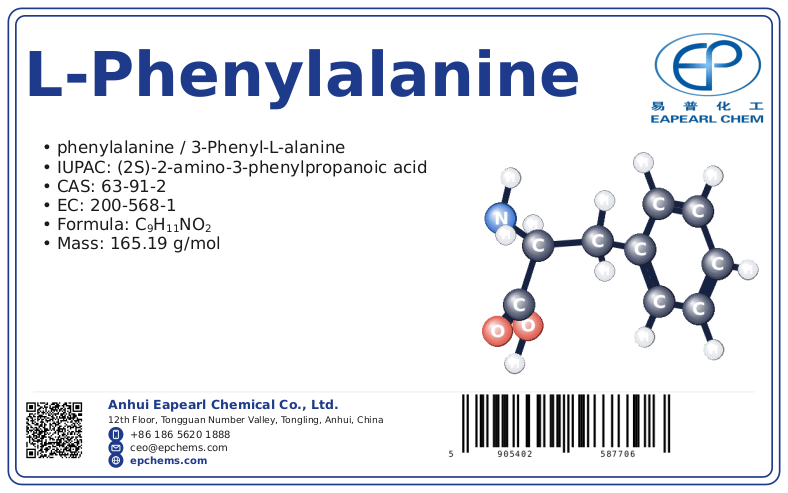
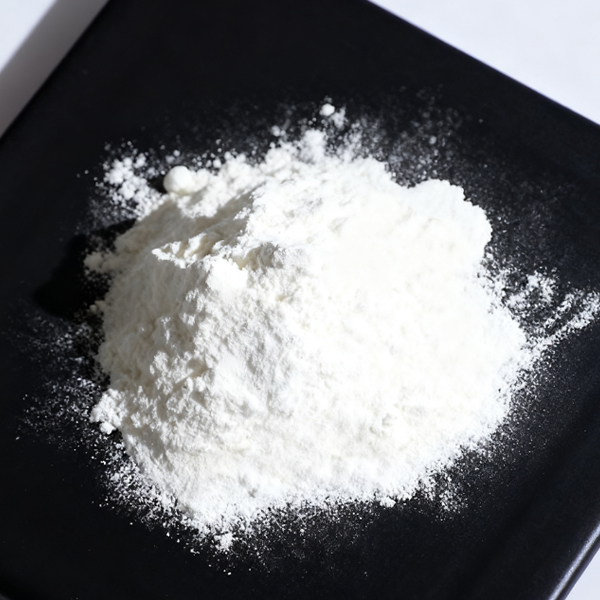
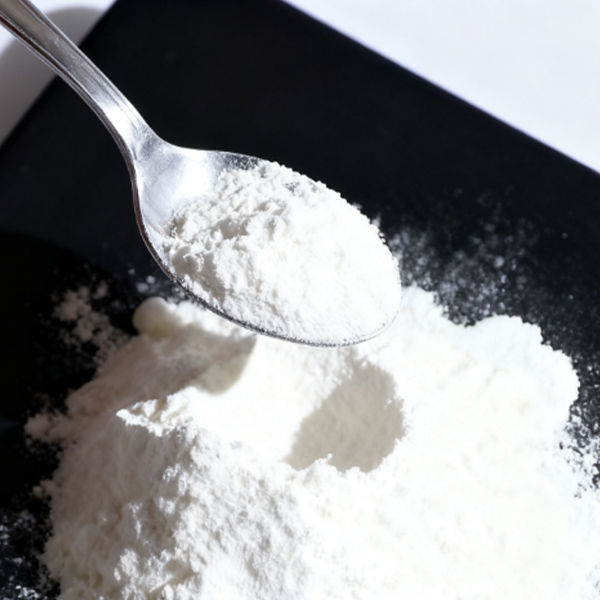
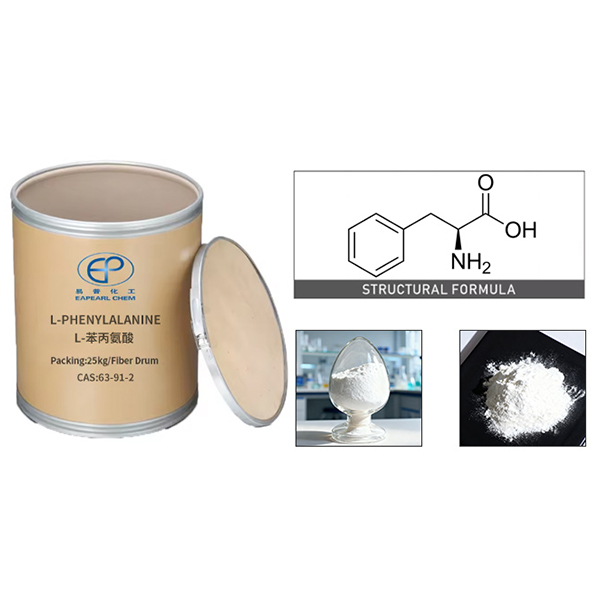
Values are typical for the standard grade. Tighter specifications are available — state the target in your inquiry and we confirm against the production batch.
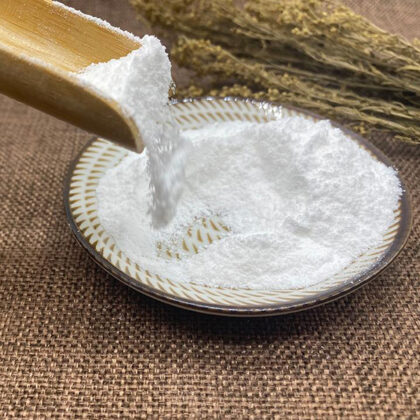
L-Phenylalanine (CAS 63-91-2) is an essential amino acid widely used across industries such as food, pharmaceuticals, nutraceuticals, and animal nutrition. From a procurement perspective, it is valued for its high purity, stable chemical properties, and important role as a key building block in protein synthesis and metabolic processes.
Product Description
L-Phenylalanine (CAS 63-91-2) is an essential amino acid widely used across industries such as food and beverage, pharmaceuticals, nutraceuticals, and animal nutrition. From a procurement perspective, it is valued for its high purity, stable chemical characteristics, and its critical role as a precursor in protein synthesis and various metabolic pathways.
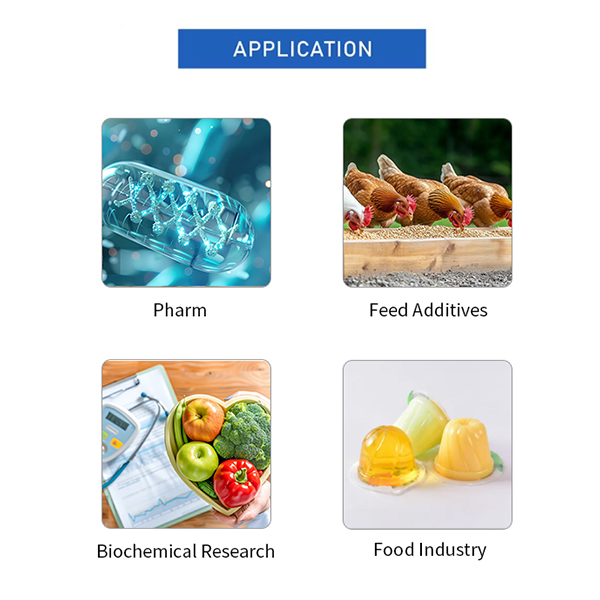
In food and beverage applications, L-Phenylalanine is commonly used as a nutritional fortifier and as a key component in the production of high-intensity sweeteners such as aspartame. Its consistent quality and stability enable manufacturers to maintain reliable taste profiles and product performance.
Within the nutraceutical and dietary supplement sector, L-Phenylalanine is utilized in formulations aimed at supporting cognitive function, mood balance, and overall metabolic health. Its compatibility with other amino acids and active ingredients allows for flexible formulation in capsules, tablets, and powder blends.
In pharmaceutical applications, L-Phenylalanine serves as an important intermediate and active component in specific therapeutic formulations. Its well-defined purity and controlled production standards are essential for meeting strict regulatory requirements.
In animal nutrition, L-Phenylalanine is used as a feed additive to improve protein utilization and support growth performance, contributing to more efficient feed formulations.
From a sourcing and supply chain standpoint, high-quality L-Phenylalanine provides:
High purity with strict impurity control
Stable chemical properties and long shelf life
Consistent batch-to-batch quality
Compliance with food grade and pharmaceutical grade standards
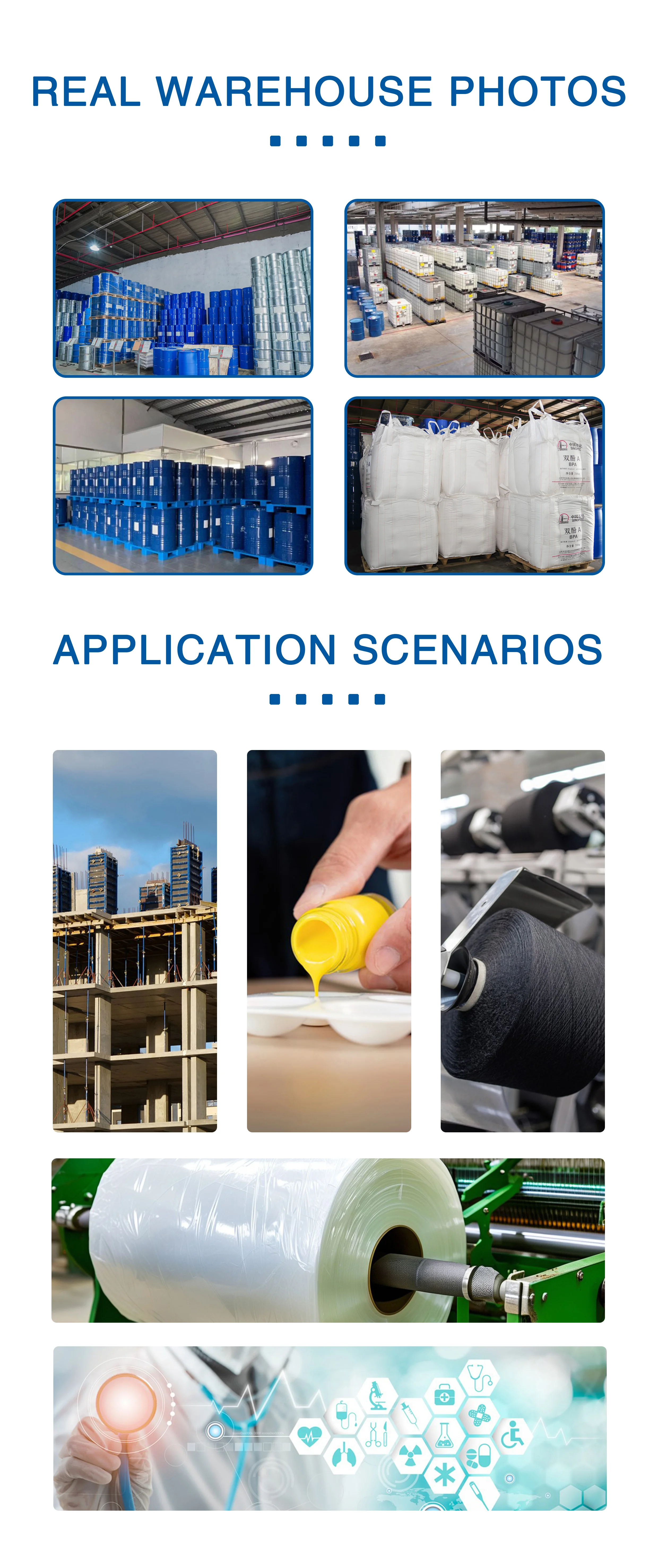
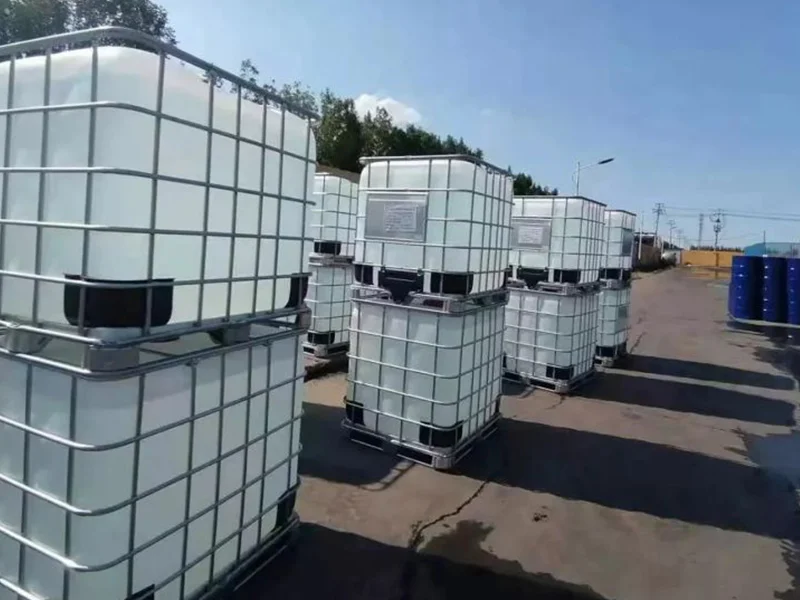
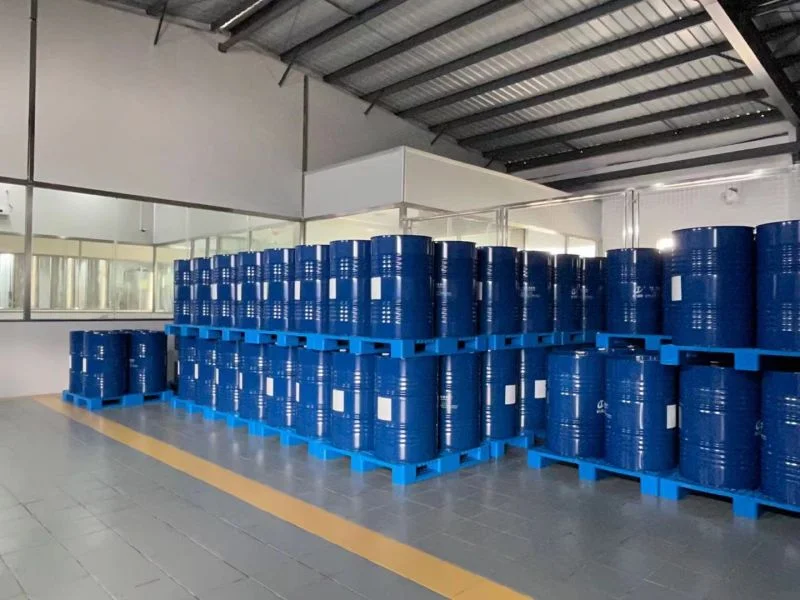
Flexible packaging options and reliable global supply
For buyers focused on product quality, formulation flexibility, and regulatory compliance, L-Phenylalanine is a reliable and versatile amino acid ingredient across multiple application sectors.
Delivery&Payment method
Frequently asked
Is a safety data sheet available for L-Phenylalanine?
Yes, on request. Safety data sheets are issued per grade and destination market; state the country of import in your inquiry.
What purity do you supply?
The standard grade is 99.5%. Tighter specifications are confirmed against the production batch before shipment.
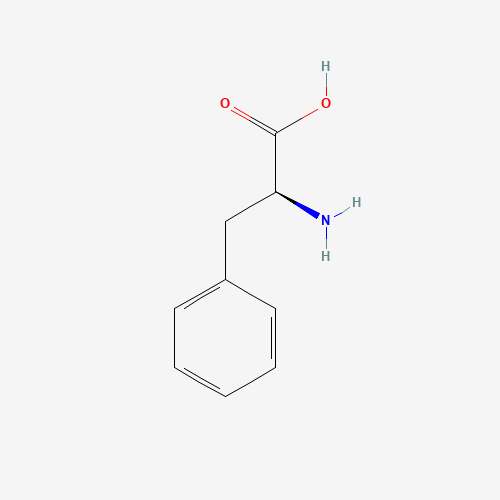
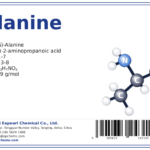
Modello 3D L-Phenylalanine, CAS 63-91-2, formula molecolare C9H11NO2, massa molare 165.19 g/mol
Dati trascritti da registri normativi e letteratura tecnica, con indicazione della fonte e dell'edizione. Non sostituiscono la scheda di dati di sicurezza del fornitore. I campi privi di fonte registrata sono contrassegnati come tali.
📊 Dati chimico-fisici — CAS 63-91-2MolGod_PROPHUB_MAIN
📊Proprietà fisico-chimiche
Riferimento rapido
Formula:C9H11NO2
MW:165.19 g/mol
CAS:63-91-2
Aspetto:Prisms form water
Odore:Slight
Proprietà dettagliate
A supplement to the „Physicochemical properties (database)” table below — repeated values are shown only once.
PubChem. National Center for Biotechnology Information (NIH/NLM), chemical compound database. ↗
dotyczy: Punto di fusione · Punto di ebollizione · Solubilità in acqua · logP (ottanolo/acqua)
PubChem. National Center for Biotechnology Information (NIH/NLM), chemical compound database. ↗
dotyczy: Formula molecolare · Peso molecolare · Punto di fusione · LogP (lipofilia) · Nome IUPAC · SMILES · InChIKey
Václav Pokorný, Vojtěch Štejfa, Jakub Havlín et al.. (2021). "Heat Capacities of l-Histidine, l-Phenylalanine, l-Proline, l-Tryptophan and l-Tyrosine". Molecules. https://doi.org/10.3390/molecules2614
MOLECULE
Bibliografia per-CAS (live da 13+ banche dati)
Fonti: db:pubmed (2) · db:doaj (1)
db:pubmed
Hedaya L, Naja K, Almuraikhy S et al.. (2025). "N-Lactoyl Phenylalanine Disrupts Insulin Signaling, Induces Inflammation, and Impairs Mitochondrial Respiration in Cell Models.". Cells. https://doi.org/10.3390/cells14161296 →
db:pubmed
Wobst HJ, Viader A, Muncipinto G et al.. (2024). "SLC6A19 inhibition facilitates urinary neutral amino acid excretion and lowers plasma phenylalanine.". JCI insight. https://doi.org/10.1172/jci.insight.182876 →
db:doaj
Václav Pokorný, Vojtěch Štejfa, Jakub Havlín et al.. (2021). "Heat Capacities of l-Histidine, l-Phenylalanine, l-Proline, l-Tryptophan and l-Tyrosine". Molecules. https://doi.org/10.3390/molecules26144298 →
Stato normativo della sostanza
Nessuna voce per questo CAS negli elenchi di restrizioni consultati (lista di candidati SVHC, REACH Allegato XVII; insiemi di dati incompleti - questa non è una conferma di conformità). Classificazione CLP e stato di trasporto (ADR): vedere la sezione GHS e la scheda di dati di sicurezza (SDS).
🧮 Calcolatore stechiometricoMolGod_STOICH_1
🧪 Dati chimiciMolGod_CHEMDATA_1
Numero CAS
63-91-2
Formula molecolare
C9H11NO2
Massa molare
165.19 g/mol
Nome IUPAC (EN)
(2S)-2-amino-3-phenylpropanoic acid
SMILES
C1=CC=C(C=C1)C[C@@H](C(=O)O)N
InChIKey
COLNVLDHVKWLRT-QMMMGPOBSA-N
📚 Scientific literature (1 article)MolGod_LITSCI_1
PubChem. National Center for Biotechnology Information (NIH/NLM), chemical compound database. ↗
dotyczy: PubChem CID · InChIKey · InChI · SMILES
ECHA. EC Inventory — EINECS, ELINCS, NLP and List Numbers assigned under REACH. Helsinki: European Chemicals Agency. ↗
dotyczy: EC Number
ChEMBL. European Bioinformatics Institute (EMBL-EBI), bioactivity database. ↗
dotyczy: ChEMBL
ChemSpider. Royal Society of Chemistry, chemical structure database. ↗
dotyczy: ChemSpider
Dalsza literatura
Publications thematically related to this CAS. They are not the source of any value given on this card.
Bibliografia (estesa) (10)
★★★★★CANONICAL_PAPERS💰 Paywall (probable)✓ verificatoJakka SR; Mugesh G. 2026. "p-Benzoyl-l-phenylalanine as a Multifunctional Noncanonical Amino Acid in Synthetic Biology: Photoprobing, Photocatalysis, and Structural Programming for Biocontainment." Angewandte Chemie (International ed. in English).link[consultato: 2026-11-07]
★★★★★CANONICAL_PAPERS💰 Paywall (probable)✓ verificatoZhang D; Liu B; Hu L et al.. 2023. "A novel L-phenylalanine dipeptide inhibits prostate cancer cell proliferation by targeting TNFSF9." Biomedicine & pharmacotherapy = Biomedecine & pharmacotherapie.link[consultato: 2026-11-07]
★★★★½CANONICAL_PAPERS💰 Paywall (probable)✓ verificatoMORRIS CJ; THOMPSON JF. 1962. "The isolation and characterization of gamma-L-glutamyl-L-tyrosine and gamma-L-glutamyl-L-phenylalanine from soybeans." Biochemistry.link[consultato: 2026-11-07]
★★☆☆☆CROSSREF🔓 OPEN❓ non verificatoTanchai, Nipawan. "Improvement of the phenylalanine dehydrogenase immobilization method for the production of phenylalanine.". https://doi.org/10.58837/chula.the.2007.1012.link[consultato: 2026-11-07]CC0 (metadata)
★★☆☆☆CROSSREF🔓 OPEN❓ non verificatoAnonymous. "Self-Assembly of Phenylalanine-Leucine, Leucine-Phenylalanine and Cyclo(-leucine-phenylalanine) Dipeptides through Simulations and Experiments.". https://doi.org/10.1021/acs.jpcb.2c08576.s001.link[consultato: 2026-11-07]CC0 (metadata)
★★☆☆☆CROSSREF🔓 OPEN❓ non verificatoAnonymous. "Phenylalanine.". https://doi.org/10.31003/uspnf_m64020_04_01.link[consultato: 2026-11-07]CC0 (metadata)
★★☆☆☆CROSSREF🔓 OPEN❓ non verificatoAnonymous. "Phenylalanine Binding Is Linked to Dimerization of the Regulatory Domain of Phenylalanine Hydroxylase.". https://doi.org/10.1021/bi501109s.s001.link[consultato: 2026-11-07]CC0 (metadata)
★★☆☆☆CROSSREF🔓 OPEN❓ non verificatoAnonymous. "Phenylalanine.". https://doi.org/10.31003/uspnf_m64020_05_01.link[consultato: 2026-11-07]CC0 (metadata)
★☆☆☆☆CANONICAL_PAPERS❓ ?✓ verificatoEspinoza-González Á; Hernández-Valencia C; Cedeño-Caero L et al.. 2023. "Protease-catalyzed synthesis of α-poly-L-Lysine and amphiphilic poly(L-lysine-co-L-phenylalanine) in a neat non-toxic organic solvent." Bioprocess and biosystems engineering.link[consultato: 2026-11-07]
★☆☆☆☆OPENLIBRARY🔓 OPENMaria Yeng-Ying Kuo. 1977. "A kinetic study of the carboxypeptidase A catalyzed hydrolyses of Cinnamoylglycyl-L-phenylalanine (CinGP) and Hydrocinnamoylglycyl-L-phenylalanine (HCinGP) / by Maria Yeng-Ying Kuo." Miami University.link[consultato: 2026-11-03]CC0 (metadata)
📡 Spettroscopia — CAS 63-91-2MolGod_SPECHUB_MAIN
📊Banche dati di spettri spettroscopici — dati inline9 sourcesMolGod_SPECDB_2
Gli spettri vengono recuperati su richiesta da 9 fonti. Ogni spettro viene salvato nel nostro database — l'apertura successiva = zero richieste all'API esterna. Scarica JCAMP-DX / CSV / PNG per ogni spettro senza dover cercare.
I dati vengono scaricati una sola volta (parser JCAMP-DX) e salvati nel database locale del plugin. Nessun download duplicato, nessuna query a NIST alle aperture successive. Licenze rispettate (vengono pubblicati solo un deep link e una visualizzazione propria).
Dati recuperati in tempo reale da più fonti (priority-chain). JCAMP-DX / CSV / PNG disponibili per il download sotto ogni spettro.
IR — infrarosso in trasformata di Fourier
Caricamento IR — infrarosso in trasformata di Fourier…
MS — spettrometria di massa (EI 70eV)
Caricamento MS — spettrometria di massa (EI 70eV)…
Spettro NMR — spostamenti chimici previsti
Valori di riferimento tabulati (1H e 13C) per il CAS 63-91-2. Fonti bibliografiche: Gottlieb 1997, Pretsch 2009, Silverstein 2014.
Dati di riferimento dalla letteratura. Verificare con uno spettro di riferimento prima dell'uso analitico.
1H NMR (DMSO-d6)
δ (ppm)
Molteplicità
Integrazione
J (Hz)
Assegnazione
8.06
br s
3
—
NH3+ (broad)
7.26
m
5
—
aromatic H-2,3,4,5,6
3.96
m
1
—
alpha-CH
3.02
dd
1
13.4
beta-CH2 (Ha)
2.73
dd
1
10.0
beta-CH2 (Hb)
Fonte dei dati: SDBS; Pretsch 2009
13C NMR (DMSO-d6)
δ (ppm)
Molteplicità
Integrazione
J (Hz)
Assegnazione
170.40
s
—
—
COOH (C=O)
137.30
s
—
—
C-1 (ipso)
129.50
s
—
—
C-3,5 (meta)
128.80
s
—
—
C-2,6 (ortho)
127.10
s
—
—
C-4 (para)
54.00
s
—
—
alpha-C
36.50
s
—
—
beta-CH2
Fonte dei dati: SDBS; Pretsch 2009
Bibliografia (Chicago autore-data)
Aue, W. P., E. Bartholdi, and R. R. Ernst. 1976. "Two-Dimensional Spectroscopy. Application to Nuclear Magnetic Resonance." Journal of Chemical Physics 64 (5): 2229–2246. [DOI]
Bodenhausen, Geoffrey, and D. J. Ruben. 1980. "Natural Abundance Nitrogen-15 NMR by Enhanced Heteronuclear Spectroscopy." Chemical Physics Letters 69 (1): 185–189.
Bax, Ad, and Donald G. Davis. 1985. "MLEV-17-Based Two-Dimensional Homonuclear Magnetization Transfer Spectroscopy." Journal of Magnetic Resonance 65 (2): 355–360.
Gottlieb, Hugo E., Vadim Kotlyar, and Abraham Nudelman. 1997. "NMR Chemical Shifts of Common Laboratory Solvents as Trace Impurities." Journal of Organic Chemistry 62 (21): 7512–7515. [DOI]
Harris, Robin K., Edwin D. Becker, Sonia M. Cabral de Menezes, Pierre Granger, Roy E. Hoffman, and Kurt W. Zilm. 2008. "Further Conventions for NMR Shielding and Chemical Shifts (IUPAC Recommendations 2008)." Pure and Applied Chemistry 80 (1): 59–84. [DOI]
Fulmer, Gregory R., Alexander J. M. Miller, Nathaniel H. Sherden, Hugo E. Gottlieb, Abraham Nudelman, Brian M. Rosen, Virgil Percec, and Paul J. Chirik. 2010. "NMR Chemical Shifts of Common Laboratory Solvents as Trace Impurities." Organometallics 29 (9): 2176–2179. [DOI]
Levitt, Malcolm H. 2008. Spin Dynamics: Basics of Nuclear Magnetic Resonance. 2nd ed. Chichester: Wiley. ISBN 978-0-470-51117-6
Friebolin, Horst. 2010. Basic One- and Two-Dimensional NMR Spectroscopy. 5th ed. Weinheim: Wiley-VCH. ISBN 978-3-527-32782-9
Berger, Stefan, and Siegmar Braun. 2004. 200 and More NMR Experiments: A Practical Course. Weinheim: Wiley-VCH. ISBN 978-3-527-31067-8
Sanders, Jeremy K. M., and Brian K. Hunter. 1993. Modern NMR Spectroscopy: A Guide for Chemists. 2nd ed. Oxford: Oxford University Press. ISBN 978-0-19-855514-8
Bovey, Frank A., and Peter A. Mirau. 1996. Nuclear Magnetic Resonance Spectroscopy. 2nd ed. San Diego: Academic Press. ISBN 978-0-12-119765-8
Becker, Edwin D. 2000. High Resolution NMR: Theory and Chemical Applications. 3rd ed. San Diego: Academic Press. ISBN 978-0-12-084660-9
Field, Leslie D., Sev Sternhell, and John R. Kalman. 2013. Organic Structures from Spectra. 5th ed. Chichester: Wiley. ISBN 978-1-118-32498-1
🔎 Ricerca per spettro (JCAMP-DX)
Carica un file JCAMP-DX (.jdx, .dx, .jcm) — il sistema calcolerà la similarità del coseno rispetto a tutti gli spettri nel database e mostrerà le TOP 10 corrispondenze.
📚 Bibliography (Chicago)
McLafferty, Fred W., ed. 2018. Wiley Registry of Mass Spectral Data. 11th ed. Hoboken, NJ: Wiley. Una libreria MS di riferimento (~775k spettri).
Stein, Stephen E., and Donald R. Scott. 1994. "Optimization and Testing of Mass Spectral Library Search Algorithms for Compound Identification." Journal of the American Society for Mass Spectrometry 5 (9): 859–866. L'algoritmo cosine + dot-product di NIST MS Search.
McDonald, Robert S., and Paul A. Wilks Jr. 1988. "JCAMP-DX: A Standard Form for Exchange of Infrared Spectra in Computer Readable Form." Applied Spectroscopy 42 (1): 151–162. La specifica JCAMP-DX (estesa alla 5.01 per NMR/MS).
McLafferty, Fred W., and František Tureček. 1993. "Interpretation of Mass Spectra." 4th ed. Mill Valley, CA: University Science Books. Matching per similarità coseno e frammentazione MS — la base dell'algoritmo di ricerca.
Sumner, Lloyd W., Alexander Amberg, Dave Barrett, Michael H. Beale, Richard Beger, Clare A. Daykin, Teresa W.-M. Fan, et al. 2007. "Proposed Minimum Reporting Standards for Chemical Analysis." Metabolomics 3 (3): 211–221. MSI Level 1-4 — standard del livello di confidenza della corrispondenza spettrale.
Stein, Stephen E. 1999. "An Integrated Method for Spectrum Extraction and Compound Identification from Gas Chromatography/Mass Spectrometry Data." Journal of the American Society for Mass Spectrometry 10 (8): 770–781. L'algoritmo AMDIS — deconvoluzione + library match (NIST).
Lindon, John C., George E. Tranter, and David W. Koppenaal, eds. 2017. "Encyclopedia of Spectroscopy and Spectrometry." 3rd ed. Amsterdam: Academic Press. Voci enciclopediche sullo spectral library searching.
Smith, Brian C. 2011. "Fundamentals of Fourier Transform Infrared Spectroscopy." 2nd ed. Boca Raton, FL: CRC Press. FT-IR e il formato JCAMP-DX per gli spettri di trasmissione.
Larkin, Peter. 2017. "Infrared and Raman Spectroscopy: Principles and Spectral Interpretation." 2nd ed. Amsterdam: Elsevier. Principi del library matching IR/Raman e del preprocessing dei picchi.
Proprietà strutturaliMolGod_STRUCT3D_1
Caricamento dei dati strutturali...
❓ Domande frequenti (3)MolGod_FAQ_1
What is 63-91-2?
63-91-2 (CAS 63-91-2) is a chemical compound. The chemical data comes from PubChem (National Institutes of Health, USA).
Utile?
What is the CAS number of 63-91-2?
The CAS number for 63-91-2 is 63-91-2. A CAS Registry Number is the standard identifier for a chemical substance in scientific literature and in trade.
Utile?
How should 63-91-2 be stored?
63-91-2 should be stored as its safety data sheet directs \— typically in a dry, cool, well-ventilated place, away from heat and from materials it is incompatible with.
Utile?
➕ Suggerisci una domanda
Scarica i file di strutturaMolGod_STRDL_1
File di struttura molecolare dal database PubChem (NIH). Compatibili con i programmi: Avogadro, PyMOL, Jmol, ChemDraw.
Cohen ER, Cvitaš T, Frey JG, Holmström B, Kuchitsu K, Marquardt R, Mills I, Pavese F, Quack M, Stohner J, Strauss HL, Takami M, Thor AJ (2007)
g/L ↔ molarity
c (mol/L) = (g/L) / MW
±0.1% (depends on MW precision)
Cohen ER, Cvitaš T, Frey JG, Holmström B, Kuchitsu K, Marquardt R, Mills I, Pavese F, Quack M, Stohner J, Strauss HL, Takami M, Thor AJ (2007)
mmol/L ↔ molarity
c (mol/L) = mmol/L × 10⁻³
Exact
Cohen ER, Cvitaš T, Frey JG, Holmström B, Kuchitsu K, Marquardt R, Mills I, Pavese F, Quack M, Stohner J, Strauss HL, Takami M, Thor AJ (2007)
Celsius ↔ Kelvin
T(K) = t(°C) + 273.15
±0.01 K (ITS-90 scale)
BIPM (Bureau International des Poids et Mesures) (2019)
Celsius ↔ Fahrenheit
T(°F) = T(°C) × 9/5 + 32
±0.1 °F
Thompson A, Taylor BN (2008)
density-corrected % ↔ molarity
c (mol/L) = (%w/w × ρ × 10) / MW, ρ in g/mL
±0.1% when ρ known to 3 decimals
Cohen ER, Cvitaš T, Frey JG, Holmström B, Kuchitsu K, Marquardt R, Mills I, Pavese F, Quack M, Stohner J, Strauss HL, Takami M, Thor AJ (2007)
📚 Bibliografia (8 fonti autorevoli)
Thompson A, Taylor BN (2008). Guide for the Use of the International System of Units (SI). NIST Special Publication 811 · DOI: 10.6028/NIST.SP.811-2008 → Primary SI standard for US scientific usage
Cohen ER, Cvitaš T, Frey JG, Holmström B, Kuchitsu K, Marquardt R, Mills I, Pavese F, Quack M, Stohner J, Strauss HL, Takami M, Thor AJ (2007). Quantities, Units and Symbols in Physical Chemistry — The IUPAC Green Book. RSC Publishing, 3rd ed. · DOI: 10.1039/9781847557889 · ISBN: 978-0-85404-433-7 → Canonical IUPAC guide for chemistry quantities/units
BIPM (Bureau International des Poids et Mesures) (2019). The International System of Units (SI), 9th edition. BIPM · ↗ → International SI definitions (incl. redefined kilogram 2019)
ISO/IEC (2022). Quantities and units — Part 1: General. International Organization for Standardization — ISO 80000-1:2022 · ↗ → General rules for physical quantities and units
ISO/IEC (2019). Quantities and units — Part 9: Physical chemistry and molecular physics. International Organization for Standardization — ISO 80000-9:2019 · ↗ → Concentration / molality / amount-of-substance conventions
Tiesinga E, Mohr PJ, Newell DB, Taylor BN (2021). CODATA recommended values of the fundamental physical constants: 2018. Rev. Mod. Phys. 93(2):025010 · DOI: 10.1103/RevModPhys.93.025010 → Avogadro, gas constant, molar volume (2019 SI revision)
IUPAC (2019). Compendium of Chemical Terminology — the IUPAC Gold Book (online). IUPAC · DOI: 10.1351/goldbook → Definitions of mass fraction, molality, normality, ppm, activity
Mills IM, Cvitaš T, Homann K, Kallay N, Kuchitsu K (1988). Quantities, Units and Symbols in Physical Chemistry. Blackwell Scientific Publications, 1st ed. · ISBN: 0-632-01773-5 → Historical predecessor of IUPAC Green Book
Strutture molecolari similiMolGod_SIMSTR_1
Caricamento di strutture simili...
🧪 Procedura guidata di preparazione della soluzione WIZARDMolGod_PREP_1
Avviso sulle limitazioni dei dati. Le informazioni sulla sicurezza contenute in questa pagina hanno carattere informativo e non sostituiscono la scheda di dati di sicurezza (SDS) completa. Prima di utilizzare il prodotto, consultare la scheda di dati di sicurezza aggiornata del produttore e le linee guida GHS/CLP. La classificazione CLP riguarda la sostanza pura bulk, non i preparati commerciali.
Nessuna classificazione GHS armonizzata per questa sostanza — vedere la scheda di dati di sicurezza (SDS) aggiornata del fornitore.
☢️ Dati tossicologici (IARC + EPA CTX)
🧬 Classificazione di cancerogenicità IARC
Classificazione IARC:
Nessuna voce IARC individuale per questo CAS
Nessuna monografia IARC separata negli elenchi verificati — questo NON è una conferma dell'assenza di cancerogenicità. Verificare la classificazione CLP/GHS (sezione CMR / GHS).
📚 Fonti:
IARC Monographs (WHO) Ultima verifica: 2026-09-21
Hedaya L, Naja K, Almuraikhy S et al.. (2025). "N-Lactoyl Phenylalanine Disrupts Insulin Signaling, Induces Inflammation, and Impairs Mitochondrial Respiration in Cell Models.". Cells. https://doi.org/10.3390/cells14161296 [DOI]
Wobst HJ, Viader A, Muncipinto G et al.. (2024). "SLC6A19 inhibition facilitates urinary neutral amino acid excretion and lowers plasma phenylalanine.". JCI insight. https://doi.org/10.1172/jci.insight.182876 [DOI]
Václav Pokorný, Vojtěch Štejfa, Jakub Havlín et al.. (2021). "Heat Capacities of l-Histidine, l-Phenylalanine, l-Proline, l-Tryptophan and l-Tyrosine". Molecules. https://doi.org/10.3390/molecules26144298 [DOI]
International Agency for Research on Cancer (IARC). 2024. "IARC Monographs on the Identification of Carcinogenic Hazards to Humans." Lyon: IARC. 🔗
U.S. EPA. 2024. "ECOTOX Knowledgebase." Washington, DC: U.S. Environmental Protection Agency. 🔗
ECHA. 2024. "Chemical Safety Assessment." European Chemicals Agency. 🔗
U.S. National Toxicology Program. 2024. Report on Carcinogens. 15th ed. Research Triangle Park, NC: National Institute of Environmental Health Sciences. 🔗
GESTIS. 2024. "GESTIS Substance Database." Institute for Occupational Safety and Health of the German Social Accident Insurance (DGUV). 🔗
U.S. EPA. 2024. "CompTox Chemicals Dashboard." Washington, DC: U.S. Environmental Protection Agency. 🔗
ECHA. 2023. "Regulation (EC) No 1272/2008 on Classification, Labelling and Packaging of Substances and Mixtures (CLP), Annex VI — Harmonised Classification." European Chemicals Agency. 🔗
Leist, Marcel, et al. 2014. "Consensus Report on the Future of Animal-Free Systemic Toxicity Testing." ALTEX 31 (3): 341–356. [DOI]
Hartung, Thomas. 2009. "Toxicology for the Twenty-First Century." Nature 460 (7252): 208–212. [DOI]
Lenga, Robert E., ed. 2008. The Sigma-Aldrich Library of Chemical Safety Data. 2nd ed. Milwaukee: Sigma-Aldrich.
Slikker, William Jr., et al. 2004. "Dose-Dependent Terminal and Tissue Residues After Chronic Exposure." Toxicological Sciences 81 (2): 253–279. [DOI]
Calabrese, Edward J., and Linda A. Baldwin. 2003. "Toxicology Rethinks Its Central Belief." Nature 421 (6924): 691–692. [DOI]
📋 Conformità normativa (checklist di conformità)0 richiesto7 voci
ℹ️ Lista di controllo degli obblighi normativi per CAS 63-91-2.
Stato basato su: ADR 2025 (Tabella A), REACH Allegato XVII, CLP Allegato VI (classificazione armonizzata), hazard class da m14-spill DB, SVHC, GIS e NDS PL. Principio: assenza di dati = assenza di affermazione (NON dichiariamo 'assenza di restrizioni' senza base).
✅SDS (Scheda di Dati di Sicurezza) disponibilesoddisfatto
Come garantire la conformità: Requisito: SDS aggiornata conforme al Reg. 1907/2006 (REACH) allegato II, formato a 16 sezioni.
Base giuridica: Regulation (EC) 1907/2006 (REACH) Art. 31 + Annex II
Come garantire la conformità: Brak potwierdzonej klasyfikacji dla tej substancji — obowiązku etykiety CLP NIE MOŻNA ORZEC. Nie zakładaj ani obowiązku, ani jego braku: zweryfikuj samoklasyfikację dostawcy oraz wpis w CLP zał. VI przed wprowadzeniem do obrotu.
Base giuridica: Regulation (EC) 1272/2008 (CLP) Art. 17-33
Come garantire la conformità: Nessun dato ADR nel set di dati MOL-GOD per questo numero CAS. NON presumere l'assenza di restrizioni — prima della spedizione verificare la classificazione ai fini del trasporto nell'ADR 2025 (Tabella A) e nella sezione 14 della scheda di dati di sicurezza (SDS).
Base giuridica: European Agreement ADR 2025 + Act of 19 August 2011 on the transport of dangerous goods
Come garantire la conformità: Gli importatori/produttori ≥1 tonnellata/anno devono registrare la sostanza presso l'ECHA (dossier tecnico + Chemical Safety Report se ≥10 t). Consultare ECHA Annex VI / registered substances list.
Base giuridica: Regulation (EC) 1907/2006 (REACH) Art. 5-22
Come garantire la conformità: Stato SVHC non verificato nel set di dati disponibile — verificare l'elenco aggiornato delle sostanze candidate ECHA; non presumere l'assenza di una voce.
Base giuridica: REACH Art. 7(2) + 33 — SVHC notification + communication
❓REACH Allegato XVII (restrizioni all'uso/commercializzazione)da verificare
Come garantire la conformità: Brak wpisu w zbiorze klasyfikacji zharmonizowanej (CLP Załącznik VI) dla tego numeru CAS — status poz. 28–30 (zakaz CMR) NIEZWERYFIKOWANY; nie zakładać braku ograniczenia. Zbiór ograniczeń Załącznika XVII również niepełny — sprawdź skonsolidowany Załącznik XVII oraz klasyfikację zharmonizowaną CMR na stronach ECHA.
Base giuridica: Regulation (EC) 1907/2006 (REACH) Annex XVII — restrictions on manufacture/placing on the market/use
European Parliament and Council. 2008. Regulation (EC) No 1272/2008 on classification, labelling and packaging of substances and mixtures (CLP). Official Journal of the European Union L 353/1. CLP Regulation 1272/2008. [link ↗] — Classificazione, etichettatura e imballaggio delle sostanze + miscele (implementazione GHS nell'UE)
European Parliament and Council. 2006. Regulation (EC) No 1907/2006 concerning the Registration, Evaluation, Authorisation and Restriction of Chemicals (REACH). Official Journal of the European Union L 396/1. REACH Regulation 1907/2006. [link ↗] — REACH — registrazione, valutazione e autorizzazione delle sostanze chimiche; SVHC; SDS Allegato II
Ministerstwo Rodziny i Polityki Społecznej Rzeczypospolitej Polskiej. 2024. Rozporządzenie Ministra Rodziny i Polityki Społecznej z dnia 4 września 2024 r. w sprawie najwyższych dopuszczalnych stężeń i natężeń czynników szkodliwych dla zdrowia w środowisku pracy. Dziennik Ustaw RP 2024 poz. 1017. [link ↗] — NDS e NDSCh per circa 600 sostanze chimiche — limiti polacchi attuali di esposizione professionale
United Nations Economic Commission for Europe (UNECE). 2025. European Agreement concerning the International Carriage of Dangerous Goods by Road (ADR), 2025 Edition. United Nations, Geneva. ADR 2025. [link ↗] — Accordo internazionale sul trasporto su strada di merci pericolose — numeri UN, classi, imballaggi
📚 Riferimenti scientifici consolidati — Chicago Author-Date 10 sources
Riferimenti raccolti da tutte le schede del Safety Hub. CAS: 63-91-2 ·
PubChem ↗
Parlament Europejski i Rada UE. 2008. "Rozporządzenie (WE) nr 1272/2008 w sprawie klasyfikacji, oznakowania i pakowania substancji (CLP)." Dz.Urz. UE L 353. [↗]
GHS, Normative
United Nations Economic Commission for Europe (UNECE). 2021. "Globally Harmonized System of Classification and Labelling of Chemicals (GHS), Ninth Revised Edition." United Nations, Geneva. [↗]
GHS
Goldfrank, Lewis R., Robert S. Hoffman, Mary Ann Howland, et al.. 2019. "Goldfrank's Toxicologic Emergencies, 11th ed.." McGraw-Hill Education, New York. ISBN 978-1-25-985961-8.
Pierwsza pomoc, Toksykologia
National Institute for Occupational Safety and Health (NIOSH). 2023. "NIOSH Pocket Guide to Chemical Hazards (DHHS Publ. 2005-149)." U.S. Department of Health and Human Services / CDC, Cincinnati, OH. [↗]
Pierwsza pomoc, PPE, Toksykologia
European Committee for Standardization (CEN). 2016. "EN 374-1:2016 — Protective gloves against dangerous chemicals and micro-organisms." CEN, Brussels. [↗]
PPE
UNECE. 2023. "European Agreement Concerning the International Carriage of Dangerous Goods by Road (ADR 2025)." United Nations, Geneva. [↗]
Utylizacja, Regulacje
National Fire Protection Association (NFPA). 2022. "NFPA 400 — Hazardous Materials Code." NFPA, Quincy, MA. [↗]
Magazynowanie
Urben, P.G. (ed.). 2017. "Bretherick's Handbook of Reactive Chemical Hazards, 8th ed.." Butterworth-Heinemann / Elsevier, Oxford. [↗]
Magazynowanie
Ministerstwo Klimatu i Środowiska RP. 2023. "Baza danych o produktach i opakowaniach oraz o gospodarce odpadami (BDO)." Ministerstwo Klimatu i Środowiska, Warszawa. [↗]
Utylizacja
International Agency for Research on Cancer (IARC / WHO). 2024. "IARC Monographs on the Identification of Carcinogenic Hazards to Humans — List of Classifications." WHO, Lyon. [↗]
Toksykologia
Le schede con riferimenti propri (Emergency, PPE, Storage, Waste) contengono ulteriori voci bibliografiche all'interno delle rispettive sezioni.
Incolla una serie di misure replicate (CSV oppure un numero per riga). Il calcolatore calcolerà la media, la deviazione standard e il 95% CI, e rileverà gli outlier (Grubbs + Dixon Q).
Separatore: virgola, spazio, tab, nuova riga. Min 3 misurazioni.
📐 Formule statistiche
x̄ = Σxᵢ / n — media aritmetica
s² = Σ(xᵢ - x̄)² / (n-1) — varianza campionaria
s = √s² — deviazione standard
RSD% = (s / x̄) × 100% — deviazione standard relativa
★★☆☆☆CROSSREF🔓 OPEN❓ non verificatoTanchai, Nipawan. "Improvement of the phenylalanine dehydrogenase immobilization method for the production of phenylalanine.". https://doi.org/10.58837/chula.the.2007.1012.link[consultato: 2026-11-07]CC0 (metadata)
★★☆☆☆CROSSREF🔓 OPEN❓ non verificatoAnonymous. "Self-Assembly of Phenylalanine-Leucine, Leucine-Phenylalanine and Cyclo(-leucine-phenylalanine) Dipeptides through Simulations and Experiments.". https://doi.org/10.1021/acs.jpcb.2c08576.s001.link[consultato: 2026-11-07]CC0 (metadata)
★★☆☆☆CROSSREF🔓 OPEN❓ non verificatoAnonymous. "Phenylalanine.". https://doi.org/10.31003/uspnf_m64020_04_01.link[consultato: 2026-11-07]CC0 (metadata)
★★☆☆☆CROSSREF🔓 OPEN❓ non verificatoAnonymous. "Phenylalanine Binding Is Linked to Dimerization of the Regulatory Domain of Phenylalanine Hydroxylase.". https://doi.org/10.1021/bi501109s.s001.link[consultato: 2026-11-07]CC0 (metadata)
★★☆☆☆CROSSREF🔓 OPEN❓ non verificatoAnonymous. "Phenylalanine.". https://doi.org/10.31003/uspnf_m64020_05_01.link[consultato: 2026-11-07]CC0 (metadata)
★☆☆☆☆OPENLIBRARY🔓 OPENMaria Yeng-Ying Kuo. 1977. "A kinetic study of the carboxypeptidase A catalyzed hydrolyses of Cinnamoylglycyl-L-phenylalanine (CinGP) and Hydrocinnamoylglycyl-L-phenylalanine (HCinGP) / by Maria Yeng-Ying Kuo." Miami University.link[consultato: 2026-11-03]CC0 (metadata)
📅Project Planner — Gestore degli esperimenti di laboratorioNOVITÀ
Pianifica l'intero progetto di laboratorio: aggiungi esperimenti con reagenti, repliche e durata. Otterrai un diagramma di Gantt, una lista degli acquisti (con link al negozio!), un budget con un margine del 10% e una matrice dei rischi GHS.
💡 Accedi per salvare i progetti.
Senza effettuare l'accesso puoi calcolare, ma non salvare.
🧪 Solubilità e compatibilità con i solventi MolGod_SOLUB_1
Molecola
L-Phenylalanine
Formula
C9H11NO2
logP (XLogP3)
-1.50
Massa (g/mol)
165.19
Polarità
Idrofila (polare)
⚠️ Stima GC (Hoftyzer-Van Krevelen). Nessun dato HSP di letteratura per questo CAS — precisione ±2 MPa½. Verificare sperimentalmente.
Solvente
Compat.
Ra
Visuale
GC-MS
HPLC
Applications
Riferimenti
Ra < R₀ = good miscibility · Ra < 1,5×R₀ = borderline · above = poor (R₀ — radius of the Hansen sphere of this molecule) For this molecule R₀ = 8..
Teoria della solubilità (applicata nella previsione della compatibilità):
Yalkowsky, Samuel H., and Shri C. Valvani. 1980. "Solubility and Partitioning I: Solubility of Nonelectrolytes in Water." Journal of Pharmaceutical Sciences 69 (8): 912–922. https://doi.org/10.1002/jps.2600690814 — General Solubility Equation (GSE): logS = 0.5 − logP − 0.01(MP−25).
Hansen, Charles M. 2007. Hansen Solubility Parameters: A User's Handbook. 2nd ed. CRC Press. https://doi.org/10.1201/9781420006834 — Tripletta HSP (dD, dP, dH) + formula Ra.
Stefanis, E., and C. Panayiotou. 2008. "Prediction of Hansen Solubility Parameters with a New Group-Contribution Method." Int J Thermophys 29: 568–585. https://doi.org/10.1007/s10765-008-0415-z
Reichardt, Christian, and Thomas Welton. 2011. Solvents and Solvent Effects in Organic Chemistry. 4th ed. Wiley-VCH. https://doi.org/10.1002/9783527632220 — E_T(30) polarity scale, solwatochromia.
Snyder, Lloyd R., Joseph J. Kirkland, and John W. Dolan. 2010. Introduction to Modern Liquid Chromatography. 3rd ed. Wiley. https://doi.org/10.1002/9780470508183 — Eluotropic series, polarity index.
Van Krevelen, D. W., and K. Te Nijenhuis. 2009. Properties of Polymers. 4th ed. Elsevier. https://doi.org/10.1016/B978-0-08-054819-7.X0001-5 — Hoftyzer–Van Krevelen group contribution dla dD/dP/dH z SMILES.
Marcus, Yizhak. 1998. The Properties of Solvents. Wiley Series in Solution Chemistry, Vol. 4. ISBN 9780471983699 — Set tabulare completo di 250+ solventi (ε, μ, donicità, numeri di accettore).
PubChem Compound Database — CAS 63-91-2 lookup ↗ — logP (XLogP3), water solubility experimental + predicted.
Bibliografia completa nell'accordion RIFERIMENTI (in fondo alla pagina) — Chicago Manual of Style 17th ed., Author-Date.
🧮 Calcolatore di solubilità
Solubilità:—
logS:—
Metodo:—
⚠️ —
Solubilità vs Temperatura
🌐 Hansen Solubility Sphere (3D)
⚠️ The Hansen parameters for this substance fall outside the range of the method.
At least one of the δD/δP/δH parameters fell outside the domain of validity of the group contribution method (Hoftyzer–Van Krevelen), so the position of the molecule in Hansen space is unknown. The distance Ra is measured FROM THAT POINT — it cannot be calculated without knowing the point. The sphere and the distance table have been omitted rather than filled with numbers that have nothing behind them. Where a solubility measurement exists, it is shown in the table below.
Grafico radar di drug-likeness (Lipinski Ro5 / Veber). Zona verde = conformità ai criteri.
Dati predittivi — proprietà calcolate in silico (SMILES/RDKit). Non sostituiscono gli studi clinici. Non utilizzare per la valutazione di farmaci senza verifica sperimentale.
Lipinski, Christopher A., Franco Lombardo, Beryl W. Dominy, and Paul J. Feeney. 1997. "Experimental and computational approaches to estimate solubility and permeability in drug discovery and development settings." Advanced Drug Delivery Reviews 23 (1-3): 3-25.
Veber, Daniel F., Stephen R. Johnson, Hung-Yuan Cheng, et al. 2002. "Molecular properties that influence the oral bioavailability of drug candidates." Journal of Medicinal Chemistry 45 (12): 2615-2623.
Daina, Antoine, Olivier Michielin, and Vincent Zoete. 2017. "SwissADME: a free web tool to evaluate pharmacokinetics, drug-likeness and medicinal chemistry friendliness." Scientific Reports 7: 42717.
Egan, William J., and Gregory Lauri. 2002. "Prediction of intestinal permeability." Advanced Drug Delivery Reviews 54 (3): 273-289.
Baell, Jonathan B., and Georgina A. Holloway. 2010. "New substructure filters for removal of pan assay interference compounds (PAINS) from screening libraries." Journal of Medicinal Chemistry 53 (7): 2719-2740.
Brenk, Ruth, Alessandro Schipani, Daniel James, et al. 2008. "Lessons learnt from assembling screening libraries for drug discovery for neglected diseases." ChemMedChem 3 (3): 435-444.
Ertl, Peter, and Ansgar Schuffenhauer. 2009. "Estimation of synthetic accessibility score of drug-like molecules based on molecular complexity and fragment contributions." Journal of Cheminformatics 1: 8.
Bickerton, G. Richard, Gaia V. Paolini, Jérémy Besnard, Sorel Muresan, and Andrew L. Hopkins. 2012. "Quantifying the Chemical Beauty of Drugs." Nature Chemistry 4 (2): 90-98.
Hopkins, Andrew L., and Colin R. Groom. 2002. "The Druggable Genome." Nature Reviews Drug Discovery 1 (9): 727-730.
Ghose, Arup K., Vellarkad N. Viswanadhan, and John J. Wendoloski. 1999. "A Knowledge-Based Approach in Designing Combinatorial or Medicinal Chemistry Libraries for Drug Discovery." Journal of Combinatorial Chemistry 1 (1): 55-68.
Tice, Raymond R., Christopher P. Austin, Robert J. Kavlock, and John R. Bucher. 2013. "Improving the Human Hazard Characterization of Chemicals: A Tox21 Update." Environmental Health Perspectives 121 (7): 756-765.
Leeson, Paul D., and Brian Springthorpe. 2007. "The Influence of Drug-Like Concepts on Decision-Making in Medicinal Chemistry." Nature Reviews Drug Discovery 6 (11): 881-890.
Hann, Michael M. 2011. "Molecular Obesity, Potency and Other Addictions in Drug Discovery." MedChemComm 2 (5): 349-355.
Davies, Mark, Michał Nowotka, George Papadatos, et al. 2015. "ChEMBL Web Services: Streamlining Access to Drug Discovery Data and Utilities." Nucleic Acids Research 43 (W1): W612-W620.
Walters, W. Patrick, and Mark A. Murcko. 2002. "Prediction of 'Drug-Likeness.'". Advanced Drug Delivery Reviews 54 (3): 255–271. https://doi.org/10.1016/S0169-409X(02)00003-0.
Congreve, Miles, Robin Carr, Christopher Murray, and Harren Jhoti. 2003. "A 'Rule of Three' for Fragment-Based Lead Discovery?" Drug Discovery Today 8 (19): 876–877. https://doi.org/10.1016/S1359-6446(03)02831-9.
Brenk, Ruth, Alessandro Schipani, Daniel James, Agata Krasowski, Iain Hugh Gilbert, Julie Frearson, and Paul Graham Wyatt. 2008. "Lessons Learnt from Assembling Screening Libraries for Drug Discovery for Neglected Diseases." ChemMedChem 3 (3): 435-444.
Schomburg, Karen T., Sascha Bietz, Hans Briem, Andrea M. Henzler, Stefan Urbaczek, and Matthias Rarey. 2014. "Facing the Challenges of Structure-Based Target Prediction by Inverse Virtual Screening." Journal of Chemical Information and Modeling 54 (6): 1676-1686.
Bemis, Guy W., and Mark A. Murcko. 1996. "The Properties of Known Drugs. 1. Molecular Frameworks." Journal of Medicinal Chemistry 39 (15): 2887-2893.
Schomburg, Karen T., and Matthias Rarey. 2014. "What Is the Potential of Structure-Based Target Prediction Methods?" Future Medicinal Chemistry 6 (17): 1987-1989.
Hedaya L, Naja K, Almuraikhy S et al.. (2025). "N-Lactoyl Phenylalanine Disrupts Insulin Signaling, Induces Inflammation, and Impairs Mitochondrial Respiration in Cell Models.". Cells. https://doi.org/10.3390/cells14161296
Wobst HJ, Viader A, Muncipinto G et al.. (2024). "SLC6A19 inhibition facilitates urinary neutral amino acid excretion and lowers plasma phenylalanine.". JCI insight. https://doi.org/10.1172/jci.insight.182876
Václav Pokorný, Vojtěch Štejfa, Jakub Havlín et al.. (2021). "Heat Capacities of l-Histidine, l-Phenylalanine, l-Proline, l-Tryptophan and l-Tyrosine". Molecules. https://doi.org/10.3390/molecules26144298
Tanchai, Nipawan. "Improvement of the phenylalanine dehydrogenase immobilization method for the production of phenylalanine.". https://doi.org/10.58837/chula.the.2007.1012. [DOI ↗]
Anonymous. "Self-Assembly of Phenylalanine-Leucine, Leucine-Phenylalanine and Cyclo(-leucine-phenylalanine) Dipeptides through Simulations and Experiments.". https://doi.org/10.1021/acs.jpcb.2c08576.s001. [DOI ↗]
Anonymous. "Phenylalanine Binding Is Linked to Dimerization of the Regulatory Domain of Phenylalanine Hydroxylase.". https://doi.org/10.1021/bi501109s.s001. [DOI ↗]
Maria Yeng-Ying Kuo. 1977. "A kinetic study of the carboxypeptidase A catalyzed hydrolyses of Cinnamoylglycyl-L-phenylalanine (CinGP) and Hydrocinnamoylglycyl-L-phenylalanine (HCinGP) / by Maria Yeng-Ying Kuo." Miami University. ↗
Bolton, Evan E., Yanli Wang, Paul A. Thiessen, and Stephen H. Bryant. 2008. "PubChem: Integrated Platform of Small Molecules and Biological Activities." Annual Reports in Computational Chemistry 4: 217-241. [DOI ↗]
Kim, Sunghwan, Jie Chen, Tiejun Cheng, et al. 2023. "PubChem 2023 update." Nucleic Acids Research 51 (D1): D1373-D1380. [DOI ↗]
Kim, Sunghwan, Tiejun Cheng, Jianyong He, Chen Cheng, et al. 2021. "PubChem Protein, Pathway, Reaction, and Disease Specifications." Journal of Cheminformatics 13: 16. [DOI ↗]
Hähnke, Volker D., Sunghwan Kim, and Evan E. Bolton. 2018. "PubChem chemical structure standardization." Journal of Cheminformatics 10: 36. [DOI ↗]
Wang, Yanli, Stephen H. Bryant, Tiejun Cheng, Jiyao Wang, et al. 2017. "PubChem BioAssay: 2017 update." Nucleic Acids Research 45 (D1): D955-D963. [DOI ↗]
Cheng, Tiejun, et al. 2014. "Computation of Octanol-Water Partition Coefficients by Guiding an Additive Model with Knowledge." Journal of Chemical Information and Modeling 54 (3): 793-805. [DOI ↗]
Wilkinson, Mark D., et al. 2016. "The FAIR Guiding Principles for scientific data management and stewardship." Scientific Data 3: 160018. [DOI ↗]
Hersey, Anne, et al. 2015. "Chemical databases: curation or integration by user-defined equivalence?" Drug Discovery Today: Technologies 14: 17-24.
Sandra Lynn Elliott. 2001. "Enzyme-mediated degradation of L-phenylalanine based segmented polyurethaneureas." National Library of Canada. ↗
Veber, Daniel F., Stephen R. Johnson, Hung-Yuan Cheng, Brian R. Smith, Keith W. Ward, and Kenneth D. Kopple. 2002. "Molecular Properties That Influence the Oral Bioavailability of Drug Candidates." Journal of Medicinal Chemistry 45 (12): 2615-2623.
ECHA. 2024. "REACH Guidance." European Chemicals Agency. ↗
Groom, Colin R., Ian J. Bruno, Matthew P. Lightfoot, and Suzanna C. Ward. 2016. "The Cambridge Structural Database." Acta Crystallographica Section B 72 (2): 171-179. ↗
🧪Assistente di preparazione della soluzione (Smart Prep)MolGod_PREP_2
Inserisci cosa vuoi preparare — genererò una SOP
Esempi qui sotto — clicca per inserire:
Ricette predefinite:
📚 Panoramica della letteratura scientifica — CAS 63-91-2MolGod_LITHUB_MAIN
⭐ Risultati principali (letteratura scientifica)6 publications
📊 Argomenti estratti automaticamente dagli abstract di 1 pubblicazioni per CAS 63-91-2.
Algoritmo: TF-IDF (Salton & Buckley 1988) — frequenza del termine × frequenza inversa del documento.
🔬 HPLC — metodi e parametri — CAS 63-91-2MolGod_HPLCHUB_MAIN
🔬 Metodi HPLC/GC (2 metod)
📄
Insight Into the Metabolomic Characteristics of Post-Transplant Diabetes Mellitus by the Integrated LC-MS and GC-MS Approach- Preliminary Study
UHPLCFrontiers in Endocrinology202293% ✓CC-BYResearch method (specificity, robustness)
Colonna: C18, 100 x 2.1 mm, 2.6 μm
Fase: consisting of acetonitrile (mobile phase A) and 0.1% formic acid (mobile phase…
Rivelazione: MS
Flusso: 0.40 mL/min
Temp.: 80.0 °C
Inj.: 5 μL
Gradient: elution involved a mobile phase consisting of acetonitrile (mobile phase…
Wang M, Xu J, Yang N, Zhang T, Zhu H, Wang J. Insight Into the Metabolomic Characteristics of Post-Transplant Diabetes Mellitus by the Integrated LC-MS and GC-MS Approach- Preliminary Study. Frontiers in Endocrinology. 2022;12:807318. doi:10.3389/fendo.2021.807318
Post-transplantation diabetes mellitus (PTDM) is a common metabolic complication after solid organ transplantation, which not only results in elevated microvascular morbidity, but also seriously impacts graft function and recipient survival. However, its underlying mechanism is not yet fully understood. In this study, an integrated liquid chromatography- mass spectrometry (LC-MS) and gas chromatography-mass spectrometry (GC-MS) based-metabolomics approach was adopted to dissect the metabolic fluctuations and deduce potential mechanism associated with PTDM. 68 adult liver transplant recipients were recruited and classified as 32 PTDM and 36 non-PTDM subjects. PTDM group and non-PTDM group were well matched in gender, age, BMI, family history of diabetes, alcohol drinking history, ICU length of stay and hepatitis B infection. Peripheral blood samples from these recipients were collected and prepared for instrument analysis. Data acquired from LC-MS and GC-MS demonstrated significant metabolome alterations between PTDM and non-PTDM subjects. A total of 30 differential metabolites (15 from LC-MS, 15 from GC-MS) were screened out. PTDM patients, compared with non-PTDM subjects, were characterized with increased levels of L-leucine, L-phenylalanine, LysoPE (16:0), LysoPE (18:0), LysoPC (18:0), taurocholic acid, glycocholic acid, taurochenodeoxycholic acid, tauroursodeoxycholic acid, glycochenodeoxycholic acid, glycoursodeoxycholic acid, etc, and with decreased levels of LysoPC (16:1), LysoPC (18:2), LysoPE (22:6), LysoPC (20:4), etc. Taken collectively, this study demonstrated altered metabolites in patients with PTDM, which would provide support for enhancing mechanism exploration, prediction and treatment of PTDM.
Serum Metabolomics Study of Papillary Thyroid Carcinoma Based on HPLC-Q-TOF-MS/MS
HPLCFrontiers in Cell and Developmental202186% ✓CC-BYResearch method (specificity)
Colonna: C18, 100 x 2.1 mm, 2.2 μm
Fase: A was 0.1% (volume fraction) formic acid/water, and mobile phase B was…
Rivelazione: MS/MS
Temp.: 80.0 °C
Gradient: was set as follows: 2% B for 0–2 min, 50%…
Du Y, Fan P, Zou L, Jiang Y, Gu X, Yu J, et al. Serum Metabolomics Study of Papillary Thyroid Carcinoma Based on HPLC-Q-TOF-MS/MS. Frontiers in Cell and Developmental Biology. 2021;9:593510. doi:10.3389/fcell.2021.593510
This study examined metabolite profile differences between serum samples of thyroid papillary carcinoma (PTC) patients and healthy controls, aiming to identify candidate biomarkers and pathogenesis pathways in this cancer type. Serum samples were collected from PTC patients (n = 80) and healthy controls (n = 80). Using principal component analysis (PCA), partial least squares discrimination analysis(PLS-DA), orthogonal partial least square discriminant analysis (OPLS-DA), t-tests, and the volcano plot, a model of abnormal metabolic pathways in PTC was constructed. PCA, PLS-DA, and OPLS-DA analysis revealed differences in serum metabolic profiles between the PTC and control group. OPLS-Loading plot analysis, combined with Variable importance in the projection (VIP)>1, Fold change (FC) > 1.5, and p < 0.05 were used to screen 64 candidate metabolites. Among them, 22 metabolites, including proline betaine, taurocholic acid, L-phenylalanine, retinyl beta-glucuronide, alpha-tocotrienol, and threonine acid were upregulated in the PTC group; meanwhile, L-tyrosine, L-tryptophan, 2-arachidonylglycerol, citric acid, and other 42 metabolites were downregulated in this group. There were eight abnormal metabolic pathways related to the differential metabolites, which may be involved in the pathophysiology of PTC. Six metabolites yielded an area under the receiver operating curve of >0.75, specifically, 3-hydroxy-cis-5-tetradecenoylcarnitine, aspartylphenylalanine, l-kynurenine, methylmalonic acid, phenylalanylphenylalanine, and l-glutamic acid. The Warburg effect was observed in PTC. The levels of 3-hydroxy-cis-5-tetradecenoylcarnitine, aspartylphenylalanine, l-kynurenine, methylmalonic acid, phenylalanine, and L-glutamic acid may help distinguish PTC patients from healthy controls. Aspartic acid metabolism, glutamic acid metabolism, urea cycle, and tricarboxylic acid cycle are involved in the mechanism of PTC.
Gradiente basato su PubChem XLogP3 + LSS (Snyder et al. 2010, cap. 9).
Colonna: C18
Tampone: phosphate
Flusso: 1 mL/min
logP:
-1.5(PubChem XLogP3)
Ramp: 5% → 95% B, 10 min
Tempo totale di analisi: 23 min
t (min)
%A
%B
flow (mL/min)
Commento
0
95
5
1
avvio (equilibrio)
2
95
5
1
fine mantenimento iniziale
12
5
95
1
fine rampa LSS
17
5
95
1
lavaggio della colonna
18
95
5
1
ritorno a init
23
95
5
1
riequilibrazione
📚 Riferimenti scientifici (Chicago Author-Date)
Snyder, Lloyd R., John W. Dolan, and Joseph J. Kirkland. 2010. Introduction to Modern Liquid Chromatography. Wiley. — Chapter 9 — gradient elution, LSS theory (cited as Snyder et al. 2010 in tool description).
Schoenmakers, Peter J. 1986. Optimization of Chromatographic Selectivity: A Guide to Method Development. Elsevier. — Numerical optimization of gradient programs.
Snyder, L. R., and J. W. Dolan. 2007. High-Performance Gradient Elution: The Practical Application of the Linear-Solvent-Strength Model. Wiley. — Foundational LSS reference for the %B_init = 5 + 8·logP heuristic implemented here.
Nikitas, Pavlos, and Adrian Pappa-Louisi. 2009. "Retention models for isocratic and gradient elution in reversed-phase liquid chromatography." Journal of Chromatography A 1216: 1737-1755. [DOI ↗] — Modern review of gradient retention models — basis for non-LSS extensions.
Carr, Peter W.. 2009. "The new physical chemistry of HPLC." Journal of Chromatography A 1216: 1764-1772. [DOI ↗]
Dong, Michael W. 2019. HPLC and UHPLC for Practicing Scientists. Wiley. https://doi.org/10.1002/9781119313793. — Modern UHPLC gradient programming, sub-2 µm scaling rules.
Wu, Naijun, and Anton M. Clausen. 2007. "Fundamental and practical aspects of ultrahigh pressure liquid chromatography for fast separations." Journal of Separation Science 30: 1167-1182. [DOI ↗]
Stoll, Dwight R., and Peter W. Carr. 2017. "Two-Dimensional Liquid Chromatography: A State of the Art Tutorial." Analytical Chemistry 89: 519-531. [DOI ↗] — Reference for orthogonal gradient design (2D-LC second dimension).
Dolan, John W.. 2013. "When to Modify Method Conditions." LCGC North America 31: 192-199.
Meyer, Veronika R. 2010. Practical High-Performance Liquid Chromatography. Wiley. — Chapter 7 — practical gradient design with isokratyczny scouting.
REST: /wp-json/molgod/v1/hplc/gradient/63-91-2
📐 Dimensioni della colonna — calcolatore van DeemterN=12,466
Formula: H = A + B/u + C·u (Van Deemter et al. 1956), N = L/H, ΔP ≈ η·L·u / (K_p·dp²) (Knox 1977). u_opt = √(B/C) (Giddings 1965).
Dimensions
150 × 4.6 mm, 5 µm
Piatti teorici (N)
12,466
N a u_opt
12,500
HETP (attuale)
12.032 µm
Min. HETP
12 µm
Velocità lineare (u)
0.1003 cm/s
u_opt (van Deemter)
0.12 cm/s
Contropressione (ΔP)
42.1 bar
Tempo di analisi (volume morto)
2.49 min
📚 Riferimenti scientifici (Chicago Author-Date)
Van Deemter, J. J., F. J. Zuiderweg, and A. Klinkenberg. 1956. "Longitudinal diffusion and resistance to mass transfer as causes of nonideality in chromatography." Chemical Engineering Science 5: 271-289. https://doi.org/10.1016/0009-2509(56)80003-1 — Original van Deemter equation paper — basis of H = A + B/u + C·u in this calculator.
Giddings, J. Calvin. 1965. "Dynamics of Chromatography, Part I: Principles and Theory.". Marcel Dekker. — Theoretical underpinning of HETP minimum and u_opt = sqrt(B/C).
Poppe, Hans. 1997. "Some reflections on speed and efficiency of modern chromatographic methods." Journal of Chromatography A 778: 3-21. https://doi.org/10.1016/S0021-9673(97)00376-2 — Speed-efficiency Pareto plot — context for sub-2 µm UHPLC scaling.
Wu, Naijun, and Anton M. Clausen. 2007. "Fundamental and practical aspects of ultrahigh pressure liquid chromatography for fast separations." Journal of Separation Science 30: 1167-1182. https://doi.org/10.1002/jssc.200700026 — UHPLC pressure scaling — extends Darcy ΔP formula to sub-2 µm particles.
Carr, Peter W.. 2009. "The new physical chemistry of HPLC." Journal of Chromatography A 1216: 1764-1772. https://doi.org/10.1016/j.chroma.2008.11.094 — Modern reinterpretation of A, B, C terms (eddy diffusion vs. b-term).
Knox, John H.. 1977. "Practical aspects of LC theory." Journal of Chromatographic Science 15: 352-364. https://doi.org/10.1093/chromsci/15.9.352 — Reduced plate height equation h = a·v^(1/3) + b/v + c·v.
Dong, Michael W.. 2019. "HPLC and UHPLC for Practicing Scientists.". Wiley (2nd ed.). https://doi.org/10.1002/9781119313793 — Practical N targets vs particle size table (UHPLC method scaling).
Snyder, L. R., J. J. Kirkland, and J. L. Glajch. 1997. "Practical HPLC Method Development.". Wiley (2nd ed.). — Column dimensioning rules of thumb (L, dp, dc) for given α and N.
Engelhardt, Heinz. 2014. "100 Years of Chromatography.". Wiley-VCH (2nd ed.).
Rivelatore: UV
— compatibile con entrambi i solventi.
📚 Riferimenti scientifici (Chicago Author-Date)
Sadek, Paul C.. 2002. "The HPLC Solvent Guide.". Wiley-Interscience (2nd ed.).
Snyder, L. R.. 1978. "Classification of the solvent properties of common liquids." Journal of Chromatographic Science 16: 223-234. https://doi.org/10.1093/chromsci/16.6.223
Reichardt, Christian, and Thomas Welton. 2010. "Solvents and Solvent Effects in Organic Chemistry.". Wiley-VCH (4th ed.).
Vailaya, Anant, and Csaba Horváth. 1998. "Retention thermodynamics in hydrophobic interaction chromatography." Industrial & Engineering Chemistry Research 37: 4040-4055. https://doi.org/10.1021/ie980212h
Krstulović, Andrea M., and Phyllis R. Brown. 1981. "Reversed-phase High-Performance Liquid Chromatography.". Wiley.
Snyder, L. R., J. J. Kirkland, and J. L. Glajch. 1997. "Practical HPLC Method Development.". Wiley (2nd ed.).
Carr, Peter W.. 2009. "The new physical chemistry of HPLC." Journal of Chromatography A 1216: 1764-1772. https://doi.org/10.1016/j.chroma.2008.11.094
Boysen, Reinhard I., and Milton T. W. Hearn. 2009. "Multi-modal HPLC of proteins." Journal of Chromatographic Science 47: 645-654. https://doi.org/10.1093/chromsci/47.8.645
Dong, Michael W.. 2019. "HPLC and UHPLC for Practicing Scientists.". Wiley (2nd ed.). https://doi.org/10.1002/9781119313793
Skoog, Douglas A., F. James Holler, and Stanley R. Crouch. 2017. "Principles of Instrumental Analysis." 7th ed. Cengage Learning. ISBN 978-1-305-57721-3.
Perkampus, Heinz-Helmut. 1992. "UV-VIS Spectroscopy and Its Applications." Springer. ISBN 978-3-642-77479-9. →
Sadek, Paul C.. 2002. "The HPLC Solvent Guide." 2nd ed. Wiley-Interscience. ISBN 978-0-471-41138-4.
Snyder, Lloyd R., Joseph J. Kirkland, and John W. Dolan. 2010. "Introduction to Modern Liquid Chromatography." 3rd ed. Wiley. ISBN 978-0-470-16754-0. →
Dong, Michael W.. 2019. "HPLC and UHPLC for Practicing Scientists." 2nd ed. Wiley. ISBN 978-1-119-31378-3. →
Stoll, Dwight R., and Peter W. Carr. 2017. "Two-Dimensional Liquid Chromatography: A State of the Art Tutorial." Analytical Chemistry 89: 519-531 →
Vivó-Truyols, Gabriel, and Hans-Gerd Janssen. 2010. "Probabilistic approach to peak deconvolution in chromatography." Analytical Chemistry 82: 8525-8531 →
Kazakevich, Yuri V., and Rosario LoBrutto, eds.. 2007. "HPLC for Pharmaceutical Scientists." Wiley-Interscience. ISBN 978-0-471-68162-4. →
Kim, Sunghwan, et al.. 2023. "PubChem 2023 update." Nucleic Acids Research 51: D1373-D1380 →
MOLECULE
Bibliografia per-CAS (live da 13+ banche dati)
Fonti: db:pubmed (2) · db:doaj (1)
db:pubmed
Hedaya L, Naja K, Almuraikhy S et al.. (2025). "N-Lactoyl Phenylalanine Disrupts Insulin Signaling, Induces Inflammation, and Impairs Mitochondrial Respiration in Cell Models.". Cells. https://doi.org/10.3390/cells14161296 →
db:pubmed
Wobst HJ, Viader A, Muncipinto G et al.. (2024). "SLC6A19 inhibition facilitates urinary neutral amino acid excretion and lowers plasma phenylalanine.". JCI insight. https://doi.org/10.1172/jci.insight.182876 →
db:doaj
Václav Pokorný, Vojtěch Štejfa, Jakub Havlín et al.. (2021). "Heat Capacities of l-Histidine, l-Phenylalanine, l-Proline, l-Tryptophan and l-Tyrosine". Molecules. https://doi.org/10.3390/molecules26144298 →
REST: /wp-json/molgod/v1/hplc/detector/63-91-2
🧪 System Suitability — calcolatore live (USP <621>)
Inserisci i dati di 5-6 iniezioni (areas, tr, tailing, plates) — il calcolatore calcolerà %RSD, le medie e verificherà la conformità con USP <621>. Puoi incollare un CSV (separato da virgole) o modificare i singoli valori.
📚 Riferimenti (Chicago Author-Date)
USP General Chapter <621>. 2024. "Chromatography (System Suitability section)." USP-NF 2024 ed. United States Pharmacopeial Convention. [link ↗] — Defines RSD area < 2%, tailing < 2.0, N > 2000 acceptance criteria.
International Council for Harmonisation (ICH). 2023. "Validation of Analytical Procedures Q2(R2)." ICH Expert Working Group. [link ↗] — Section 5.4 — system suitability is part of method validation.
US Food and Drug Administration (FDA). 2018. "Reviewer Guidance: Validation of Chromatographic Methods." US Food and Drug Administration. [link ↗] — CDER reviewer perspective on chromatographic validation expectations.
Snyder, Lloyd R., Joseph J. Kirkland, and John W. Dolan. 2010. "Introduction to Modern Liquid Chromatography." 3rd ed. Wiley. — Chapter 2 — system suitability fundamentals (RSD, Tf, N).
Heyden, Yvan Vander, et al.. 2009. "Robustness of pharmaceutical liquid chromatographic methods." — Robustness vs. system suitability — design-of-experiments framework.
Rozet, Eric, et al.. 2013. "Analysis of recent pharmaceutical regulatory documents on analytical method validation."
European Medicines Agency (EMA). 2011. "Guideline on bioanalytical method validation EMEA/CHMP/EWP/192217/2009." EMA. [link ↗] — EMA companion guideline with bioanalytical SS criteria.
Dong, Michael W.. 2019. "HPLC and UHPLC for Practicing Scientists." 2nd ed. Wiley. — UHPLC-specific suitability adjustments (n=5 vs. n=6).
Kazakevich, Yuri V., and Rosario LoBrutto, eds.. 2007. "HPLC for Pharmaceutical Scientists." Wiley-Interscience.
AOAC International. 2016. "Appendix F: Guidelines for Standard Method Performance Requirements." AOAC INTERNATIONAL. [link ↗] — Alternative SS thresholds for food/dietary samples.
📊 Validazione del metodo HPLC (ICH Q2(R1))PARTIAL
3 of 3 critical metrics need experimental data
Parametro
Valore
Unità
Criterio ICH Q2
Status
Linearità (R²)
nessun dato
unitless
R² ≥ 0.999 (≥0.99 per la bioanalitica)
—
LOD (S/N = 3:1)
nessun dato
ng/mL
S/N ≥ 3:1 (concentrazione rilevabile più bassa)
—
LOQ (S/N = 10:1)
nessun dato
ng/mL
S/N ≥ 10:1 (LOQ ≥ 3×LOD tipicamente)
—
Precisione (RSD intraday, n=6)
nessun dato
% RSD
RSD ≤ 2% (intraday) / ≤ 3% (interday) per l'API
—
Accuratezza (recupero, 3 livelli)
nessun dato
% (target 100±2%)
Recovery 98-102% (target 100%)
—
Intervallo di linearità
nessun dato
es. 0.1-100 ng/mL
Min. 80-120% della concentrazione nominale
—
Selettività/Specificità
nessun dato
qualitative
Nessuna interferenza — picco dell'analita completamente risolto (Rs ≥ 2.0)
—
Robustezza (robustness)
nessun dato
RSD < 2% con variazione del ±5%
RSD < 2% con piccole variazioni dei parametri
—
Legend:✓ PASS⚠ CAUTION✗ FAIL— NO_DATA
📚 Riferimenti scientifici (Chicago Author-Date) — fare clic per espandere
Standard di convalida dei metodi analitici — 4 fonti indipendenti (ICH + USP + AOAC + Snyder).
International Conference on Harmonisation (ICH). 2005. Validation of Analytical Procedures: Text and Methodology Q2(R1). ICH Expert Working Group. [link ↗] — Gold-standard ICH guideline — accepted by EMA, FDA, MHLW, NMPA
United States Pharmacopeia (USP) Convention. 2024. USP General Chapter <621> Chromatography. USP-NF 2024 ed. USP. [link ↗]
AOAC International. 2016. Appendix F: Guidelines for Standard Method Performance Requirements. AOAC INTERNATIONAL. [link ↗] — AOAC SMPR — alternative to ICH Q2 for food/dietary supplements
Snyder, Lloyd R., Joseph J. Kirkland, and John W. Dolan. 2010. Introduction to Modern Liquid Chromatography. 3rd ed. John Wiley & Sons. ISBN 978-0-470-16754-0. https://doi.org/10.1002/9780470508183 [link ↗] — Industry standard textbook — Chapter 11 covers method validation
Snyder, L. R., J. J. Kirkland, and J. L. Glajch. 1997. Practical HPLC Method Development. 2nd ed. Wiley. ISBN 978-0-471-00703-6. — Classic method-development reference (DryLab heritage).
Rozet, Eric, et al.. 2013. Analysis of recent pharmaceutical regulatory documents on analytical method validation. https://doi.org/10.1016/j.chroma.2007.03.111 [link ↗] — Comparison of FDA / EMA / ICH validation expectations — used for ICH Q2(R1) interpretation.
Heyden, Yvan Vander, et al.. 2009. Robustness of pharmaceutical liquid chromatographic methods. https://doi.org/10.1016/j.jchromb.2008.10.052 [link ↗] — Plackett-Burman design for robustness — basis of ICH Q2 §3.7.
Dong, Michael W.. 2019. HPLC and UHPLC for Practicing Scientists. 2nd ed. Wiley. ISBN 978-1-119-31378-3. https://doi.org/10.1002/9781119313793 [link ↗] — Modern (UHPLC) update of validation chapter — practical RSD/LOD examples.
Meyer, Veronika R.. 2010. Practical High-Performance Liquid Chromatography. 5th ed. Wiley. ISBN 978-0-470-68218-0. — European pharmacopeial perspective — complements USP/AOAC.
Kazakevich, Yuri V., and Rosario LoBrutto, eds.. 2007. HPLC for Pharmaceutical Scientists. Wiley-Interscience. ISBN 978-0-471-68162-4. https://doi.org/10.1002/9780470087954 [link ↗] — Pharma-focused validation case studies (specificity, robustness).
European Medicines Agency (EMA). 2011. Guideline on bioanalytical method validation EMEA/CHMP/EWP/192217/2009. EMA Committee for Medicinal Products for Human Use. [link ↗] — EMA bioanalytical companion to ICH Q2(R1) for clinical samples.
📐 Calcolatore della simmetria del picco HPLC (USP Tf / As)
Calcola il fattore di tailing USP (T) e l'asimmetria (As) dalle semilarghezze del picco. Inserisci a (semilarghezza sinistra) e b (semilarghezza destra) misurate al 5% o 10% dell'altezza del picco.
📚 Riferimenti (Chicago Author-Date)
USP General Chapter <621>. 2024. "Chromatography." United States Pharmacopeial Convention. [link ↗] — Defines USP Tailing Factor T = (a+b)/(2a) measured at 5% peak height.
International Council for Harmonisation (ICH). 2023. "Validation of Analytical Procedures Q2(R2)." ICH Expert Working Group. [link ↗] — Tailing factor is a system suitability parameter (Section 6).
Foley, Joe P., and John G. Dorsey. 1983. "Equations for calculation of chromatographic figures of merit for ideal and skewed peaks." Analytical Chemistry 55: 730-737 https://doi.org/10.1021/ac00255a033 [link ↗] — Original asymmetry factor As = b/a at 10% height (Foley & Dorsey 1983).
Snyder, Lloyd R., Joseph J. Kirkland, and John W. Dolan. 2010. "Introduction to Modern Liquid Chromatography." Wiley. https://doi.org/10.1002/9780470508183 [link ↗] — Chapter 2.4 — peak shape diagnostics and remedies.
Dolan, John W.. 2003. "Peak tailing and resolution." LCGC North America 21: 610-614 [link ↗] — How tailing factor degrades effective resolution.
Vivó-Truyols, Gabriel, and Hans-Gerd Janssen. 2010. "Probabilistic approach to peak deconvolution in chromatography." Analytical Chemistry 82: 8525-8531 https://doi.org/10.1021/ac101742z [link ↗] — Modern numerical deconvolution for asymmetric peaks.
Kromidas, Stavros. 2017. "HPLC Made to Measure: A Practical Handbook for Optimization." Wiley-VCH. — Practical Tf and As thresholds for routine QC.
Dong, Michael W.. 2019. "HPLC and UHPLC for Practicing Scientists." Wiley. https://doi.org/10.1002/9781119313793 [link ↗]
Heyden, Yvan Vander, et al.. 2009. "Robustness of pharmaceutical liquid chromatographic methods." Journal of Chromatography B 877: 2120-2129 https://doi.org/10.1016/j.jchromb.2008.10.052 [link ↗]
📊 Calcolatore di risoluzione e numero di piatti (Rs, N, H)
Calcola la risoluzione Rs, il numero di piatti teorici N e l'HETP (H) per una coppia di picchi HPLC. Inserisci i tempi di ritenzione, le larghezze dei picchi (al 50% o alla base) e la lunghezza della colonna.
📚 Riferimenti (Chicago Author-Date)
Snyder, Lloyd R., Joseph J. Kirkland, and John W. Dolan. 2010. "Introduction to Modern Liquid Chromatography." 3rd ed. John Wiley & Sons. ISBN 978-0-470-16754-0. https://doi.org/10.1002/9780470508183 [link ↗] — Chapter 2 covers resolution, plate count and HETP fundamentals (Snyder et al. 2010).
USP General Chapter <621>. 2024. "Chromatography." USP-NF 2024 ed. United States Pharmacopeial Convention. [link ↗] — Defines Rs >= 1.5 acceptance criterion and N calculation methods.
Dolan, John W.. 2003. "How much resolution is enough?." LCGC North America 21: 350-353 [link ↗] — Practical guidance on Rs targets for routine method development.
Van Deemter, J. J., F. J. Zuiderweg, and A. Klinkenberg. 1956. "Longitudinal diffusion and resistance to mass transfer as causes of nonideality in chromatography." Chemical Engineering Science 5: 271-289 https://doi.org/10.1016/0009-2509(56)80003-1 [link ↗] — Origin of N = 5.54·(tr/w0.5)² half-height plate count formulation.
Giddings, J. Calvin. 1965. "Dynamics of Chromatography, Part I: Principles and Theory." Marcel Dekker. ISBN 978-0-8247-1357-7. — Resolution equation Rs = (1/4)·√N·(α-1)/α·k/(1+k) (master equation).
Foley, Joe P., and John G. Dorsey. 1983. "Equations for calculation of chromatographic figures of merit for ideal and skewed peaks." Analytical Chemistry 55: 730-737 https://doi.org/10.1021/ac00255a033 [link ↗] — Skewed-peak corrections to apparent N.
Knox, John H.. 1977. "Practical aspects of LC theory." Journal of Chromatographic Science 15: 352-364 https://doi.org/10.1093/chromsci/15.9.352 [link ↗]
Carr, Peter W.. 2009. "The new physical chemistry of HPLC." Journal of Chromatography A 1216: 1764-1772 https://doi.org/10.1016/j.chroma.2008.11.094 [link ↗]
Dong, Michael W.. 2019. "HPLC and UHPLC for Practicing Scientists." 2nd ed. Wiley. ISBN 978-1-119-31378-3. https://doi.org/10.1002/9781119313793 [link ↗]
🔧 Risoluzione dei problemi HPLC — albero decisionale6 problemi comuni
Diagnostica dei 6 problemi HPLC più comuni con albero decisionale (5 passaggi per problema). Fonte: Snyder/Kirkland/Dolan 3rd ed. Chapter 17 + LCGC LC Troubleshooting columns 1989-2024.
Picchi allargati (broad peaks) medium
Sintomo: Tutti i picchi nel cromatogramma sono più larghi del previsto (FWHM > 2× della norma)
🔍 Albero diagnostico:
1. Verifica se tutti i picchi sono allargati o solo alcuni → SÌ: Tutti → problema strumentale (colonna o sistema) → NO: Solo alcuni → problema chimico (interazione con la colonna per analiti specifici)
2. Sostituisci con una colonna di prova — il problema scompare? → SÌ: COLONNA usurata — packing danneggiato, void nei primi mm. Sostituiscila. → NO: Problema nel sistema LC
3. Controllare il volume morto (dead volume) — loop di iniezione, connessioni, rivelatore → SÌ: Loop > 100 µL per una colonna da 4.6 mm o connessioni allentate → sostituire le ferrule, accorciare i tubi → NO: Continua diagnostica
4. Test di temperatura: aumentare la colonna da 25°C a 40°C → SÌ: Picchi più stretti → cinetica di trasferimento di massa troppo lenta (aumentare T) → NO: Continue
5. Controllare il flow rate rispetto al valore ottimale di van Deemter per questa colonna → SÌ: Ottimale per 4.6mm/5µm = 1.0 mL/min, per 2.1mm/3µm = 0.4 mL/min → NO: Continue
⚠️ Cause comuni:
Colonna usurata (>2000 iniezioni senza guard)
Volume morto del sistema > 100 µL (loop errato, tubi lunghi, ferrule allentate)
Temperatura troppo bassa (cinetica di trasferimento di massa)
Flow rate al di fuori dell'ottimale di van Deemter
Solvente del campione più forte della fase A
✓ Soluzioni:
✓ Sostituire la colonna (quando >2000 iniezioni)
✓ Controllare tutte le connessioni — tubi il più corti possibile
✓ Aumentare la T della colonna a 40°C (se la sostanza è stabile)
✓ Ridurre il flow all'ottimale di van Deemter
✓ Sciogliere il campione nella fase A (non in organico puro)
Coda dei picchi (tailing, T > 1.5) high
Sintomo: I picchi presentano una "coda" prolungata sul lato di eluizione tardiva (asimmetria T = b/a > 1.5 secondo USP)
🔍 Albero diagnostico:
1. La sostanza contiene gruppi basici (ammino, piridina)? → SÌ: Sì → interazioni silanoliche! Aggiungere 0.1% TFA o 5-10 mM TEA alla fase A. → NO: Continue
2. Controllare il pH della fase mobile rispetto al pKa della sostanza → SÌ: pH = pKa ± 1 → ionizzazione parziale, peak split. Portare il pH a ≥ 2 unità di distanza dal pKa. → NO: Continue
3. Controllare l'età della colonna (>1500 iniezioni?) → SÌ: Sì → silanoli esposti (column bleed). Sostituire con una colonna con endcapping più elevato (XTerra, Symmetry). → NO: Continue
4. Il campione contiene metalli (Fe, Cu dalle fiale di vetro)? → SÌ: Sì → utilizzare fiale incolori di tipo II o PFA. EDTA 0.1mM nel campione. → NO: Continue
⚠️ Cause comuni:
Interazioni silanoliche (analita basico + silanoli liberi del gel di silice)
pH al limite del pKa dell'analita (peak split)
Colonna vecchia (column bleed, elevata attività silanolica)
Metalli nel campione (chelazione → tailing)
Sovraccarico della colonna (>50 µg su una colonna da 4.6mm)
✓ Soluzioni:
✓ Aggiungere 0.1% TFA (UV) o 0.1% acido formico (LC-MS) alla fase A
✓ Scegliere una colonna con endcapping ad alta purezza: Waters XBridge BEH, Phenomenex Kinetex
✓ Lavorare a pH ≥ 2 unità di distanza dal pKa
✓ EDTA 0.1mM nel campione (chelazione Fe/Cu)
✓ Ridurre il volume di iniezione a ≤ 20 µL per una colonna da 4.6mm
Deriva della linea di base (baseline drift) medium
Sintomo: La linea di base aumenta o diminuisce sistematicamente per >5 minuti
🔍 Albero diagnostico:
1. Si sta utilizzando un gradiente (B% in aumento)? → SÌ: Sì → assorbimento diverso delle fasi A e B a dλ. Cambio di solvente nell'UV-cutoff. Controllare l'assorbanza UV del % di organico. → NO: Continua (isocratico)
2. Controllare la temperatura della colonna — è stabile a ±0.5°C? → SÌ: Sì (stabile) → continua → NO: Instabile → attivare il termostato della colonna (>25°C controllato)
3. Test: spegnere l'autosampler, far funzionare solo pompa+colonna+rivelatore → SÌ: La deriva scompare → contaminazione dell'autosampler (pulire l'ago, il septum) → NO: Continue
4. Controllare l'età della lampada (D2 per UV) → SÌ: Sì (>1500 ore) → sostituire la lampada → NO: Continue
⚠️ Cause comuni:
Eluizione a gradiente con UV-cutoff diverso delle fasi
T della colonna instabile
Contaminazione dell'ago/septum dell'autosampler
Lampada UV vecchia (>1500h)
Cella di flusso del rivelatore sporca
Colonna non equilibrata (<10 volumi di colonna)
✓ Soluzioni:
✓ Pre-equilibrare la colonna per 10-15 volumi di colonna al 100% A
✓ Termostato colonna attivo, T 30-40°C stabile
✓ Pulire la flow cell del rivelatore con soluzione ACN:H2O 50:50
✓ Sostituire la lampada D2 se >1500h
✓ Usare la baseline subtraction (funzione nativa Chromeleon, Empower)
Nessun picco / picco perso (no peak) critical
Sintomo: Il picco atteso dell'analita non compare nel cromatogramma
🔍 Albero diagnostico:
1. L'iniezione è stata effettivamente eseguita? → SÌ: Controllare il log dell'autocampionatore, la pressione della pompa (dovrebbe calare durante l'iniezione) → NO: Problema dell'autocampionatore → controllare il loop, l'ago, il campione nella fiala
2. Il campione è nella fiala (volume corretto, non evaporato)? → SÌ: Continue → NO: Nessun campione — ri-pipettare
3. Stabilità del campione — preparato >24h fa? → SÌ: Sì → degradazione. Ri-preparare un campione fresco. → NO: Continue
4. Controllare la lunghezza d'onda di rilevazione rispetto al λmax della sostanza → SÌ: Rilevazione a λ NON corrisponde al λmax → nessun segnale. Scansione DAD 200-400nm. → NO: Continue
5. Test: iniettare uno standard puro (di concentrazione nota, fresco) → SÌ: Lo standard dà un picco → problema con il campione (matrice, derivatizzazione) → NO: Nessun picco anche con lo standard → problema di sistema (colonna, fase, gradiente)
⚠️ Cause comuni:
Campione non prelevato dalla fiala (bug dell'autocampionatore)
Campione degradato (>24h pH/temp/luce)
Rilevazione alla lunghezza d'onda errata
Fase mobile errata (es. TFA dimenticato)
Colonna invertita / fase stazionaria errata
La sostanza eluisce sul fronte (V0) → non trattenuta, non visibile
✓ Soluzioni:
✓ Ri-preparare un campione fresco secondo il protocollo esatto
✓ Scansione UV-Vis DAD 200-400nm + ricerca del λmax
✓ Controllare la composizione della fase mobile — TFA aggiunto?
✓ Testare la direzione inversa della colonna (con cautela!)
✓ Per ritenzione <1 min — abbassare il % B, MeOH al posto di ACN
✓ Verifica il tempo di ritenzione atteso nel database dei metodi del plugin
Pressione troppo alta (pressure too high) critical
Sintomo: Pressione della pompa > 80% del massimo della colonna o shutdown del sistema con errore high-pressure
🔍 Albero diagnostico:
1. Controllare che la colonna sia collegata correttamente (direzione della freccia) → SÌ: OK → NO: Colonna invertita → invertirla (non lavorare mai "al contrario")
2. Test: rimuovere la colonna dal sistema, far girare pompa+rivelatore da soli → SÌ: La pressione scende a <50 bar → problema nella colonna (intasata) → NO: La pressione rimane alta → filtro in-line intasato, frit sporco
3. Controllare il filtro pre-colonna (frit in-line) → SÌ: Sporco e brunastro → sostituire → NO: Continue
4. Retro-lavare la colonna con ACN:H2O 50:50 senza la colonna — scompare? → SÌ: Particelle bloccate nel primo mm — un flush di 30 min può recuperarla → NO: Sostituire la colonna
⚠️ Cause comuni:
Filtro in-line (frit) intasato da particelle
Salting-out del buffer (precipitazione ad alto %B)
Il campione contiene materiale in sospensione (filtrare a 0.22 µm prima dell'iniezione)
Colonna intasata (compattazione del letto della colonna)
Gradiente con fase buffer + molto organico → precipitazione del sale
✓ Soluzioni:
✓ Filtrare SEMPRE il campione con PVDF 0.22 µm prima dell'iniezione
✓ Sostituire il filtro in-line ogni 100 iniezioni (o quando la pressione aumenta >20%)
✓ NON usare buffer fosfato >20mM + >70% ACN (il sale precipita)
✓ Lavare la colonna per 30 min con ACN:H2O 50:50 in direzione inversa (quando il produttore lo consente)
✓ Pre-colonna 4×3mm per proteggere la colonna principale
Picchi fantasma (ghost peaks) high
Sintomo: Picchi inspiegabili sul cromatogramma assenti nella calibrazione
🔍 Albero diagnostico:
1. Test: iniezione in bianco (solvente puro del campione) → SÌ: Compare un ghost → contaminazione del sistema o degli eluenti → NO: Compare solo con il campione → matrice
2. Il ghost cresce con il gradiente (eluisce ad alta %B)? → SÌ: Sì → colonna sovraccarica o composti fortemente trattenuti dalla corsa precedente → NO: Indipendente dal gradiente → carryover dell'autocampionatore
3. Increase carryover wash (between injections) → SÌ: Aiuta → il carryover era la causa. Protocollo di lavaggio più forte. → NO: Continue
4. Iniezione di acqua pura — c'è un picco? → SÌ: Sì → contaminazione della fonte d'acqua (sostanze organiche dal sistema DI) → NO: Continue
⚠️ Cause comuni:
Carryover nell'ago/loop dell'autocampionatore
Contaminazione dell'eluente (anche di grado HPLC)
Componenti fortemente trattenuti da corse precedenti
Plastica nelle fiale (ftalati, PEG dai tappi)
Acqua DI insufficientemente purificata
✓ Soluzioni:
✓ Rafforzare il protocollo di lavaggio: 100% B → 100% A → 50:50 (3 cicli)
✓ Lavaggio forte: DMSO 100% o MeOH 100% prima della calibrazione
✓ Filtrare gli eluenti con PTFE 0.22 µm in caso di dubbio
✓ Usare vetro ambrato + tappi con rivestimento in Teflon per i campioni
✓ Rampa di gradiente periodica fino a 100% B per 10 min (clean-out)
📚 Riferimenti scientifici (Chicago Author-Date) — fare clic per espandere
Snyder, Lloyd R., Joseph J. Kirkland, and John W. Dolan. 2010. Introduction to Modern Liquid Chromatography. 3rd ed. John Wiley & Sons. Chapter 17 (Troubleshooting) pp. 559-616. ISBN 978-0-470-16754-0. https://doi.org/10.1002/9780470508183 [link ↗]
Dolan, John W.. 2014. LC Troubleshooting (monthly column 1989-2024). LCGC North America. [link ↗] — John Dolan 35-letnia seria miesięcznych artykułów problemowych
Kromidas, Stavros. 2017. HPLC Made to Measure: A Practical Handbook for Optimization. 2nd ed. Wiley-VCH. ISBN 978-3-527-31377-1. — Praktyczny przewodnik problem-solving dla labs analitycznych
Dolan, John W.. 2013. When to Modify Method Conditions. 192-199. [link ↗] — Decision flow for changing flow rate / temperature / %B vs swapping columns.
Dong, Michael W.. 2019. HPLC and UHPLC for Practicing Scientists. 2nd ed. Wiley. ISBN 978-1-119-31378-3. https://doi.org/10.1002/9781119313793 [link ↗] — Chapter 9 covers troubleshooting modern UHPLC systems (sub-2 µm particles).
Snyder, L. R., J. J. Kirkland, and J. L. Glajch. 1997. Practical HPLC Method Development. 2nd ed. Wiley. ISBN 978-0-471-00703-6. — Method-development companion volume with troubleshooting cross-refs.
Carr, Peter W.. 2009. The new physical chemistry of HPLC. 1764-1772. https://doi.org/10.1016/j.chroma.2008.11.094 [link ↗] — Theoretical basis for diagnosing efficiency losses (mass-transfer, eddy diffusion).
Heyden, Yvan Vander, et al.. 2009. Robustness of pharmaceutical liquid chromatographic methods. 2120-2129. https://doi.org/10.1016/j.jchromb.2008.10.052 [link ↗] — How to diagnose method failures vs. system failures (Plackett-Burman).
Engelhardt, Heinz. 2014. 100 Years of Chromatography. 2nd ed. Wiley-VCH. ISBN 978-3-527-33473-5. — Historical context for ghost-peak phenomenology (silica chemistry).
📊
Guida completa al metodo HPLC Revisione paritaria
Scenari specifici per la molecola, risoluzione dei problemi e riferimenti bibliografici
📈 Molecular Predictor
The predicted parameters for this molecule (CAS 63-91-2) are based on literature-backed models (Snyder-Dolan LSS, Neue pore-size rules).
⏱️Retention Time
-2.55 min
Range: 0.5 – -3.32
confidence: medium
Model: Snyder-Dolan LSS na kolumnie C18 150×4.6 mm, gradient 5→95% B w 15 min
👁️UV λmax
254 nm
confidence: medium
Aromatic ring detected → 254 nm optimal
🧪Concentration
0.5 mg/mL
= 3.027 mM
confidence: high
Safe linear range detektora UV (nie przekroczy 1.5 AU)
⚗️Buffer pH
2
Range: 1.5 – 2.5
confidence: medium
Acid (pKa=0) → mobile phase pH 2 keeps the neutral form (better peak shape)
💉Injection Volume
20 μL
confidence: medium
Smaller volume for larger molecules (avoiding peak broadening)
⚠️ Predykcje oparte na modelach chemometrycznych — require validation against an actual measurement. Confidence: low/medium/high depending on the available descriptors.
⚠ Un vero problema del chimico
First gradient — what to do step by step
You click Method Editor and see 10 empty time/%B rows. Where to start? How many points to enter?
Volatile: MS-compatible (evaporates without residue)
pH range: 6.5–8.5 (ideal for most organic acids)
Shelf life: 4 weeks @ 4°C (make fresh weekly)
Concentration: 10 mM optimal (higher = ion suppression in MS)
Common Mistake: Using old buffer (>1 week room temp) = pH drift + microbial growth → ghost peaks.
💵 Cost Savings Calculator
How much you save by using naszej metody zamiast alternatyw? Kwartalne koszty labu HPLC.
1. Solwenty — ACN vs MeOH
—
Nasza (ACN)
Alternatywa (MeOH)
Cena/L
115 PLN
70 PLN
Runtime/sample
23 min
32 min (+40%)
Back pressure
150 bar
210 bar
Solwent/sample
~130 mL
~180 mL
Koszt/sample
~5 PLN
~4.5 PLN
Czas/sample
23 min
32 min
Czas pracy chemika
—
—
Total/quarter
—
—
2. Kolumna — z guard vs bez
—
Nasza (z guard)
Bez guard
Guard column
200 PLN / 100 inj
—
Main column lifetime
2000 inj
500 inj
Columns / quarter
—
—
Guards / quarter
—
—
Downtime wymiany (h)
—
—
Total/quarter
—
—
3. Method development — SOP vs scratch
—
Nasza (SOP template)
Custom dev
Initial setup
1 h (use template)
40 h (screening of phases, columns, gradients)
Walidacja (ICH Q2)
8 h
24 h
Dokumentacja
2 h (edit template)
16 h
Ryzyko OOS w Q1
~2%
~15%
Total (jednorazowo)
—
—
4. Fast gradient (high-throughput) — ROI
—
Fast (5 min)
Standard (23 min)
Runtime/sample
5 min
23 min
Samples/8h shift
—
—
Shifts potrzebnych
—
—
Koszt pracy
—
—
Savings
—
—
Total annual savings:—
❓ Domande frequenti
Dla logP=-1.5 rekomendacja zależy: jeśli logP<2 (polarny) → MeOH retencja wystarczy; logP≥2 (niepolarny) → ACN daje lepszy peak shape. Dla tej molekuły (MW=165.19, CAS 63-91-2) zaczynaj od ACN w gradiencie 5→95% B.
Drug quantification in human plasma. Matrix suppresses 40%. Which SPE type (MCX / HLB / C18)?
✅ Our Gradient Strategy
Initial hold 0–2 min @ 5% B — sample adsorbs on the head
Ramp 2–15 min do 95% B — linear, curve 6 (Empower)
Final hold 15–20 min @ 95% B — elute strongly retained
Re-equilibrate 20–23 min back to 5% B + 5 col.volumes
🔧 Gradient Visualizer
Gradient Timeline
#
Time
%B start
%B end
Duration
Slope (Δ%B/min)
Step
Slope & Dwell Volume Test
—
Slope (Δ%B/min)
—
Gradient volume (mL)
—
Dwell vol estimate (mL)
—
k*·t0 (dla Rs)
💡 Rule of thumb: slope 2-5 %B/min gives the best peak shape · dwell vol = empty tubing from the pump to the column (check a blank run without the column) · k*·t0 ≥ 3 dla Rs ≥ 2.0.
📚 Snyder-Dolan LSS Model
Log k = log kw − S·φ, gdzie φ = fraction B. Optymalny gradient: Δφ ≈ 0.6–0.8 per 5 t0. Dla kolumny 250×4.6mm @ 1 mL/min → t0 ≈ 2 min → gradient 10–12 min.
❓ Domande frequenti
Heurystyka Snyder: Rt ≈ 2.5·logP + 1.2 min. Dla (2S)-2-amino-3-phenylpropanoic acid (logP=-1.5) → szacunkowe Rt=-2.55 min. ±30% wariancja zależnie od dead volume i gradient slope. Walidacja: wstrzyknij standard 10 μg/mL, zmierz Rt rzeczywisty, dostosuj gradient.
You click Method Editor and see 10 empty time/%B rows. Where to start? How many points to enter?
✅ Recommended Columns
A
Zorbax Eclipse Plus C18
150×4.6 mm · 3.5 μm · pH 2–9
B
Waters XBridge C18
150×4.6 mm · 3.5 μm · pH 1–12 (high pH)
C
Phenomenex Kinetex C18
100×4.6 mm · 2.6 μm core-shell · fast
📚 Column Lifetime Rules
Clean samples: 2000–5000 injections
Biological matrix: 500–1000 injections
Crude extracts: 100–500 injections
Guard column = +4× main column lifetime
❓ Domande frequenti
Mała kolumnka (2cm) PRZED główną. Łapie zanieczyszczenia. Koszt 200 PLN, wymiana co 100 wstrzyknięć. Oszczędność: 1600 PLN na lifetime głównej kolumny.
Dla API (active pharmaceutical ingredient) typowo 98-102% label claim. Dla (2S)-2-amino-3-phenylpropanoic acid (CAS 63-91-2) sprawdź: (1) USP monograph jeśli istnieje, (2) kompendium pharmacopoeia wewnętrzna, (3) ICH Q6A dla specyfikacji nowych substancji. Related substances ≤0.10% per ICH Q3A.
The baseline jumps ±10 mAU, you see peaks but also „humps" between them. Integration is impossible.
✅ Sample Prep Protocol
Dissolve 10 mg of sample in 10 mL of mobile phase (initial composition)
Sonikuj 5 min → vortex 30 s
Filtruj 0.22 μm PTFE (nie PVDF — adsorbuje!)
Transfer 1 mL do HPLC vial z septum PTFE/silikon
Przechowuj 4°C max 48h
📚 Why Filter 0.22 μm?
Particles >0.22 μm clog the column inlet frit. Pressure rises +50 bar per 100 injections. Column lifetime drops from 2000 to 500 injections. Filter cost: 2 PLN. Column cost: 1800 PLN.
📄
Complete Method PDF
Full protocol with all parameters
📋
SOP Template
GMP-compliant SOP template
✓
Validation Protocol
ICH Q2(R1) validation template
📚
Bibliography (.bib)
All references in BibTeX format
🚨
Analisi forense — storie reali di fallimenti Lezioni apprese
Veri incidenti di chimici — cosa è successo, cosa ha aiutato, cosa evitare.
Ghost peaks w ostatnim dniu stability
Dr. Tomasz W., PhD pharmaceutical2024-08-22Poziom 4/5
Cosa è successo:
Day 90 stability pull. 6 batch × 2 repeats. W próbce widzę duplikaty peaków z poprzedniego dnia. OOS opened. 4 dni investigation. Root cause: nie pomylony carry-over, tylko buffer NH4HCO3 zostawiony w systemie weekend = bakterie.
💡 Lekcja:
NIGDY nie zostawiaj buforu w systemie >3 dni. Zawsze flush z 80% ACN/20% H2O przed weekendem. Koszt lekcji: 4 dni pracy + 3 batch release delay.
48 godzin stracone na niewidoczne piki
Anna K., studentka 2. rok, PW2024-11-15Poziom 2/5
Cosa è successo:
Day 1 — I prepared the sample, injected it, baseline flat. Day 2 — I repeated it 6× with different samples. Nothing. Wave check? Professor: "Take a look at the DAD scan". λ_max = 214 nm, and I had 254 nm set.
💡 Lekcja:
ALWAYS run a UV scan of an unknown compound BEFORE the method. 254 nm = aromatics only. 210 nm = universal. Time saved: 2 days of work.
🤖 Ask about this method
Ciao — sono addestrato su tutti gli scenari, le FAQ e la letteratura per questo metodo. Chiedimi qualsiasi cosa.
👥 Share your scenario
Do you have experience with this method? A problem you solved? A mishap you want to spare others? Write to us — after moderator approval it will appear here as „real case".
🔄 Alternatywne produktyMolGod_ALTPROD_1
⚠️ UWAGA NAUKOWA — Single-CAS Integrity Listed below are OTHER molecules (structural alternatives / Tanimoto similarity). All physicochemical values (MW, pKa, LD50, GHS, spectra) apply to THESE alternatives, NOT the current molecule (CAS 63-91-2). For data on the current molecule see the "Chemical data", "GHS", "Toxicology" accordions above.
⚗️ Jonizacja w funkcji pH (Henderson-Hasselbalch)MolGod_PHION_1
Typ: Amfoteryczny · pKa: 2.2 · pKa2: 9.31
pH
% jonowy
% niejonowy
0
99.4 %
0.6 %
2
61.3 %
38.7 %
4
1.6 %
98.4 %
6
0.1 %
99.9 %
8
4.7 %
95.3 %
10
83.0 %
17.0 %
12
99.8 %
0.2 %
14
100.0 %
0.0 %
Sources for this substance (12)
CRC Handbook 91st ed. Lide, David R., ed. 2010. CRC Handbook of Chemistry and Physics. 91st ed. Boca Raton, FL: CRC Press.
CRC Handbook 105th ed. Rumble, John R., Thomas J. Bruno, Maria J. Doa, and Donald R. Burgess, eds. 2024. CRC Handbook of Chemistry and Physics. 105th ed. Boca Raton, FL: CRC Press.
NIST WebBook — link Linstrom, Peter J., and William G. Mallard, eds. 2024. NIST Chemistry WebBook. NIST Standard Reference Database Number 69. Gaithersburg, MD: National Institute of Standards and Technology.
PubChem CID 6140 — link Kim, Sunghwan, Jie Chen, Tiejun Cheng, Asta Gindulyte, Jia He, Siqian He, Qingliang Li, et al. 2023. "PubChem 2023 update." Nucleic Acids Research 51 (D1): D1373-D1380. PubChem CID 6140.
DrugBank DB00120 — link Knox, Craig, Mike Wilson, Christen M. Klinger, Mark Franklin, Eponine Oler, Alex Wilson, Allison Pon, et al. 2024. "DrugBank 6.0: the DrugBank Knowledgebase for 2024." Nucleic Acids Research 52 (D1): D1265-D1275. DrugBank ID DB00120.
ChEMBL CHEMBL301523 — link Zdrazil, Barbara, Eloy Felix, Fiona Hunter, Emma J. Manners, James Blackshaw, Sybilla Corbett, Marleen de Veij, et al. 2024. "The ChEMBL Database in 2023." Nucleic Acids Research 52 (D1): D1180-D1192. ChEMBL ID CHEMBL301523.
KEGG COMPOUND C00079 — link Kanehisa, Minoru, Miho Furumichi, Yoko Sato, Masayuki Kawashima, and Mari Ishiguro-Watanabe. 2023. "KEGG for taxonomy-based analysis of pathways and genomes." Nucleic Acids Research 51 (D1): D587-D592.
IUPAC Serjeant, E. P., and Boyd Dempsey. 1979. Ionisation Constants of Organic Acids in Aqueous Solution. IUPAC Chemical Data Series No. 23. Oxford: Pergamon Press.
IUPAC Perrin, Douglas D. 1965. Dissociation Constants of Organic Bases in Aqueous Solution. IUPAC. London: Butterworths.
NIST Goldberg, Robert N., Nand Kishore, and Rebecca Lennen. 2002. "Thermodynamic Quantities for the Ionization Reactions of Buffers." Journal of Physical and Chemical Reference Data 31 (2): 231-370.
Textbook Nelson, David L., and Michael M. Cox. 2017. Lehninger Principles of Biochemistry. 7th ed. New York: W. H. Freeman.
Bibliografia metody (Chicago)
Henderson, L. J. 1908. "Concerning the Relationship between the Strength of Acids and Their Capacity to Preserve Neutrality." American Journal of Physiology 21 (4): 173-179.
Hasselbalch, K. A. 1917. "Die Berechnung der Wasserstoffzahl des Blutes aus der freien und gebundenen Kohlensäure desselben." Biochemische Zeitschrift 78: 112-144.
Po, Henry N., and N. M. Senozan. 2001. "The Henderson-Hasselbalch Equation: Its History and Limitations." Journal of Chemical Education 78 (11): 1499-1503.
Avdeef, Alex. 2012. "Absorption and Drug Development: Solubility, Permeability, and Charge State." 2nd ed. Wiley.
Avdeef, Alex. 2007. "Solubility of sparingly-soluble ionizable drugs." Advanced Drug Delivery Reviews 59 (7): 568-590.
Volgyi, Gergely, et al. 2007. "Potentiometric and spectrophotometric pKa determination of water-insoluble compounds." Analytica Chimica Acta 583 (2): 418-428.
Fini, Adamo, Giuseppe Fazio, and Giuseppina Feroci. 1997. "Solubility and solubilization properties of non-steroidal anti-inflammatory drugs." Pharmaceutica Acta Helvetiae 70 (4): 305-318.
Mauger, John W., Anthony N. Paruta, and Robert J. Gerraughty. 1972. "Solubilities of sulfadiazine, sulfisomidine, and sulfadimethoxine." Journal of Pharmaceutical Sciences 61 (1): 94-97.
Lyman, Warren J., William F. Reehl, and David H. Rosenblatt. 1990. "Handbook of Chemical Property Estimation Methods." American Chemical Society.
Marcus, Yizhak. 1998. "The Properties of Solvents." Wiley.
Serjeant, E. P., and Boyd Dempsey. 1979. Ionisation Constants of Organic Acids in Aqueous Solution. IUPAC Chemical Data Series No. 23. Oxford: Pergamon Press.
Perrin, Douglas D. 1965. Dissociation Constants of Organic Bases in Aqueous Solution. IUPAC. London: Butterworths.
Goldberg, Robert N., Nand Kishore, and Rebecca Lennen. 2002. "Thermodynamic Quantities for the Ionization Reactions of Buffers." Journal of Physical and Chemical Reference Data 31 (2): 231-370.
Rumble, John R., Thomas J. Bruno, Maria J. Doa, and Donald R. Burgess, eds. 2024. CRC Handbook of Chemistry and Physics. 105th ed. Boca Raton, FL: CRC Press.
Lide, David R., ed. 2010. CRC Handbook of Chemistry and Physics. 91st ed. Boca Raton, FL: CRC Press.
Kim, Sunghwan, Jie Chen, Tiejun Cheng, Asta Gindulyte, Jia He, Siqian He, Qingliang Li, et al. 2023. "PubChem 2023 update." Nucleic Acids Research 51 (D1): D1373-D1380.
Knox, Craig, Mike Wilson, Christen M. Klinger, Mark Franklin, Eponine Oler, Alex Wilson, Allison Pon, et al. 2024. "DrugBank 6.0: the DrugBank Knowledgebase for 2024." Nucleic Acids Research 52 (D1): D1265-D1275.
Zdrazil, Barbara, Eloy Felix, Fiona Hunter, Emma J. Manners, James Blackshaw, Sybilla Corbett, Marleen de Veij, et al. 2024. "The ChEMBL Database in 2023." Nucleic Acids Research 52 (D1): D1180-D1192.
Kanehisa, Minoru, Miho Furumichi, Yoko Sato, Masayuki Kawashima, and Mari Ishiguro-Watanabe. 2023. "KEGG for taxonomy-based analysis of pathways and genomes." Nucleic Acids Research 51 (D1): D587-D592.
Linstrom, Peter J., and William G. Mallard, eds. 2024. NIST Chemistry WebBook. NIST Standard Reference Database Number 69. Gaithersburg, MD: National Institute of Standards and Technology.
Nelson, David L., and Michael M. Cox. 2017. Lehninger Principles of Biochemistry. 7th ed. New York: W. H. Freeman.
📄 Certificati di Analisi (CoA)CAS 63-91-2nessunoMolGod_COA_2
Nessun certificato per questo prodotto nel database.
📚 Riferimenti scientifici (Chicago Author-Date) — fare clic per espandere
Standard di gestione dei lotti e di certificazione di laboratorio — 13 fonti indipendenti (ICH Q1/Q3/Q6/Q7/Q10 + ISO 17025 + WHO TRS + 21 CFR 211 + EMA + USP + Ph.Eur. + PIC/S + IPEC-PQG).
International Council for Harmonisation (ICH). 2000. "Q7 Good Manufacturing Practice Guide for Active Pharmaceutical Ingredients." ICH Expert Working Group. [link ↗] — GMP for APIs — adopted by EMA, FDA, MHLW
International Organization for Standardization. 2017. "ISO/IEC 17025:2017 General requirements for the competence of testing and calibration laboratories." ISO. [link ↗] — Lab accreditation standard underpinning every CoA
World Health Organization. 2010. "WHO Good Manufacturing Practices for Pharmaceutical Products: Main Principles (WHO Technical Report Series No. 957, Annex 3)." WHO Press. [link ↗] — WHO TRS No. 957 — global reference for GMP
International Council for Harmonisation (ICH). 2003. "ICH Q1A(R2): Stability Testing of New Drug Substances and Products." International Council for Harmonisation. [link ↗] — Source for batch shelf-life and retest dating
International Council for Harmonisation (ICH). 2006. "ICH Q3A(R2): Impurities in New Drug Substances." ICH. [link ↗]
International Council for Harmonisation (ICH). 1999. "ICH Q6A: Specifications for New Drug Substances and Products." ICH. [link ↗] — CoA acceptance-criteria specification standard
International Council for Harmonisation (ICH). 2008. "ICH Q10: Pharmaceutical Quality System." ICH. [link ↗]
U.S. Food and Drug Administration. 2024. "21 CFR Part 211: Current Good Manufacturing Practice for Finished Pharmaceuticals." US Code of Federal Regulations. [link ↗] — US legal mandate (Subpart J — Records and Reports)
European Medicines Agency. 2014. "Guideline on Process Validation for Finished Products — Information and Data to Be Provided EMA/CHMP/CVMP/QWP/BWP/70278/2012." European Medicines Agency. [link ↗]
United States Pharmacopeial Convention. 2024. "United States Pharmacopeia and National Formulary, USP 47-NF 42." USP. [link ↗]
European Pharmacopoeia Commission. 2024. "European Pharmacopoeia 11th Edition." Council of Europe — EDQM. [link ↗]
Pharmaceutical Inspection Co-operation Scheme (PIC/S). 2021. "Guide to Good Manufacturing Practice for Medicinal Products PE 009-15." PIC/S Secretariat, Geneva. [link ↗] — Cross-recognized GMP for 54 inspectorates worldwide
International Pharmaceutical Excipients Council (IPEC) and Pharmaceutical Quality Group (PQG). 2017. "Joint IPEC-PQG Good Manufacturing Practices Guide for Pharmaceutical Excipients." IPEC-Americas. [link ↗] — Excipient-grade CoA standard for non-API ingredients
📈 Predittore dello spettro UV-VIS (200-400 nm)λmax 257 nmMolGod_UVVIS_1
Composto
L-Phenylalanine
λmax
257 nm
λmin
245 nm
εmax (M⁻¹·cm⁻¹)
195
Solvente (query)
water
Solvente (riferimento)
water
Concentration (M)
1e-4
Lunghezza del cammino ottico (cm)
1
FWHM della curva
24 nm
Modello: curva gaussiana centrata su λmax con scalatura secondo Beer-Lambert A = ε · c · l. Trasmittanza T = 10^(-A) · 100%.
📚 Riferimenti scientifici (Chicago Author-Date)
Hedaya L, Naja K, Almuraikhy S et al.. (2025). "N-Lactoyl Phenylalanine Disrupts Insulin Signaling, Induces Inflammation, and Impairs Mitochondrial Respiration in Cell Models.". Cells. https://doi.org/10.3390/cells14161296 [DOI]
Wobst HJ, Viader A, Muncipinto G et al.. (2024). "SLC6A19 inhibition facilitates urinary neutral amino acid excretion and lowers plasma phenylalanine.". JCI insight. https://doi.org/10.1172/jci.insight.182876 [DOI]
Václav Pokorný, Vojtěch Štejfa, Jakub Havlín et al.. (2021). "Heat Capacities of l-Histidine, l-Phenylalanine, l-Proline, l-Tryptophan and l-Tyrosine". Molecules. https://doi.org/10.3390/molecules26144298 [DOI]
Linstrom, Peter J., and William G. Mallard, eds. 2023. NIST Chemistry WebBook, NIST Standard Reference Database Number 69. Gaithersburg, MD: National Institute of Standards and Technology. [DOI]
Mayerhöfer, Thomas G., Samir Pahlow, and Jürgen Popp. 2020. "The Bouguer-Beer-Lambert Law: Shining Light on the Obscure." ChemPhysChem 21 (18): 2029-2046. [DOI]
Skoog, Douglas A., F. James Holler, and Stanley R. Crouch. 2017. Principles of Instrumental Analysis. 7th ed. Boston: Cengage Learning. ISBN 978-1-305-57721-3.
Lindon, John C., George E. Tranter, and David W. Koppenaal, eds. 2017. "Encyclopedia of Spectroscopy and Spectrometry." 3rd ed. Amsterdam: Academic Press. ISBN 978-0-12-803224-4.
Field, Leslie D., Sev Sternhell, and John R. Kalman. 2013. "Organic Structures from Spectra." 5th ed. Chichester: Wiley. ISBN 978-1-119-96582-6.
Reusch, William. 2013. "Virtual Textbook of Organic Chemistry: Spectroscopy." East Lansing, MI: Michigan State University.
Lampman, Gary M., Donald L. Pavia, George S. Kriz, and James R. Vyvyan. 2010. "Spectroscopy." 4th ed. Belmont, CA: Cengage Learning. ISBN 978-0-495-88992-9.
Kalsi, P. S. 2010. "Spectroscopy of Organic Compounds." 6th ed. New Delhi: New Age International. ISBN 978-81-224-2032-9.
Williams, Dudley H., and Ian Fleming. 2008. "Spectroscopic Methods in Organic Chemistry." 6th ed. London: McGraw-Hill. ISBN 978-0-07-711559-0.
Sadek, Paul C. 2002. The HPLC Solvent Guide. 2nd ed. Hoboken: Wiley. ISBN 978-0-471-41242-2.
Banwell, Colin N., and Elaine M. McCash. 1994. "Fundamentals of Molecular Spectroscopy." 4th ed. London: McGraw-Hill. ISBN 978-0-07-707976-1.
Perkampus, Heinz-Helmut. 1992. UV-VIS Spectroscopy and Its Applications. Berlin: Springer. https://doi.org/10.1007/978-3-642-77479-9.
Fieser, Louis F. 1949. "Extension of Woodward's Rules for Prediction of Conjugated Diene Absorption." Journal of the American Chemical Society 71 (5): 1854-1857. [DOI]
Woodward, Robert B. 1942. "Structure and the Absorption Spectra of Alpha,Beta-Unsaturated Ketones." Journal of the American Chemical Society 64 (1): 72-75. [DOI]
Beer, August. 1852. "Bestimmung der Absorption des rothen Lichts in farbigen Flüssigkeiten." Annalen der Physik und Chemie 86: 78-88. https://doi.org/10.1002/andp.18521620505.
Lambert, Johann Heinrich. 1760. Photometria. Augsburg: Sumptibus Vidae.
📖 The λmax = 257 nm value comes from a database/literature. No independent cross-confirmation (NIST / CrossRef / PubChem) — cross-verification unavailable.
📜 Brevetti (metadati pubblici)
nessun dato MolGod_PATENT_2
Attualmente non sono stati trovati metadati brevettuali pubblici per questa sostanza in Crossref / OpenAlex. I dati verranno aggiornati automaticamente dopo il prossimo aggiornamento della cache (24h).
📚 Riferimenti (Chicago Author-Date) — fare clic per espandere
Hedaya L, Naja K, Almuraikhy S et al.. (2025). "N-Lactoyl Phenylalanine Disrupts Insulin Signaling, Induces Inflammation, and Impairs Mitochondrial Respiration in Cell Models.". Cells. https://doi.org/10.3390/cells14161296
Wobst HJ, Viader A, Muncipinto G et al.. (2024). "SLC6A19 inhibition facilitates urinary neutral amino acid excretion and lowers plasma phenylalanine.". JCI insight. https://doi.org/10.1172/jci.insight.182876
Václav Pokorný, Vojtěch Štejfa, Jakub Havlín et al.. (2021). "Heat Capacities of l-Histidine, l-Phenylalanine, l-Proline, l-Tryptophan and l-Tyrosine". Molecules. https://doi.org/10.3390/molecules26144298
World Intellectual Property Organization. 2024. "Patent Cooperation Treaty (PCT)." https://www.wipo.int/pct/.
U.S. Patent and Trademark Office. 2024. "USPTO Patent Public Search." https://ppubs.uspto.gov/.
European Patent Office. 2024. "Espacenet Patent Search." https://worldwide.espacenet.com/.
Newman, David J., and Gordon M. Cragg. 2020. "Natural Products as Sources of New Drugs over the Nearly Four Decades from 01/1981 to 09/2019." Journal of Natural Products 83 (3): 770-803.
Davies, Mark, Michał Nowotka, George Papadatos, et al. 2015. "ChEMBL Web Services: Streamlining Access to Drug Discovery Data and Utilities." Nucleic Acids Research 43 (W1): W612-W620.
Bickerton, G. Richard, Gaia V. Paolini, Jérémy Besnard, Sorel Muresan, and Andrew L. Hopkins. 2012. "Quantifying the Chemical Beauty of Drugs." Nature Chemistry 4 (2): 90-98.
Meanwell, Nicholas A. 2011. "Synopsis of Some Recent Tactical Application of Bioisosteres in Drug Design." Journal of Medicinal Chemistry 54 (8): 2529-2591.
Ertl, Peter, and Ansgar Schuffenhauer. 2009. "Estimation of Synthetic Accessibility Score of Drug-Like Molecules Based on Molecular Complexity and Fragment Contributions." Journal of Cheminformatics 1: 8.
Hopkins, Andrew L., and Colin R. Groom. 2002. "The Druggable Genome." Nature Reviews Drug Discovery 1 (9): 727-730.
Allison, John R., and Mark A. Lemley. 1998. "Empirical Evidence on the Validity of Litigated Patents." AIPLA Quarterly Journal 26 (3): 185-275.
Patani, George A., and Edmond J. LaVoie. 1996. "Bioisosterism: A Rational Approach in Drug Design." Chemical Reviews 96 (8): 3147-3176.
Lerner, Josh. 1994. "The Importance of Patent Scope: An Empirical Analysis." RAND Journal of Economics 25 (2): 319-333.
Stereochemistry, specific rotation and recommended chiral HPLC column for CAS 63-91-2 (CIP per Cahn-Ingold-Prelog 1966).
Dati predittivi — configurazione CIP determinata dalla struttura SMILES. La rotazione specifica e la scelta della colonna sono valori stimati. Verificare con ChemSpider/PubChem e con lo spettro CD prima dell'impiego analitico.
Centra stereogeniczne
1
Konfiguracja
(S) — konfiguracja absolutna (CIP)
Specific rotation [α]D20
-35.00°
(−) levorotatory • solv.: H2O • c=1.5, 25°C
Enancjomer (para)
CAS 673-06-3
Rekomendowana kolumna HPLC
Crownpak CR(+)
Faza ruchoma (eluent)
HClO4(aq) pH 1.5
Bibliografia (Chicago autore-data)
Eliel, Ernest L., Samuel H. Wilen, and Lewis N. Mander. 1994. "Stereochemistry of Organic Compounds." New York: Wiley.
Cahn, Robert S., Christopher Ingold, and Vladimir Prelog. 1966. "Specification of Molecular Chirality." Angewandte Chemie International Edition 5 (4): 385-415. https://doi.org/10.1002/anie.196603851.
Francotte, Eric, and Wolfgang Lindner, eds. 2006. "Chirality in Drug Research." Weinheim: Wiley-VCH.
U.S. FDA. 1992. "FDA's Policy Statement for the Development of New Stereoisomeric Drugs." Chirality 4 (5): 338-340. https://doi.org/10.1002/chir.530040513.
Patani, George A., and Edmond J. LaVoie. 1996. "Bioisosterism: A Rational Approach in Drug Design." Chemical Reviews 96 (8): 3147-3176.
Meanwell, Nicholas A. 2011. "Synopsis of Some Recent Tactical Application of Bioisosteres in Drug Design." Journal of Medicinal Chemistry 54 (8): 2529-2591.
Davies, Mark, Michał Nowotka, George Papadatos, et al. 2015. "ChEMBL Web Services: Streamlining Access to Drug Discovery Data and Utilities." Nucleic Acids Research 43 (W1): W612-W620.
Easson, Leslie H., and Edgar Stedman. 1933. "Studies on the relationship between chemical constitution and physiological action: molecular dissymmetry and physiological activity." Biochemical Journal 27 (4): 1257-1266. https://doi.org/10.1042/bj0271257.
Pirkle, William H., and Thomas C. Pochapsky. 1989. "Considerations of chiral recognition relevant to the liquid chromatography separation of enantiomers." Chemical Reviews 89 (2): 347-362. https://doi.org/10.1021/cr00092a006.
Dale, James A., and Harry S. Mosher. 1973. "Nuclear magnetic resonance enantiomer reagents: configurational correlations via nuclear magnetic resonance chemical shifts of diastereomeric mandelate, O-methylmandelate, and α-methoxy-α-trifluoromethylphenylacetate (MTPA) esters." Journal of the American Chemical Society 95 (2): 512-519. https://doi.org/10.1021/ja00783a034.
Beesley, Thomas E., and Raymond P. W. Scott. 1998. Chiral Chromatography. Chichester: John Wiley & Sons.
Allenmark, Stig G. 1991. Chromatographic Enantioseparation: Methods and Applications. 2nd ed. New York: Ellis Horwood.
Wainer, Irving W., ed. 1993. Drug Stereochemistry: Analytical Methods and Pharmacology. 2nd ed. New York: Marcel Dekker.
Aboul-Enein, Hassan Y., and Irving W. Wainer, eds. 1997. The Impact of Stereochemistry on Drug Development and Use. New York: John Wiley & Sons.
Ahuja, Satinder, ed. 2000. Chiral Separations by Liquid Chromatography. ACS Symposium Series 471. Washington, DC: American Chemical Society.
Maier, Norbert M., Pilar Franco, and Wolfgang Lindner. 2001. "Separation of enantiomers: needs, challenges, perspectives." Journal of Chromatography A 906 (1-2): 3-33. https://doi.org/10.1016/S0021-9673(00)00532-X.
Schurig, Volker. 2001. "Separation of enantiomers by gas chromatography." Journal of Chromatography A 906 (1-2): 275-299. https://doi.org/10.1016/S0021-9673(00)00505-7.
Okamoto, Yoshio, and Eiji Yashima. 1998. "Polysaccharide derivatives for chromatographic separation of enantiomers." Angewandte Chemie International Edition 37 (8): 1020-1043. https://doi.org/10.1002/(SICI)1521-3773(19980504)37:8<1020::AID-ANIE1020>3.0.CO;2-5.
Lämmerhofer, Michael. 2010. "Chiral recognition by enantioselective liquid chromatography: mechanisms and modern chiral stationary phases." Journal of Chromatography A 1217 (6): 814-856. https://doi.org/10.1016/j.chroma.2009.10.022.
Caner, Hava, Eli Groner, Liron Levy, and Israel Agranat. 2004. "Trends in the development of chiral drugs." Drug Discovery Today 9 (3): 105-110. https://doi.org/10.1016/S1359-6446(03)02904-0.
Agranat, Israel, Hava Caner, and John Caldwell. 2002. "Putting chirality to work: the strategy of chiral switches." Nature Reviews Drug Discovery 1 (10): 753-768. https://doi.org/10.1038/nrd915.
Crosby, John. 1991. "Synthesis of optically active compounds: a large-scale perspective." Tetrahedron 47 (27): 4789-4846. https://doi.org/10.1016/S0040-4020(01)80950-6.
Nguyen, Lien Ai, Hua He, and Chuong Pham-Huy. 2006. "Chiral drugs: an overview." International Journal of Biomedical Science 2 (2): 85-100.
Eriksson, Tommy, Sven Björkman, and Peter Höglund. 2001. "Clinical pharmacology of thalidomide." European Journal of Clinical Pharmacology 57 (5): 365-376. https://doi.org/10.1007/s002280100320.
Evans, Andrew M. 2007. "Comparative pharmacology of S(+)-ibuprofen and (RS)-ibuprofen." Clinical Rheumatology 20 (Suppl 1): S9-S14. https://doi.org/10.1007/BF03342661.
IUPAC. 1996. "Basic terminology of stereochemistry (IUPAC recommendations 1996)." Pure and Applied Chemistry 68 (12): 2193-2222. https://doi.org/10.1351/pac199668122193.
Mislow, Kurt, and Jay Siegel. 1984. "Stereoisomerism and local chirality." Journal of the American Chemical Society 106 (11): 3319-3328. https://doi.org/10.1021/ja00323a043.
Francotte, Eric R. 2001. "Enantioselective chromatography as a powerful alternative for the preparation of drug enantiomers." Journal of Chromatography A 906 (1-2): 379-397. https://doi.org/10.1016/S0021-9673(00)00951-1.
Welch, Christopher J. 1994. "Evolution of chiral stationary phase design in the Pirkle laboratories." Journal of Chromatography A 666 (1-2): 3-26. https://doi.org/10.1016/0021-9673(94)80367-6.
Armstrong, Daniel W., Yibing Tang, Shengsheng Chen, et al. 1994. "Macrocyclic antibiotics as a new class of chiral selectors for liquid chromatography." Analytical Chemistry 66 (9): 1473-1484. https://doi.org/10.1021/ac00081a019.
Pirkle, William H., Donn W. House, and Jerald M. Finn. 1980. "Broad spectrum resolution of optical isomers using chiral high-performance liquid chromatographic bonded phases." Journal of Chromatography A 192 (1): 143-158. https://doi.org/10.1016/S0021-9673(80)80043-3.
European Directorate for the Quality of Medicines & HealthCare. 2024. European Pharmacopoeia 11.5: Chapter 2.2.7 Optical rotation. Strasbourg: EDQM Council of Europe.
United States Pharmacopeial Convention. 2024. USP-NF General Chapter <781> Optical Rotation. Rockville, MD: USP.
Gal, Joseph. 2017. "Pasteur and the art of chirality." Nature Chemistry 9 (7): 604-605. https://doi.org/10.1038/nchem.2790.
Pasteur, Louis. 1848. "Mémoire sur la relation qui peut exister entre la forme cristalline et la composition chimique, et sur la cause de la polarisation rotatoire." Comptes rendus de l'Académie des sciences 26: 535-538.
Le Bel, Joseph A. 1874. "Sur les relations qui existent entre les formules atomiques des corps organiques et le pouvoir rotatoire de leurs dissolutions." Bulletin de la Société Chimique de France 22: 337-347.
van 't Hoff, Jacobus Henricus. 1874. "Voorstel tot uitbreiding der tegenwoordige in de scheikunde gebruikte structuur-formules in de ruimte, benevens een daarmede samenhangende opmerking omtrent het verband tusschen optisch actief vermogen en chemische constitutie van organische verbindingen." Utrecht: J. Greven.
PUBHedaya L, Naja K, Almuraikhy S et al.. (2025). "N-Lactoyl Phenylalanine Disrupts Insulin Signaling, Induces Inflammation, and Impairs Mitochondrial Respiration in Cell Models.". Cells. https://doi.org/10.3390/cells14161296
PUBWobst HJ, Viader A, Muncipinto G et al.. (2024). "SLC6A19 inhibition facilitates urinary neutral amino acid excretion and lowers plasma phenylalanine.". JCI insight. https://doi.org/10.1172/jci.insight.182876
DOAVáclav Pokorný, Vojtěch Štejfa, Jakub Havlín et al.. (2021). "Heat Capacities of l-Histidine, l-Phenylalanine, l-Proline, l-Tryptophan and l-Tyrosine". Molecules. https://doi.org/10.3390/molecules26144298
Bibliografia (estesa) (6)
★★☆☆☆CROSSREF🔓 OPEN❓ non verificatoTanchai, Nipawan. "Improvement of the phenylalanine dehydrogenase immobilization method for the production of phenylalanine.". https://doi.org/10.58837/chula.the.2007.1012.link[consultato: 2026-11-07]CC0 (metadata)
★★☆☆☆CROSSREF🔓 OPEN❓ non verificatoAnonymous. "Self-Assembly of Phenylalanine-Leucine, Leucine-Phenylalanine and Cyclo(-leucine-phenylalanine) Dipeptides through Simulations and Experiments.". https://doi.org/10.1021/acs.jpcb.2c08576.s001.link[consultato: 2026-11-07]CC0 (metadata)
★★☆☆☆CROSSREF🔓 OPEN❓ non verificatoAnonymous. "Phenylalanine.". https://doi.org/10.31003/uspnf_m64020_04_01.link[consultato: 2026-11-07]CC0 (metadata)
★★☆☆☆CROSSREF🔓 OPEN❓ non verificatoAnonymous. "Phenylalanine Binding Is Linked to Dimerization of the Regulatory Domain of Phenylalanine Hydroxylase.". https://doi.org/10.1021/bi501109s.s001.link[consultato: 2026-11-07]CC0 (metadata)
★★☆☆☆CROSSREF🔓 OPEN❓ non verificatoAnonymous. "Phenylalanine.". https://doi.org/10.31003/uspnf_m64020_05_01.link[consultato: 2026-11-07]CC0 (metadata)
★☆☆☆☆OPENLIBRARY🔓 OPENMaria Yeng-Ying Kuo. 1977. "A kinetic study of the carboxypeptidase A catalyzed hydrolyses of Cinnamoylglycyl-L-phenylalanine (CinGP) and Hydrocinnamoylglycyl-L-phenylalanine (HCinGP) / by Maria Yeng-Ying Kuo." Miami University.link[consultato: 2026-11-03]CC0 (metadata)
Hai un blog, un forum o un sito scientifico? Incorpora la molecola 3D interattiva nel tuo sito — la vedrà ogni tuo lettore,e sotto trova un link al nostro negozio dove può acquistare il reagente.
🔗 Codice HTML iframe (il più semplice — funziona ovunque)
Copia e incolla nell'editor HTML del tuo sito:
Adatta width e height al tuo layout.
⚙ WordPress Shortcode (per altri negozi con MOL-GOD)
🌐 Link diretto (per email, chat, LinkedIn, Twitter)
📱 QR code (per la stampa su volantini / etichette / cataloghi)
Inseriscilo nel catalogo prodotti, sull'etichetta del flacone o su un volantino. Il cliente lo scansiona — vede la molecola 3D sul telefono, con un link al tuo negozio.
🖼 Open Graph image (per i meta tag dei social media)
Condividendo il link, Facebook/LinkedIn/Discord recupererà automaticamente l'anteprima dell'immagine:
📋 Licenza: L'embed mantiene un backlink a Eapearl Chemical (obbligatorio — il negozio è la fonte dei dati). I dati chimici provengono da PubChem (CC0 — pubblico dominio). L'embed è GRATUITO per usi educativi, commerciali e hobbistici.
📚 RIFERIMENTI (Bibliografia complessiva, Chicago Author-Date) 120 elementi
Tutte le fonti scientifiche citate negli accordion sopra per il CAS 63-91-2.Formato: Chicago Manual of Style 17ª ed., sistema Author-Date.
🗄️ Banche dati scientifiche
PubChem. n.d. PubChem Compound Summary: CAS 63-91-2. Bethesda, MD: National Center for Biotechnology Information (NCBI), National Library of Medicine.
AIST. n.d. Spectral Database for Organic Compounds (SDBS): CAS 63-91-2. Tsukuba, Japan: National Institute of Advanced Industrial Science and Technology. https://sdbs.db.aist.go.jp/.
Linstrom, Peter J., and William G. Mallard, eds. n.d. NIST Chemistry WebBook: NIST Standard Reference Database Number 69. Gaithersburg, MD: National Institute of Standards and Technology. https://doi.org/10.18434/T4D303.
European Chemicals Agency (ECHA). 2024. "Annex VI to Regulation (EC) No 1272/2008 (CLP) — Harmonised Classification and Labelling." ECHA, Helsinki / Official Journal of the European Union. https://echa.europa.eu/regulations/clp/clp-classification.
National Institute for Occupational Safety and Health (NIOSH). 2017. "Recommendations for Chemical Protective Clothing: A Companion to the NIOSH Pocket Guide." U.S. Department of Health & Human Services / CDC. https://www.cdc.gov/niosh/ncpc/default.html.
Connors, Kenneth A., Gordon L. Amidon, and Valentino J. Stella. 1986. Chemical Stability of Pharmaceuticals: A Handbook for Pharmacists, 2nd ed.. New York: Wiley. https://doi.org/10.1002/0471734683.
Rumble, John R., ed. 2019. CRC Handbook of Chemistry and Physics: 100th Edition. Boca Raton, FL: CRC Press. https://hbcp.chemnetbase.com/.
Stefanis, Emmanuel, and Costas Panayiotou. 2008. "Prediction of Hansen Solubility Parameters with a New Group-Contribution Method." International Journal of Thermophysics 29: 568-585. https://doi.org/10.1007/s10765-008-0415-z.
Stoll, Vincent S., and John S. Blanchard. 1990. "Buffers: Principles and Practice: In Methods in Enzymology, vol. 182." San Diego: Academic Press. https://doi.org/10.1016/0076-6879(90)82008-P.
European Parliament. 2008. "Regulation (EC) No 1272/2008 on Classification, Labelling and Packaging of Substances and Mixtures (CLP)." Official Journal of the European Union L 353: 1–1355.
United Nations. 2021. Globally Harmonized System of Classification and Labelling of Chemicals (GHS). 9th revised ed. ST/SG/AC.10/30/Rev.9. New York and Geneva: United Nations. https://unece.org/ghs-rev9-2021.
Snyder, Lloyd R., John W. Dolan, and Joseph J. Kirkland. 2010. Introduction to Modern Liquid Chromatography. Wiley.
Schoenmakers, Peter J.. 1986. Optimization of Chromatographic Selectivity: A Guide to Method Development. Elsevier.
Snyder, L. R., and J. W. Dolan. 2007. High-Performance Gradient Elution: The Practical Application of the Linear-Solvent-Strength Model. Wiley.
Nikitas, Pavlos, and Adrian Pappa-Louisi. 2009. "Retention models for isocratic and gradient elution in reversed-phase liquid chromatography." Journal of Chromatography A 1216: 1737-1755. https://doi.org/10.1016/j.chroma.2008.10.005.
Wu, Naijun, and Anton M. Clausen. 2007. "Fundamental and practical aspects of ultrahigh pressure liquid chromatography for fast separations." Journal of Separation Science 30: 1167-1182. https://doi.org/10.1002/jssc.200700026.
Stoll, Dwight R., and Peter W. Carr. 2017. "Two-Dimensional Liquid Chromatography: A State of the Art Tutorial." Analytical Chemistry 89: 519-531. https://doi.org/10.1021/acs.analchem.6b03506.
Van Deemter, J. J., F. J. Zuiderweg, and A. Klinkenberg. 1956. "Longitudinal diffusion and resistance to mass transfer as causes of nonideality in chromatography." https://doi.org/10.1016/0009-2509(56)80003-1.
Giddings, J. Calvin. 1965. "Dynamics of Chromatography, Part I: Principles and Theory." Marcel Dekker.
Wu, Naijun, and Anton M. Clausen. 2007. "Fundamental and practical aspects of ultrahigh pressure liquid chromatography for fast separations." https://doi.org/10.1002/jssc.200700026.
Foley, Joe P., and John G. Dorsey. 1983. "Equations for calculation of chromatographic figures of merit for ideal and skewed peaks." https://doi.org/10.1021/ac00255a033.
Snyder, Lloyd R., Joseph J. Kirkland, and John W. Dolan. 2010. "Introduction to Modern Liquid Chromatography." Wiley. https://doi.org/10.1002/9780470508183.
Vivó-Truyols, Gabriel, and Hans-Gerd Janssen. 2010. "Probabilistic approach to peak deconvolution in chromatography." https://doi.org/10.1021/ac101742z.
Kromidas, Stavros. 2017. "HPLC Made to Measure: A Practical Handbook for Optimization." Wiley-VCH.
United States Pharmacopeial Convention. 2024. "USP <621> Chromatography." In United States Pharmacopeia and National Formulary, USP 47-NF 42. Rockville, MD: USP. https://www.uspnf.com/.
International Organization for Standardization. 2017. "ISO/IEC 17025:2017 General Requirements for the Competence of Testing and Calibration Laboratories." Geneva: ISO. https://www.iso.org/standard/66912.html.
Kolthoff, Izaak Maurits, and Philip J. Elving, eds. 1978. Treatise on Analytical Chemistry, Part I: Theory and Practice. 2nd ed. New York: Wiley-Interscience.
Skoog, Douglas A., F. James Holler, and Stanley R. Crouch. 2018. Principles of Instrumental Analysis. 7th ed. Boston: Cengage Learning.
Christian, Gary D., Purnendu K. Dasgupta, and Kevin A. Schug. 2014. Analytical Chemistry. 7th ed. Hoboken, NJ: Wiley.
Snyder, Lloyd R., Joseph J. Kirkland, and John W. Dolan. 2010. "Introduction to Modern Liquid Chromatography." John Wiley & Sons. https://doi.org/10.1002/9780470508183.
US Food and Drug Administration (FDA). 2018. "Reviewer Guidance: Validation of Chromatographic Methods." US Food and Drug Administration. https://www.fda.gov/media/74954/download.
International Organization for Standardization. 1994. "ISO 5725-2:1994 Accuracy (Trueness and Precision) of Measurement Methods and Results — Part 2: Basic Method for the Determination of Repeatability and Reproducibility of a Standard Measurement Method." Geneva: ISO. https://www.iso.org/standard/11834.html.
Heckert, N. A., and J. J. Filliben. 2003. "NIST/SEMATECH e-Handbook of Statistical Methods." NIST Handbook 151. Gaithersburg, MD: National Institute of Standards and Technology. https://www.itl.nist.gov/div898/handbook/.
Grubbs, Frank E. 1950. "Sample Criteria for Testing Outlying Observations." Annals of Mathematical Statistics 21 (1): 27–58.
Dixon, Wilfrid J. 1950. "Analysis of Extreme Values." Annals of Mathematical Statistics 21 (4): 488–506.
Snedecor, George W., and William G. Cochran. 1989. Statistical Methods. 8th ed. Ames, IA: Iowa State University Press.
Student [William Sealy Gosset]. 1908. "The Probable Error of a Mean." Biometrika 6 (1): 1–25.
International Organization for Standardization. 2005. "ISO 3534-1:2006 Statistics — Vocabulary and Symbols — Part 1: General Statistical Terms and Terms Used in Probability." Geneva: ISO. https://www.iso.org/standard/40145.html.
Thompson, Michael, Stephen L. R. Ellison, and Roger Wood. 2002. "Harmonized Guidelines for Single-Laboratory Validation of Methods of Analysis." Pure and Applied Chemistry 74 (5): 835–855.
United Nations Economic Commission for Europe. 2024. European Agreement Concerning the International Carriage of Dangerous Goods by Road (ADR), Applicable as from 1 January 2025 (ECE/TRANS/352). Geneva: UNECE. https://unece.org/transport/dangerous-goods/adr-2025-edition.
Ministry of Climate and Environment of the Republic of Poland. 2020. "Regulation of the Minister of Climate of 2 January 2020 on the waste catalogue." Journal of Laws of the Republic of Poland 2020 item 10. https://isap.sejm.gov.pl/isap.nsf/DocDetails.xsp?id=WDU20200000010.
Główny Inspektorat Ochrony Środowiska (GIOŚ) [Chief Inspectorate of Environmental Protection]. 2024. "Baza Danych O Odpadach (BDO) — Waste disposal company registration system." Ministry of Climate and Environment. https://bdo.mos.gov.pl/.
International Organization for Standardization. 2017. "ISO/IEC 17025:2017 General requirements for the competence of testing and calibration laboratories." ISO. https://www.iso.org/standard/66912.html.
World Health Organization. 2010. "WHO Good Manufacturing Practices for Pharmaceutical Products: Main Principles (WHO Technical Report Series No. 957, Annex 3)." WHO Press. https://www.who.int/publications/m/item/trs957-annex3.
Pharmaceutical Inspection Co-operation Scheme (PIC/S). 2021. "Guide to Good Manufacturing Practice for Medicinal Products PE 009-15." PIC/S Secretariat, Geneva. https://picscheme.org/en/publications.