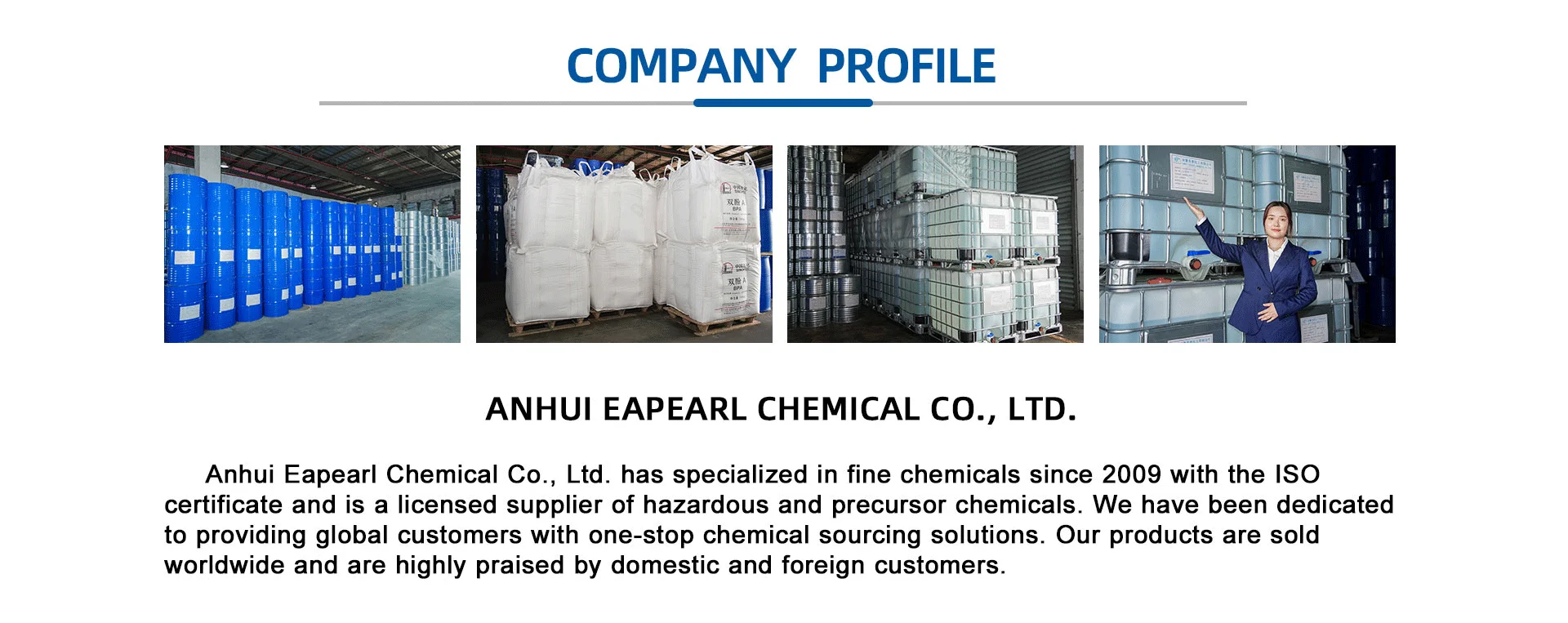
Manufacturer since 2009 · Tongling, Anhui ISO certified Licensed for hazardous & precursor chemicals
[email protected] · +86 186 5620 1888
Eapearl Chemical

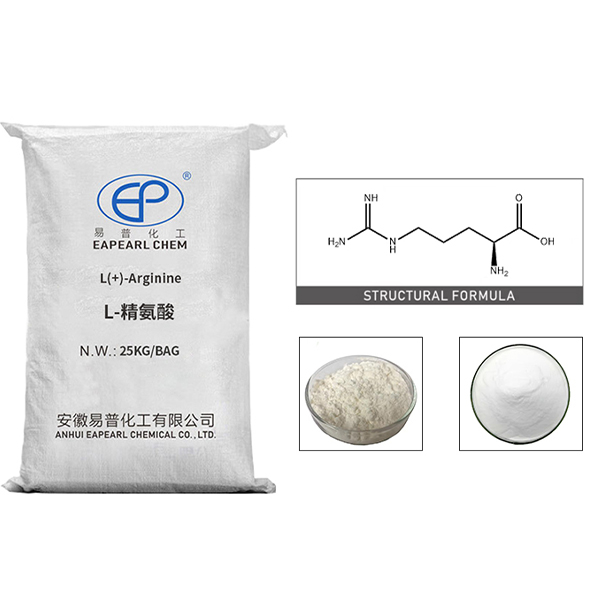
L (+)-Arginine

Arg

CAS 74-79-3 EC 200-811-1 C6H14N4O2 Powder SDS published CLP Warning

⚠️ Note: This safety data sheet is provided in English; a localized version is being prepared.

MolGod_SDSCARD_1
REACH 2020/878
v2 · 08.09.2026

Specification

Product NameL (+)-Arginine
Other NamesArg
CAS No.74-79-3
EINECS No.200-811-1
MFC6H14N4O2
Molecular weight174.2
Purity99%
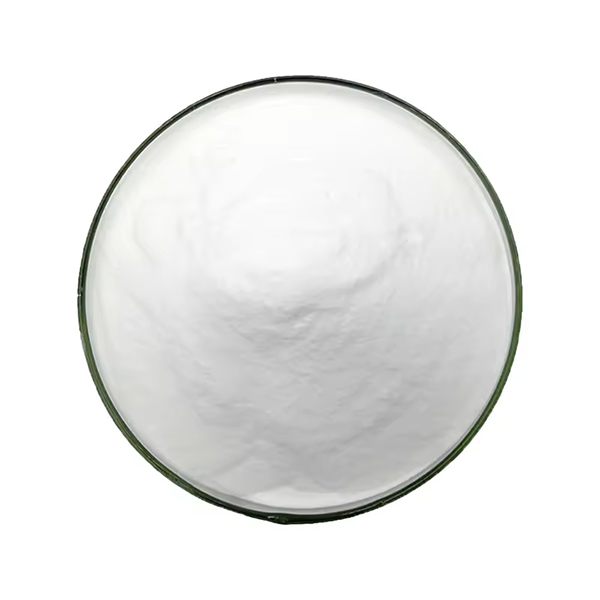
AppearanceWhite crystalline powder
Density1.2297 (rough estimate)
melting point222 °C (dec.) (lit.)
boiling point305.18°C (rough estimate)
flash (ing) point201.2°C

Values are typical for the standard grade. Tighter specifications are available — state the target in your inquiry and we confirm against the production batch.

Hazard classification

GHS pictogram GHS07 — Irritant / harmful

Warning

Classification source — PubChem C&L (consensus filter, not harmonised)

No harmonised entry exists for this substance; the classification shown is the supplier consensus reported to ECHA and should be confirmed for your intended use.

Precautionary statements (1)
  • P264 Wash thoroughly after handling

Substance identity verified against the registry entry on 2026-09-02.

Packaging and shipping
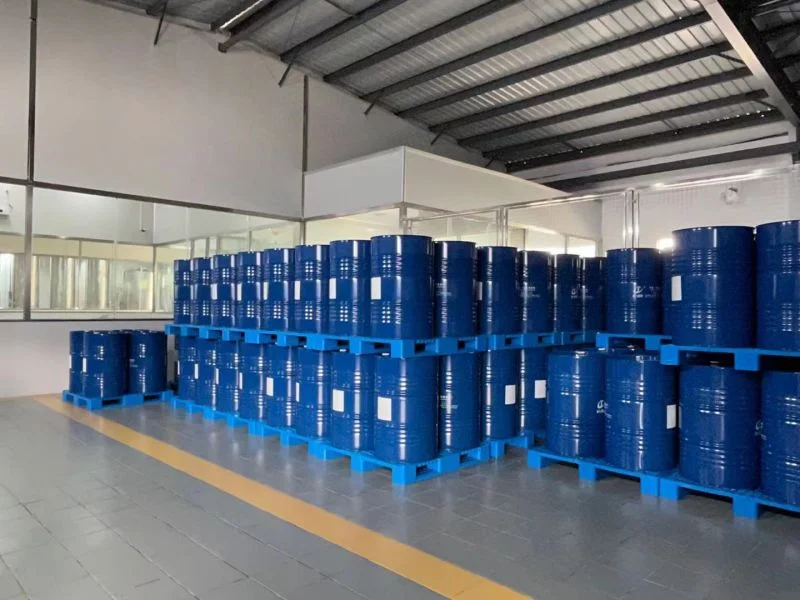
Dag25kg
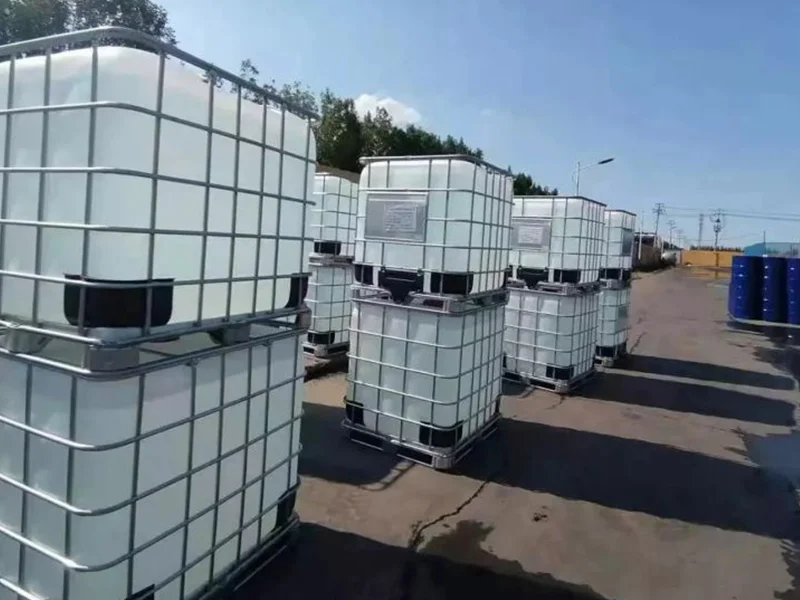
IBC Dag25kg
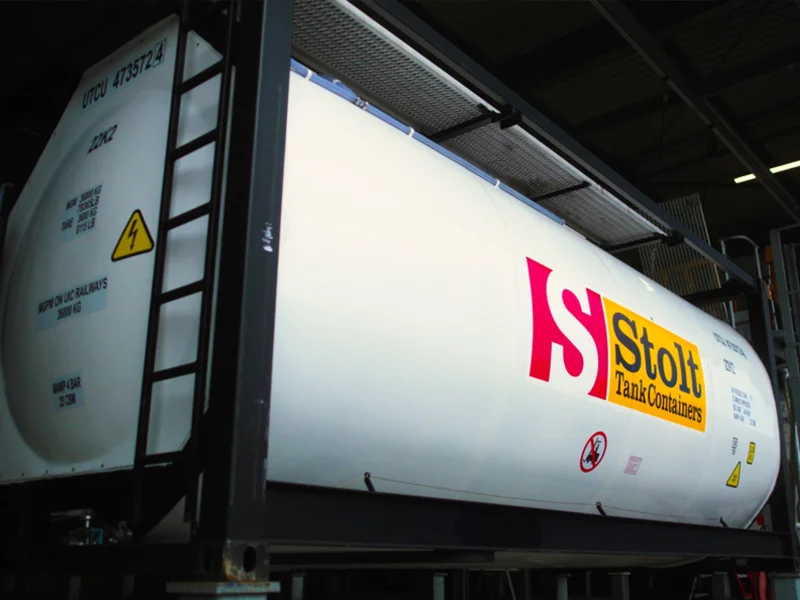
ISO tank (20ft)24–26 m³
ISO tank (40ft)48–50 m³
L (+)-Arginine
L (+)-Arginine
L (+)-Arginine

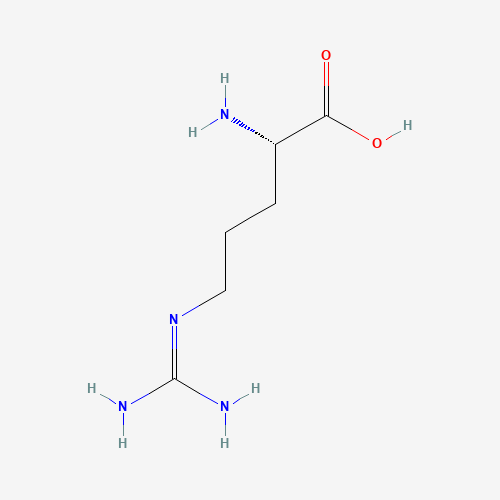
L-Arginine is a semi-essential alkaline amino acid for the human body, playing a central role in protein synthesis and various key physiological metabolic pathways. Its most notable function is as a direct precursor for the synthesis of nitric oxide (NO). Thanks to its unique basic guanidine structure, high biological activity, excellent water solubility, and outstanding safety, L-Arginine has become an indispensable key raw material in modern medical health, high-end functional foods, biopharmaceuticals, personal care, and life science research fields. We are committed to providing scientific and rigorous attitude and stable and reliable products to support human health and technological progress with basic molecular support.
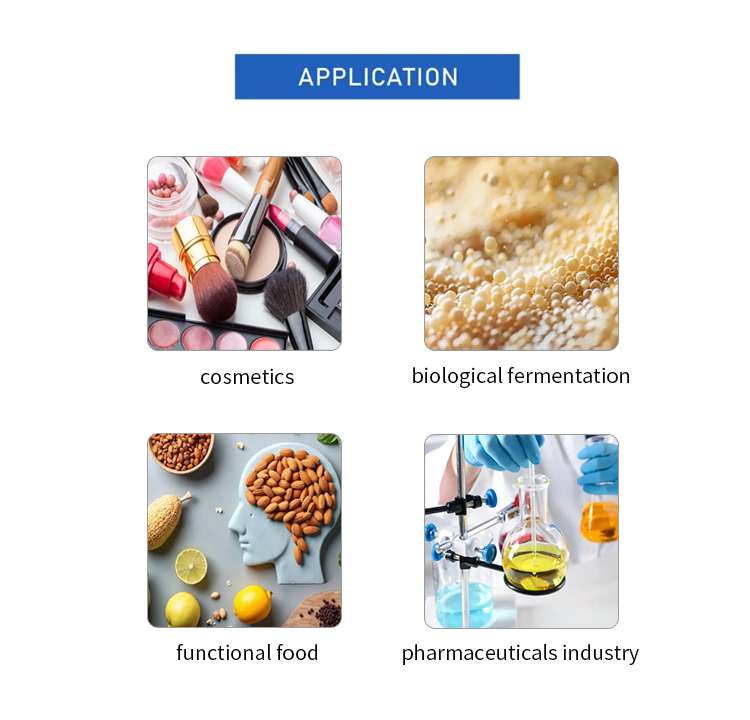
L-Arginine, manufacturer, provides pharmaceutical raw materials, functional foods, high-end cosmetics, biological fermentation, research and other applications.L-Arginine, manufacturer, provides pharmaceutical raw materials, functional foods, high-end cosmetics, biological fermentation, research and other applications.L-Arginine, manufacturer, provides pharmaceutical raw materials, functional foods, high-end cosmetics, biological fermentation, research and other applications.

L-Arginine, manufacturer, provides pharmaceutical raw materials, functional foods, high-end cosmetics, biological fermentation, research and other applications.

Product Description

Anhui Eapearl Chemical Co., Ltd.As a professional production plant for amino acid series and high-value-added fine chemicals, relying on a profound understanding of the raw materials in the field of life science and a strict compliance management system, we provide customers with high-quality and multi-specification L-arginine products and professional application solutions. L-arginine is a semi-essential alkaline amino acid for the human body, and it is a core participant in protein synthesis and various key physiological metabolic pathways. Its most notable function is as a direct precursor for the synthesis of nitric oxide (NO). With its unique alkaline guanidine structure, high biological activity, excellent water solubility and outstanding safety, L-arginine has become an indispensable key raw material in modern medical health, high-end functional food, biopharmaceuticals, personal care and life science research fields. We are committed to providing scientific and rigorous attitudes and stable and reliable products to support human health and technological progress.

The core value of L-arginine stems from its multiple crucial roles at the physiological and biochemical levels, elevating it from a simple nutritional molecule to a functional one:

The precursor of nitric oxide (NO): This is its most fundamental functional value. Under the catalysis of nitric oxide synthase (NOS) in the body, L-arginine is converted into NO and citrulline. NO is an important vascular endothelial dilator factor, neurotransmitter, and immune regulatory molecule, crucial for maintaining cardiovascular health, immune function, and nervous system function.

A strongly basic amino acid: The guanidine group in its side chain is one of the most basic groups in the biological world, allowing it to carry a positive charge at neutral pH and participate in protein interactions, nucleic acid binding (such as histones), and as a pH buffer.

A key intermediate in the urea cycle: Involved in ammonia detoxification and urea production, it is of great significance for maintaining nitrogen balance and liver function.

Safety and biocompatibility: It is a natural component of the human body, involved in normal metabolism, with high safety. It has been recognized by the US FDA as a “generally recognized as safe” (GRAS) substance.
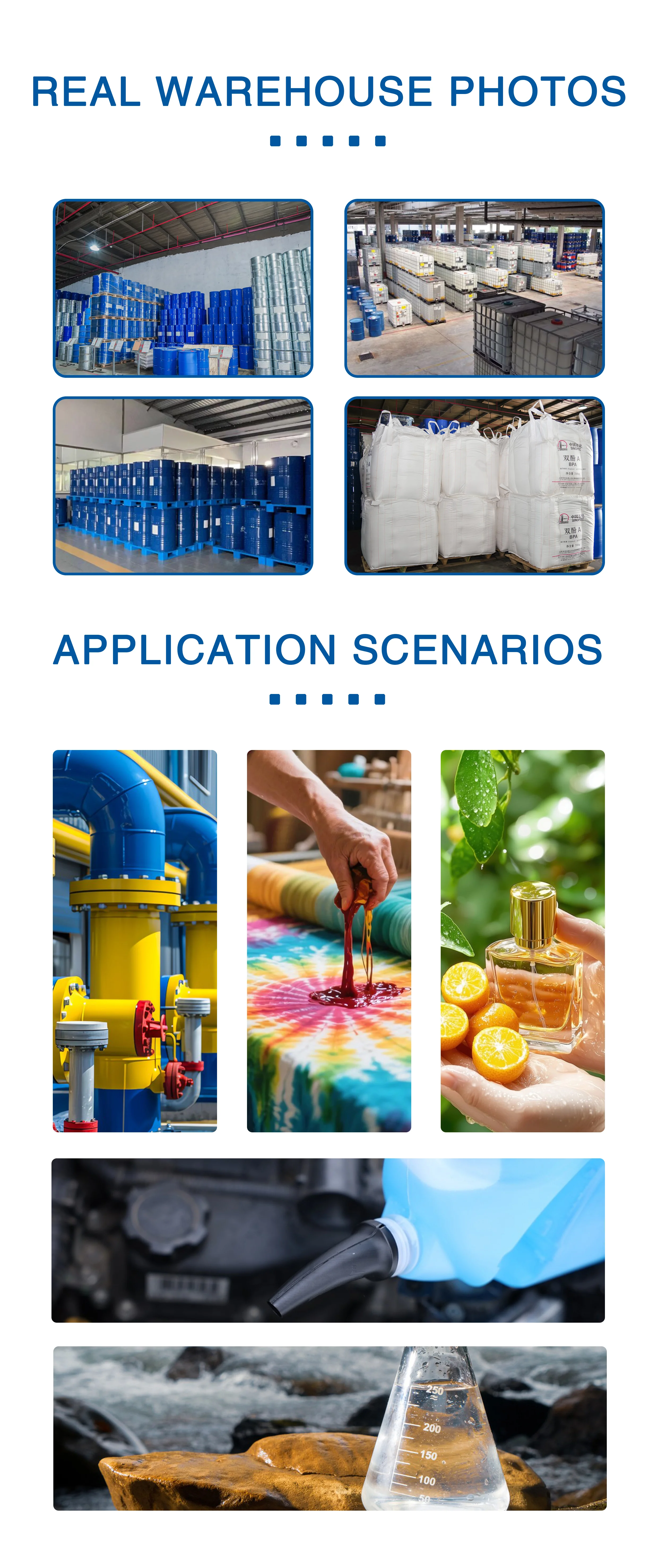
L-Arginine, manufacturer, provides pharmaceutical raw materials, functional foods, high-end cosmetics, biological fermentation, research and other applications.

L-Arginine, manufacturer, provides pharmaceutical raw materials, functional foods, high-end cosmetics, biological fermentation, research and other applications.

Delivery&Payment method

L-Arginine, manufacturer, provides pharmaceutical raw materials, functional foods, high-end cosmetics, biological fermentation, research and other applications.

Frequently asked

In what packaging is L (+)-Arginine shipped?

Standard formats are Dag (25kg), IBC Dag (25kg), ISO tank (20ft) (24–26 m³), ISO tank (40ft) (48–50 m³). Other packaging can be arranged for full-container orders.

Is a safety data sheet available for L (+)-Arginine?

Yes. A full safety data sheet for CAS 74-79-3 is published and linked from this page; a signed copy is issued with the shipping documents.

What purity do you supply?

The standard grade is 99%. Tighter specifications are confirmed against the production batch before shipment.
Related products

🧬 Wizualizator molekuły 3D
Ładowanie molekuły...
Model 3D L-Arginine, CAS 74-79-3, wzór sumaryczny C6H14N4O2, masa molowa 174.20 g/mol

Dane transkrybowane z rejestrów regulacyjnych i literatury fachowej, z podaniem źródła i wydania. Nie zastępują karty charakterystyki dostawcy. Pola bez zapisanego źródła oznaczone jako takie.

📊 Dane fizykochemiczne — CAS 74-79-3MolGod_PROPHUB_MAIN
📊 Właściwości fizykochemiczne

Szybki przegląd

Wzór: C6H14N4O2
MW: 174.2 g/mol
CAS: 74-79-3
🔬 Właściwości zaawansowane

Identyfikatory chemiczne

SMILES: C(C[C@@H](C(=O)O)N)CN=C(N)N

Ostatnia aktualizacja: niepotwierdzona

Przegląd chemiczny: L-ArginineMolGod_OVERVIEW_1
Wzór sumarycznyC6H14N4O2[1]
Masa cząsteczkowa174.2 g/mol[1]
Temperatura topnienia244 °C
LogP (lipofilowość)-4.2[1]
Nazwa IUPAC(2S)-2-amino-5-(diaminomethylideneamino)pentanoic acid[1]
SMILESC(C[C@@H](C(=O)O)N)CN=C(N)N[1]
InChIKeyODKSFYDXXFIFQN-BYPYZUCNSA-N[1]

Synonimy: L-arginine · arginine · 74-79-3 · L-(+)-Arginine · (S)-2-Amino-5-guanidinopentanoic acid

Data sources: PubChem (NLM/NIH)
Last updated: 2026-09-21

📚 Naukowe referencje (Chicago Author-Date) (1 źródeł)
  1. PubChem. National Center for Biotechnology Information (NIH/NLM), chemical compound database. dotyczy: Wzór sumaryczny · Masa cząsteczkowa · LogP (lipofilowość) · Nazwa IUPAC · SMILES · InChIKey

BADANIA NAUKOWE

[1]PubMed2026
Scobie C, Dean R, Stavisky J et al.. (2026). "Diagnostic accuracy of symmetric dimethylarginine for chronic kidney disease in cats and dogs: A systematic review.". The Veterinary record. https://doi.o
[2]PubMed2026
Hu H, Yang Q, Hu J et al.. (2026). "ESRRA-ATG5-Mediated mitophagy enhances arginine metabolism to alleviate diabetic kidney disease.". Autophagy. https://doi.org/10.1080/15548627.2025.2601874
[3]PubMed2026
Ali̇hossei̇ni̇ H, Çolakoğlu EÇ, Haydardedeoğlu AE et al.. (2026). "N-acetylcysteine reduces serum creatinine, blood urea nitrogen, symmetric dimethylarginine and urine protein to creatinine ratio in c
[4]PubMed2026
Zhang X, Hao Y, Han D et al.. (2026). "PRMT3-Mediated Arginine Methylation Stabilizes PCSK9 to Promote Aortic Valve Calcification.". Circulation. https://doi.org/10.1161/CIRCULATIONAHA.125.078830
[5]PubMed2026
Kerndl M, Musiejovsky L, Komljenovic A et al.. (2026). "Monocyte infiltration induces CNS arginine catabolism to fuel neuroinflammation.". Nature immunology. https://doi.org/10.1038/s41590-026-02516-4
[6]PubMed2026
Bhattacharjee S, Das S, Chowdhury B et al.. (2026). "PRMT5 in mitochondria regulates mtDNA stability through TFAM arginine methylation.". Nature communications. https://doi.org/10.1038/s41467-026-6967
[7]PubMed2026
Pan S, Wang J, Wang B et al.. (2026). "Targeting arginine metabolism reverses bone immunosuppressive microenvironment and metastasis in ARID1A-deficient triple negative breast cancer.". Nature communi
[8]PubMed2026
Yu W, Sun R, Lu X et al.. (2026). "Dynamic regulation of lysine and arginine metabolism promotes immune evasion by limiting T cell function in cancer.". Science immunology. https://doi.org/10.1126/sci
📚 Naukowe referencje (Chicago Author-Date) 12 refs · 1 baz

MOLECULE Bibliografia per-CAS (live z 13+ baz)

Źródła: db:pubmed (12)

  1. db:pubmed Scobie C, Dean R, Stavisky J et al.. (2026). "Diagnostic accuracy of symmetric dimethylarginine for chronic kidney disease in cats and dogs: A systematic review.". The Veterinary record. https://doi.org/10.1002/vetr.70216
  2. db:pubmed Hu H, Yang Q, Hu J et al.. (2026). "ESRRA-ATG5-Mediated mitophagy enhances arginine metabolism to alleviate diabetic kidney disease.". Autophagy. https://doi.org/10.1080/15548627.2025.2601874
  3. db:pubmed Ali̇hossei̇ni̇ H, Çolakoğlu EÇ, Haydardedeoğlu AE et al.. (2026). "N-acetylcysteine reduces serum creatinine, blood urea nitrogen, symmetric dimethylarginine and urine protein to creatinine ratio in cats with chronic kidney disease: a double-blind, placebo-controlled clinical trial.". BMC veterinary research. https://doi.org/10.1186/s12917-026-05328-8
  4. db:pubmed Zhang X, Hao Y, Han D et al.. (2026). "PRMT3-Mediated Arginine Methylation Stabilizes PCSK9 to Promote Aortic Valve Calcification.". Circulation. https://doi.org/10.1161/CIRCULATIONAHA.125.078830
  5. db:pubmed Kerndl M, Musiejovsky L, Komljenovic A et al.. (2026). "Monocyte infiltration induces CNS arginine catabolism to fuel neuroinflammation.". Nature immunology. https://doi.org/10.1038/s41590-026-02516-4
  6. db:pubmed Bhattacharjee S, Das S, Chowdhury B et al.. (2026). "PRMT5 in mitochondria regulates mtDNA stability through TFAM arginine methylation.". Nature communications. https://doi.org/10.1038/s41467-026-69676-7
  7. db:pubmed Pan S, Wang J, Wang B et al.. (2026). "Targeting arginine metabolism reverses bone immunosuppressive microenvironment and metastasis in ARID1A-deficient triple negative breast cancer.". Nature communications. https://doi.org/10.1038/s41467-026-73574-3
  8. db:pubmed Yu W, Sun R, Lu X et al.. (2026). "Dynamic regulation of lysine and arginine metabolism promotes immune evasion by limiting T cell function in cancer.". Science immunology. https://doi.org/10.1126/sciimmunol.aeb7315
  9. db:pubmed Choe S, Mariam A, Ejaz M. (2026). "Polyproline Modulates Membrane Translocation of Arginine-Rich Cell-Penetrating Peptides: Insights from Molecular Dynamics Simulations.". The Journal of membrane biology. https://doi.org/10.1007/s00232-026-00381-8
  10. db:pubmed Han Y, Li N, Zhao Y et al.. (2025). "Lysosomal acidity and cathepsin L activate eosinophils via ARG1-mediated arginine metabolism in allergic airway inflammation.". Nature communications. https://doi.org/10.1038/s41467-025-65400-z
  11. db:pubmed Zhang L, Xiang J, Feng Y et al.. (2025). "Protein arginine methyltransferase 7-mediated arginine mono-methylation stabilizes SRY-box transcription factor 9 to promote non-small cell lung cancer progression.". Molecular biomedicine. https://doi.org/10.1186/s43556-025-00378-0
  12. db:pubmed Zhang P, Fan L, Teng M et al.. (2025). "The Role of Iron and Ferroptosis in the Pathogenesis of L-Arginine-Induced Acute Pancreatitis.". Bulletin of experimental biology and medicine. https://doi.org/10.1007/s10517-026-06550-y
Status regulacyjny substancji
Ta substancja podlega wymogom regulacyjnym: gospodarka odpadami niebezpiecznymi (BDO). Szczegoly w sekcji "Status regulacyjny (REACH/ECHA/CLP)" oraz na karcie SDS. Informacja regulacyjna — nie ogranicza zakupu w sklepie.
🧮 Kalkulator stechiometrycznyMolGod_STOICH_1
🧪 Dane chemiczneMolGod_CHEMDATA_1
Numer CAS
74-79-3
Wzór sumaryczny
C6H14N4O2
Masa molowa
174.20 g/mol
Nazwa IUPAC (EN)
(2S)-2-amino-5-(diaminomethylideneamino)pentanoic acid
SMILES
C(C[C@@H](C(=O)O)N)CN=C(N)N
InChIKey
ODKSFYDXXFIFQN-BYPYZUCNSA-N
📡 Data sourcesMolGod_SOURCES_1

The data in this widget comes from the following verified scientific sources:

  • PubChem — National Center for Biotechnology Information (NCBI/NIH), USA
  • ChEMBL — European Bioinformatics Institute (EMBL-EBI), UK
  • NIST WebBook — National Institute of Standards and Technology, USA

Data is cached locally for speed — the widget also works offline.

⚗️ Physicochemical propertiesMolGod_PHYSTAB_2
Temp. topnienia
259.9

Source: PubChem, NIST WebBook. Last updated: date not confirmed

🔍 Identyfikatory zewnętrzneMolGod_EXTID_1
15 z 16 systemów ID94%
BazaIdentyfikatorAkcje
CAS Registry Number74-79-3Otwórz →
PubChem CID6322[1]Otwórz →
InChIKeyODKSFYDXXFIFQN-BYPYZUCNSA-N[1]Otwórz →
InChIInChI=1S/C6H14N4O2/c7-4(5(11)12)2-1-3-10-6(8)9/h…[1]
SMILESC(C[C@@H](C(=O)O)N)CN=C(N)N[1]
EC Number200-811-1[2]Otwórz →
ChEMBLCHEMBL1485[3]Otwórz →
DrugBankDB00125Otwórz →
KEGG CompoundC00062Otwórz →
HMDBHMDB0000517Otwórz →
ChemSpider6082[4]Otwórz →
MeSH UID (NLM)D001120Otwórz →
UNII (FDA)94ZLA3W45FOtwórz →
NSC Number (NCI)206269Otwórz →
WikiData QIDQ173670Otwórz →

Źródła: PubChem (NIH), Wikidata SPARQL, KEGG, ChEMBL (EBI), CompTox CTX (EPA).

📚 Naukowe referencje (Chicago Author-Date) (4 źródeł)
  1. PubChem. National Center for Biotechnology Information (NIH/NLM), chemical compound database. dotyczy: PubChem CID · InChIKey · InChI · SMILES
  2. ECHA. EC Inventory — EINECS, ELINCS, NLP and List Numbers assigned under REACH. Helsinki: European Chemicals Agency. dotyczy: EC Number
  3. ChEMBL. European Bioinformatics Institute (EMBL-EBI), bioactivity database. dotyczy: ChEMBL
  4. ChemSpider. Royal Society of Chemistry, chemical structure database. dotyczy: ChemSpider

Dalsza literatura

Publications thematically related to this CAS. They are not the source of any value given on this card.

Bibliografia (rozszerzona) (1)

  1. ★★☆☆☆ CROSSREF 🔓 OPEN ❓ unverified Anonymous. "All-Factor Analysis and Correlations on the Transmembrane Process for Arginine-Rich Cell-Penetrating Peptides.". https://doi.org/10.1021/acs.langmuir.9b01169.s001. link [dostep: 2026-09-02]
📡 Spektroskopia — CAS 74-79-3MolGod_SPECHUB_MAIN
📊 Bazy widm spektroskopowych — dane inline 9 źródeł MolGod_SPECDB_2

Widma pobierane na żądanie z 9 źródeł. Każde widmo jest zapisywane w naszej bazie — kolejne otwarcie = zero zapytania do zewnętrznego API. Pobierz JCAMP-DX / CSV / PNG przy każdym widmie bez szukania.

IR IR (Infrared) — NIST WebBook
Public domain (US Federal)
▶ Kliknij aby załadować widmo
🔗 Źródło
punktów
📚 NIST Chemistry WebBook, SRD 69
MS (NIST) Mass Spectrum (EI) — NIST WebBook
Public domain (US Federal)
▶ Kliknij aby załadować widmo
🔗 Źródło
punktów
📚 NIST Standard Reference Database 1A
UV-Vis UV/Visible Absorption — NIST WebBook
Public domain (US Federal)
▶ Kliknij aby załadować widmo
🔗 Źródło
punktów
📚 NIST Chemistry WebBook, SRD 69
¹H NMR NMR (¹H, ¹³C) — NMRShiftDB
CC-BY-SA 4.0
▶ Kliknij aby załadować widmo
🔗 Źródło
punktów
📚 Steinbeck C et al. (2003) J. Chem. Inf. Comput. Sci. 43(1):10–16 DOI: 10.1021/ci025588g
MS (MoNA) MoNA — MassBank of North America
CC-BY 4.0
▶ Kliknij aby załadować widmo
🔗 Źródło
punktów
📚 MassBank of North America (UC Davis) DOI: 10.1002/jms.1777
IR/NMR/MS (SDBS) SDBS — Spectral Database for Organic Compounds (Japan AIST)
Free for non-commercial

Źródło referencyjne — brak publicznego API. Otwórz w zewnętrznej bazie:

🔗 IR/NMR/MS (SDBS) →
📚 SDBSWeb: https://sdbs.db.aist.go.jp (AIST, Japan)
JP Monograph Japanese Pharmacopoeia — Monographs
Reference only

Źródło referencyjne — brak publicznego API. Otwórz w zewnętrznej bazie:

🔗 JP Monograph →
📚 Japanese Pharmacopoeia 18th Edition (2021)
WHO INN WHO — International Nonproprietary Names
WHO Model Lists (free)

Źródło referencyjne — brak publicznego API. Otwórz w zewnętrznej bazie:

🔗 WHO INN →
📚 WHO INN Programme
DOAJ DOAJ — Directory of Open Access Journals
OA journal index (mixed)

Źródło referencyjne — brak publicznego API. Otwórz w zewnętrznej bazie:

🔗 DOAJ →
📚 DOAJ — doaj.org
🔬 Interaktywne widma (live — NIST / MoNA / NMRShiftDB / SDBS) (2)

Dane pobierane na żywo z wielu źródeł (priority-chain). JCAMP-DX / CSV / PNG dostępne do pobrania pod każdym widmem. ⓘ Jedno źródło ★★☆☆☆

IR — Fourier-transform infrared

Ładowanie IR — Fourier-transform infrared…

MS — Mass spectrometry (EI 70eV)

Ładowanie MS — Mass spectrometry (EI 70eV)…

Wlasciwosci strukturalneMolGod_STRUCT3D_1

Ladowanie danych strukturalnych...

❓ Najczęstsze pytania (3)MolGod_FAQ_1
What is 74-79-3?
74-79-3 (CAS 74-79-3) is a chemical compound. The chemical data comes from PubChem (National Institutes of Health, USA).
Pomocne?
What is the CAS number of 74-79-3?
The CAS number for 74-79-3 is 74-79-3. A CAS Registry Number is the standard identifier for a chemical substance in scientific literature and in trade.
Pomocne?
How should 74-79-3 be stored?
74-79-3 should be stored as its safety data sheet directs \— typically in a dry, cool, well-ventilated place, away from heat and from materials it is incompatible with.
Pomocne?
➕ Zaproponuj pytanie
Pobierz pliki strukturyMolGod_STRDL_1

Pliki struktury molekularnej z bazy PubChem (NIH). Kompatybilne z programami: Avogadro, PyMOL, Jmol, ChemDraw.

Zrodlo: PubChem, National Library of Medicine (NIH). CID: 6322

🔄 Konwerter jednostek stężeń LIVE MolGod_UNITCONV_1

Wpisz stężenie L-Arginine w dowolnej jednostce — reszta obliczy się automatycznie.

MW: 174.20 g/mol · IUPAC Gold Book ↗

⚗️ Wzory konwersji + cytacje (per formuła)
KonwersjaWzórDokładnośćŹródło
% (w/v) ↔ molarityc (mol/L) = (% × 10) / MW±0.5% rel. when density ≈ 1.0 g/mLIUPAC (2019)
millimolar ↔ molarc (mol/L) = mM × 10⁻³ExactCohen ER, Cvitaš T, Frey JG, Holmström B, Kuchitsu K, Marquardt R, Mills I, Pavese F, Quack M, Stohner J, Strauss HL, Takami M, Thor AJ (2007)
molarity (mol/L)c = n/V = (m/MW)/V±0.1% (depends on MW precision)IUPAC (2019)
parts per million (mg/L) ↔ molarityc (mol/L) = ppm / (1000 × MW); equivalently ppm = mg/L for dilute aqueous±1% (density-independent for dilute solutions)IUPAC (2019)
mg/mL ↔ molarityc (mol/L) = (mg/mL × 1000) / MW / 1000 = mg/mL / MW × 1±0.2%Cohen ER, Cvitaš T, Frey JG, Holmström B, Kuchitsu K, Marquardt R, Mills I, Pavese F, Quack M, Stohner J, Strauss HL, Takami M, Thor AJ (2007)
g/L ↔ molarityc (mol/L) = (g/L) / MW±0.1% (depends on MW precision)Cohen ER, Cvitaš T, Frey JG, Holmström B, Kuchitsu K, Marquardt R, Mills I, Pavese F, Quack M, Stohner J, Strauss HL, Takami M, Thor AJ (2007)
mmol/L ↔ molarityc (mol/L) = mmol/L × 10⁻³ExactCohen ER, Cvitaš T, Frey JG, Holmström B, Kuchitsu K, Marquardt R, Mills I, Pavese F, Quack M, Stohner J, Strauss HL, Takami M, Thor AJ (2007)
Celsius ↔ KelvinT(K) = t(°C) + 273.15±0.01 K (ITS-90 scale)BIPM (Bureau International des Poids et Mesures) (2019)
Celsius ↔ FahrenheitT(°F) = T(°C) × 9/5 + 32±0.1 °FThompson A, Taylor BN (2008)
density-corrected % ↔ molarityc (mol/L) = (%w/w × ρ × 10) / MW, ρ in g/mL±0.1% when ρ known to 3 decimalsCohen ER, Cvitaš T, Frey JG, Holmström B, Kuchitsu K, Marquardt R, Mills I, Pavese F, Quack M, Stohner J, Strauss HL, Takami M, Thor AJ (2007)
📚 Bibliografia (8 źródeł autorytatywnych)
  1. Thompson A, Taylor BN (2008). Guide for the Use of the International System of Units (SI). NIST Special Publication 811 · DOI: 10.6028/NIST.SP.811-2008
    → Primary SI standard for US scientific usage
  2. Cohen ER, Cvitaš T, Frey JG, Holmström B, Kuchitsu K, Marquardt R, Mills I, Pavese F, Quack M, Stohner J, Strauss HL, Takami M, Thor AJ (2007). Quantities, Units and Symbols in Physical Chemistry — The IUPAC Green Book. RSC Publishing, 3rd ed. · DOI: 10.1039/9781847557889 · ISBN: 978-0-85404-433-7
    → Canonical IUPAC guide for chemistry quantities/units
  3. BIPM (Bureau International des Poids et Mesures) (2019). The International System of Units (SI), 9th edition. BIPM ·
    → International SI definitions (incl. redefined kilogram 2019)
  4. ISO/IEC (2022). Quantities and units — Part 1: General. International Organization for Standardization — ISO 80000-1:2022 ·
    → General rules for physical quantities and units
  5. ISO/IEC (2019). Quantities and units — Part 9: Physical chemistry and molecular physics. International Organization for Standardization — ISO 80000-9:2019 ·
    → Concentration / molality / amount-of-substance conventions
  6. Tiesinga E, Mohr PJ, Newell DB, Taylor BN (2021). CODATA recommended values of the fundamental physical constants: 2018. Rev. Mod. Phys. 93(2):025010 · DOI: 10.1103/RevModPhys.93.025010
    → Avogadro, gas constant, molar volume (2019 SI revision)
  7. IUPAC (2019). Compendium of Chemical Terminology — the IUPAC Gold Book (online). IUPAC · DOI: 10.1351/goldbook
    → Definitions of mass fraction, molality, normality, ppm, activity
  8. Mills IM, Cvitaš T, Homann K, Kallay N, Kuchitsu K (1988). Quantities, Units and Symbols in Physical Chemistry. Blackwell Scientific Publications, 1st ed. · ISBN: 0-632-01773-5
    → Historical predecessor of IUPAC Green Book
Podobne struktury molekularneMolGod_SIMSTR_1

Ladowanie podobnych struktur...

Wyjasnienia naukoweMolGod_EDU3D_1

Automatycznie wygenerowane wyjasnienia na podstawie wlasciwosci molekularnych i oznaczen GHS. Zrodlo: dane PubChem + klasyfikacja CLP/GHS.

Cząsteczka silnie polarna

Ta czasteczka ma LogP = -4.20, co oznacza silna preferencje do fazy wodnej. Wynika to z obecnosci grup funkcyjnych zdolnych do tworzenia wiazan wodorowych (np. -OH, -NH2, -COOH). Substancja dobrze rozpuszcza sie w wodzie i rozpuszczalnikach polarnych.

Interpretacja na podstawie XLogP3 (PubChem)
🧪 Kreator przygotowania roztworu WIZARD MolGod_PREP_1
① Wybierz stężenie
② Objętość docelowa
③ Rozpuszczalnik

Obliczenia wg: IUPAC Gold Book ↗, Merck ↗

Chemia obliczeniowaMolGod_COMPCHEM_1

Ladowanie danych obliczeniowych...

🛡️ Bezpieczeństwo — CAS 74-79-3MolGod_SAFEHUB_MAIN
Informacja o ograniczeniach danych. Informacje dotyczące bezpieczeństwa zawarte na tej stronie mają charakter informacyjny i nie zastępują pełnej karty charakterystyki (SDS). Przed użyciem produktu zapoznaj się z aktualną kartą charakterystyki producenta oraz wytycznymi GHS/CLP. Klasyfikacja CLP dotyczy czystej substancji bulk, nie preparatów handlowych.

Klasyfikacja GHS/CLP — Rozporządzenie (WE) nr 1272/2008 + UN GHS Rev. 9 (2021).

⚠ Uwaga (Warning)
GHS07 — Drażniące / szkodliwe
GHS07 Drażniące / szkodliwe

🚨 Zwroty wskazujące rodzaj zagrożenia (H)

  • H319 — Działa drażniąco na oczy

🛡 Zwroty określające środki ostrożności (P)

  • P264 — Dokładnie umyć ręce po użyciu

⚠ Klasyfikacja na podstawie konsensusu źródeł (PubChem / zgłoszenia dostawców) — nie zweryfikowano względem zharmonizowanej klasyfikacji w załączniku VI (CLP). Zakres zagrożeń może być szerszy niż klasyfikacja urzędowa; przed zastosowaniem zweryfikować z aktualną kartą charakterystyki dostawcy.

Tłumaczenia: Rozporządzenie CLP (WE) 1272/2008, Załącznik III i IV. Dane: PubChem/NLM.

📚 Skonsolidowane referencje naukowe — Chicago Author-Date 10 źródeł

Referencje zebrane ze wszystkich zakładek Safety Hub. CAS: 74-79-3 · PubChem ↗

  1. Parlament Europejski i Rada UE. 2008. "Rozporządzenie (WE) nr 1272/2008 w sprawie klasyfikacji, oznakowania i pakowania substancji (CLP)." Dz.Urz. UE L 353. [↗] GHS, Regulacje
  2. United Nations Economic Commission for Europe (UNECE). 2021. "Globally Harmonized System of Classification and Labelling of Chemicals (GHS), Ninth Revised Edition." United Nations, Geneva. [↗] GHS
  3. Goldfrank, Lewis R., Robert S. Hoffman, Mary Ann Howland, et al.. 2019. "Goldfrank's Toxicologic Emergencies, 11th ed.." McGraw-Hill Education, New York. ISBN 978-1-25-985961-8. Pierwsza pomoc, Toksykologia
  4. National Institute for Occupational Safety and Health (NIOSH). 2023. "NIOSH Pocket Guide to Chemical Hazards (DHHS Publ. 2005-149)." U.S. Department of Health and Human Services / CDC, Cincinnati, OH. [↗] Pierwsza pomoc, PPE, Toksykologia
  5. European Committee for Standardization (CEN). 2016. "EN 374-1:2016 — Protective gloves against dangerous chemicals and micro-organisms." CEN, Brussels. [↗] PPE
  6. UNECE. 2023. "European Agreement Concerning the International Carriage of Dangerous Goods by Road (ADR 2025)." United Nations, Geneva. [↗] Utylizacja, Regulacje
  7. National Fire Protection Association (NFPA). 2022. "NFPA 400 — Hazardous Materials Code." NFPA, Quincy, MA. [↗] Magazynowanie
  8. Urben, P.G. (ed.). 2017. "Bretherick's Handbook of Reactive Chemical Hazards, 8th ed.." Butterworth-Heinemann / Elsevier, Oxford. [↗] Magazynowanie
  9. Ministerstwo Klimatu i Środowiska RP. 2023. "Baza danych o produktach i opakowaniach oraz o gospodarce odpadami (BDO)." Ministerstwo Klimatu i Środowiska, Warszawa. [↗] Utylizacja
  10. International Agency for Research on Cancer (IARC / WHO). 2024. "IARC Monographs on the Identification of Carcinogenic Hazards to Humans — List of Classifications." WHO, Lyon. [↗] Toksykologia

Zakładki z własnymi referencjami (Emergency, PPE, Storage, Waste) zawierają dodatkowe pozycje bibliograficzne wewnątrz swoich sekcji.

📈 Statystyka analityczna (t-test · RSD · Grubbs · Q-Dixon) ICH Q2

Wklej serię powtórzeń pomiarów (CSV lub po jednej liczbie w linii). Kalkulator policzy średnią, odchylenie, 95% CI, wykryje outliery (Grubbs + Dixon Q).

Separator: przecinek, spacja, tab, nowa linia. Min 3 pomiary.
📐 Formuły statystyczne
  • x̄ = Σxᵢ / n — średnia arytmetyczna
  • s² = Σ(xᵢ - x̄)² / (n-1) — wariancja próby
  • s = √s² — odchylenie standardowe
  • RSD% = (s / x̄) × 100% — względne odchylenie
  • CI₉₅ = x̄ ± t(0.05, n-1) × s / √n — Student's t
  • G = |xᵢ - x̄| / s — test Grubbsa
  • Q = |xsuspect - xnearest| / |xmax - xmin| — Dixon Q-test

Źródło: ICH Q2(R2) Validation of Analytical Procedures · ICH PDF ↗

🧪 Kalkulator receptur buforów UNIKALNE

Wybierz bufor z listy 20 popularnych systemów → wprowadź docelowe pH → otrzymasz dokładny przepis z masami do odważenia.

Krok 1: Wybierz system buforowy

📜 Historia przepisów (ostatnie 10)
Status farmakologiczny

Badania kliniczne Faza 3

Faza I
Faza II
Faza III
Dopuszczony

Faza III — wieloośrodkowe badania porównawcze na dużej populacji.

ChEMBL CHEMBL1485 ↗

Bibliografia (rozszerzona) (1)

  1. ★★☆☆☆ CROSSREF 🔓 OPEN ❓ unverified Anonymous. "All-Factor Analysis and Correlations on the Transmembrane Process for Arginine-Rich Cell-Penetrating Peptides.". https://doi.org/10.1021/acs.langmuir.9b01169.s001. link [dostep: 2026-09-02]
📅 Project Planner — Lab experiment manager NOWOŚĆ

Zaplanuj cały projekt laboratoryjny: dodaj eksperymenty z reagentami, powtórzeniami i czasem trwania. Otrzymasz wykres Gantta, listę zakupów (linki do sklepu!), budżet z 10% marginesem i macierz ryzyka GHS.

🧪 Rozpuszczalność i kompatybilność z solwentami MolGod_SOLUB_1
Molekuła
L-Arginine
Wzór
C6H14N4O2
logP (XLogP3)
-4.20
Masa (g/mol)
174.20
Polarność
Hydrofilowa (polarna)

⚠️ Estymacja GC (Hoftyzer-Van Krevelen). Brak danych literaturowych HSP dla tego CAS — precyzja ±2 MPa½. Weryfikuj eksperymentalnie.

Ra < R₀ = good miscibility · Ra < 1,5×R₀ = borderline · above = poor (R₀ — radius of the Hansen sphere of this molecule) For this molecule R₀ = 8..

Solwent Kompat. Ra Wizual GC-MS HPLC Zastosowania Referencje
Water (H₂O)182 g/L (pomiar)
✗ NieA (aqueous) (RP)
buffercell cultureanalyticalextraction (hydrophilic)
Ethanol (EtOH)brak podstawy✗ NieA/B modifier (RP/NP)
extractionspectroscopy (UV-Vis)synthesisHPLC modifier
Methanol (MeOH)brak podstawy✗ NieA/B (RP) (RP)
HPLC (eluent)LC-MSKarl FischerUV-transparent to 205 nm
Acetonebrak podstawy✗ NieB modifier (NP)
GC headspacecrystallisationdegreasingsynthesis
Acetonitrile (ACN)brak podstawy✗ NieB (RP) (RP)
HPLC eluent (gold standard)LC-MS (low UV cut-off, 190 nm)peptide analysis
DMSObrak podstawy✗ NieN/A (N/A)
NMR (d6-DMSO)cell biology (cryopreservation)drug deliverysynthesis
THFbrak podstawy✗ NieB (NP) (NP)
GPC/SEC (polymer analysis)Grignard synthesisorganometallics
DCM (CH₂Cl₂)brak podstawy✓ TakB (NP) (NP)
extractionNP-HPLCGC-MScrystallisation (anti-solvent)
Chloroform (CHCl₃)brak podstawy✓ TakN/A (toxic) (N/A)
NMR (CDCl3)lipid extraction (Folch method)NP-TLC
Hexanebrak podstawy✓ TakA (NP) (NP)
NP-HPLCoil extraction (lipids)GC-MSTLC (NP)
Toluenebrak podstawy✓ TakB (NP) (NP)
NMR (d8-toluene)synthesisazeotropic drying (Dean-Stark)
📚 Naukowe referencje dla solwentów (Chicago Author-Date) — kliknij aby rozwinąć

11 solvents · 54 full citations (NIST/CRC/IARC/Hansen/Reichardt/Smallwood/Wypych/Armarego/Snyder/GESTIS) — below.

Water (H₂O)
  1. NIST — NIST Chemistry WebBook — Water (CAS 7732-18-5)
  2. CRC — CRC Handbook of Chemistry and Physics, 104th ed., Sec. 8 (Properties of Water)
  3. IAPWS — IAPWS Release on Static Dielectric Constant of Water
  4. Reichardt 2011 — Solvents and Solvent Effects in Organic Chemistry
  5. GESTIS — GESTIS Substance Database — Water
Ethanol (EtOH)
  1. NIST — NIST Chemistry WebBook — Ethanol (CAS 64-17-5)
  2. CRC — CRC Handbook — Ethanol physical constants
  3. Snyder & Kirkland — Modern Liquid Chromatography — Ethanol eluotropic
  4. Smallwood — Handbook of Organic Solvent Properties — Ethanol
  5. GESTIS — GESTIS Substance Database — Ethanol
Methanol (MeOH)
  1. NIST — NIST Chemistry WebBook — Methanol (CAS 67-56-1)
  2. CRC — CRC Handbook — Methanol physical constants
  3. Snyder & Kirkland — Modern Liquid Chromatography — MeOH eluotropic, eo=0.95
  4. GESTIS — GESTIS Substance Database — Methanol
Acetone
  1. NIST — NIST Chemistry WebBook — Acetone (CAS 67-64-1)
  2. CRC — CRC Handbook — Acetone physical & thermodynamic constants
  3. Hansen 2007 — Hansen Solubility Parameters — Acetone (dD=15.5, dP=10.4, dH=7.0)
  4. Smallwood — Handbook of Organic Solvent Properties — Acetone
  5. GESTIS — GESTIS Substance Database — Acetone
Acetonitrile (ACN)
  1. NIST — NIST Chemistry WebBook — Acetonitrile (CAS 75-05-8)
  2. CRC — CRC Handbook — Acetonitrile constants
  3. Snyder & Kirkland — Modern Liquid Chromatography — ACN gold-standard HPLC eluent
  4. Reichardt 2011 — Solvents and Solvent Effects — ACN dipolar aprotic
  5. GESTIS — GESTIS Substance Database — Acetonitrile
DMSO
  1. NIST — NIST Chemistry WebBook — DMSO (CAS 67-68-5)
  2. Wypych 2019 — Handbook of Solvents Vol. 1 — DMSO comprehensive properties
  3. Hansen 2007 — HSP — DMSO (dD=18.4, dP=16.4, dH=10.2)
  4. Reichardt 2011 — Solvents and Solvent Effects — DMSO E_T(30)=45.1, dipolar aprotic
  5. GESTIS — GESTIS Substance Database — DMSO
THF
  1. NIST — NIST Chemistry WebBook — THF (CAS 109-99-9)
  2. Armarego 2009 — Purification of Laboratory Chemicals — THF drying & peroxide test
  3. Hansen 2007 — Hansen Solubility Parameters — THF (dD=16.8, dP=5.7, dH=8.0)
  4. Smallwood — Handbook of Organic Solvent Properties — THF
  5. GESTIS — GESTIS Substance Database — Tetrahydrofuran
DCM (CH₂Cl₂)
  1. NIST — NIST Chemistry WebBook — Dichloromethane (CAS 75-09-2)
  2. IARC 71 — IARC Monograph 71 — DCM (Group 2A carcinogen)
  3. Hansen 2007 — Hansen Solubility Parameters — DCM (dD=18.2, dP=6.3, dH=6.1)
  4. Reichardt 2011 — Solvents and Solvent Effects — DCM polarity index
  5. GESTIS — GESTIS Substance Database — Dichloromethane
Chloroform (CHCl₃)
  1. NIST — NIST Chemistry WebBook — Chloroform (CAS 67-66-3)
  2. IARC 73 — IARC Monograph 73 — Chloroform (Group 2B carcinogen)
  3. Hansen 2007 — Hansen Solubility Parameters — CHCl3 (dD=17.8, dP=3.1, dH=5.7)
  4. Reichardt 2011 — Solvents and Solvent Effects — CHCl3 H-bond donor strength
  5. GESTIS — GESTIS Substance Database — Chloroform
n-Hexane
  1. NIST — NIST Chemistry WebBook — n-Hexane (CAS 110-54-3)
  2. ATSDR n-Hexane — ATSDR Toxicological Profile for n-Hexane — neuropatia obwodowa (n-Heksan NIE jest kancerogenem IARC)
  3. Hansen 2007 — Hansen Solubility Parameters — n-Hexane (dD=14.9, dP=0, dH=0)
  4. Snyder & Kirkland — Modern Liquid Chromatography — n-Hexane NP standard, eo=0.00
  5. GESTIS — GESTIS Substance Database — n-Hexane
Toluene
  1. NIST — NIST Chemistry WebBook — Toluene (CAS 108-88-3)
  2. IARC 71 — IARC Monograph 71 — Toluene
  3. Hansen 2007 — Hansen Solubility Parameters — Toluene (dD=18.0, dP=1.4, dH=2.0)
  4. Smallwood — Handbook of Organic Solvent Properties — Toluene
  5. GESTIS — GESTIS Substance Database — Toluene
Teoria rozpuszczalności (zastosowane w przewidywaniu kompatybilności):
  1. Yalkowsky, Samuel H., and Shri C. Valvani. 1980. "Solubility and Partitioning I: Solubility of Nonelectrolytes in Water." Journal of Pharmaceutical Sciences 69 (8): 912–922. https://doi.org/10.1002/jps.2600690814 — General Solubility Equation (GSE): logS = 0.5 − logP − 0.01(MP−25).
  2. Hansen, Charles M. 2007. Hansen Solubility Parameters: A User's Handbook. 2nd ed. CRC Press. https://doi.org/10.1201/9781420006834 — HSP triplet (dD, dP, dH) + wzór Ra.
  3. Stefanis, E., and C. Panayiotou. 2008. "Prediction of Hansen Solubility Parameters with a New Group-Contribution Method." Int J Thermophys 29: 568–585. https://doi.org/10.1007/s10765-008-0415-z
  4. Reichardt, Christian, and Thomas Welton. 2011. Solvents and Solvent Effects in Organic Chemistry. 4th ed. Wiley-VCH. https://doi.org/10.1002/9783527632220 — E_T(30) polarity scale, solwatochromia.
  5. Snyder, Lloyd R., Joseph J. Kirkland, and John W. Dolan. 2010. Introduction to Modern Liquid Chromatography. 3rd ed. Wiley. https://doi.org/10.1002/9780470508183 — Eluotropic series, polarity index.
  6. Van Krevelen, D. W., and K. Te Nijenhuis. 2009. Properties of Polymers. 4th ed. Elsevier. https://doi.org/10.1016/B978-0-08-054819-7.X0001-5 — Hoftyzer–Van Krevelen group contribution dla dD/dP/dH z SMILES.
  7. Marcus, Yizhak. 1998. The Properties of Solvents. Wiley Series in Solution Chemistry, Vol. 4. ISBN 9780471983699 — Kompletny tabularny zestaw 250+ rozpuszczalników (ε, μ, donicity, acceptor numbers).
  8. PubChem Compound Database — CAS 74-79-3 lookup ↗ — logP (XLogP3), water solubility experimental + predicted.

Kompletna bibliografia w akordeonie REFERENCJE (na dole strony) — Chicago Manual of Style 17th ed., Author-Date.

⚗️ Sprawdź kompatybilność reakcji MolGod_RXNCOMP_1
1 0 0
Zdrowie: 1/4
Palność: 0/4
Reaktywność: 0/4
Wg NFPA 704 / obliczone z H-codes

Sprawdź czy L-Arginine jest kompatybilny z innym odczynnikiem

📦 Matryca kompatybilności przechowywania
Kwasy Zasady Utleniacze Łatwopalne Toksyczne Gazy
Kwasy
Zasady
Utleniacze
Łatwopalne
Toksyczne
Gazy
✓ Można razem · ⚠ Ostrożnie · ✗ NIE przechowywać razem · OSHA Chemical Segregation ↗

Dane kompatybilności z: Bretherick's Handbook (7th ed.) ↗, GESTIS ↗, ECHA REACH ↗, NFPA 704 ↗

🧮 Kalkulatory laboratoryjne (8) MolGod_LABCALC_1
Rozcieńczenie (C₁V₁=C₂V₂)
Molarność (M=n/V)
pH Bufor (Henderson-Hasselbalch)
Beer-Lambert (A=εcl)
Masa → Mole
Stężenie % → M
ppm → mg/L
Temperatura C↔F↔K

Formuły zweryfikowane: IUPAC Gold Book ↗, DOI ↗

📊 Bazy widm spektroskopowych MolGod_SPECDB_3
📋 Generator protokołu laboratoryjnego MolGod_PROTOCOL_1

Protokół wygenerowany na podstawie: GHS SDS, Aldrich Lab Guide ↗

🏷️ Generator etykiety (QR) MolGod_LABEL_1
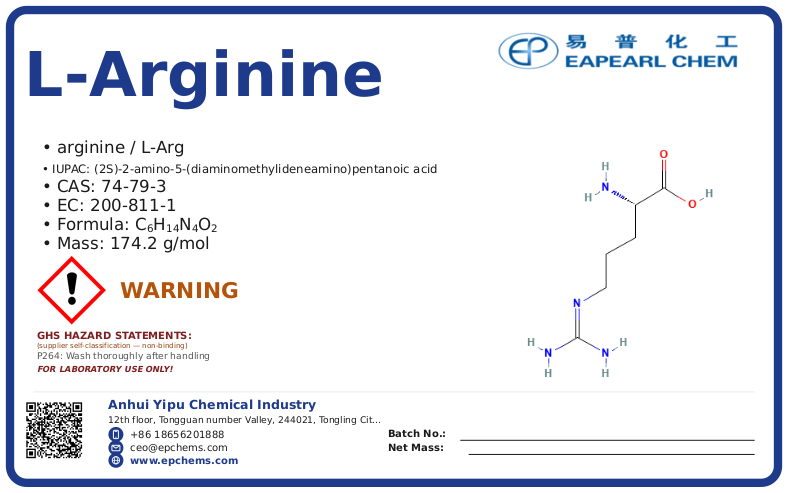
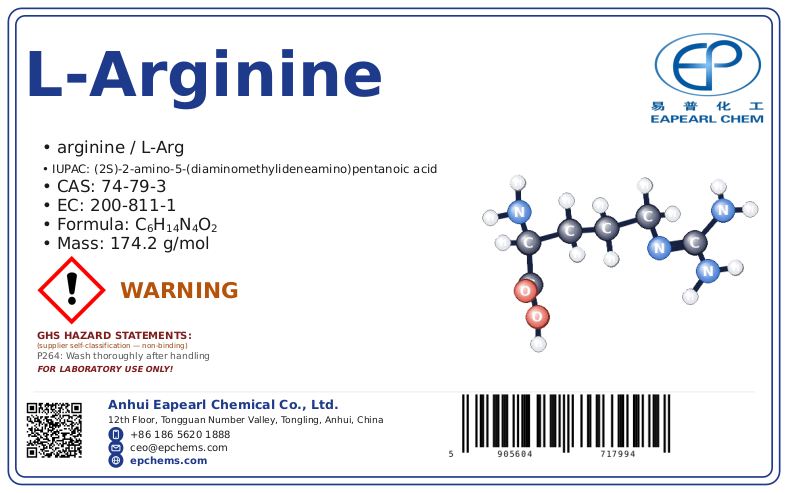
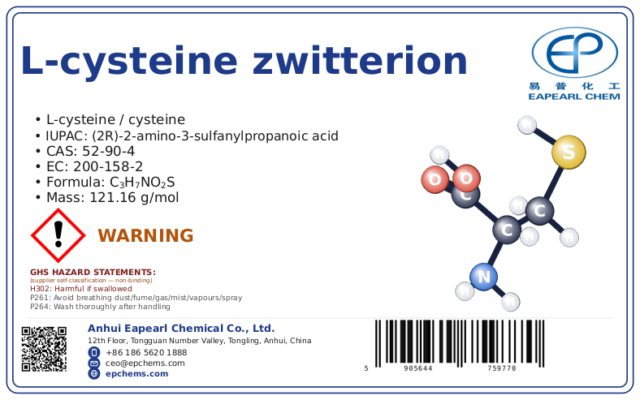
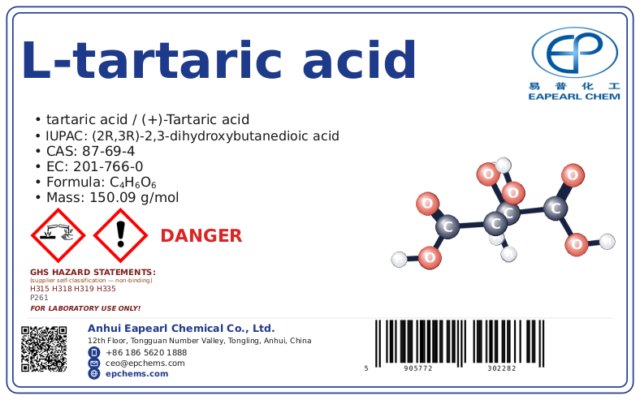
L-Arginine• arginine / L-Arg• IUPAC: (2S)-2-amino-5-(diaminomethylideneamino)pentanoic acid• CAS: 74-79-3• EC: 200-811-1• Wzór: C6H14N4O2• Masa: 174.2 g/molUWAGAZwroty wskazujące rodzaj zagrożenia (H):(zgłoszenia dostawców — samoklasyfikacja, niewiążące)P264: Dokładnie umyć ręce po użyciuWYŁĄCZNIE DO CELÓW LABORATORYJNYCH!Anhui Eapearl Chemical Co., Ltd.12th Floor, Tongguan Number Valley, Tongling, Anhui, China+86 186 5620 1888[email protected]epchems.com
🧪 Asystent przygotowania roztworu (Smart Prep) MolGod_PREP_2

Wpisz co chcesz przygotować — wygeneruję SOP

Przykłady poniżej — kliknij żeby wstawić:
Gotowe przepisy:
📚 Przegląd literatury naukowej — CAS 74-79-3MolGod_LITHUB_MAIN
⭐ Najważniejsze odkrycia (literatura naukowa) 5 publikacji
🏆 CAS 74-79-3 — multi-criteria ranking (W12): 30% cytowania · 20% recency · 20% topic · 15% historical · 15% open access.
  1. #1
    Pan S, Wang J, Wang B et al. (2026) · Nature communications
    Dlaczego ważne: Aktualna (2026) · open access
    SCORE 7.05 Farmakologia Open Access DOI ↗ PubMed ↗
  2. #2
    Xie Z, Li S, Yang J et al. (2026) · Cancer letters
    Dlaczego ważne: Aktualna (2026) · open access
    SCORE 7.05 Farmakologia Open Access DOI ↗ PubMed ↗
  3. #3
    Karadima E, Yilmaz C, Sinha A et al. (2026) · Frontiers in immunology
    Dlaczego ważne: Aktualna (2026) · open access
    SCORE 7.05 Farmakologia Open Access DOI ↗ PubMed ↗
  4. #4
    Basu S, Bhattacharyya A, Khan MA et al. (2026) · Nucleic acids research
    Dlaczego ważne: Aktualna (2026) · open access
    SCORE 6.25 Mechanizm Open Access DOI ↗ PubMed ↗
  5. #5
    Ding R, He L, Guo R et al. (2026) · Environmental science & technology
    Dlaczego ważne: Aktualna (2026)
    SCORE 4 Farmakologia DOI ↗ PubMed ↗
🔬 HPLC — metody i parametry — CAS 74-79-3MolGod_HPLCHUB_MAIN
🔬 Metody HPLC/GC (1 metoda)
📄
Glossogyne tenuifolia Extract Increases Nitric Oxide Production in Human Umbilical Vein Endothelial Cells
HPLCPharmaceuticals202190% ✓CC-BYResearch method (specificity, robustness)
Kolumna: C18, 250 x 4.6 mm, 5 μm
Faza: was methanol/0.05% acetic acid in water (4:6, v/v) with the flow rate…
Detekcja: UV 570 nm
Przepływ: 1.00 mL/min
Temp.: 37.0 °C
Inj.: 10 μL
Hsuan C, Lee T, Tseng W, Wu C, Chang C, Ko T, et al. Glossogyne tenuifolia Extract Increases Nitric Oxide Production in Human Umbilical Vein Endothelial Cells. Pharmaceuticals. 2021;14:577. doi:10.3390/ph14060577
The vascular nitric oxide (NO) system has a protective effect in atherosclerosis. NO is generated from the conversion of L-arginine to L-citrulline by the enzymatic action of endothelial NO synthase (eNOS). Compounds with the effect of enhancing eNOS expression are considered to be candidates for the prevention of atherosclerosis. In this study, extracts from the aerial, root, and whole plant of Glossogyne tenuifolia (GT) were obtained with ethanol, n-hexane, ethyl acetate (EA), and methanol extraction, respectively. The effects of these GT extracts on the synthesis of NO and the expression of eNOS in human umbilical vein endothelial cells (HUVECs) were investigated. NO production was determined as nitrite by colorimetry, following the Griess reaction. The treatment of HUVECs with EA extract from the root of GT and n-hexane, methanol, and ethanol extract from the aerial, root, and whole plant of GT increased NO production in a dose-dependent manner. When at a dose of 160 μg/mL, NO production increased from 0.9 to 18.4-fold. Among these extracts, the methanol extract from the root of GT (R/M GTE) exhibited the most potent effect on NO production (increased by 18.4-fold). Furthermore, using Western blot and RT–PCR analysis, treatment of HUVECs with the R/M GTE increased both eNOS protein and mRNA expression. In addition, Western blot analysis revealed that the R/M GTE increased eNOS phosphorylation at serine1177 as early as 15 min after treatment. The chemical composition for the main ingredients was also performed by HPLC analysis. In conclusion, the present study demonstrated that GT extracts increased NO production in HUVECs and that the R/M GTE increased NO production via increasing eNOS expression and activation by phosphorylation of eNOS at serine1177.
nitric oxideendothelial NO synthasehuman umbilical vein endothelial cellatherosclerosis
📈 Walidacja metody (ICH Q2)

Brak danych walidacyjnych. Skontaktuj się z autorem metody.

Parametry wg: ICH Q2(R2) ↗

🔧 Troubleshooting HPLC/GC
Szerokie piki / tailing
Przyczyny: Zużyta kolumna, złe pH fazy, przeciążenie kolumny, dead volume
Rozwiązanie: Wymień kolumnę, sprawdź pH buforu (±0.2), zmniejsz objętość nastrzyku, sprawdź połączenia
Dryft linii bazowej
Przyczyny: Zanieczyszczona faza ruchoma, gradient, temperatura niestabilna
Rozwiązanie: Odgazuj fazę, filtruj 0.22 µm, stabilizuj temperaturę kolumny, przemyj system
Brak piku
Przyczyny: Zła długość fali, substancja nie eluuje, rozkład termiczny, zła faza
Rozwiązanie: Sprawdź λmax, wydłuż gradient, obniż temperaturę, zmień fazę ruchomą
Piki duchów (ghost peaks)
Przyczyny: Zanieczyszczenie systemu, carry-over, zanieczyszczone fiolki
Rozwiązanie: Wyczyść system (MeOH/H₂O), użyj nowych fiolek, wstrzyknij blank
Niski odzysk
Przyczyny: Adsorpcja na ściankach, niedostateczna ekstrakcja, rozkład
Rozwiązanie: Dodaj IS, silanizuj szkło, zoptymalizuj ekstrakcję, sprawdź stabilność

Źródła: Snyder, Kirkland & Dolan ↗, Waters ↗

Kompletny przewodnik po metodzie HPLC Recenzowane

Scenariusze specyficzne dla cząsteczki, rozwiązywanie problemów i odniesienia literaturowe

Molecular Predictor

The predicted parameters for this molecule (CAS 74-79-3) are based on literature-backed models (Snyder-Dolan LSS, Neue pore-size rules).

Retention Time
-9.3 min
Range: 0.5 – -12.09
confidence: medium
Model: Snyder-Dolan LSS na kolumnie C18 150×4.6 mm, gradient 5→95% B w 15 min
UV λmax
210 nm
confidence: medium
No strong chromophore detected → 210 nm uniwersalne
Concentration
0.5 mg/mL
= 2.87 mM
confidence: high
Safe linear range detektora UV (nie przekroczy 1.5 AU)
Buffer pH
2
Range: 1.5 – 2.5
confidence: medium
Acid (pKa=0) → mobile phase pH 2 keeps the neutral form (better peak shape)
Injection Volume
20 μL
confidence: medium
Smaller volume for larger molecules (avoiding peak broadening)

⚠️ Predykcje oparte na modelach chemometrycznych — require validation against an actual measurement. Confidence: low/medium/high depending on the available descriptors.

Prawdziwy problem chemika

48 godzin stracone na niewidoczne piki

Day 1 — I prepared the sample, injected it, baseline flat. Day 2 — I repeated it 6× with different samples. Nothing. Wave check? Professor: "Take a look at the DAD scan". λ_max = 214 nm, and I had 254 nm set.

Jak to rozwiązujemy

1

Exact Solvent List

Name + CAS + Grade + Role in method

2

Grade Explanations

HPLC vs LC-MS vs Far UV — when to use which

3

Consumption Calculator

4

Shopping List

One-click add to cart

Kalkulator interaktywny

Deep Education

Zrozumieć chemię fazy ruchomej

Why Acetonitrile vs Methanol?
PropertyAcetonitrile (ACN)Methanol (MeOH)
Viscosity (20°C)0.37 cP0.59 cP (+59%)
Back Pressure~150 bar~210 bar (+40%)
UV Cutoff190 nm205 nm
Elution StrengthStrongerWeaker
Price (typical)115 PLN/L70 PLN/L (-39%)
Van Deemter Equation Impact

H = A + B/u + Cu

Higher viscosity (MeOH) → lower optimal flow rate → longer runtime.

Buffer Selection: Why NH₄HCO₃?
  • Volatile: MS-compatible (evaporates without residue)
  • pH range: 6.5–8.5 (ideal for most organic acids)
  • Shelf life: 4 weeks @ 4°C (make fresh weekly)
  • Concentration: 10 mM optimal (higher = ion suppression in MS)

Common Mistake: Using old buffer (>1 week room temp) = pH drift + microbial growth → ghost peaks.

Cost Savings Calculator

How much you save by using naszej metody zamiast alternatyw? Kwartalne koszty labu HPLC.

1. Solwenty — ACN vs MeOH

Nasza (ACN)Alternatywa (MeOH)
Cena/L115 PLN70 PLN
Runtime/sample23 min32 min (+40%)
Back pressure150 bar210 bar
Solwent/sample~130 mL~180 mL
Koszt/sample~5 PLN~4.5 PLN
Czas/sample23 min32 min
Czas pracy chemika
Total/quarter

2. Kolumna — z guard vs bez

Nasza (z guard)Bez guard
Guard column200 PLN / 100 inj
Main column lifetime2000 inj500 inj
Columns / quarter
Guards / quarter
Downtime wymiany (h)
Total/quarter

3. Method development — SOP vs scratch

Nasza (SOP template)Custom dev
Initial setup1 h (use template)40 h (screening of phases, columns, gradients)
Walidacja (ICH Q2)8 h24 h
Dokumentacja2 h (edit template)16 h
Ryzyko OOS w Q1~2%~15%
Total (jednorazowo)

4. Fast gradient (high-throughput) — ROI

Fast (5 min)Standard (23 min)
Runtime/sample5 min23 min
Samples/8h shift
Shifts potrzebnych
Koszt pracy
Savings
Total annual savings:

Najczęściej zadawane pytania

0.79 g NH₄HCO₃ (MW 79.06). Dissolve in 900 mL, make up to 1000 mL, check pH = 7.0±0.2.

Source: r/chemistry

NIE dla LC-MS (sole w wodzie dest. → piki duchów). OK dla UV-HPLC tylko jeśli filtrujesz 0.22 μm. Bezpiecznie: HPLC grade 9 zł/L.

Source: ResearchGate

ACN: niższa lepkość (mniejsze ciśnienie), UV cutoff 190 nm. MeOH: 40% tańszy, ale wyższe ciśnienie +50 bar i UV cutoff 205 nm. Dla gradientu: ACN preferowany.

Source: Chromatography Forum

Dla logP= rekomendacja zależy: jeśli logP<2 (polarny) → MeOH retencja wystarczy; logP≥2 (niepolarny) → ACN daje lepszy peak shape. Dla tej molekuły (MW=174.20, CAS 74-79-3) zaczynaj od ACN w gradiencie 5→95% B.

Source: Snyder LSS Model

Gradient Problem From The Lab

Impurity profiling per ICH Q3

You are developing a stability-indicating method. You have to detect impurities at the 0.05% level. System suitability: Rs ≥ 2.0, LOD 0.01%.

Our Gradient Strategy

  • Initial hold 0–2 min @ 5% B — sample adsorbs on the head
  • Ramp 2–15 min do 95% B — linear, curve 6 (Empower)
  • Final hold 15–20 min @ 95% B — elute strongly retained
  • Re-equilibrate 20–23 min back to 5% B + 5 col.volumes

Gradient Visualizer

Gradient Timeline

#Time%B start%B endDurationSlope (Δ%B/min)Step

Slope & Dwell Volume Test

Slope (Δ%B/min)
Gradient volume (mL)
Dwell vol estimate (mL)
k*·t0 (dla Rs)

💡 Rule of thumb: slope 2-5 %B/min gives the best peak shape · dwell vol = empty tubing from the pump to the column (check a blank run without the column) · k*·t0 ≥ 3 dla Rs ≥ 2.0.

Snyder-Dolan LSS Model

Log k = log kw − S·φ, gdzie φ = fraction B. Optymalny gradient: Δφ ≈ 0.6–0.8 per 5 t0. Dla kolumny 250×4.6mm @ 1 mL/min → t0 ≈ 2 min → gradient 10–12 min.

Najczęściej zadawane pytania

Heurystyka Snyder: Rt ≈ 2.5·logP + 1.2 min. Dla (2S)-2-amino-5-(diaminomethylideneamino)pentanoic acid (logP=) → szacunkowe Rt=— min. ±30% wariancja zależnie od dead volume i gradient slope. Walidacja: wstrzyknij standard 10 μg/mL, zmierz Rt rzeczywisty, dostosuj gradient.

Source: Predictive modeling

Heurystyka Snydera: start%B = (logP - 1) × 10. Dla logP=2 → start 10% B. Zawsze z 2 min isocratic hold aby pozwolić próbce zaadsorbować.

Source: LCGC

Linear = płynne odklejanie związku od kolumny = lepszy peak shape (Tf < 1.3). Step gradient daje shock waves = artifacts.

Source: Snyder Seminar

Column Choice Dilemma

Why am I not seeing any peaks?

You injected the sample, you wait 23 min and... a flat line. Anxiety is rising.
Lesson learned (Student MSc, UW, 2024-10):
Wavelength 254 nm does not work for most carboxylic acids — use 210 nm.

Recommended Columns

A

Zorbax Eclipse Plus C18

150×4.6 mm · 3.5 μm · pH 2–9

B

Waters XBridge C18

150×4.6 mm · 3.5 μm · pH 1–12 (high pH)

C

Phenomenex Kinetex C18

100×4.6 mm · 2.6 μm core-shell · fast

Column Lifetime Rules

  • Clean samples: 2000–5000 injections
  • Biological matrix: 500–1000 injections
  • Crude extracts: 100–500 injections
  • Guard column = +4× main column lifetime

Najczęściej zadawane pytania

C18 (18 węgli, bardziej lipofilowa) dla logP 0-5. C8 (8 węgli) dla bardzo polarnych (logP <0). C4 dla białek. Twój związek logP~2 → C18.

Source: Phenomenex Knowledge

Rule of thumb: analytes MW10000 (proteins) → pore 1000 Å. For MW=174.20 (CAS 74-79-3) use a standard C18 100 Å column.

Source: Phenomenex Guide

Mała kolumnka (2cm) PRZED główną. Łapie zanieczyszczenia. Koszt 200 PLN, wymiana co 100 wstrzyknięć. Oszczędność: 1600 PLN na lifetime głównej kolumny.

Source: Agilent App Notes

Detection Gotcha

First column connection — no leak

A C18 100×4.6 mm column straight out of the box. How to connect it without dismantling it and spilling ACN over the autosampler?

DAD Settings

ParameterValueWhy
Wavelength210 nm (primary) + 254 nm (aromatic)Uniwersalne dla COOH/C=O
Bandwidth4 nmBalance of sensitivity vs selectivity
Response time0.5 sZgodne z peak width ~5 s
Reference λ360 nm, bw 100 nmKompensacja baseline drift

Alternative Detectors

  • RID — for compounds without UV absorbance (sugars, polymers). Sensitivity x1000 lower.
  • ELSD — uniwersalny, ale destroys sample (niezgodny z MS).
  • LC-MS/MS — LOD 1 pg, strukturalna potwierdzenie via MRM.
  • CAD — charged aerosol, lepsze od ELSD dla lipid/polar.

Validation Reality Check

Change control: transfer the method to a new HPLC

The old Agilent 1100 is due for replacement. New Waters Arc. How to run transfer validation without a repeat full validation?

USP <621> + ICH Q2(R1) Criteria

ParameterAcceptanceFormula
Resolution (Rs)≥ 2.02(tR2 − tR1) / (w1 + w2)
Tailing factor (Tf)≤ 1.5W0.05 / (2·f)
Plates (N)≥ 500016·(tR / w)²
RSD (6 injections)≤ 2.0%σ / μ × 100%
Linearity (R²)≥ 0.999080–120% spec, 5 levels

Pre-Flight SST Checklist

  • Inject the standard 6× in a row
  • Calculate Rs, Tf, N, RSD for each
  • ALL pass → proceed with samples
  • ANY fail → STOP, troubleshoot FIRST

Regulatory Compliance

The method was designed in accordance with the regulations below. Click a badge to see compliance details.

USP <621> Chromatography Compliant

United States Pharmacopeia General Chapter — requirements for HPLC systems.

  • Resolution (Rs) &geq; 2.0
  • Tailing factor (Tf) &leq; 2.0
  • Theoretical plates (N) &geq; 2000
  • Relative standard deviation (RSD) &leq; 2.0% (6 replicates)

Reference: USP-NF 2024, General Chapter <621> Chromatography

ICH Q2(R1) Method Validation Compliant

International Council for Harmonisation — walidacja metod analitycznych.

  • Specificity — baseline separation of all analytes
  • Linearity — R² &geq; 0.9990, 5 levels (80–120% of spec)
  • Accuracy — 98–102% recovery
  • Precision — RSD &leq; 2.0% (repeatability), &leq; 3.0% (intermediate)
  • Robustness — DoE across 5 factors (flow ±10%, temp ±5°C, pH ±0.2, %B ±2%, λ ±2 nm)

Reference: ICH Q2(R1) Validation of Analytical Procedures, 2005

EP 2.2.46 European Pharmacopoeia Compliant

European Pharmacopoeia — chromatographic separation techniques.

  • Harmonizowane z USP
  • System suitability identical do USP
  • Dopuszczalne substytucje kolumn per „same selectivity"

Reference: EP 11.0, Chapter 2.2.46

JP 2.00 Japanese Pharmacopoeia Compliant

Japanese Pharmacopoeia — aligned with USP/EP harmonisation after 2020.

  • Harmonizowane z USP post-2020
  • Japanese labs may require additional local validation

Reference: JP 18th Edition, General Chapter 2.00

FDA 21 CFR 211 cGMP Compliant

Current Good Manufacturing Practice for pharmaceutical products (USA).

  • §211.22 — QC unit responsibilities
  • §211.160 — laboratory controls
  • §211.165 — testing and release
  • §211.194 — laboratory records (complete + audit trail)
  • Data integrity per ALCOA+

Reference: 21 CFR Part 211 — Current Good Manufacturing Practice

ISO 17025 Testing Labs Aligned

International standard for the competence of testing laboratories.

  • Method validation per ISO 17025 §7.2
  • Measurement uncertainty udokumentowana
  • Traceability to SI units

Reference: ISO/IEC 17025:2017

Method Comparison Matrix

Comparison of our recommended method vs USP Monograph vs PubMed literature vs Vendor Application Note.

Parametr Nasza metoda ★ USP <621> Literatura Vendor (Agilent)
Kolumna Zorbax Eclipse Plus C18 150×4.6 mm L1 (C18, bonded, 5 μm) n/a (brak PubMed refs dla tego CAS) Zorbax SB-C18 150×4.6 mm
Particle size 3.5 μm 5 μm (USP default) 5 μm
Faza A 10 mM NH₄HCO₃ pH 7.0 Phosphate buffer pH 2.5 0.1% TFA w H₂O
Faza B Acetonitryl HPLC grade Acetonitryl / Methanol Acetonitryl / 0.1% TFA
Gradient 5 → 95% B w 15 min (linear) Isocratic (preferowane w USP) 10 → 90% B w 20 min
Flow 1.0 mL/min 1.5 mL/min 1.0 mL/min
Temperatura 30°C 25°C 40°C
Detekcja UV 210 nm + 254 nm UV 254 nm (standard USP) DAD 210/254 nm
Runtime 23 min 30 min 25 min
Rs (typ.) 2.3 ≥ 2.0 2.1
Walidacja USP <621> + ICH Q2(R1) USP <621> obligatoryjnie Application note only
Solvent cost/run ~5 PLN/run ~7 PLN/run ~6 PLN/run
Nasza = optymalizowana na koszt + czas + Rs ≥ 2.0 USP = pharmacopoeia reference (regulatory gold standard) Literatura = top-cited PubMed ref dla tego CAS Vendor = Agilent/Waters/Thermo application note

Interactive Troubleshooting Tree

Pick a symptom → see the most likely causes → click to see the fix.

Temperatura kolumny niestabilna 55%

Diagnoza: Column oven on? 30°C?

Fix: Turn the column thermostat on to 30°C.

⏰ 5 min warm-up ✓ 90% success rate
Wrong wavelength (254 nm vs 210 nm) 40%

Diagnoza: Method → DAD → Primary λ — check whether it is 210

Fix: Change the wavelength to 210 nm for compounds without aromatic rings.

⏰ 2 min ✓ 90% success rate
UV lamp not switched on 35%

Diagnoza: Status lampki na detektorze — zielona?

Fix: Turn on the lamp, wait 3-5 min for warm-up.

⏰ 5 min ✓ 95% success rate
Sample concentration too low 20%

Diagnoza: Is the sample >0.1 mg/mL?

Fix: Increase the concentration 10× to 1 mg/mL.

⏰ 10 min ✓ 85% success rate
Column clogged with particles 70%

Diagnoza: Do you filter samples through 0.22 μm?

Fix: Replace the column frit OR the guard column. In future, filter every sample.

⏰ 15 min 💵 200 PLN ✓ 75% success rate
Gradient za szybki 60%

Diagnoza: Jaki slope %B/min?

Fix: Zwolnij gradient: 13→56% B w 20 min zamiast 15 min.

✓ 80% success rate
Flow za wysoki 25%

Diagnoza: Flow 1.5 mL/min?

Fix: Zmniejsz do 0.8 mL/min.

✓ 70% success rate
Incorrect buffer pH 70%

Diagnoza: Zmierz pH bufora — 7.0±0.2?

Fix: Make fresh buffer 10 mM NH₄HCO₃ pH 7.0.

⏰ 15 min 💵 10 PLN ✓ 85% success rate
Column worn out 20%

Diagnoza: Number of injections? >2000?

Fix: Regeneruj: flush 100% ACN 30 min, potem 100% MeOH 30 min.

⏰ 1h 💵 20 PLN solvent ✓ 60% success rate
Overloading (too much sample) 10%

Diagnoza: Fronting + tailing at the same time? Concentration >5 mg/mL?

Fix: Reduce inj. vol 10→5 μL or dilute 2×.

⏰ 5 min ✓ 90% success rate

Najczęściej zadawane pytania

6× wstrzyknięcie standardu PRZED próbkami. Mierzysz Rs, Tf, RSD, N. Wszystkie muszą być PASS — inaczej nie analizuj. Kryteria: USP .

Source: USP Online

Dla API (active pharmaceutical ingredient) typowo 98-102% label claim. Dla (2S)-2-amino-5-(diaminomethylideneamino)pentanoic acid (CAS 74-79-3) sprawdź: (1) USP monograph jeśli istnieje, (2) kompendium pharmacopoeia wewnętrzna, (3) ICH Q6A dla specyfikacji nowych substancji. Related substances ≤0.10% per ICH Q3A.

Source: ICH Q6A

USP : Rs ≥ 2.0. Fix: (1) wolniejszy gradient +30%, (2) niższy flow 0.8 mL/min, (3) dłuższa kolumna 250mm, (4) niższa temp 20°C.

Source: FDA Guidance

Prep Mistakes That Ruined The Run

What to set on the DAD for an unknown compound?

You do not know λ_max. The DAD covers 200–800 nm. Set it wide or narrow? Use bandwidth 4 or 16 nm?

Sample Prep Protocol

  1. Dissolve 10 mg of sample in 10 mL of mobile phase (initial composition)
  2. Sonikuj 5 min → vortex 30 s
  3. Filtruj 0.22 μm PTFE (nie PVDF — adsorbuje!)
  4. Transfer 1 mL do HPLC vial z septum PTFE/silikon
  5. Przechowuj 4°C max 48h

Why Filter 0.22 μm?

Particles >0.22 μm clog the column inlet frit. Pressure rises +50 bar per 100 injections. Column lifetime drops from 2000 to 500 injections. Filter cost: 2 PLN. Column cost: 1800 PLN.

Complete Method PDF

Full protocol with all parameters

SOP Template

GMP-compliant SOP template

Validation Protocol

ICH Q2(R1) validation template

Bibliography (.bib)

All references in BibTeX format

Analiza powypadkowa — prawdziwe historie porażek Wnioski

Prawdziwe wpadki chemików — co się stało, co pomogło, czego unikać.

Why am I not seeing any peaks?

Student MSc, UW 2024-10 Poziom 2/5
Co się stało:

You injected the sample, you wait 23 min and... a flat line. Anxiety is rising.

💡 Lekcja:

Wavelength 254 nm does not work for most carboxylic acids — use 210 nm.

FDA finding — audit trail disabled

Director of QC, pharma 2025-11-04 Poziom 5/5
Co się stało:

FDA inspection Q3 2025. Warning Letter: "Empower audit trail disabled w 3 sekwencjach 2024-12". Investigation: stary operator który odszedł, miał privilege „Disable audit" do troubleshoot. NIKT nie wyłączył mu privileged after departure.

💡 Lekcja:

Privileged access review MONTHLY. Disable audit trail should never be enabled on prod. HR offboarding MUST trigger IT access revocation. Cost: 483 forms + 6 months of remediation.

Ask about this method

Cześć — jestem wytrenowany na wszystkich scenariuszach, FAQ i literaturze dla tej metody. Zapytaj mnie o cokolwiek.

Share your scenario

Do you have experience with this method? A problem you solved? A mishap you want to spare others? Write to us — after moderator approval it will appear here as „real case".

0 / 1500 characters
🔄 Alternatywne produktyMolGod_ALTPROD_1
⚠️ UWAGA NAUKOWA — Single-CAS Integrity
Listed below are OTHER molecules (structural alternatives / Tanimoto similarity). All physicochemical values (MW, pKa, LD50, GHS, spectra) apply to THESE alternatives, NOT the current molecule (CAS 74-79-3). For data on the current molecule see the "Chemical data", "GHS", "Toxicology" accordions above.
L-Tryptophan
Ta sama kategoria · Ta sama kategoria produktu
L-Valine
Ta sama kategoria · Ta sama kategoria produktu
Titanium Dioxide
Ta sama kategoria · Ta sama kategoria produktu
Soda Ash Light
Ta sama kategoria · Ta sama kategoria produktu
Sodium Benzoate
Ta sama kategoria · Ta sama kategoria produktu
⚗️ Jonizacja w funkcji pH (Henderson-Hasselbalch)MolGod_PHION_1

Typ: Amfoteryczny · pKa: 2.17 · pKa2: 9.04

024681012140%50%100%% zjonizowany% niejonowypH
pH% jonowy% niejonowy
099.3 %0.7 %
259.7 %40.3 %
41.5 %98.5 %
60.1 %99.9 %
88.4 %91.6 %
1090.1 %9.9 %
1299.9 %0.1 %
14100.0 %0.0 %
Sources for this substance (12)
  • CRC Handbook 91st ed.
    Lide, David R., ed. 2010. CRC Handbook of Chemistry and Physics. 91st ed. Boca Raton, FL: CRC Press.
  • CRC Handbook 105th ed.
    Rumble, John R., Thomas J. Bruno, Maria J. Doa, and Donald R. Burgess, eds. 2024. CRC Handbook of Chemistry and Physics. 105th ed. Boca Raton, FL: CRC Press.
  • NIST WebBooklink
    Linstrom, Peter J., and William G. Mallard, eds. 2024. NIST Chemistry WebBook. NIST Standard Reference Database Number 69. Gaithersburg, MD: National Institute of Standards and Technology.
  • PubChem CID 6322link
    Kim, Sunghwan, Jie Chen, Tiejun Cheng, Asta Gindulyte, Jia He, Siqian He, Qingliang Li, et al. 2023. "PubChem 2023 update." Nucleic Acids Research 51 (D1): D1373-D1380. PubChem CID 6322.
  • DrugBank DB00125link
    Knox, Craig, Mike Wilson, Christen M. Klinger, Mark Franklin, Eponine Oler, Alex Wilson, Allison Pon, et al. 2024. "DrugBank 6.0: the DrugBank Knowledgebase for 2024." Nucleic Acids Research 52 (D1): D1265-D1275. DrugBank ID DB00125.
  • ChEMBL CHEMBL1908link
    Zdrazil, Barbara, Eloy Felix, Fiona Hunter, Emma J. Manners, James Blackshaw, Sybilla Corbett, Marleen de Veij, et al. 2024. "The ChEMBL Database in 2023." Nucleic Acids Research 52 (D1): D1180-D1192. ChEMBL ID CHEMBL1908.
  • KEGG COMPOUND C00062link
    Kanehisa, Minoru, Miho Furumichi, Yoko Sato, Masayuki Kawashima, and Mari Ishiguro-Watanabe. 2023. "KEGG for taxonomy-based analysis of pathways and genomes." Nucleic Acids Research 51 (D1): D587-D592.
  • IUPAC
    Serjeant, E. P., and Boyd Dempsey. 1979. Ionisation Constants of Organic Acids in Aqueous Solution. IUPAC Chemical Data Series No. 23. Oxford: Pergamon Press.
  • IUPAC
    Perrin, Douglas D. 1965. Dissociation Constants of Organic Bases in Aqueous Solution. IUPAC. London: Butterworths.
  • NIST
    Goldberg, Robert N., Nand Kishore, and Rebecca Lennen. 2002. "Thermodynamic Quantities for the Ionization Reactions of Buffers." Journal of Physical and Chemical Reference Data 31 (2): 231-370.
  • Textbook
    Nelson, David L., and Michael M. Cox. 2017. Lehninger Principles of Biochemistry. 7th ed. New York: W. H. Freeman.
Bibliografia metody (Chicago)
  • Henderson, L. J. 1908. "Concerning the Relationship between the Strength of Acids and Their Capacity to Preserve Neutrality." American Journal of Physiology 21 (4): 173-179.
  • Hasselbalch, K. A. 1917. "Die Berechnung der Wasserstoffzahl des Blutes aus der freien und gebundenen Kohlensäure desselben." Biochemische Zeitschrift 78: 112-144.
  • Po, Henry N., and N. M. Senozan. 2001. "The Henderson-Hasselbalch Equation: Its History and Limitations." Journal of Chemical Education 78 (11): 1499-1503.
  • Avdeef, Alex. 2012. "Absorption and Drug Development: Solubility, Permeability, and Charge State." 2nd ed. Wiley.
  • Avdeef, Alex. 2007. "Solubility of sparingly-soluble ionizable drugs." Advanced Drug Delivery Reviews 59 (7): 568-590.
  • Volgyi, Gergely, et al. 2007. "Potentiometric and spectrophotometric pKa determination of water-insoluble compounds." Analytica Chimica Acta 583 (2): 418-428.
  • Fini, Adamo, Giuseppe Fazio, and Giuseppina Feroci. 1997. "Solubility and solubilization properties of non-steroidal anti-inflammatory drugs." Pharmaceutica Acta Helvetiae 70 (4): 305-318.
  • Mauger, John W., Anthony N. Paruta, and Robert J. Gerraughty. 1972. "Solubilities of sulfadiazine, sulfisomidine, and sulfadimethoxine." Journal of Pharmaceutical Sciences 61 (1): 94-97.
  • Lyman, Warren J., William F. Reehl, and David H. Rosenblatt. 1990. "Handbook of Chemical Property Estimation Methods." American Chemical Society.
  • Marcus, Yizhak. 1998. "The Properties of Solvents." Wiley.
  • Serjeant, E. P., and Boyd Dempsey. 1979. Ionisation Constants of Organic Acids in Aqueous Solution. IUPAC Chemical Data Series No. 23. Oxford: Pergamon Press.
  • Perrin, Douglas D. 1965. Dissociation Constants of Organic Bases in Aqueous Solution. IUPAC. London: Butterworths.
  • Goldberg, Robert N., Nand Kishore, and Rebecca Lennen. 2002. "Thermodynamic Quantities for the Ionization Reactions of Buffers." Journal of Physical and Chemical Reference Data 31 (2): 231-370.
  • Rumble, John R., Thomas J. Bruno, Maria J. Doa, and Donald R. Burgess, eds. 2024. CRC Handbook of Chemistry and Physics. 105th ed. Boca Raton, FL: CRC Press.
  • Lide, David R., ed. 2010. CRC Handbook of Chemistry and Physics. 91st ed. Boca Raton, FL: CRC Press.
  • Kim, Sunghwan, Jie Chen, Tiejun Cheng, Asta Gindulyte, Jia He, Siqian He, Qingliang Li, et al. 2023. "PubChem 2023 update." Nucleic Acids Research 51 (D1): D1373-D1380.
  • Knox, Craig, Mike Wilson, Christen M. Klinger, Mark Franklin, Eponine Oler, Alex Wilson, Allison Pon, et al. 2024. "DrugBank 6.0: the DrugBank Knowledgebase for 2024." Nucleic Acids Research 52 (D1): D1265-D1275.
  • Zdrazil, Barbara, Eloy Felix, Fiona Hunter, Emma J. Manners, James Blackshaw, Sybilla Corbett, Marleen de Veij, et al. 2024. "The ChEMBL Database in 2023." Nucleic Acids Research 52 (D1): D1180-D1192.
  • Kanehisa, Minoru, Miho Furumichi, Yoko Sato, Masayuki Kawashima, and Mari Ishiguro-Watanabe. 2023. "KEGG for taxonomy-based analysis of pathways and genomes." Nucleic Acids Research 51 (D1): D587-D592.
  • Linstrom, Peter J., and William G. Mallard, eds. 2024. NIST Chemistry WebBook. NIST Standard Reference Database Number 69. Gaithersburg, MD: National Institute of Standards and Technology.
  • Nelson, David L., and Michael M. Cox. 2017. Lehninger Principles of Biochemistry. 7th ed. New York: W. H. Freeman.
📄 Certyfikaty Analiz (CoA) CAS 74-79-3 brak MolGod_COA_2

Brak certyfikatów dla tego produktu w bazie.

📚 Naukowe referencje (Chicago Author-Date) — kliknij aby rozwinąć

Standardy zarządzania batchami i certyfikacji laboratoryjnej — 13 niezależnych źródeł (ICH Q1/Q3/Q6/Q7/Q10 + ISO 17025 + WHO TRS + 21 CFR 211 + EMA + USP + Ph.Eur. + PIC/S + IPEC-PQG).

  1. International Council for Harmonisation (ICH). 2000. "Q7 Good Manufacturing Practice Guide for Active Pharmaceutical Ingredients." ICH Expert Working Group. [link ↗] — GMP for APIs — adopted by EMA, FDA, MHLW
  2. International Organization for Standardization. 2017. "ISO/IEC 17025:2017 General requirements for the competence of testing and calibration laboratories." ISO. [link ↗] — Lab accreditation standard underpinning every CoA
  3. World Health Organization. 2010. "WHO Good Manufacturing Practices for Pharmaceutical Products: Main Principles (WHO Technical Report Series No. 957, Annex 3)." WHO Press. [link ↗] — WHO TRS No. 957 — global reference for GMP
  4. International Council for Harmonisation (ICH). 2003. "ICH Q1A(R2): Stability Testing of New Drug Substances and Products." International Council for Harmonisation. [link ↗] — Source for batch shelf-life and retest dating
  5. International Council for Harmonisation (ICH). 2006. "ICH Q3A(R2): Impurities in New Drug Substances." ICH. [link ↗]
  6. International Council for Harmonisation (ICH). 1999. "ICH Q6A: Specifications for New Drug Substances and Products." ICH. [link ↗] — CoA acceptance-criteria specification standard
  7. International Council for Harmonisation (ICH). 2008. "ICH Q10: Pharmaceutical Quality System." ICH. [link ↗]
  8. U.S. Food and Drug Administration. 2024. "21 CFR Part 211: Current Good Manufacturing Practice for Finished Pharmaceuticals." US Code of Federal Regulations. [link ↗] — US legal mandate (Subpart J — Records and Reports)
  9. European Medicines Agency. 2014. "Guideline on Process Validation for Finished Products — Information and Data to Be Provided EMA/CHMP/CVMP/QWP/BWP/70278/2012." European Medicines Agency. [link ↗]
  10. United States Pharmacopeial Convention. 2024. "United States Pharmacopeia and National Formulary, USP 47-NF 42." USP. [link ↗]
  11. European Pharmacopoeia Commission. 2024. "European Pharmacopoeia 11th Edition." Council of Europe — EDQM. [link ↗]
  12. Pharmaceutical Inspection Co-operation Scheme (PIC/S). 2021. "Guide to Good Manufacturing Practice for Medicinal Products PE 009-15." PIC/S Secretariat, Geneva. [link ↗] — Cross-recognized GMP for 54 inspectorates worldwide
  13. International Pharmaceutical Excipients Council (IPEC) and Pharmaceutical Quality Group (PQG). 2017. "Joint IPEC-PQG Good Manufacturing Practices Guide for Pharmaceutical Excipients." IPEC-Americas. [link ↗] — Excipient-grade CoA standard for non-API ingredients
🧮 Ceny hurtowe (B2B)MolGod_BULK_1

Bulk orders? Contact us.

🔄 Analiza chiralna / enancjomery chiralnaMolGod_CHIRAL_1

Stereochemistry, specific rotation and recommended chiral HPLC column for CAS 74-79-3 (CIP per Cahn-Ingold-Prelog 1966).

Dane predykcyjne — konfiguracja CIP wyznaczona ze struktury SMILES. Skręcalność właściwa i dobór kolumny to wartości szacunkowe. Weryfikuj z ChemSpider/PubChem i spektrum CD przed zastosowaniem analitycznym.

Centra stereogeniczne
1
Konfiguracja
(S) — konfiguracja absolutna (CIP)
Specific rotation [α]D20
26.90°
(+) dextrorotatory • solv.: 6 N HCl • c=2, 25°C
Enancjomer (para)
CAS 157-06-2
Rekomendowana kolumna HPLC
Crownpak CR(+)
Faza ruchoma (eluent)
HClO4(aq) pH 1.5
Bibliografia (Chicago author-date)
  • Eliel, Ernest L., Samuel H. Wilen, and Lewis N. Mander. 1994. "Stereochemistry of Organic Compounds." New York: Wiley.
  • Cahn, Robert S., Christopher Ingold, and Vladimir Prelog. 1966. "Specification of Molecular Chirality." Angewandte Chemie International Edition 5 (4): 385-415. https://doi.org/10.1002/anie.196603851.
  • Subramanian, Ganapathy, ed. 2007. "Chiral Separation Techniques: A Practical Approach." 3rd ed. Weinheim: Wiley-VCH.
  • Francotte, Eric, and Wolfgang Lindner, eds. 2006. "Chirality in Drug Research." Weinheim: Wiley-VCH.
  • U.S. FDA. 1992. "FDA's Policy Statement for the Development of New Stereoisomeric Drugs." Chirality 4 (5): 338-340. https://doi.org/10.1002/chir.530040513.
  • Patani, George A., and Edmond J. LaVoie. 1996. "Bioisosterism: A Rational Approach in Drug Design." Chemical Reviews 96 (8): 3147-3176.
  • Meanwell, Nicholas A. 2011. "Synopsis of Some Recent Tactical Application of Bioisosteres in Drug Design." Journal of Medicinal Chemistry 54 (8): 2529-2591.
  • Davies, Mark, Michał Nowotka, George Papadatos, et al. 2015. "ChEMBL Web Services: Streamlining Access to Drug Discovery Data and Utilities." Nucleic Acids Research 43 (W1): W612-W620.
  • Easson, Leslie H., and Edgar Stedman. 1933. "Studies on the relationship between chemical constitution and physiological action: molecular dissymmetry and physiological activity." Biochemical Journal 27 (4): 1257-1266. https://doi.org/10.1042/bj0271257.
  • Pirkle, William H., and Thomas C. Pochapsky. 1989. "Considerations of chiral recognition relevant to the liquid chromatography separation of enantiomers." Chemical Reviews 89 (2): 347-362. https://doi.org/10.1021/cr00092a006.
  • Dale, James A., and Harry S. Mosher. 1973. "Nuclear magnetic resonance enantiomer reagents: configurational correlations via nuclear magnetic resonance chemical shifts of diastereomeric mandelate, O-methylmandelate, and α-methoxy-α-trifluoromethylphenylacetate (MTPA) esters." Journal of the American Chemical Society 95 (2): 512-519. https://doi.org/10.1021/ja00783a034.
  • Beesley, Thomas E., and Raymond P. W. Scott. 1998. Chiral Chromatography. Chichester: John Wiley & Sons.
  • Allenmark, Stig G. 1991. Chromatographic Enantioseparation: Methods and Applications. 2nd ed. New York: Ellis Horwood.
  • Wainer, Irving W., ed. 1993. Drug Stereochemistry: Analytical Methods and Pharmacology. 2nd ed. New York: Marcel Dekker.
  • Aboul-Enein, Hassan Y., and Irving W. Wainer, eds. 1997. The Impact of Stereochemistry on Drug Development and Use. New York: John Wiley & Sons.
  • Ahuja, Satinder, ed. 2000. Chiral Separations by Liquid Chromatography. ACS Symposium Series 471. Washington, DC: American Chemical Society.
  • Maier, Norbert M., Pilar Franco, and Wolfgang Lindner. 2001. "Separation of enantiomers: needs, challenges, perspectives." Journal of Chromatography A 906 (1-2): 3-33. https://doi.org/10.1016/S0021-9673(00)00532-X.
  • Schurig, Volker. 2001. "Separation of enantiomers by gas chromatography." Journal of Chromatography A 906 (1-2): 275-299. https://doi.org/10.1016/S0021-9673(00)00505-7.
  • Berthod, Alain. 2009. "Chiral recognition mechanisms with macrocyclic glycopeptide selectors." Chirality 21 (1): 167-175. https://doi.org/10.1002/chir.20600.
  • Okamoto, Yoshio, and Eiji Yashima. 1998. "Polysaccharide derivatives for chromatographic separation of enantiomers." Angewandte Chemie International Edition 37 (8): 1020-1043. https://doi.org/10.1002/(SICI)1521-3773(19980504)37:8<1020::AID-ANIE1020>3.0.CO;2-5.
  • Lämmerhofer, Michael. 2010. "Chiral recognition by enantioselective liquid chromatography: mechanisms and modern chiral stationary phases." Journal of Chromatography A 1217 (6): 814-856. https://doi.org/10.1016/j.chroma.2009.10.022.
  • Caner, Hava, Eli Groner, Liron Levy, and Israel Agranat. 2004. "Trends in the development of chiral drugs." Drug Discovery Today 9 (3): 105-110. https://doi.org/10.1016/S1359-6446(03)02904-0.
  • Agranat, Israel, Hava Caner, and John Caldwell. 2002. "Putting chirality to work: the strategy of chiral switches." Nature Reviews Drug Discovery 1 (10): 753-768. https://doi.org/10.1038/nrd915.
  • Crosby, John. 1991. "Synthesis of optically active compounds: a large-scale perspective." Tetrahedron 47 (27): 4789-4846. https://doi.org/10.1016/S0040-4020(01)80950-6.
  • Nguyen, Lien Ai, Hua He, and Chuong Pham-Huy. 2006. "Chiral drugs: an overview." International Journal of Biomedical Science 2 (2): 85-100.
  • Eriksson, Tommy, Sven Björkman, and Peter Höglund. 2001. "Clinical pharmacology of thalidomide." European Journal of Clinical Pharmacology 57 (5): 365-376. https://doi.org/10.1007/s002280100320.
  • Evans, Andrew M. 2007. "Comparative pharmacology of S(+)-ibuprofen and (RS)-ibuprofen." Clinical Rheumatology 20 (Suppl 1): S9-S14. https://doi.org/10.1007/BF03342661.
  • IUPAC. 1996. "Basic terminology of stereochemistry (IUPAC recommendations 1996)." Pure and Applied Chemistry 68 (12): 2193-2222. https://doi.org/10.1351/pac199668122193.
  • Mislow, Kurt, and Jay Siegel. 1984. "Stereoisomerism and local chirality." Journal of the American Chemical Society 106 (11): 3319-3328. https://doi.org/10.1021/ja00323a043.
  • Francotte, Eric R. 2001. "Enantioselective chromatography as a powerful alternative for the preparation of drug enantiomers." Journal of Chromatography A 906 (1-2): 379-397. https://doi.org/10.1016/S0021-9673(00)00951-1.
  • Welch, Christopher J. 1994. "Evolution of chiral stationary phase design in the Pirkle laboratories." Journal of Chromatography A 666 (1-2): 3-26. https://doi.org/10.1016/0021-9673(94)80367-6.
  • Armstrong, Daniel W., Yibing Tang, Shengsheng Chen, et al. 1994. "Macrocyclic antibiotics as a new class of chiral selectors for liquid chromatography." Analytical Chemistry 66 (9): 1473-1484. https://doi.org/10.1021/ac00081a019.
  • Pirkle, William H., Donn W. House, and Jerald M. Finn. 1980. "Broad spectrum resolution of optical isomers using chiral high-performance liquid chromatographic bonded phases." Journal of Chromatography A 192 (1): 143-158. https://doi.org/10.1016/S0021-9673(80)80043-3.
  • European Directorate for the Quality of Medicines & HealthCare. 2024. European Pharmacopoeia 11.5: Chapter 2.2.7 Optical rotation. Strasbourg: EDQM Council of Europe.
  • United States Pharmacopeial Convention. 2024. USP-NF General Chapter <781> Optical Rotation. Rockville, MD: USP.
  • Gal, Joseph. 2017. "Pasteur and the art of chirality." Nature Chemistry 9 (7): 604-605. https://doi.org/10.1038/nchem.2790.
  • Pasteur, Louis. 1848. "Mémoire sur la relation qui peut exister entre la forme cristalline et la composition chimique, et sur la cause de la polarisation rotatoire." Comptes rendus de l'Académie des sciences 26: 535-538.
  • Le Bel, Joseph A. 1874. "Sur les relations qui existent entre les formules atomiques des corps organiques et le pouvoir rotatoire de leurs dissolutions." Bulletin de la Société Chimique de France 22: 337-347.
  • van 't Hoff, Jacobus Henricus. 1874. "Voorstel tot uitbreiding der tegenwoordige in de scheikunde gebruikte structuur-formules in de ruimte, benevens een daarmede samenhangende opmerking omtrent het verband tusschen optisch actief vermogen en chemische constitutie van organische verbindingen." Utrecht: J. Greven.
Bibliografia rozszerzona — 12 źródeł (PubMed/CrossRef/EuropePMC)
  • PUBScobie C, Dean R, Stavisky J et al.. (2026). "Diagnostic accuracy of symmetric dimethylarginine for chronic kidney disease in cats and dogs: A systematic review.". The Veterinary record. https://doi.org/10.1002/vetr.70216
  • PUBHu H, Yang Q, Hu J et al.. (2026). "ESRRA-ATG5-Mediated mitophagy enhances arginine metabolism to alleviate diabetic kidney disease.". Autophagy. https://doi.org/10.1080/15548627.2025.2601874
  • PUBAli̇hossei̇ni̇ H, Çolakoğlu EÇ, Haydardedeoğlu AE et al.. (2026). "N-acetylcysteine reduces serum creatinine, blood urea nitrogen, symmetric dimethylarginine and urine protein to creatinine ratio in cats with chronic kidney disease: a double-blind, placebo-controlled clinical trial.". BMC veterinary research. https://doi.org/10.1186/s12917-026-05328-8
  • PUBZhang X, Hao Y, Han D et al.. (2026). "PRMT3-Mediated Arginine Methylation Stabilizes PCSK9 to Promote Aortic Valve Calcification.". Circulation. https://doi.org/10.1161/CIRCULATIONAHA.125.078830
  • PUBKerndl M, Musiejovsky L, Komljenovic A et al.. (2026). "Monocyte infiltration induces CNS arginine catabolism to fuel neuroinflammation.". Nature immunology. https://doi.org/10.1038/s41590-026-02516-4
  • PUBBhattacharjee S, Das S, Chowdhury B et al.. (2026). "PRMT5 in mitochondria regulates mtDNA stability through TFAM arginine methylation.". Nature communications. https://doi.org/10.1038/s41467-026-69676-7
  • PUBPan S, Wang J, Wang B et al.. (2026). "Targeting arginine metabolism reverses bone immunosuppressive microenvironment and metastasis in ARID1A-deficient triple negative breast cancer.". Nature communications. https://doi.org/10.1038/s41467-026-73574-3
  • PUBYu W, Sun R, Lu X et al.. (2026). "Dynamic regulation of lysine and arginine metabolism promotes immune evasion by limiting T cell function in cancer.". Science immunology. https://doi.org/10.1126/sciimmunol.aeb7315
  • PUBChoe S, Mariam A, Ejaz M. (2026). "Polyproline Modulates Membrane Translocation of Arginine-Rich Cell-Penetrating Peptides: Insights from Molecular Dynamics Simulations.". The Journal of membrane biology. https://doi.org/10.1007/s00232-026-00381-8
  • PUBHan Y, Li N, Zhao Y et al.. (2025). "Lysosomal acidity and cathepsin L activate eosinophils via ARG1-mediated arginine metabolism in allergic airway inflammation.". Nature communications. https://doi.org/10.1038/s41467-025-65400-z
  • PUBZhang L, Xiang J, Feng Y et al.. (2025). "Protein arginine methyltransferase 7-mediated arginine mono-methylation stabilizes SRY-box transcription factor 9 to promote non-small cell lung cancer progression.". Molecular biomedicine. https://doi.org/10.1186/s43556-025-00378-0
  • PUBZhang P, Fan L, Teng M et al.. (2025). "The Role of Iron and Ferroptosis in the Pathogenesis of L-Arginine-Induced Acute Pancreatitis.". Bulletin of experimental biology and medicine. https://doi.org/10.1007/s10517-026-06550-y

Bibliografia (rozszerzona) (1)

  1. ★★☆☆☆ CROSSREF 🔓 OPEN ❓ unverified Anonymous. "All-Factor Analysis and Correlations on the Transmembrane Process for Arginine-Rich Cell-Penetrating Peptides.". https://doi.org/10.1021/acs.langmuir.9b01169.s001. link [dostep: 2026-09-02]
Dane z PubChemŹródło: PubChem (NIH) · ChEMBL
📤 Osadź tę molekułę na swojej stronie

Masz bloga, forum lub serwis naukowy? Osadź interaktywną molekułę 3D na swojej stronie — zobaczy ją każdy Twój czytelnik, a poniżej ma link do naszego sklepu gdzie może kupić odczynnik.

🔗 Kod HTML iframe (najłatwiejsze — działa wszędzie)

Skopiuj i wklej w edytorze HTML swojej strony:

Dostosuj width i height do swojego layoutu.

⚙ WordPress Shortcode (dla innych sklepów z MOL-GOD)

🌐 Bezpośredni link (do emaili, czatów, LinkedIn, Twitter)

LinkedIn Twitter/X Facebook
QR code CAS 74-79-3

📱 QR code (do druku na ulotkach / etykietach / katalogach)

Umieść w katalogu produktów, na etykiecie butelki lub ulotce. Klient skanuje — widzi molekułę 3D na telefonie, ze linkiem do Twojego sklepu.

⬇ Pobierz PNG

🖼 Open Graph image (dla meta tagów social media)

Udostępniając link, Facebook/LinkedIn/Discord automatycznie pobierze podgląd obrazu:

Preview
📋 Licencja: Embed zachowuje link zwrotny do Eapearl Chemical (wymagane — sklep jest źródłem danych). Dane chemiczne pochodzą z PubChem (CC0 — domena publiczna). Embed jest BEZPŁATNY do zastosowań edukacyjnych, komercyjnych i hobby.
📚 REFERENCJE (Bibliografia zbiorcza, Chicago Author-Date) 120 items

Wszystkie źródła naukowe cytowane w akordeonach powyżej dla CAS 74-79-3. Format: Chicago Manual of Style 17th ed., Author-Date system.

🗄️ Bazy danych naukowych

  1. NIST. n.d. NIST Chemistry WebBook: CAS 74-79-3. Gaithersburg, MD: National Institute of Standards and Technology. https://webbook.nist.gov/cgi/cbook.cgi?ID=74-79-3.
  2. AIST. n.d. Spectral Database for Organic Compounds (SDBS): CAS 74-79-3. Tsukuba, Japan: National Institute of Advanced Industrial Science and Technology. https://sdbs.db.aist.go.jp/.
  3. Linstrom, Peter J., and William G. Mallard, eds. n.d. NIST Chemistry WebBook: NIST Standard Reference Database Number 69. Gaithersburg, MD: National Institute of Standards and Technology. https://doi.org/10.18434/T4D303.
  4. PubChem. n.d. PubChem Compound Summary: CAS 74-79-3. Bethesda, MD: National Center for Biotechnology Information (NCBI), National Library of Medicine. https://pubchem.ncbi.nlm.nih.gov/#query=74-79-3.

📐 Standardy / Wytyczne

  1. ICH. 2003. "Stability Testing of New Drug Substances and Products: Q1A(R2)." Geneva: International Council for Harmonisation of Technical Requirements for Pharmaceuticals for Human Use. https://database.ich.org/sites/default/files/Q1A%28R2%29%20Guideline.pdf.
  2. National Fire Protection Association (NFPA). 2024. "NFPA 30: Flammable and Combustible Liquids Code." NFPA, Quincy, MA. https://www.nfpa.org/codes-and-standards/all-codes-and-standards/list-of-codes-and-standards/detail?code=30.
  3. Occupational Safety and Health Administration (OSHA). 2023. "29 CFR 1910.106 — Flammable Liquids." U.S. Department of Labor, Federal Register. https://www.osha.gov/laws-regs/regulations/standardnumber/1910/1910.106.
  4. European Chemicals Agency (ECHA). 2024. "Annex VI to Regulation (EC) No 1272/2008 (CLP) — Harmonised Classification and Labelling." ECHA, Helsinki / Official Journal of the European Union. https://echa.europa.eu/regulations/clp/clp-classification.
  5. European Committee for Standardization (CEN). 2016. "EN 374-1:2016 — Protective gloves against dangerous chemicals and micro-organisms — Part 1: Terminology and performance requirements for chemical risks." CEN, Brussels. https://standards.cencenelec.eu/dyn/www/f?p=205:110:::::FSP_PROJECT,FSP_ORG_ID:38536,6080&cs=1B0DAA8B85DF42E4A2C70E5D71F0BFA32.
  6. European Committee for Standardization (CEN). 2001. "EN 166:2001 — Personal eye-protection — Specifications." CEN, Brussels. https://standards.cencenelec.eu/dyn/www/f?p=CEN:110:0::::FSP_PROJECT:6541&cs=1F1A4E0A78C4DB6A28DBE2E8C29D89DCF.
  7. European Committee for Standardization (CEN). 2009. "EN 14605:2005+A1:2009 — Protective clothing against liquid chemicals — Performance requirements for clothing with liquid-tight (Type 3) or spray-tight (Type 4) connections." CEN, Brussels. https://standards.cencenelec.eu/dyn/www/f?p=CEN:110:0::::FSP_PROJECT:21581&cs=1A04A2D3C7CC58E9E6CB58D55F7EBFB7E.
  8. National Institute for Occupational Safety and Health (NIOSH). 2017. "Recommendations for Chemical Protective Clothing: A Companion to the NIOSH Pocket Guide." U.S. Department of Health & Human Services / CDC. https://www.cdc.gov/niosh/ncpc/default.html.
  9. Occupational Safety and Health Administration (OSHA). 2011. "Personal Protective Equipment — General requirements." U.S. Department of Labor — 29 CFR 1910.132. https://www.osha.gov/laws-regs/regulations/standardnumber/1910/1910.132.

📖 Książki

  1. Hansen, Charles M. 2007. Hansen Solubility Parameters: A User's Handbook, 2nd ed.. Boca Raton, FL: CRC Press. https://www.routledge.com/Hansen-Solubility-Parameters-A-Users-Handbook/Hansen/p/book/9780849372483.
  2. Barton, Allan F. M. 1991. CRC Handbook of Solubility Parameters and Other Cohesion Parameters: 2nd ed.. Boca Raton, FL: CRC Press. https://www.routledge.com/CRC-Handbook-of-Solubility-Parameters-and-Other-Cohesion-Parameters/Barton/p/book/9780849301766.
  3. Connors, Kenneth A., Gordon L. Amidon, and Valentino J. Stella. 1986. Chemical Stability of Pharmaceuticals: A Handbook for Pharmacists, 2nd ed.. New York: Wiley. https://doi.org/10.1002/0471734683.
  4. Rumble, John R., ed. 2019. CRC Handbook of Chemistry and Physics: 100th Edition. Boca Raton, FL: CRC Press. https://hbcp.chemnetbase.com/.
  5. Urben, Peter G. 2017. Bretherick's Handbook of Reactive Chemical Hazards, 8th Edition. Academic Press / Elsevier, Oxford. https://www.sciencedirect.com/book/9780081010594.

📄 Artykuły naukowe (peer-reviewed)

  1. Stefanis, Emmanuel, and Costas Panayiotou. 2008. "Prediction of Hansen Solubility Parameters with a New Group-Contribution Method." International Journal of Thermophysics 29: 568-585. https://doi.org/10.1007/s10765-008-0415-z.
  2. Stoll, Vincent S., and John S. Blanchard. 1990. "Buffers: Principles and Practice: In Methods in Enzymology, vol. 182." San Diego: Academic Press. https://doi.org/10.1016/0076-6879(90)82008-P.

🌐 Strony internetowe

  1. ECHA. 2023. "Guidance on the Application of the CLP Criteria." European Chemicals Agency. https://echa.europa.eu/guidance-documents/guidance-on-clp.
  2. European Parliament. 2006. "Regulation (EC) No 1907/2006 (REACH)." Official Journal of the European Union L 396: 1–849.
  3. ECHA. 2023. "Candidate List of Substances of Very High Concern for Authorisation." European Chemicals Agency. https://echa.europa.eu/candidate-list-table.
  4. European Parliament. 2008. "Regulation (EC) No 1272/2008 on Classification, Labelling and Packaging of Substances and Mixtures (CLP)." Official Journal of the European Union L 353: 1–1355.
  5. ECHA. 2017. "Guidance on the Compilation of Safety Data Sheets." Version 3.1. European Chemicals Agency. ECHA-17-G-01-EN. https://echa.europa.eu/documents/10162/23047722/sds_en.pdf.
  6. ECHA. 2022. "Restrictions Under REACH — Annex XVII." European Chemicals Agency. https://echa.europa.eu/substances-restricted-under-reach.
  7. United Nations. 2021. Globally Harmonized System of Classification and Labelling of Chemicals (GHS). 9th revised ed. ST/SG/AC.10/30/Rev.9. New York and Geneva: United Nations. https://unece.org/ghs-rev9-2021.
  8. ECHA. 2020. "Understanding REACH." European Chemicals Agency. https://echa.europa.eu/regulations/reach/understanding-reach.
  9. Snyder, Lloyd R., John W. Dolan, and Joseph J. Kirkland. 2010. Introduction to Modern Liquid Chromatography. Wiley.
  10. Schoenmakers, Peter J.. 1986. Optimization of Chromatographic Selectivity: A Guide to Method Development. Elsevier.
  11. Snyder, L. R., and J. W. Dolan. 2007. High-Performance Gradient Elution: The Practical Application of the Linear-Solvent-Strength Model. Wiley.
  12. Nikitas, Pavlos, and Adrian Pappa-Louisi. 2009. "Retention models for isocratic and gradient elution in reversed-phase liquid chromatography." Journal of Chromatography A 1216: 1737-1755. https://doi.org/10.1016/j.chroma.2008.10.005.
  13. Carr, Peter W.. 2009. "The new physical chemistry of HPLC." Journal of Chromatography A 1216: 1764-1772. https://doi.org/10.1016/j.chroma.2008.11.094.
  14. Dong, Michael W.. 2019. HPLC and UHPLC for Practicing Scientists. Wiley. https://doi.org/10.1002/9781119313793.
  15. Wu, Naijun, and Anton M. Clausen. 2007. "Fundamental and practical aspects of ultrahigh pressure liquid chromatography for fast separations." Journal of Separation Science 30: 1167-1182. https://doi.org/10.1002/jssc.200700026.
  16. Stoll, Dwight R., and Peter W. Carr. 2017. "Two-Dimensional Liquid Chromatography: A State of the Art Tutorial." Analytical Chemistry 89: 519-531. https://doi.org/10.1021/acs.analchem.6b03506.
  17. Dolan, John W.. 2013. "When to Modify Method Conditions." LCGC North America 31: 192-199. https://www.chromatographyonline.com/view/when-modify-method-conditions.
  18. Meyer, Veronika R.. 2010. Practical High-Performance Liquid Chromatography. Wiley.
  19. Van Deemter, J. J., F. J. Zuiderweg, and A. Klinkenberg. 1956. "Longitudinal diffusion and resistance to mass transfer as causes of nonideality in chromatography." https://doi.org/10.1016/0009-2509(56)80003-1.
  20. Giddings, J. Calvin. 1965. "Dynamics of Chromatography, Part I: Principles and Theory." Marcel Dekker.
  21. Poppe, Hans. 1997. "Some reflections on speed and efficiency of modern chromatographic methods." https://doi.org/10.1016/S0021-9673(97)00376-2.
  22. Wu, Naijun, and Anton M. Clausen. 2007. "Fundamental and practical aspects of ultrahigh pressure liquid chromatography for fast separations." https://doi.org/10.1002/jssc.200700026.
  23. Carr, Peter W.. 2009. "The new physical chemistry of HPLC." https://doi.org/10.1016/j.chroma.2008.11.094.
  24. Knox, John H.. 1977. "Practical aspects of LC theory." https://doi.org/10.1093/chromsci/15.9.352.
  25. Snyder, L. R., J. J. Kirkland, and J. L. Glajch. 1997. "Practical HPLC Method Development." Wiley.
  26. Engelhardt, Heinz. 2014. "100 Years of Chromatography." Wiley-VCH.
  27. Sadek, Paul C.. 2002. "The HPLC Solvent Guide." Wiley-Interscience.
  28. Snyder, L. R.. 1978. "Classification of the solvent properties of common liquids." https://doi.org/10.1093/chromsci/16.6.223.
  29. Reichardt, Christian, and Thomas Welton. 2010. "Solvents and Solvent Effects in Organic Chemistry." Wiley-VCH.
  30. Vailaya, Anant, and Csaba Horváth. 1998. "Retention thermodynamics in hydrophobic interaction chromatography." https://doi.org/10.1021/ie980212h.
  31. Krstulović, Andrea M., and Phyllis R. Brown. 1981. "Reversed-phase High-Performance Liquid Chromatography." Wiley.
  32. Boysen, Reinhard I., and Milton T. W. Hearn. 2009. "Multi-modal HPLC of proteins." https://doi.org/10.1093/chromsci/47.8.645.
  33. USP General Chapter <621>. 2024. "Chromatography." United States Pharmacopeial Convention. https://www.usp.org/harmonization-standards/pdg/general-chapters/chromatography.
  34. International Council for Harmonisation (ICH). 2023. "Validation of Analytical Procedures Q2(R2)." ICH Expert Working Group. https://database.ich.org/sites/default/files/ICH_Q2-R2_Document_Step4_Guideline_2023_1101.pdf.
  35. Foley, Joe P., and John G. Dorsey. 1983. "Equations for calculation of chromatographic figures of merit for ideal and skewed peaks." https://doi.org/10.1021/ac00255a033.
  36. Snyder, Lloyd R., Joseph J. Kirkland, and John W. Dolan. 2010. "Introduction to Modern Liquid Chromatography." Wiley. https://doi.org/10.1002/9780470508183.
  37. Dolan, John W.. 2003. "Peak tailing and resolution." https://www.chromatographyonline.com/view/peak-tailing-and-resolution.
  38. Vivó-Truyols, Gabriel, and Hans-Gerd Janssen. 2010. "Probabilistic approach to peak deconvolution in chromatography." https://doi.org/10.1021/ac101742z.
  39. Kromidas, Stavros. 2017. "HPLC Made to Measure: A Practical Handbook for Optimization." Wiley-VCH.
  40. Heyden, Yvan Vander, et al.. 2009. "Robustness of pharmaceutical liquid chromatographic methods." https://doi.org/10.1016/j.jchromb.2008.10.052.
  41. United States Pharmacopeial Convention. 2024. "USP <621> Chromatography." In United States Pharmacopeia and National Formulary, USP 47-NF 42. Rockville, MD: USP. https://www.uspnf.com/.
  42. European Pharmacopoeia Commission. 2024. "2.2.46 Chromatographic Separation Techniques." In European Pharmacopoeia, 11th ed. Strasbourg: Council of Europe — EDQM. https://www.edqm.eu/en/european-pharmacopoeia-ph-eur-11th-edition.
  43. International Council for Harmonisation (ICH). 2022. "ICH Q2(R2): Validation of Analytical Procedures." International Council for Harmonisation. https://database.ich.org/sites/default/files/ICH_Q2%28R2%29_Guideline_2022_1130.pdf.
  44. International Council for Harmonisation (ICH). 1996. "ICH Q3A: Impurities in New Drug Substances." International Council for Harmonisation. https://database.ich.org/sites/default/files/Q3A%28R2%29%20Guideline.pdf.
  45. International Organization for Standardization. 2017. "ISO/IEC 17025:2017 General Requirements for the Competence of Testing and Calibration Laboratories." Geneva: ISO. https://www.iso.org/standard/66912.html.
  46. Kolthoff, Izaak Maurits, and Philip J. Elving, eds. 1978. Treatise on Analytical Chemistry, Part I: Theory and Practice. 2nd ed. New York: Wiley-Interscience.
  47. Skoog, Douglas A., F. James Holler, and Stanley R. Crouch. 2018. Principles of Instrumental Analysis. 7th ed. Boston: Cengage Learning.
  48. Christian, Gary D., Purnendu K. Dasgupta, and Kevin A. Schug. 2014. Analytical Chemistry. 7th ed. Hoboken, NJ: Wiley.
  49. EURACHEM/CITAC. 2012. "Quantifying Uncertainty in Analytical Measurement." 3rd ed. EURACHEM/CITAC Guide CG 4. https://www.eurachem.org/images/stories/Guides/pdf/QUAM2012_P1.pdf.
  50. Snyder, Lloyd R., Joseph J. Kirkland, and John W. Dolan. 2010. "Introduction to Modern Liquid Chromatography." John Wiley & Sons. https://doi.org/10.1002/9780470508183.
  51. Dolan, John W.. 2003. "How much resolution is enough?." https://www.chromatographyonline.com/view/how-much-resolution-enough.
  52. USP General Chapter <621>. 2024. "Chromatography (System Suitability section)." United States Pharmacopeial Convention. https://www.usp.org/harmonization-standards/pdg/general-chapters/chromatography.
  53. US Food and Drug Administration (FDA). 2018. "Reviewer Guidance: Validation of Chromatographic Methods." US Food and Drug Administration. https://www.fda.gov/media/74954/download.
  54. Rozet, Eric, et al.. 2013. "Analysis of recent pharmaceutical regulatory documents on analytical method validation." https://doi.org/10.1016/j.chroma.2007.03.111.
  55. European Medicines Agency (EMA). 2011. "Guideline on bioanalytical method validation EMEA/CHMP/EWP/192217/2009." EMA. https://www.ema.europa.eu/en/documents/scientific-guideline/guideline-bioanalytical-method-validation_en.pdf.
  56. Kazakevich, Yuri V., and Rosario LoBrutto, eds.. 2007. "HPLC for Pharmaceutical Scientists." Wiley-Interscience. https://doi.org/10.1002/9780470087954.
  57. AOAC International. 2016. "Appendix F: Guidelines for Standard Method Performance Requirements." AOAC INTERNATIONAL. https://www.aoac.org/wp-content/uploads/2019/08/app_f.pdf.
  58. International Organization for Standardization. 1994. "ISO 5725-2:1994 Accuracy (Trueness and Precision) of Measurement Methods and Results — Part 2: Basic Method for the Determination of Repeatability and Reproducibility of a Standard Measurement Method." Geneva: ISO. https://www.iso.org/standard/11834.html.
  59. Heckert, N. A., and J. J. Filliben. 2003. "NIST/SEMATECH e-Handbook of Statistical Methods." NIST Handbook 151. Gaithersburg, MD: National Institute of Standards and Technology. https://www.itl.nist.gov/div898/handbook/.
  60. Grubbs, Frank E. 1950. "Sample Criteria for Testing Outlying Observations." Annals of Mathematical Statistics 21 (1): 27–58.
  61. Dixon, Wilfrid J. 1950. "Analysis of Extreme Values." Annals of Mathematical Statistics 21 (4): 488–506.
  62. Snedecor, George W., and William G. Cochran. 1989. Statistical Methods. 8th ed. Ames, IA: Iowa State University Press.
  63. Student [William Sealy Gosset]. 1908. "The Probable Error of a Mean." Biometrika 6 (1): 1–25.
  64. International Organization for Standardization. 2005. "ISO 3534-1:2006 Statistics — Vocabulary and Symbols — Part 1: General Statistical Terms and Terms Used in Probability." Geneva: ISO. https://www.iso.org/standard/40145.html.
  65. Thompson, Michael, Stephen L. R. Ellison, and Roger Wood. 2002. "Harmonized Guidelines for Single-Laboratory Validation of Methods of Analysis." Pure and Applied Chemistry 74 (5): 835–855.
  66. United Nations Economic Commission for Europe. 2024. European Agreement Concerning the International Carriage of Dangerous Goods by Road (ADR), Applicable as from 1 January 2025 (ECE/TRANS/352). Geneva: UNECE. https://unece.org/transport/dangerous-goods/adr-2025-edition.
  67. International Air Transport Association. 2026. Dangerous Goods Regulations (DGR). 67th ed. Montreal: IATA. https://www.iata.org/en/programs/cargo/dgr/.
  68. International Maritime Organization. 2024. International Maritime Dangerous Goods (IMDG) Code, 2024 Edition (Amendment 42-24). London: IMO. https://www.imo.org/en/OurWork/Safety/Pages/DangerousGoods-default.aspx.
  69. United Nations. 2025. Recommendations on the Transport of Dangerous Goods: Model Regulations (Orange Book). 24th revised ed. ST/SG/AC.10/1/Rev.24. New York and Geneva: United Nations. https://unece.org/transport/dangerous-goods/un-model-regulations.
  70. International Civil Aviation Organization. 2025. Technical Instructions for the Safe Transport of Dangerous Goods by Air (Doc 9284). 2025–2026 ed. Montreal: ICAO. https://www.icao.int/safety/DangerousGoods/Pages/technical-instructions.aspx.
  71. International Conference on Harmonisation (ICH). 2005. "Validation of Analytical Procedures: Text and Methodology Q2(R1)." ICH Expert Working Group. https://database.ich.org/sites/default/files/Q2%28R1%29%20Guideline.pdf.
  72. United States Pharmacopeia (USP) Convention. 2024. "USP General Chapter <621> Chromatography." USP. https://www.usp.org/sites/default/files/usp/document/harmonization/gen-chapter/g05_pf_30_4_2004.pdf.
  73. European Medicines Agency (EMA). 2011. "Guideline on bioanalytical method validation EMEA/CHMP/EWP/192217/2009." EMA Committee for Medicinal Products for Human Use. https://www.ema.europa.eu/en/documents/scientific-guideline/guideline-bioanalytical-method-validation_en.pdf.
  74. European Commission. 2014. "Commission Decision 2014/955/EU on the list of waste pursuant to Directive 2008/98/EC." Official Journal of the European Union. https://eur-lex.europa.eu/legal-content/EN/TXT/?uri=CELEX:32014D0955.
  75. Ministry of Climate and Environment of the Republic of Poland. 2020. "Regulation of the Minister of Climate of 2 January 2020 on the waste catalogue." Journal of Laws of the Republic of Poland 2020 item 10. https://isap.sejm.gov.pl/isap.nsf/DocDetails.xsp?id=WDU20200000010.
  76. Główny Inspektorat Ochrony Środowiska (GIOŚ) [Chief Inspectorate of Environmental Protection]. 2024. "Baza Danych O Odpadach (BDO) — Waste disposal company registration system." Ministry of Climate and Environment. https://bdo.mos.gov.pl/.
  77. Poland — Sejm RP. 2012. "Act of 14 December 2012 on waste." Dz.U. 2013 item 21 (as amended). https://isap.sejm.gov.pl/isap.nsf/DocDetails.xsp?id=WDU20130000021.
  78. Furr, A. Keith, ed.. 2000. "CRC Handbook of Laboratory Safety." CRC Press.
  79. Pohanish, Richard P.. 2017. "Sittig's Handbook of Toxic and Hazardous Chemicals and Carcinogens." Elsevier.
  80. Lewis, Richard J.. 2012. "Sax's Dangerous Properties of Industrial Materials." Wiley.
  81. NIOSH. 2024. "Pocket Guide to Chemical Hazards." U.S. Department of Health and Human Services. https://www.cdc.gov/niosh/npg/.
  82. OSHA. 2024. "Occupational Chemical Database — Hazardous Waste Operations (HAZWOPER)." Occupational Safety and Health Administration. https://www.osha.gov/chemicaldata.
  83. European Parliament and Council. 2008. "Directive 2008/98/EC on waste (Waste Framework Directive)." Official Journal of the European Union L 312/3. https://eur-lex.europa.eu/legal-content/EN/TXT/?uri=CELEX:32008L0098.
  84. European Parliament and Council. 2009. "Regulation (EC) No 1272/2008 (CLP) on classification, labelling and packaging of substances and mixtures." Official Journal of the European Union L 353. https://eur-lex.europa.eu/legal-content/EN/TXT/?uri=CELEX:32008R1272.
  85. United Nations Economic Commission for Europe (UNECE). 2023. "European Agreement concerning the International Carriage of Dangerous Goods by Road (ADR 2025)." UNECE. https://unece.org/transport/standards/transport/dangerous-goods/adr-2025.
  86. IPCS INCHEM. 2024. "International Programme on Chemical Safety — Waste Management Guidelines." WHO/UNEP/ILO. https://www.inchem.org/.
  87. European Parliament and Council. 2006. "Regulation (EC) No 1013/2006 on Shipments of Waste." Official Journal of the European Union L 190: 1–98. https://eur-lex.europa.eu/legal-content/EN/TXT/?uri=CELEX:32006R1013.
  88. International Council for Harmonisation (ICH). 2000. "Q7 Good Manufacturing Practice Guide for Active Pharmaceutical Ingredients." ICH Expert Working Group. https://database.ich.org/sites/default/files/Q7%20Guideline.pdf.
  89. International Organization for Standardization. 2017. "ISO/IEC 17025:2017 General requirements for the competence of testing and calibration laboratories." ISO. https://www.iso.org/standard/66912.html.
  90. World Health Organization. 2010. "WHO Good Manufacturing Practices for Pharmaceutical Products: Main Principles (WHO Technical Report Series No. 957, Annex 3)." WHO Press. https://www.who.int/publications/m/item/trs957-annex3.
  91. International Council for Harmonisation (ICH). 2003. "ICH Q1A(R2): Stability Testing of New Drug Substances and Products." International Council for Harmonisation. https://database.ich.org/sites/default/files/Q1A%28R2%29%20Guideline.pdf.
  92. International Council for Harmonisation (ICH). 2006. "ICH Q3A(R2): Impurities in New Drug Substances." ICH. https://database.ich.org/sites/default/files/Q3A%28R2%29%20Guideline.pdf.
  93. International Council for Harmonisation (ICH). 1999. "ICH Q6A: Specifications for New Drug Substances and Products." ICH. https://database.ich.org/sites/default/files/Q6A%20Guideline.pdf.
  94. International Council for Harmonisation (ICH). 2008. "ICH Q10: Pharmaceutical Quality System." ICH. https://database.ich.org/sites/default/files/Q10%20Guideline.pdf.
  95. U.S. Food and Drug Administration. 2024. "21 CFR Part 211: Current Good Manufacturing Practice for Finished Pharmaceuticals." US Code of Federal Regulations. https://www.ecfr.gov/current/title-21/chapter-I/subchapter-C/part-211.
  96. European Medicines Agency. 2014. "Guideline on Process Validation for Finished Products — Information and Data to Be Provided EMA/CHMP/CVMP/QWP/BWP/70278/2012." European Medicines Agency. https://www.ema.europa.eu/en/documents/scientific-guideline/guideline-process-validation-finished-products-information-data-be-provided-regulatory-submissions-revision-1_en.pdf.
  97. United States Pharmacopeial Convention. 2024. "United States Pharmacopeia and National Formulary, USP 47-NF 42." USP. https://www.uspnf.com/.
  98. European Pharmacopoeia Commission. 2024. "European Pharmacopoeia 11th Edition." Council of Europe — EDQM. https://www.edqm.eu/en/european-pharmacopoeia-ph-eur-11th-edition.
  99. Pharmaceutical Inspection Co-operation Scheme (PIC/S). 2021. "Guide to Good Manufacturing Practice for Medicinal Products PE 009-15." PIC/S Secretariat, Geneva. https://picscheme.org/en/publications.
  100. International Pharmaceutical Excipients Council (IPEC) and Pharmaceutical Quality Group (PQG). 2017. "Joint IPEC-PQG Good Manufacturing Practices Guide for Pharmaceutical Excipients." IPEC-Americas. https://ipecamericas.org/sites/default/files/IPECPQGGMPGuide2017.pdf.
📥 Pobierz BibTeX📥 Pobierz RISImport do Zotero/Mendeley/EndNote/Papers.