Manufacturer since 2009 · Tongling, Anhui ISO certified Licensed for hazardous & precursor chemicals
[email protected] · +86 186 5620 1888
Eapearl Chemical

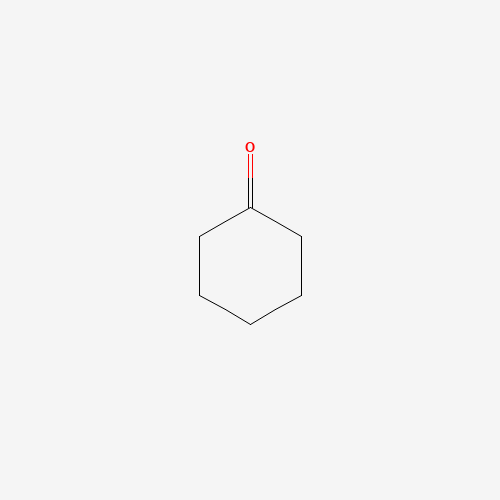
Cyclohexanone

CYC

CAS 108-94-1 EC 203-631-1 C6H10O Precursor CLP Warning
MolGod_SDSCARD_1
REACH 2020/878
v1 · 22.09.2026

Specification

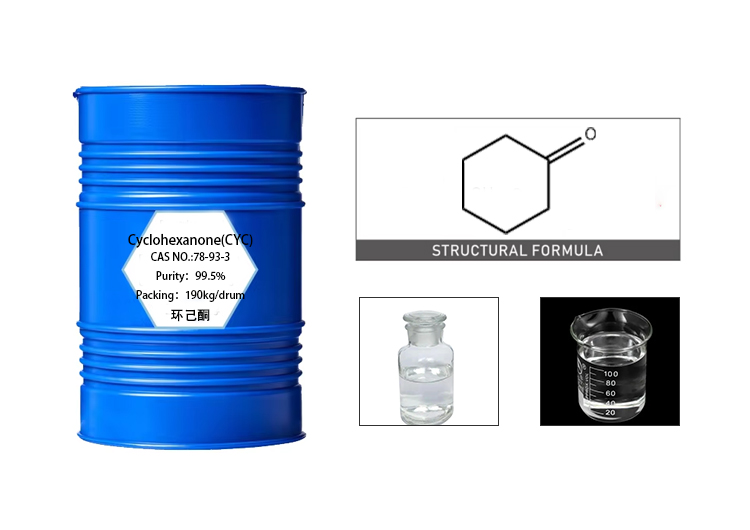
Product NameCyclohexanone
Other NamesCYC
CAS No.108-94-1
EINECS No.203-631-1
MFC6H10O
Molecular weight98.14
Purity99.5%
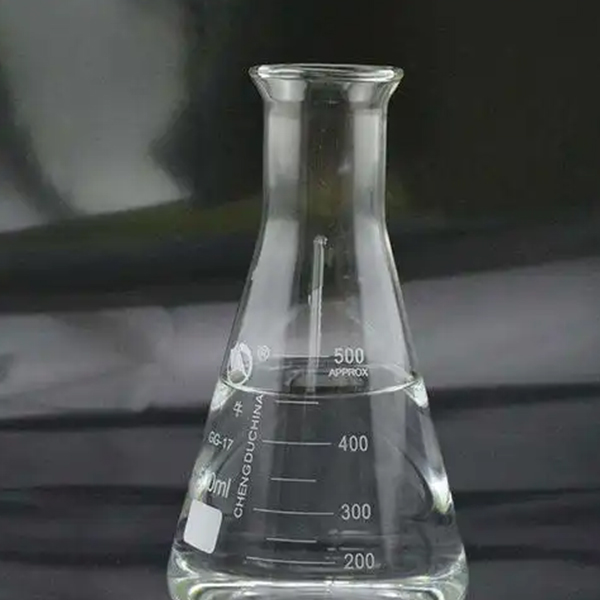
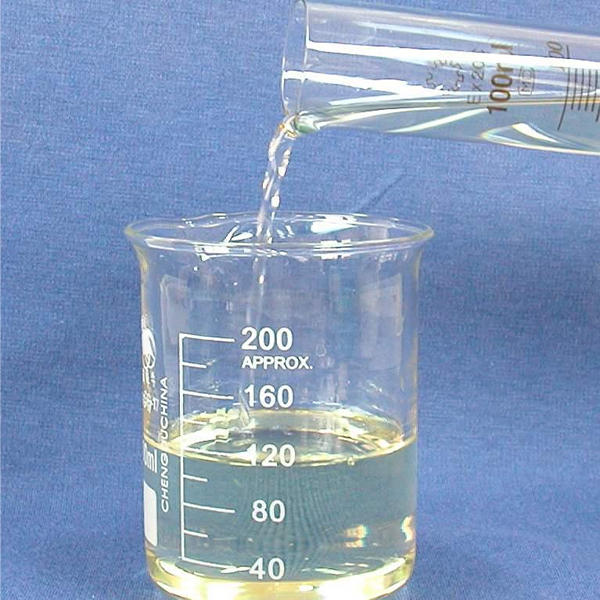
AppearanceColorless or light yellow transparent oily liquid.
Density0.947 g/mL at 25 °C (lit.)
Melting point155 °C (lit.)
Boiling point-47 °C (lit.)
Vapour pressure116°F

Values are typical for the standard grade. Tighter specifications are available — state the target in your inquiry and we confirm against the production batch.

Hazard classification
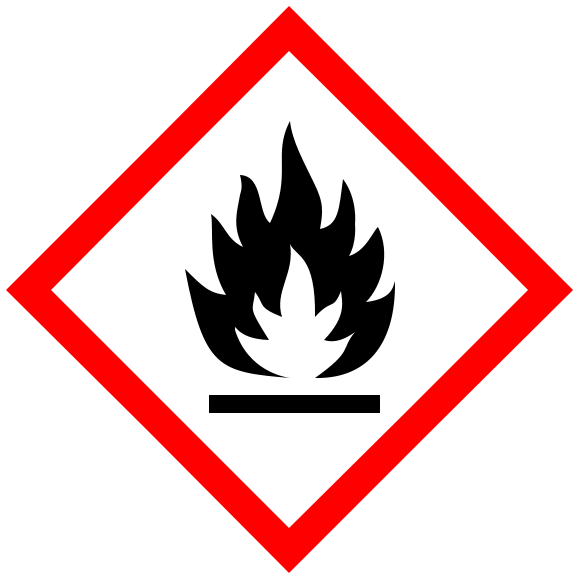
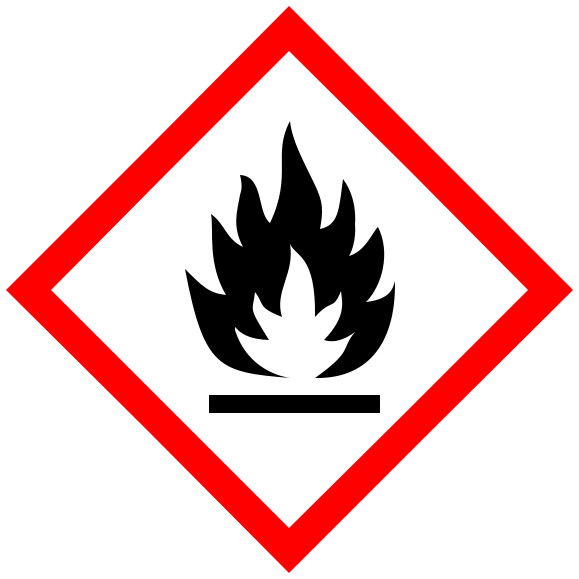
GHS pictogram GHS02 — Flammable GHS pictogram GHS07 — Irritant / harmful

Warning

Harmonised classification (EU) — ECHA Annex VI (harmonised, ATP 23; 2026-07-07)

  • H226 Flammable liquid and vapour
  • H332 Harmful if inhaled
Precautionary statements (1)
  • P210 Keep away from heat, hot surfaces, sparks, open flames and other ignition sources. No smoking

European Chemicals Agency. "cyclohexanone, Index No. 606-010-00-7." In Table 3 of Annex VI to Regulation (EC) No 1272/2008 (CLP Regulation), 23rd Adaptation to Technical Progress (harmonised list as of 2026-07-07). Helsinki: European Chemicals Agency, 2026. https://echa.europa.eu/information-on-chemicals/annex-vi-to-clp.

Packaging and shipping
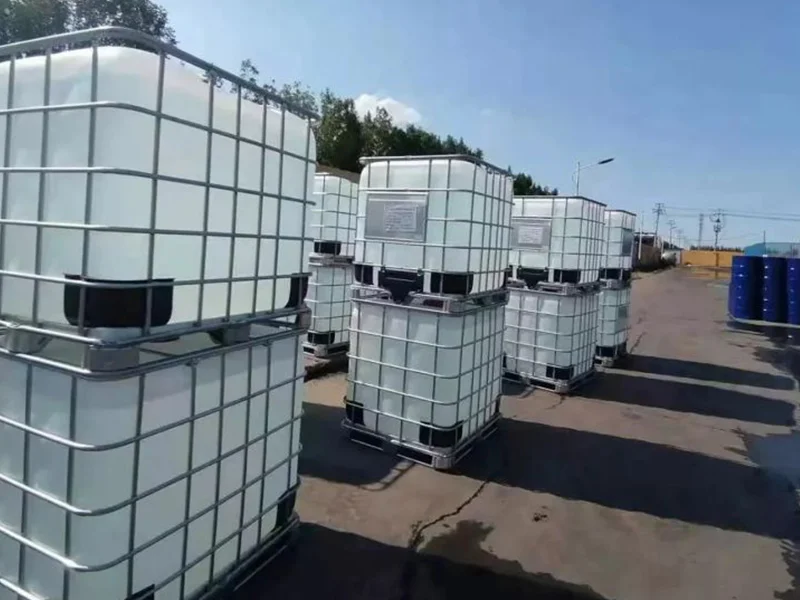
Drum190 kg
IBC Drum1127 kg
ISO tank (20ft)24–26 m³
ISO tank (40ft)48–50 m³
Cyclohexanone
Cyclohexanone
Cyclohexanone
Cyclohexanone

erformance solvent, provides support for applications such as nylon raw materials and coating solvents. Cyclohexanone (abbreviated as CYC), with the chemical formula C₆H₁₀O, is a colorless or pale yellow transparent oily liquid that has a stimulating odor similar to mint or acetone, belonging to a class of cyclic ketone compounds. The cyclohexanone product provided by Anhui Yipu Chemical Co., Ltd. has strict purity control. Its core value lies in being a key raw material for the production of caprolactam (nylon 6) and adipic acid (nylon 66), which supports the industries such as chemical fibers and engineering plastics. It is also a high-boiling-point solvent with excellent performance.
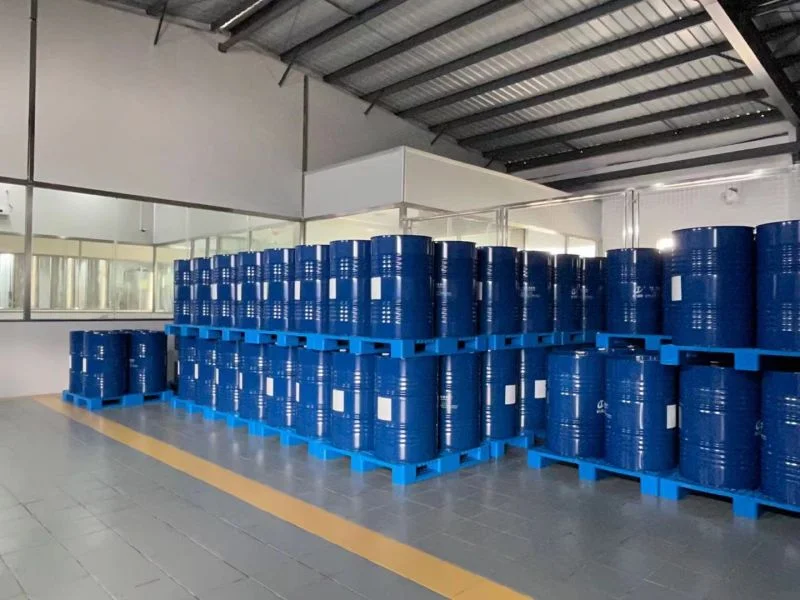
Cyclohexanone (CYC), a core chemical intermediate and high-performance solvent, provides support for applications such as nylon raw materials and coating solvents.Cyclohexanone (CYC), a core chemical intermediate and high-performance solvent, provides support for applications such as nylon raw materials and coating solvents.Cyclohexanone (CYC), a core chemical intermediate and high-performance solvent, provides support for applications such as nylon raw materials and coating solvents.

Cyclohexanone (CYC), a core chemical intermediate and high-performance solvent, provides support for applications such as nylon raw materials and coating solvents.

Product Description

Anhui Eapearl Chemical Co., Ltd., as a professional chemical supplier in China, deeply understands the fundamental role of cyclohexanone (CYC) as a core intermediate in the nylon production chain and a high-performance solvent in modern industry. At the same time, we are fully aware that cyclohexanone is a flammable and irritating hazardous chemical, and its production, storage, transportation, and use must strictly comply with safety and environmental protection regulations. We solemnly promise to strictly abide by all relevant laws and regulations, provide high-quality products, and prioritize safety, health, environmental protection, and compliance management.

Cyclohexanone (Cyclohexanone, abbreviated as CYC), with the chemical formula C₆H₁₀O, is a colorless or pale yellow transparent oily liquid with a stimulating odor similar to menthol or acetone. It is a cyclic ketone compound. The cyclohexanone products provided by Anhui Yipu Chemical are strictly controlled in purity. Its core value lies in being a key raw material for the production of caprolactam (nylon 6) and adipic acid (nylon 66), which supports the chemical fiber and engineering plastic industries as “industrial food”, and is also a high-boiling-point solvent with excellent performance.
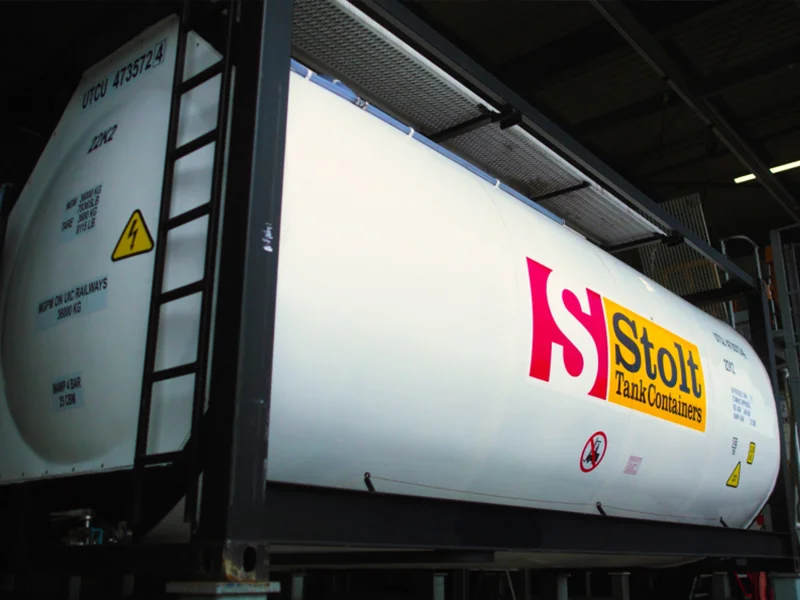
The core value of cyclohexanone lies in its irreplaceable role as a core intermediate in the nylon production chain, as well as its wide application as a high-boiling-point and highly soluble solvent.

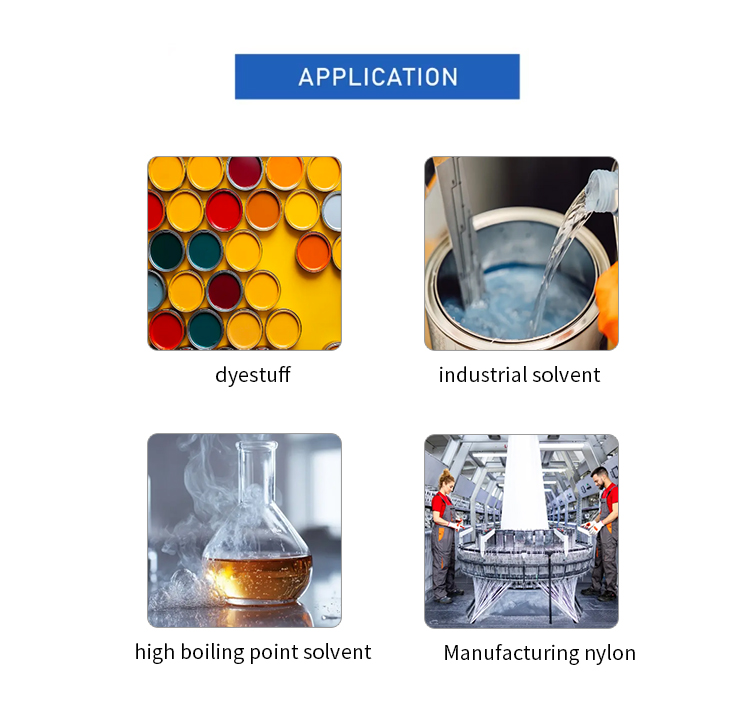
Core raw materials (dominant applications) of the nylon production chain: Over 90% of cyclohexanone is used to produce caprolactam and adipic acid. Among them, caprolactam is the largest downstream product, accounting for more than 60%, and is used to manufacture nylon 6 fibers and engineering plastics; adipic acid accounts for approximately 25%, and is used to manufacture nylon 66. This is the most core and largest application of cyclohexanone.

High-performance coatings, inks and resin solvents: As an excellent high-boiling-point solvent, it is widely used in nitrocellulose paints, vinyl resins, polyurethane coatings, inks and adhesives, effectively improving leveling and gloss.

Medicinal and pesticide intermediates and solvents: It is used for the synthesis of various medicinal intermediates (such as gabapentin intermediates), and is also an excellent solvent for pesticide production. Other fine chemical applications: Used for the production of cyclohexanone-formaldehyde resins (ketone-aldol resins), o-phthalic acid (a flame retardant and intermediate for preservatives), polybutylene sebacate (a biodegradable material), etc.
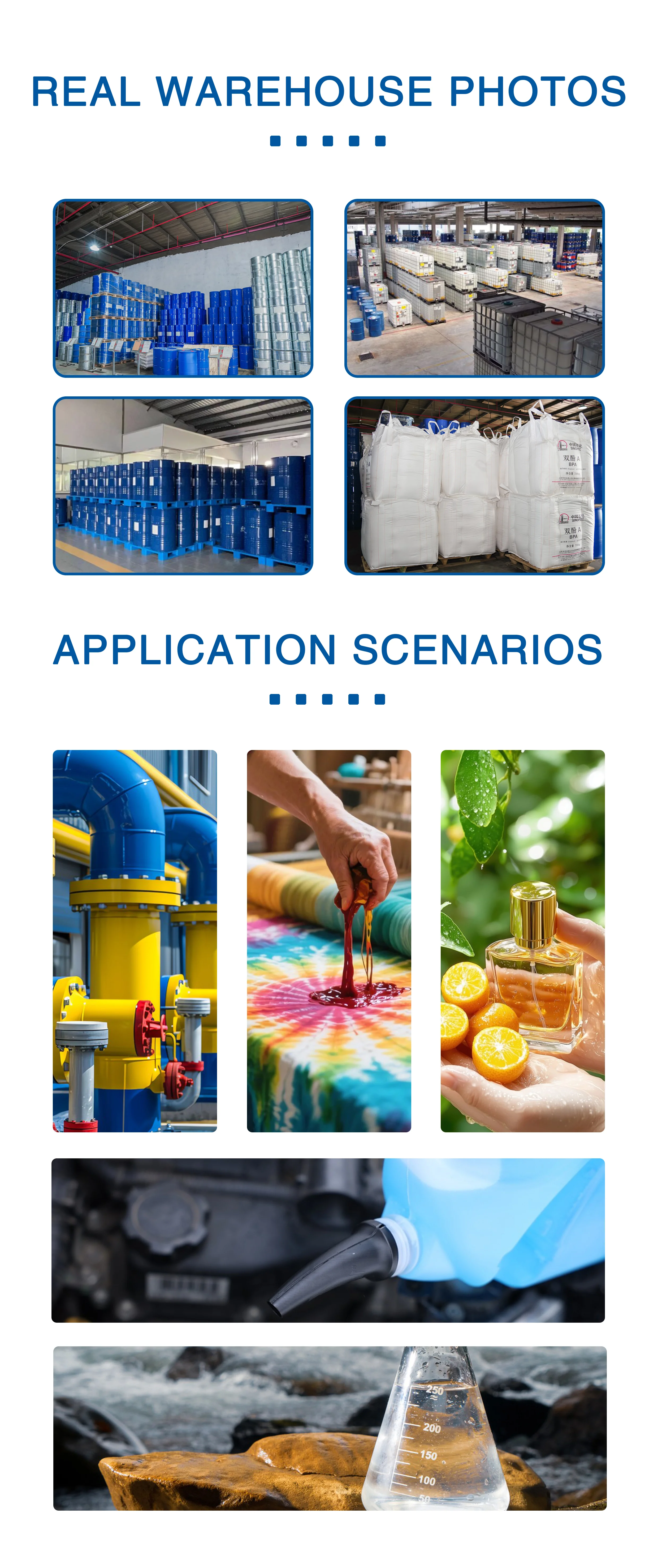
Cyclohexanone (CYC), a core chemical intermediate and high-performance solvent, provides support for applications such as nylon raw materials and coating solvents.

Cyclohexanone (CYC), a core chemical intermediate and high-performance solvent, provides support for applications such as nylon raw materials and coating solvents.

Delivery&Payment method

Cyclohexanone (CYC), a core chemical intermediate and high-performance solvent, provides support for applications such as nylon raw materials and coating solvents.

Frequently asked

In what packaging is Cyclohexanone shipped?

Standard formats are Drum (190 kg), IBC Drum (1127 kg), ISO tank (20ft) (24–26 m³), ISO tank (40ft) (48–50 m³). Other packaging can be arranged for full-container orders.

Is a safety data sheet available for Cyclohexanone?

Yes, on request. Safety data sheets are issued per grade and destination market; state the country of import in your inquiry.

What purity do you supply?

The standard grade is 99.5%. Tighter specifications are confirmed against the production batch before shipment.

Technical reading on Cyclohexanone

Related products

🧬 Visualiseur de molécule 3D
Chargement de la molécule...
Modèle 3D Cyclohexanone, CAS 108-94-1, formule brute C6H10O, masse molaire 98.14 g/mol

Données transcrites à partir de registres réglementaires et de la littérature spécialisée, avec indication de la source et de l'édition. Elles ne remplacent pas la fiche de données de sécurité du fournisseur. Les champs sans source enregistrée sont signalés comme tels.

📊 Données physicochimiques — CAS 108-94-1MolGod_PROPHUB_MAIN
📊 Propriétés physicochimiques

Aperçu rapide

Formule : C6H10O
MW : 98.14 g/mol
CAS : 108-94-1
Aspect : OILY LIQUID
Odeur : ODOR REMINISCENT OF PEPPERMINT & ACETONE

Propriétés détaillées

A supplement to the „Physicochemical properties (database)” table below — repeated values are shown only once.

Propriété Valeur Unité Conditions Source
Point d'éclair 43.9 °C (NTP, 1992)[1] CAMEO Chemicals ↗
Pression de vapeur 5.2 mmHg at 25 °C ; 10 mmHg at 38.7 °C (NTP, 1992)[1] CAMEO Chemicals ↗
Viscosité (η) 2.2 mPa.s (=cP) @ 25 °C[2][3] Hazardous Substances Data Bank (HSDB) ↗
Indice de réfraction (nD) INDEX OF REFRACTION: 1.4507 @ 20 °C[2][3] Hazardous Substances Data Bank (HSDB) ↗
🔬 Propriétés avancées

Identifiants chimiques

SMILES: C1CCC(=O)CC1
InChI: InChI=1S/C6H10O/c7-6-4-2-1-3-5-6/h1-5H2
InChIKey: JHIVVAPYMSGYDF-UHFFFAOYSA-N

Sources de données : CAMEO Chemicals, Hazardous Substances Data Bank (HSDB)

Dernière mise à jour : non confirmée

📚 Références scientifiques (Chicago Author-Date) (3 sources)
  1. DECHEMA, PTB, and BAM. CHEMSAFE - Database of Evaluated Safety Characteristics for the Avoidance of Explosions. Frankfurt am Main: DECHEMA e.V.; Braunschweig/Berlin: Physikalisch-Technische Bundesanstalt and Bundesanstalt fur Materialforschung und -prufung. ↗ dotyczy: Point d'éclair · Pression de vapeur
  2. PubChem. National Center for Biotechnology Information (NIH/NLM), chemical compound database. ↗ dotyczy: Viscosité (η) · Indice de réfraction (nD)
  3. NLM. Hazardous Substances Data Bank (HSDB). National Library of Medicine. ↗ dotyczy: Viscosité (η) · Indice de réfraction (nD)
Aperçu chimique: CyclohexanoneMolGod_OVERVIEW_1
Formule bruteC6H10O[1]
Masse moléculaire98.14 g/mol[1]
Point de fusion-31 °C[1]
Point d'ébullition155.56 °C[1][2]
Densité0.95 g/cm³[1][3]
LogP (lipophilie)0.8[1]
Nom IUPACcyclohexanone[1]
SMILESC1CCC(=O)CC1[1]
InChIKeyJHIVVAPYMSGYDF-UHFFFAOYSA-N[1]

Synonymes: CYCLOHEXANONE · 108-94-1 · Ketohexamethylene · Pimelic ketone · Sextone

Sources de données : PubChem (NLM/NIH)
Dernière mise à jour : 2026-09-21

📚 Références scientifiques (Chicago Author-Date) (3 sources)
  1. PubChem. National Center for Biotechnology Information (NIH/NLM), chemical compound database. ↗ dotyczy: Formule brute · Masse moléculaire · Point de fusion · Point d'ébullition · Densité · LogP (lipophilie) · Nom IUPAC · SMILES · InChIKey
  2. NIST. Chemistry WebBook, SRD 69. National Institute of Standards and Technology. ↗ dotyczy: Point d'ébullition
  3. DECHEMA, PTB, and BAM. CHEMSAFE - Database of Evaluated Safety Characteristics for the Avoidance of Explosions. Frankfurt am Main: DECHEMA e.V.; Braunschweig/Berlin: Physikalisch-Technische Bundesanstalt and Bundesanstalt fur Materialforschung und -prufung. ↗ dotyczy: Densité

RECHERCHE SCIENTIFIQUE

[1]Europe PMC2026
et al.. (2026). "Inter-Atomic Synergy on Single-Atom Alloy Promotes Cyclohexanone Oxime Electrosynthesis.". https://doi.org/10.1002/adma.72807
[2]Europe PMC2026
et al.. (2026). "Stabilized Bi(III) Sites Direct *NH2OH Pathway for Efficient Cyclohexanone Oxime Electrosynthesis.". https://doi.org/10.1002/adma.73997
[3]Europe PMC2026
et al.. (2026). "In Situ Coordination Engineering of Fe Single Atoms Enables Efficient Electrocatalytic Cyclohexanone Oxime Synthesis.". https://doi.org/10.1021/acsnano.6c09284
[4]Europe PMC2026
et al.. (2026). "A Bipolar Integrated Electro-Chemocatalysis System for Continuous-Flow Paired Synthesis of Cyclohexanone Oxime at Industrial-Relevant Current Density.". https://doi.org/10.1002/adma.7
[5]Europe PMC2026
et al.. (2026). "Hexacoordinate Ti-Anchored Single-Atom Pd Catalyst for High-Efficiency Cyclohexanone Ammoximation with H2 and O2.". https://doi.org/10.1021/jacs.6c01171
[6]Europe PMC2026
(2026). "Cathodic oxygen-reduction-reaction-mediated active peroxide for oxidizing cyclohexanone to ε-caprolactone.". https://doi.org/10.1039/d6cc00041j
[7]Europe PMC2026
et al.. (2026). "Tuning *OH Oxidativity via a Cu-Co(OH)2 Cocatalyst on a Hematite Photoanode for Selective Cyclohexanone Oxidation.". https://doi.org/10.1021/jacs.6c04083
[8]Europe PMC2026
et al.. (2026). "Bi-modified Ni3S2 promotes selective nitrite-to-hydroxylamine reduction for cyclohexanone oxime synthesis.". https://doi.org/10.1039/d6cc02212j
📚 Références scientifiques (Chicago Author-Date) 20 refs · 4 baz

MOLECULE Bibliographie par CAS (en direct depuis 13+ bases de données)

Sources : db:Europe PMC (17) · db:doaj (1) · db:pubmed (1) · db:crossref (1)

  1. db:Europe PMC et al.. (2026). "Inter-Atomic Synergy on Single-Atom Alloy Promotes Cyclohexanone Oxime Electrosynthesis.". https://doi.org/10.1002/adma.72807 →
  2. db:Europe PMC et al.. (2026). "Stabilized Bi(III) Sites Direct *NH2OH Pathway for Efficient Cyclohexanone Oxime Electrosynthesis.". https://doi.org/10.1002/adma.73997 →
  3. db:Europe PMC et al.. (2026). "In Situ Coordination Engineering of Fe Single Atoms Enables Efficient Electrocatalytic Cyclohexanone Oxime Synthesis.". https://doi.org/10.1021/acsnano.6c09284 →
  4. db:Europe PMC et al.. (2026). "A Bipolar Integrated Electro-Chemocatalysis System for Continuous-Flow Paired Synthesis of Cyclohexanone Oxime at Industrial-Relevant Current Density.". https://doi.org/10.1002/adma.73184 →
  5. db:Europe PMC et al.. (2026). "Hexacoordinate Ti-Anchored Single-Atom Pd Catalyst for High-Efficiency Cyclohexanone Ammoximation with H2 and O2.". https://doi.org/10.1021/jacs.6c01171 →
  6. db:Europe PMC (2026). "Cathodic oxygen-reduction-reaction-mediated active peroxide for oxidizing cyclohexanone to ε-caprolactone.". https://doi.org/10.1039/d6cc00041j →
  7. db:Europe PMC et al.. (2026). "Tuning *OH Oxidativity via a Cu-Co(OH)2 Cocatalyst on a Hematite Photoanode for Selective Cyclohexanone Oxidation.". https://doi.org/10.1021/jacs.6c04083 →
  8. db:Europe PMC et al.. (2026). "Bi-modified Ni3S2 promotes selective nitrite-to-hydroxylamine reduction for cyclohexanone oxime synthesis.". https://doi.org/10.1039/d6cc02212j →
  9. db:Europe PMC et al.. (2026). "High-Rate, Selective Electrosynthesis of Cyclohexanone Oxime via In Situ Generation and Release of Hydroxylamine on Bismuth.". https://doi.org/10.1021/jacs.6c05163 →
  10. db:doaj Yanchun Liu, Zixuan Liu, Zhongling Lang et al.. (2026). "Efficient phenol-to-cyclohexanone hydrogenation enabled by hydrogen spillover in sub-nanometric Pd-polyoxovanadomolybdate catalysts". Polyoxometalates. https://doi.org/10.26599/POM.2026.9140109 →
  11. db:Europe PMC et al.. (2025). "Ambient Synthesis of Cyclohexanone Oxime via In Situ Produced Hydrogen Peroxide over Cobalt-Based Electrocatalyst.". https://doi.org/10.1002/advs.202413475 →
  12. db:Europe PMC et al.. (2025). "Photocatalytic Cyclohexanone Oxime Synthesis from Ambient Air and KA Oil.". https://doi.org/10.1021/jacs.5c03187 →
  13. db:Europe PMC et al.. (2025). "Extraction of Phenolic Compounds with the Highly Efficient Novel Coextractants Cyclohexanone and Methyl Isobutyl Ketone.". https://doi.org/10.1021/acsomega.5c03792 →
  14. db:Europe PMC et al.. (2025). "Cyclohexanone and metabolites exposure in critically Ill neonates and children.". https://doi.org/10.1038/s41390-025-04027-8 →
  15. db:Europe PMC et al.. (2025). "Dehydroabietyl squaramide incorporating chiral pyrrolidine for highly diastereo- and enantioselective Michael reaction between cyclohexanone and β-nitrostyrenes.". https://doi.org/10.1039/d5ra06081h →
  16. db:Europe PMC et al.. (2025). "Optimization of growth and induction conditions for the production of recombinant whole cell cyclohexanone monooxygenase in Escherichia coli.". https://doi.org/10.1038/s41598-025-99461-3 →
  17. db:Europe PMC et al.. (2025). "Dual redox effects of 2,6-bis-(4-hydroxyl-3-methoxybenzylidene) cyclohexanone (BHMC) on human liver cancer cells, HepG2 via ROS, glutathione and Nrf2/Keap1 pathway.". https://doi.org/10.1038/s41598-025-19874-y →
  18. db:Europe PMC et al.. (2025). "Selective dehydrogenation of cyclohexanol to cyclohexanone over biomorphic Cu/ZnO catalysts.". https://doi.org/10.1038/s41598-025-04414-5 →
  19. db:pubmed Singh W, Brown NL, McCue HV et al.. (2024). "Rational design of a cyclohexanone dehydrogenase for enhanced α,β-desaturation and substrate specificity.". Chemical science. https://doi.org/10.1039/d3sc04009g →
  20. db:crossref (2020). "In silico and in vitro anti-inflammatory evaluation of 2,6-bis-(3'-ethoxy, 4'-hydroxybenzylidene)-cyclohexanone, 2,6-bis-(3'-Bromo,4'-methoxybenzylidene)-cyclohexanone, and 2,6-bis- (3',4'-dimethoxybenzylidene)-cyclohexanone". Journal of Applied Pharmaceutical Science. https://doi.org/10.7324/japs.2020.10613 →
Statut réglementaire de la substance
Cette substance est soumise à des exigences réglementaires : gestion des déchets dangereux (BDO). Détails dans la section « Statut réglementaire (REACH/ECHA/CLP) » et sur la FDS. Information réglementaire — ne restreint pas l'achat dans la boutique.
🧮 Calculateur stœchiométriqueMolGod_STOICH_1
🧪 Données chimiquesMolGod_CHEMDATA_1
Numéro CAS
108-94-1
Formule brute
C6H10O
Masse molaire
98.14 g/mol
Nom IUPAC (EN)
cyclohexanone
SMILES
C1CCC(=O)CC1
InChIKey
JHIVVAPYMSGYDF-UHFFFAOYSA-N
📚 Scientific literature (20 articles)MolGod_LITSCI_1
Filtrer :
Trier :
📈 Chronologie des publications
2020
2024
2025
2026
📡 Data sourcesMolGod_SOURCES_1

The data in this widget comes from the following verified scientific sources:

  • PubChem — National Center for Biotechnology Information (NCBI/NIH), USA
  • ChEMBL — European Bioinformatics Institute (EMBL-EBI), UK
  • NIST WebBook — National Institute of Standards and Technology, USA

Data is cached locally for speed — the widget also works offline.

⚗️ Physicochemical propertiesMolGod_PHYSTAB_2
Temp. wrzenia
154.9
Density
0.949

Source: PubChem, NIST WebBook. Last updated: date not confirmed

🔍 Identifiants externesMolGod_EXTID_1
14 sur 16 systèmes d'ID88%
Base de donnéesIdentifiantActions
CAS Registry Number108-94-1Ouvrir →
PubChem CID7967[1]Ouvrir →
InChIKeyJHIVVAPYMSGYDF-UHFFFAOYSA-N[1]Ouvrir →
InChIInChI=1S/C6H10O/c7-6-4-2-1-3-5-6/h1-5H2[1]
SMILESC1CCC(=O)CC1[1]
EC Number203-631-1[2]Ouvrir →
ChEMBLCHEMBL18850[3]Ouvrir →
DrugBankDB02060Ouvrir →
KEGG CompoundC00414Ouvrir →
HMDBHMDB0003315Ouvrir →
ChemSpider7679[4]Ouvrir →
UNII (FDA)5QOR3YM052Ouvrir →
NSC Number (NCI)5711Ouvrir →
WikiData QIDQ409178Ouvrir →

Sources : PubChem (NIH), Wikidata SPARQL, KEGG, ChEMBL (EBI), CompTox CTX (EPA).

📚 Références scientifiques (Chicago Author-Date) (4 sources)
  1. PubChem. National Center for Biotechnology Information (NIH/NLM), chemical compound database. ↗ dotyczy: PubChem CID · InChIKey · InChI · SMILES
  2. ECHA. EC Inventory — EINECS, ELINCS, NLP and List Numbers assigned under REACH. Helsinki: European Chemicals Agency. ↗ dotyczy: EC Number
  3. ChEMBL. European Bioinformatics Institute (EMBL-EBI), bioactivity database. ↗ dotyczy: ChEMBL
  4. ChemSpider. Royal Society of Chemistry, chemical structure database. ↗ dotyczy: ChemSpider

Dalsza literatura

Publications thematically related to this CAS. They are not the source of any value given on this card.

Bibliographie (étendue) (6)

  1. ★★★★★ CANONICAL_PAPERS 💰 Paywall (probable) ✓ vérifié Wu Y; Zhao J; Wang C et al.. 2023. "Electrosynthesis of a nylon-6 precursor from cyclohexanone and nitrite under ambient conditions." Nature communications. lien [consulté: 2026-11-07]
  2. ★★☆☆☆ CROSSREF 🔓 LIBRE ❓ non vérifié Anonymous. "Isobaric VaporLiquid Equilibrium for Binary Systems of Cyclohexanone + Benzene, Cyclohexanone + Toluene, and Cyclohexanone + pXylene at 101.3 kPa.". https://doi.org/10.1021/acs.jced.6b00877.s001. lien [consulté: 2026-11-07] CC0 (metadata)
  3. ★★☆☆☆ CROSSREF 🔓 LIBRE ❓ non vérifié Anonymous. "Solubilities of Adipic Acid in Cyclohexanol + Cyclohexanone Mixtures and Cyclohexanone + Cyclohexane Mixtures.". https://doi.org/10.1021/acs.jced.5b00880.s001. lien [consulté: 2026-11-07] CC0 (metadata)
  4. ★★☆☆☆ CROSSREF 🔓 LIBRE ❓ non vérifié Anonymous. "Cyclohexanone.". https://doi.org/10.3403/30307921u. lien [consulté: 2026-11-07] CC0 (metadata)
  5. ★★☆☆☆ CROSSREF 🔓 LIBRE ❓ non vérifié Anonymous. "Cyclohexanone.". https://doi.org/10.3403/10048033. lien [consulté: 2026-11-07] CC0 (metadata)
  6. ★★☆☆☆ CROSSREF 🔓 LIBRE ❓ non vérifié Anonymous. "Cyclohexanone.". https://doi.org/10.3403/30307921. lien [consulté: 2026-11-07] CC0 (metadata)
📡 Spectroscopie — CAS 108-94-1MolGod_SPECHUB_MAIN
📊 Spectres (NMR, IR, MS, UV-Vis) (1)

Types de spectres disponibles : IR

Spectre IR (KBr, 4000-400 cm⁻¹)

440 points de données · Source : NIST WebBook · NIST ↗ · 📥 JCAMP-DX
🎓 Guide d'interprétation des spectres (pour étudiants)
Comment lire un spectre IR
  • 3200-3600 cm⁻¹ — élongation O-H (pic large = liaison hydrogène)
  • 2850-3000 cm⁻¹ — élongation C-H (sp³)
  • 1650-1750 cm⁻¹ — élongation C=O (cétones, aldéhydes, esters)
  • 1400-1600 cm⁻¹ — vibrations du cycle aromatique
  • 1000-1300 cm⁻¹ — élongation C-O (éthers, alcools)
  • Aucune absorption = aucun groupe fonctionnel → comparer avec une référence

Sources : LibreTexts ↗, Silverstein (Spectrometric ID) ↗

📚 Références scientifiques (Chicago Author-Date) (7 sources)
  1. National Institute of Standards and Technology. 2024. "NIST Chemistry WebBook, SRD 69." Gaithersburg, MD: NIST. Accessed 2025-01-01. ↗
  2. Spectral Database for Organic Structure Determination (SDBS). 2024. National Institute of Advanced Industrial Science and Technology (AIST), Japan. Accessed 2025-01-01. ↗
  3. Ulrich, Eldon L., Hideo Akutsu, John F. Doreleijers, Yoko Harano, Yannis E. Ioannidis, Jundong Lin, Miron Livny, et al. 2008. "BioMagResBank." Nucleic Acids Research 36 (D1): D402–D408. [DOI ↗]
  4. Horai, Hisayuki, Masanori Arita, Shigehiko Kanaya, Yoshito Nihei, Tasuku Ikeda, Kazuhiro Suwa, Yuya Ojima, et al. 2010. "MassBank: A Public Repository for Sharing Mass Spectral Data for Life Sciences." Journal of Mass Spectrometry 45 (7): 703–714. [DOI ↗]
  5. Linstrom, P.J., and W.G. Mallard, eds. 2024. NIST Chemistry WebBook, NIST Standard Reference Database Number 69. Gaithersburg, MD: National Institute of Standards and Technology. ↗
  6. McDonald, M. Shane, Mike McAvoy, and Ajit Bhalerao. 1988. "JCAMP-DX: A Standard Form for Exchange of Infrared Spectra in Computer Readable Form." Applied Spectroscopy 42 (1): 151–162. [DOI ↗]
  7. PubChem. 2024. "PubChem Compound Database." National Library of Medicine, National Institutes of Health. Accessed 2025-01-01. ↗
Propriétés structurellesMolGod_STRUCT3D_1

Chargement des données structurelles...

❓ Questions fréquentes (3)MolGod_FAQ_1
What is 108-94-1?
108-94-1 (CAS 108-94-1) is a chemical compound. The chemical data comes from PubChem (National Institutes of Health, USA).
Utile ?
What is the CAS number of 108-94-1?
The CAS number for 108-94-1 is 108-94-1. A CAS Registry Number is the standard identifier for a chemical substance in scientific literature and in trade.
Utile ?
How should 108-94-1 be stored?
108-94-1 should be stored as its safety data sheet directs \— typically in a dry, cool, well-ventilated place, away from heat and from materials it is incompatible with.
Utile ?
➕ Proposer une question
Télécharger les fichiers de structureMolGod_STRDL_1

Fichiers de structure moléculaire issus de la base PubChem (NIH). Compatibles avec les logiciels : Avogadro, PyMOL, Jmol, ChemDraw.

Source : PubChem, National Library of Medicine (NIH). CID: 7967

🔄 Convertisseur d'unités de concentration LIVE MolGod_UNITCONV_1

Saisissez la concentration Cyclohexanone dans n'importe quelle unité — le reste sera calculé automatiquement.

MW : 98.14 g/mol · IUPAC Gold Book ↗

⚗️ Formules de conversion + citations (par formule)
ConversionFormulePrécisionSource
% (w/v) ↔ molarityc (mol/L) = (% × 10) / MW±0.5% rel. when density ≈ 1.0 g/mLIUPAC (2019)
millimolar ↔ molarc (mol/L) = mM × 10⁻³ExactCohen ER, Cvitaš T, Frey JG, Holmström B, Kuchitsu K, Marquardt R, Mills I, Pavese F, Quack M, Stohner J, Strauss HL, Takami M, Thor AJ (2007)
molarity (mol/L)c = n/V = (m/MW)/V±0.1% (depends on MW precision)IUPAC (2019)
parts per million (mg/L) ↔ molarityc (mol/L) = ppm / (1000 × MW); equivalently ppm = mg/L for dilute aqueous±1% (density-independent for dilute solutions)IUPAC (2019)
mg/mL ↔ molarityc (mol/L) = (mg/mL × 1000) / MW / 1000 = mg/mL / MW × 1±0.2%Cohen ER, Cvitaš T, Frey JG, Holmström B, Kuchitsu K, Marquardt R, Mills I, Pavese F, Quack M, Stohner J, Strauss HL, Takami M, Thor AJ (2007)
g/L ↔ molarityc (mol/L) = (g/L) / MW±0.1% (depends on MW precision)Cohen ER, Cvitaš T, Frey JG, Holmström B, Kuchitsu K, Marquardt R, Mills I, Pavese F, Quack M, Stohner J, Strauss HL, Takami M, Thor AJ (2007)
mmol/L ↔ molarityc (mol/L) = mmol/L × 10⁻³ExactCohen ER, Cvitaš T, Frey JG, Holmström B, Kuchitsu K, Marquardt R, Mills I, Pavese F, Quack M, Stohner J, Strauss HL, Takami M, Thor AJ (2007)
Celsius ↔ KelvinT(K) = t(°C) + 273.15±0.01 K (ITS-90 scale)BIPM (Bureau International des Poids et Mesures) (2019)
Celsius ↔ FahrenheitT(°F) = T(°C) × 9/5 + 32±0.1 °FThompson A, Taylor BN (2008)
density-corrected % ↔ molarityc (mol/L) = (%w/w × ρ × 10) / MW, ρ in g/mL±0.1% when ρ known to 3 decimalsCohen ER, Cvitaš T, Frey JG, Holmström B, Kuchitsu K, Marquardt R, Mills I, Pavese F, Quack M, Stohner J, Strauss HL, Takami M, Thor AJ (2007)
📚 Bibliographie (8 sources faisant autorité)
  1. Thompson A, Taylor BN (2008). Guide for the Use of the International System of Units (SI). NIST Special Publication 811 · DOI: 10.6028/NIST.SP.811-2008
    → Primary SI standard for US scientific usage
  2. Cohen ER, Cvitaš T, Frey JG, Holmström B, Kuchitsu K, Marquardt R, Mills I, Pavese F, Quack M, Stohner J, Strauss HL, Takami M, Thor AJ (2007). Quantities, Units and Symbols in Physical Chemistry — The IUPAC Green Book. RSC Publishing, 3rd ed. · DOI: 10.1039/9781847557889 · ISBN: 978-0-85404-433-7
    → Canonical IUPAC guide for chemistry quantities/units
  3. BIPM (Bureau International des Poids et Mesures) (2019). The International System of Units (SI), 9th edition. BIPM · ↗
    → International SI definitions (incl. redefined kilogram 2019)
  4. ISO/IEC (2022). Quantities and units — Part 1: General. International Organization for Standardization — ISO 80000-1:2022 · ↗
    → General rules for physical quantities and units
  5. ISO/IEC (2019). Quantities and units — Part 9: Physical chemistry and molecular physics. International Organization for Standardization — ISO 80000-9:2019 · ↗
    → Concentration / molality / amount-of-substance conventions
  6. Tiesinga E, Mohr PJ, Newell DB, Taylor BN (2021). CODATA recommended values of the fundamental physical constants: 2018. Rev. Mod. Phys. 93(2):025010 · DOI: 10.1103/RevModPhys.93.025010
    → Avogadro, gas constant, molar volume (2019 SI revision)
  7. IUPAC (2019). Compendium of Chemical Terminology — the IUPAC Gold Book (online). IUPAC · DOI: 10.1351/goldbook
    → Definitions of mass fraction, molality, normality, ppm, activity
  8. Mills IM, Cvitaš T, Homann K, Kallay N, Kuchitsu K (1988). Quantities, Units and Symbols in Physical Chemistry. Blackwell Scientific Publications, 1st ed. · ISBN: 0-632-01773-5
    → Historical predecessor of IUPAC Green Book
Structures moléculaires similairesMolGod_SIMSTR_1

Chargement des structures similaires...

🧪 Assistant de préparation de solution WIZARD MolGod_PREP_1
① Sélectionnez la concentration
② Volume cible
③ Solvant

Calculs selon : IUPAC Gold Book ↗, Merck ↗

Chimie computationnelleMolGod_COMPCHEM_1

Chargement des données de calcul...

🛡️ Sécurité — CAS 108-94-1MolGod_SAFEHUB_MAIN
Avis sur les limitations des données. Les informations de sécurité figurant sur cette page sont fournies à titre indicatif et ne remplacent pas une fiche de données de sécurité (SDS) complète. Avant d'utiliser le produit, consultez la fiche de données de sécurité actuelle du fabricant ainsi que les directives GHS/CLP. La classification CLP s'applique à la substance pure en vrac, et non aux préparations commerciales.

Classification GHS/CLP — Règlement (CE) n° 1272/2008 + UN GHS Rev. 9 (2021).

⚠ Attention (Warning)
GHS02 — Inflammable
GHS02 Inflammable
GHS07 — Irritant / nocif
GHS07 Irritant / nocif

🚨 Mentions de danger (H)

  • H226 — Liquide et vapeurs inflammables.
  • H332 — Nocif par inhalation.

🛡 Conseils de prudence (P)

  • P210 — Tenir à l'écart de la chaleur, des surfaces chaudes, des étincelles, des flammes nues et de toute autre source d'inflammation. Ne pas fumer.

✓ Classification harmonisée conformément à l'annexe VI du règlement CLP (CE) 1272/2008 (classification officielle, contraignante). Numéro d'index : 606-010-00-7.

Référence (Chicago) : European Chemicals Agency. "cyclohexanone, Index No. 606-010-00-7." In Table 3 of Annex VI to Regulation (EC) No 1272/2008 (CLP Regulation), 23rd Adaptation to Technical Progress (harmonised list as of 2026-07-07). Helsinki: European Chemicals Agency, 2026. https://echa.europa.eu/information-on-chemicals/annex-vi-to-clp.

⚠ IARC — Groupe 3: inclassable quant à sa cancérogénicité pour l'homme (évalué par l'IARC). (Évaluation indépendante des preuves de cancérogénicité par l'IARC/OMS — complète la classification CLP ci-dessus.)
Référence (Chicago) : IARC. n.d. IARC Monographs on the Identification of Carcinogenic Hazards to Humans: CAS 108-94-1. Lyon, France: International Agency for Research on Cancer, World Health Organization. https://monographs.iarc.who.int/list-of-classifications/.
Classification issue de la liste locale MOL-GOD (snapshot) — non vérifiée par rapport à la liste IARC actuelle. Vérifier

Traductions : Règlement CLP (CE) 1272/2008, Annexe III et IV. Données : PubChem/NLM.

📚 Références scientifiques consolidées — Chicago auteur-date 10 sources

Références collectées dans tous les onglets du Safety Hub. CAS : 108-94-1 · PubChem ↗

  1. Parlament Europejski i Rada UE. 2008. "Rozporządzenie (WE) nr 1272/2008 w sprawie klasyfikacji, oznakowania i pakowania substancji (CLP)." Dz.Urz. UE L 353. [↗] GHS, Réglementations
  2. United Nations Economic Commission for Europe (UNECE). 2021. "Globally Harmonized System of Classification and Labelling of Chemicals (GHS), Ninth Revised Edition." United Nations, Geneva. [↗] GHS
  3. Goldfrank, Lewis R., Robert S. Hoffman, Mary Ann Howland, et al.. 2019. "Goldfrank's Toxicologic Emergencies, 11th ed.." McGraw-Hill Education, New York. ISBN 978-1-25-985961-8. Pierwsza pomoc, Toksykologia
  4. National Institute for Occupational Safety and Health (NIOSH). 2023. "NIOSH Pocket Guide to Chemical Hazards (DHHS Publ. 2005-149)." U.S. Department of Health and Human Services / CDC, Cincinnati, OH. [↗] Pierwsza pomoc, PPE, Toksykologia
  5. European Committee for Standardization (CEN). 2016. "EN 374-1:2016 — Protective gloves against dangerous chemicals and micro-organisms." CEN, Brussels. [↗] PPE
  6. UNECE. 2023. "European Agreement Concerning the International Carriage of Dangerous Goods by Road (ADR 2025)." United Nations, Geneva. [↗] Utylizacja, Regulacje
  7. National Fire Protection Association (NFPA). 2022. "NFPA 400 — Hazardous Materials Code." NFPA, Quincy, MA. [↗] Magazynowanie
  8. Urben, P.G. (ed.). 2017. "Bretherick's Handbook of Reactive Chemical Hazards, 8th ed.." Butterworth-Heinemann / Elsevier, Oxford. [↗] Magazynowanie
  9. Ministerstwo Klimatu i Środowiska RP. 2023. "Baza danych o produktach i opakowaniach oraz o gospodarce odpadami (BDO)." Ministerstwo Klimatu i Środowiska, Warszawa. [↗] Utylizacja
  10. International Agency for Research on Cancer (IARC / WHO). 2024. "IARC Monographs on the Identification of Carcinogenic Hazards to Humans — List of Classifications." WHO, Lyon. [↗] Toksykologia

Les onglets possédant leurs propres références (Emergency, PPE, Storage, Waste) contiennent des entrées bibliographiques supplémentaires au sein de leurs sections respectives.

📈 Statistiques analytiques (test t · RSD · Grubbs · Q-Dixon) ICH Q2

Collez une série de mesures répétées (CSV ou un nombre par ligne). Le calculateur calculera la moyenne, l'écart-type, l'IC à 95 %, et détectera les valeurs aberrantes (Grubbs + Dixon Q).

Séparateur : virgule, espace, tabulation, nouvelle ligne. Min. 3 mesures.
📐 Formules statistiques
  • x̄ = Σxᵢ / n — moyenne arithmétique
  • s² = Σ(xᵢ - x̄)² / (n-1) — variance de l'échantillon
  • s = √s² — écart-type
  • RSD% = (s / x̄) × 100% — écart-type relatif
  • CI₉₅ = x̄ ± t(0.05, n-1) × s / √n — Student's t
  • G = |xᵢ - x̄| / s — test de Grubbs
  • Q = |xsuspect - xnearest| / |xmax - xmin| — Dixon Q-test

Source : ICH Q2(R2) Validation of Analytical Procedures · ICH PDF ↗

🧪 Calculateur de recettes de tampons UNIQUE
Références : Valeurs de pKa issues de Goldberg NIST 81 · CRC Handbook 100th ed. · Stoll & Blanchard 1990 (DOI)

Choisissez un tampon dans la liste de 20 systèmes courants → saisissez le pH cible → vous obtiendrez une recette exacte avec les masses à peser.

Étape 1 : Choisissez un système tampon

📜 Historique des recettes (10 dernières)
Statut pharmacologique

Prekliniczny

Phase I
Phase II
Phase III
Approuvé

Préclinique — aucune donnée issue d'études sur l'homme.

ChEMBL CHEMBL18850 ↗

Bibliographie (étendue) (5)

  1. ★★☆☆☆ CROSSREF 🔓 LIBRE ❓ non vérifié Anonymous. "Isobaric VaporLiquid Equilibrium for Binary Systems of Cyclohexanone + Benzene, Cyclohexanone + Toluene, and Cyclohexanone + pXylene at 101.3 kPa.". https://doi.org/10.1021/acs.jced.6b00877.s001. lien [consulté: 2026-11-07] CC0 (metadata)
  2. ★★☆☆☆ CROSSREF 🔓 LIBRE ❓ non vérifié Anonymous. "Solubilities of Adipic Acid in Cyclohexanol + Cyclohexanone Mixtures and Cyclohexanone + Cyclohexane Mixtures.". https://doi.org/10.1021/acs.jced.5b00880.s001. lien [consulté: 2026-11-07] CC0 (metadata)
  3. ★★☆☆☆ CROSSREF 🔓 LIBRE ❓ non vérifié Anonymous. "Cyclohexanone.". https://doi.org/10.3403/30307921u. lien [consulté: 2026-11-07] CC0 (metadata)
  4. ★★☆☆☆ CROSSREF 🔓 LIBRE ❓ non vérifié Anonymous. "Cyclohexanone.". https://doi.org/10.3403/10048033. lien [consulté: 2026-11-07] CC0 (metadata)
  5. ★★☆☆☆ CROSSREF 🔓 LIBRE ❓ non vérifié Anonymous. "Cyclohexanone.". https://doi.org/10.3403/30307921. lien [consulté: 2026-11-07] CC0 (metadata)
🚚 Classification pour le transport (ADR / IATA / IMDG) UN 1915
Numéro UN
UN 1915
UN number per the indicated source. Verify the transport class and packing group in ADR Table A / UN Model Regulations before shipment. Sugerowana z klasyfikacji GHS — WYMAGA WERYFIKACJI.
Source: Karta SDS sek.14 (kanon zmaterializowany)

🛣️ ADR Transport routier

Classe:
Groupe d'emballage:
Désignation d'expédition:
📅 Project Planner — Gestionnaire d'expériences de laboratoire NOUVEAU

Planifiez l'ensemble de votre projet de laboratoire : ajoutez des expériences avec réactifs, réplicats et durée. Vous obtiendrez un diagramme de Gantt, une liste d'achats (avec des liens vers la boutique !), un budget avec une marge de 10 % et une matrice de risques GHS.

🧪 Solubilité et compatibilité avec les solvants MolGod_SOLUB_1
Molécule
Cyclohexanone
Formule
C6H10O
logP (XLogP3)
0.80
Masse (g/mol)
98.14
Polarité
Modérée

⚠️ Estimation GC (Hoftyzer-Van Krevelen). Aucune donnée HSP de la littérature pour ce CAS — précision ±2 MPa½. À vérifier expérimentalement.

Ra < R₀ = good miscibility · Ra < 1,5×R₀ = borderline · above = poor (R₀ — radius of the Hansen sphere of this molecule) For this molecule R₀ = 8..

Solvant Compat. Ra Visuel GC-MS HPLC Applications Références
Water (H₂O)150 g/L (pomiar)—
✗ NieA (aqueous) (RP)
buffercell cultureanalyticalextraction (hydrophilic)
Ethanol (EtOH)——brak podstawy✗ NieA/B modifier (RP/NP)
extractionspectroscopy (UV-Vis)synthesisHPLC modifier
Methanol (MeOH)——brak podstawy✗ NieA/B (RP) (RP)
HPLC (eluent)LC-MSKarl FischerUV-transparent to 205 nm
Acetone——brak podstawy✗ NieB modifier (NP)
GC headspacecrystallisationdegreasingsynthesis
Acetonitrile (ACN)——brak podstawy✗ NieB (RP) (RP)
HPLC eluent (gold standard)LC-MS (low UV cut-off, 190 nm)peptide analysis
DMSO——brak podstawy✗ NieN/A (N/A)
NMR (d6-DMSO)cell biology (cryopreservation)drug deliverysynthesis
THF——brak podstawy✗ NieB (NP) (NP)
GPC/SEC (polymer analysis)Grignard synthesisorganometallics
DCM (CH₂Cl₂)——brak podstawy✓ TakB (NP) (NP)
extractionNP-HPLCGC-MScrystallisation (anti-solvent)
Chloroform (CHCl₃)——brak podstawy✓ TakN/A (toxic) (N/A)
NMR (CDCl3)lipid extraction (Folch method)NP-TLC
Hexane——brak podstawy✓ TakA (NP) (NP)
NP-HPLCoil extraction (lipids)GC-MSTLC (NP)
Toluene——brak podstawy✓ TakB (NP) (NP)
NMR (d8-toluene)synthesisazeotropic drying (Dean-Stark)
📚 Références scientifiques pour les solvants (Chicago Author-Date) — cliquez pour développer

11 solvents · 54 full citations (NIST/CRC/IARC/Hansen/Reichardt/Smallwood/Wypych/Armarego/Snyder/GESTIS) — below.

Water (H₂O)
  1. NIST — NIST Chemistry WebBook — Water (CAS 7732-18-5)
  2. CRC — CRC Handbook of Chemistry and Physics, 104th ed., Sec. 8 (Properties of Water)
  3. IAPWS — IAPWS Release on Static Dielectric Constant of Water
  4. Reichardt 2011 — Solvents and Solvent Effects in Organic Chemistry
  5. GESTIS — GESTIS Substance Database — Water
Ethanol (EtOH)
  1. NIST — NIST Chemistry WebBook — Ethanol (CAS 64-17-5)
  2. CRC — CRC Handbook — Ethanol physical constants
  3. Snyder & Kirkland — Modern Liquid Chromatography — Ethanol eluotropic
  4. Smallwood — Handbook of Organic Solvent Properties — Ethanol
  5. GESTIS — GESTIS Substance Database — Ethanol
Methanol (MeOH)
  1. NIST — NIST Chemistry WebBook — Methanol (CAS 67-56-1)
  2. CRC — CRC Handbook — Methanol physical constants
  3. Snyder & Kirkland — Modern Liquid Chromatography — MeOH eluotropic, eo=0.95
  4. GESTIS — GESTIS Substance Database — Methanol
Acetone
  1. NIST — NIST Chemistry WebBook — Acetone (CAS 67-64-1)
  2. CRC — CRC Handbook — Acetone physical & thermodynamic constants
  3. Hansen 2007 — Hansen Solubility Parameters — Acetone (dD=15.5, dP=10.4, dH=7.0)
  4. Smallwood — Handbook of Organic Solvent Properties — Acetone
  5. GESTIS — GESTIS Substance Database — Acetone
Acetonitrile (ACN)
  1. NIST — NIST Chemistry WebBook — Acetonitrile (CAS 75-05-8)
  2. CRC — CRC Handbook — Acetonitrile constants
  3. Snyder & Kirkland — Modern Liquid Chromatography — ACN gold-standard HPLC eluent
  4. Reichardt 2011 — Solvents and Solvent Effects — ACN dipolar aprotic
  5. GESTIS — GESTIS Substance Database — Acetonitrile
DMSO
  1. NIST — NIST Chemistry WebBook — DMSO (CAS 67-68-5)
  2. Wypych 2019 — Handbook of Solvents Vol. 1 — DMSO comprehensive properties
  3. Hansen 2007 — HSP — DMSO (dD=18.4, dP=16.4, dH=10.2)
  4. Reichardt 2011 — Solvents and Solvent Effects — DMSO E_T(30)=45.1, dipolar aprotic
  5. GESTIS — GESTIS Substance Database — DMSO
THF
  1. NIST — NIST Chemistry WebBook — THF (CAS 109-99-9)
  2. Armarego 2009 — Purification of Laboratory Chemicals — THF drying & peroxide test
  3. Hansen 2007 — Hansen Solubility Parameters — THF (dD=16.8, dP=5.7, dH=8.0)
  4. Smallwood — Handbook of Organic Solvent Properties — THF
  5. GESTIS — GESTIS Substance Database — Tetrahydrofuran
DCM (CH₂Cl₂)
  1. NIST — NIST Chemistry WebBook — Dichloromethane (CAS 75-09-2)
  2. IARC 71 — IARC Monograph 71 — DCM (Group 2A carcinogen)
  3. Hansen 2007 — Hansen Solubility Parameters — DCM (dD=18.2, dP=6.3, dH=6.1)
  4. Reichardt 2011 — Solvents and Solvent Effects — DCM polarity index
  5. GESTIS — GESTIS Substance Database — Dichloromethane
Chloroform (CHCl₃)
  1. NIST — NIST Chemistry WebBook — Chloroform (CAS 67-66-3)
  2. IARC 73 — IARC Monograph 73 — Chloroform (Group 2B carcinogen)
  3. Hansen 2007 — Hansen Solubility Parameters — CHCl3 (dD=17.8, dP=3.1, dH=5.7)
  4. Reichardt 2011 — Solvents and Solvent Effects — CHCl3 H-bond donor strength
  5. GESTIS — GESTIS Substance Database — Chloroform
n-Hexane
  1. NIST — NIST Chemistry WebBook — n-Hexane (CAS 110-54-3)
  2. ATSDR n-Hexane — ATSDR Toxicological Profile for n-Hexane — neuropatia obwodowa (n-Heksan NIE jest kancerogenem IARC)
  3. Hansen 2007 — Hansen Solubility Parameters — n-Hexane (dD=14.9, dP=0, dH=0)
  4. Snyder & Kirkland — Modern Liquid Chromatography — n-Hexane NP standard, eo=0.00
  5. GESTIS — GESTIS Substance Database — n-Hexane
Toluene
  1. NIST — NIST Chemistry WebBook — Toluene (CAS 108-88-3)
  2. IARC 71 — IARC Monograph 71 — Toluene
  3. Hansen 2007 — Hansen Solubility Parameters — Toluene (dD=18.0, dP=1.4, dH=2.0)
  4. Smallwood — Handbook of Organic Solvent Properties — Toluene
  5. GESTIS — GESTIS Substance Database — Toluene
Théorie de la solubilité (appliquée à la prédiction de la compatibilité) :
  1. Yalkowsky, Samuel H., and Shri C. Valvani. 1980. "Solubility and Partitioning I: Solubility of Nonelectrolytes in Water." Journal of Pharmaceutical Sciences 69 (8): 912–922. https://doi.org/10.1002/jps.2600690814 — General Solubility Equation (GSE): logS = 0.5 − logP − 0.01(MP−25).
  2. Hansen, Charles M. 2007. Hansen Solubility Parameters: A User's Handbook. 2nd ed. CRC Press. https://doi.org/10.1201/9781420006834 — Triplet HSP (dD, dP, dH) + formule Ra.
  3. Stefanis, E., and C. Panayiotou. 2008. "Prediction of Hansen Solubility Parameters with a New Group-Contribution Method." Int J Thermophys 29: 568–585. https://doi.org/10.1007/s10765-008-0415-z
  4. Reichardt, Christian, and Thomas Welton. 2011. Solvents and Solvent Effects in Organic Chemistry. 4th ed. Wiley-VCH. https://doi.org/10.1002/9783527632220 — E_T(30) polarity scale, solwatochromia.
  5. Snyder, Lloyd R., Joseph J. Kirkland, and John W. Dolan. 2010. Introduction to Modern Liquid Chromatography. 3rd ed. Wiley. https://doi.org/10.1002/9780470508183 — Eluotropic series, polarity index.
  6. Van Krevelen, D. W., and K. Te Nijenhuis. 2009. Properties of Polymers. 4th ed. Elsevier. https://doi.org/10.1016/B978-0-08-054819-7.X0001-5 — Hoftyzer–Van Krevelen group contribution dla dD/dP/dH z SMILES.
  7. Marcus, Yizhak. 1998. The Properties of Solvents. Wiley Series in Solution Chemistry, Vol. 4. ISBN 9780471983699 — Ensemble tabulaire complet de 250+ solvants (ε, μ, donicité, nombres accepteurs).
  8. PubChem Compound Database — CAS 108-94-1 lookup ↗ — logP (XLogP3), water solubility experimental + predicted.

Bibliographie complète dans l'accordéon RÉFÉRENCES (en bas de la page) — Chicago Manual of Style 17th ed., Author-Date.

⚗️ Vérifier la compatibilité de la réaction MolGod_RXNCOMP_1
2 2 0
Santé : 2/4
Inflammabilité : 2/4
Réactivité : 0/4
Selon NFPA 704 / calculé à partir des codes H

Vérifiez si Cyclohexanone est compatible avec un autre réactif

📦 Matrice de compatibilité de stockage
Acides Bases Oxydants Inflammable Toxique Gazy
Acides ✓ ✗ ✗ ✗ ⚠ ✗
Bases ✗ ✓ ⚠ ⚠ ⚠ ⚠
Oxydants ✗ ⚠ ✓ ✗ ⚠ ✗
Inflammable ✗ ⚠ ✗ ✓ ⚠ ✗
Toxique ⚠ ⚠ ⚠ ⚠ ✓ ⚠
Gazy ✗ ⚠ ✗ ✗ ⚠ ✓
✓ Stockage commun possible · ⚠ Prudence · ✗ NE PAS stocker ensemble · OSHA Chemical Segregation ↗

Données de compatibilité issues de : Bretherick's Handbook (7th ed.) ↗, GESTIS ↗, ECHA REACH ↗, NFPA 704 ↗

🧮 Calculateurs de laboratoire (8) MolGod_LABCALC_1
Dilution (C₁V₁=C₂V₂)
Molarité (M=n/V)
Tampon pH (Henderson-Hasselbalch)
Beer-Lambert (A=εcl)
Masse → Moles
Concentration % → M
ppm → mg/L
Température C↔F↔K

Formules vérifiées : IUPAC Gold Book ↗, DOI ↗

📊 Bases de spectres spectroscopiques MolGod_SPECDB_3
📋 Générateur de protocole de laboratoire MolGod_PROTOCOL_1

Protocole généré à partir de : GHS SDS, Aldrich Lab Guide ↗

🏷️ Générateur d'étiquette (QR) MolGod_LABEL_1
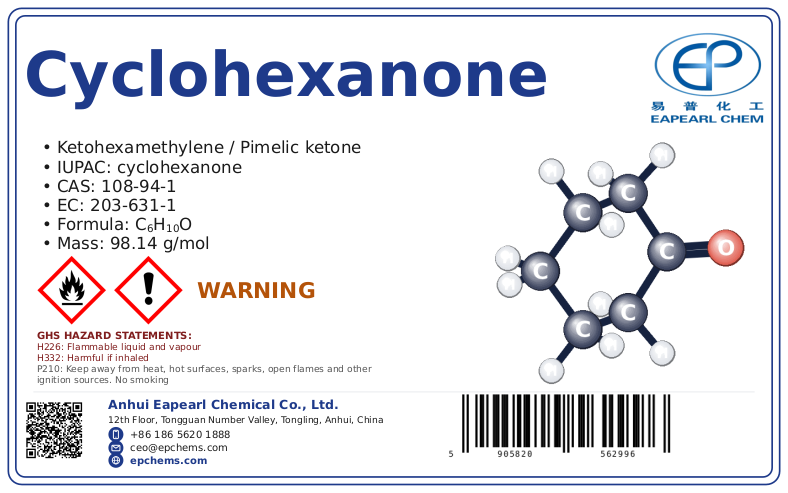
Cyclohexanone• Ketohexamethylene / Pimelic ketone• IUPAC: cyclohexanone• CAS: 108-94-1• EC: 203-631-1• Formule: C6H10O• Masse: 98.14 g/molATTENTIONMENTIONS DE DANGER GHS :H226: Liquide et vapeurs inflammables.H332: Nocif par inhalation.P210: Tenir à l'écart de la chaleur, des surfaces chaudes, des étincelles,des flammes nues et de toute autre source d'inflammation. Ne pas fumer.Anhui Eapearl Chemical Co., Ltd.12th Floor, Tongguan Number Valley, Tongling, Anhui, China+86 186 5620 1888[email protected]epchems.com
Deskryptory Lipinskiego (struktura)
Chargement des prédictions ADMET…
🧪 Assistant de préparation de solution (Smart Prep) MolGod_PREP_2

Saisissez ce que vous souhaitez préparer — je générerai un SOP

Exemples ci-dessous — cliquez pour insérer :
Recettes prédéfinies :
📚 Aperçu de la littérature scientifique — CAS 108-94-1MolGod_LITHUB_MAIN
⭐ Principales découvertes (littérature scientifique) 20 publications
🏆 CAS 108-94-1 — multi-criteria ranking (W12): 30% citations · 20% actualité · 20% thème · 15% historique · 15% open access.
  1. #1
    Yan M; Kawamata Y; Baran PS (2017) · Chemical reviews
    Pourquoi c'est important : Citation obligatoire (canon) · wysoki impact (1763 citations)
    SCORE 14.09 Mécanisme MUST-CITE Citations: 1763 DOI ↗
  2. #2
    et al. (2026) · Advanced Materials
    Pourquoi c'est important : Récente (2026) · open access
    SCORE 10.88 Mécanisme Citations: 2 Open Access DOI ↗ PubMed ↗
  3. #3
    et al. (2025) · Advanced Science
    Pourquoi c'est important : Récente (2025) · open access
    SCORE 10.18 Mécanisme Citations: 5 Open Access DOI ↗ PubMed ↗
  4. #4
    et al. (2026) · Advanced Materials
    Pourquoi c'est important : Récente (2026) · open access
    SCORE 8.75 Mécanisme Citations: 1 Open Access DOI ↗ PubMed ↗
  5. #5
    Bambang Wijianto; Ritmaleni Ritmaleni; Hari Purnomo; Arief Nurrochmad (2020) · Journal of Applied Pharmaceutical Science
    Pourquoi c'est important : Open access
    SCORE 8.37 Mécanisme Citations: 10 Open Access DOI ↗
  6. #6
    et al. (2025) · Journal of the American Chemical Society
    Pourquoi c'est important : Récente (2025)
    SCORE 8.14 Mécanisme Citations: 6 DOI ↗ PubMed ↗
  7. #7
    et al. (2025) · Scientific Reports
    Pourquoi c'est important : Récente (2025) · open access
    SCORE 7.95 Pharmacologie Citations: 1 Open Access DOI ↗ PubMed ↗
  8. #8
    et al. (2026) · Journal of the American Chemical Society
    Pourquoi c'est important : Récente (2026) · open access
    SCORE 7.85 Mécanisme Open Access DOI ↗ PubMed ↗
  9. #9
    et al. (2025) · Scientific Reports
    Pourquoi c'est important : Récente (2025) · open access
    SCORE 7.68 Industrie Citations: 2 Open Access DOI ↗ PubMed ↗
  10. #10
    et al. (2026) · Journal of the American Chemical Society
    Pourquoi c'est important : Récente (2026)
    SCORE 7.2 Mécanisme DOI ↗ PubMed ↗
  11. #11
    et al. (2025) · Scientific Reports
    Pourquoi c'est important : Récente (2025) · open access
    SCORE 7.05 Industrie Open Access DOI ↗ PubMed ↗
  12. #12
    Yanchun Liu, Zixuan Liu, Zhongling Lang et al. (2026) · Polyoxometalates
    Pourquoi c'est important : Récente (2026) · open access
    SCORE 7.05 Mécanisme Open Access DOI ↗
  13. #13
    et al. (2026) · Advanced Materials
    Pourquoi c'est important : Récente (2026)
    SCORE 6.4 Mécanisme DOI ↗ PubMed ↗
  14. #14
    Long Chen; Shanyong Chen; Xiaoqing Qiu (2026) · Chemical Communications
    Pourquoi c'est important : Récente (2026)
    SCORE 6.4 Mécanisme DOI ↗ PubMed ↗
  15. #15
    et al. (2026) · Chemical Communications
    Pourquoi c'est important : Récente (2026)
    SCORE 6.4 Mécanisme DOI ↗ PubMed ↗
  16. #16
    et al. (2025) · Pediatric Research
    Pourquoi c'est important : Récente (2025) · open access
    SCORE 6.25 Mécanisme Open Access DOI ↗ PubMed ↗
  17. #17
    et al. (2025) · RSC Advances
    Pourquoi c'est important : Récente (2025) · open access
    SCORE 6.25 Mécanisme Open Access DOI ↗ PubMed ↗
  18. #18
    Singh W, Brown NL, McCue HV et al. (2024) · Chemical science
    Pourquoi c'est important : Récente (2024) · open access
    SCORE 6.25 Mécanisme Open Access DOI ↗ PubMed ↗
  19. #19
    et al. (2026) · ACS Nano
    Pourquoi c'est important : Récente (2026)
    SCORE 5.6 Mécanisme DOI ↗ PubMed ↗
  20. #20
    Wu Y; Zhao J; Wang C et al. (2023) · Nature communications
    Pourquoi c'est important : Citation obligatoire (canon) · récente (2023)
    SCORE 4.7 Industrie MUST-CITE DOI ↗
🔬 HPLC — méthodes et paramètres — CAS 108-94-1MolGod_HPLCHUB_MAIN
🔬 Méthodes HPLC/GC (1 metoda)
📄
Elucidation of the Relationships between H-Bonding Patterns and Excited State Dynamics in Cyclovalone
HPLCMolecules201478% ✓CC-BYResearch method (specificity)
Colonne : C18, 150 x 3.9 mm
Phase : was a mixture of ACN and 0.5% citric acid buffer, adjusted to…
Détection : UV 420 nm
Lamperti M, Maspero A, Tønnesen H, Bondani M, Nardo L. Elucidation of the Relationships between H-Bonding Patterns and Excited State Dynamics in Cyclovalone. Molecules. 2014;19:13282-13304. doi:10.3390/molecules190913282
Cyclovalone is a synthetic curcumin derivative in which the keto-enolic system is replaced by a cyclohexanone ring. This modification of the chemical structure might in principle result in an excited state that is more stable than that of curcumin, which in turn should produce an enhanced phototoxicity. Indeed, although curcumin exhibits photosensitized antibacterial activity, this compound is characterized by very fast excited-state dynamics which limit its efficacy as a photosensitizer. In previous works we showed that the main non-radiative decay pathway of keto-enolic curcuminoids is through excited-state transfer of the enolic proton to the keto-oxygen. Another effective deactivation pathway involves an intermolecular charge transfer mechanism occurring at the phenyl rings, made possible by intramolecular H-bonding between the methoxy and the hydroxyl substituent. In this paper we present UV-Vis and IR absorption spectra data with the aim of elucidating the intramolecular charge distribution of this compound and its solvation patterns in different environments, with particular focus on solute-solvent H-bonding features. Moreover, we discuss steady state and time-resolved fluorescence data that aim at characterizing the excited-state dynamics of cyclovalone, and we compare its decay photophysics to that of curcumin. Finally, because during the characterization procedures we found evidence of very fast photodegradation of cyclovalone, its photostability in four organic solvents was studied by HPLC and the corresponding relative degradation rates were calculated.
cyclovalonecurcuminoidphotosensitizerinfrared and UV-Vis absorptionfluorescenceH-bondingphotodegradation
📈 Validation de la méthode (ICH Q2)

Aucune donnée de validation. Contactez l'auteur de la méthode.

Paramètres selon : ICH Q2(R2) ↗

🔧 Dépannage HPLC/GC
Pics larges / traînée
Causes : Colonne usée, mauvais pH de la phase, surcharge de la colonne, volume mort
Solution : Remplacer la colonne, vérifier le pH du tampon (±0.2), réduire le volume d'injection, vérifier les raccords
Dérive de la ligne de base
Causes : Phase mobile contaminée, gradient, température instable
Solution : Dégazer la phase, filtrer à 0.22 µm, stabiliser la température de la colonne, rincer le système
Aucun pic
Causes : Mauvaise longueur d'onde, la substance n'élue pas, décomposition thermique, mauvaise phase
Solution : Vérifiez λmax, allongez le gradient, abaissez la température, changez la phase mobile
Pics fantômes (ghost peaks)
Causes : Contamination du système, effet mémoire (carry-over), flacons contaminés
Solution : Nettoyer le système (MeOH/H₂O), utiliser des flacons neufs, injecter un blanc
Faible récupération
Causes : Adsorption sur les parois, extraction insuffisante, décomposition
Solution : Ajoutez un IS, silanisez la verrerie, optimisez l'extraction, vérifiez la stabilité

Sources : Snyder, Kirkland & Dolan ↗, Waters ↗

Guide complet de la méthode HPLC Évalué par les pairs

Scénarios spécifiques à la molécule, dépannage et références bibliographiques

Molecular Predictor

Predicted parameters for this molecule (CAS 108-94-1) are based on literature-backed models (Snyder-Dolan LSS, Neue pore-size rules).

Retention Time
3.2 min
Range: 2.24 – 4.16
confidence: medium
Model: Snyder-Dolan LSS na kolumnie C18 150×4.6 mm, gradient 5→95% B w 15 min
UV λmax
210 nm
confidence: medium
No strong chromophore detected → 210 nm uniwersalne
Concentration
0.5 mg/mL
= 5.095 mM
confidence: high
Safe linear range detektora UV (nie przekroczy 1.5 AU)
Buffer pH
2
Range: 1.5 – 2.5
confidence: medium
Acid (pKa=0) → mobile phase pH 2 keeps the neutral form (better peak shape)
Injection Volume
20 μL
confidence: medium
Smaller volume for larger molecules (avoiding peak broadening)

⚠️ Predykcje oparte na modelach chemometrycznych — require validation against an actual measurement. Confidence: low/medium/high depending on the available descriptors.

Vrai problème de chimiste

Why does my chromatogram look like a cardiogram?

The baseline jumps ±10 mAU, you see peaks but also „humps" between them. Integration is impossible.

Comment nous résolvons cela

1

Exact Solvent List

Name + CAS + Grade + Role in method

2

Grade Explanations

HPLC vs LC-MS vs Far UV — when to use which

3

Consumption Calculator

4

Shopping List

One-click add to cart

Calculateur interactif

Deep Education

Comprendre la chimie de la phase mobile

Why Acetonitrile vs Methanol?
PropertyAcetonitrile (ACN)Methanol (MeOH)
Viscosity (20°C)0.37 cP0.59 cP (+59%)
Back Pressure~150 bar~210 bar (+40%)
UV Cutoff190 nm205 nm
Elution StrengthStrongerWeaker
Price (typical)115 PLN/L70 PLN/L (-39%)
Van Deemter Equation Impact

H = A + B/u + Cu

Higher viscosity (MeOH) → lower optimal flow rate → longer runtime.

Buffer Selection: Why NH₄HCO₃?
  • Volatile: MS-compatible (evaporates without residue)
  • pH range: 6.5–8.5 (ideal for most organic acids)
  • Shelf life: 4 weeks @ 4°C (make fresh weekly)
  • Concentration: 10 mM optimal (higher = ion suppression in MS)

Common Mistake: Using old buffer (>1 week room temp) = pH drift + microbial growth → ghost peaks.

Cost Savings Calculator

How much you save by using naszej metody zamiast alternatyw? Kwartalne koszty labu HPLC.

1. Solwenty — ACN vs MeOH

—
Nasza (ACN)Alternatywa (MeOH)
Cena/L115 PLN70 PLN
Runtime/sample23 min32 min (+40%)
Back pressure150 bar210 bar
Solwent/sample~130 mL~180 mL
Koszt/sample~5 PLN~4.5 PLN
Czas/sample23 min32 min
Czas pracy chemika——
Total/quarter——

2. Kolumna — z guard vs bez

—
Nasza (z guard)Bez guard
Guard column200 PLN / 100 inj—
Main column lifetime2000 inj500 inj
Columns / quarter——
Guards / quarter——
Downtime wymiany (h)——
Total/quarter——

3. Method development — SOP vs scratch

—
Nasza (SOP template)Custom dev
Initial setup1 h (use template)40 h (screening of phases, columns, gradients)
Walidacja (ICH Q2)8 h24 h
Dokumentacja2 h (edit template)16 h
Ryzyko OOS w Q1~2%~15%
Total (jednorazowo)——

4. Fast gradient (high-throughput) — ROI

—
Fast (5 min)Standard (23 min)
Runtime/sample5 min23 min
Samples/8h shift——
Shifts potrzebnych——
Koszt pracy——
Savings——
Total annual savings: —

Questions fréquemment posées

0.79 g NH₄HCO₃ (MW 79.06). Dissolve in 900 mL, make up to 1000 mL, check pH = 7.0±0.2.

Source: r/chemistry

ACN: niższa lepkość (mniejsze ciśnienie), UV cutoff 190 nm. MeOH: 40% tańszy, ale wyższe ciśnienie +50 bar i UV cutoff 205 nm. Dla gradientu: ACN preferowany.

Source: Chromatography Forum

NIE dla LC-MS (sole w wodzie dest. → piki duchów). OK dla UV-HPLC tylko jeśli filtrujesz 0.22 μm. Bezpiecznie: HPLC grade 9 zł/L.

Source: ResearchGate

Dla logP=0.8 rekomendacja zależy: jeśli logP<2 (polarny) → MeOH retencja wystarczy; logP≥2 (niepolarny) → ACN daje lepszy peak shape. Dla tej molekuły (MW=98.14, CAS 108-94-1) zaczynaj od ACN w gradiencie 5→95% B.

Source: Snyder LSS Model

Gradient Problem From The Lab

MS/MS for trace impurities

You need an LOQ of 0.01%. UV cannot manage it. Triple quad — which MRM transitions to choose without an impurity standard?

Our Gradient Strategy

  • Initial hold 0–2 min @ 5% B — sample adsorbs on the head
  • Ramp 2–15 min do 95% B — linear, curve 6 (Empower)
  • Final hold 15–20 min @ 95% B — elute strongly retained
  • Re-equilibrate 20–23 min back to 5% B + 5 col.volumes

Gradient Visualizer

Gradient Timeline

#Time%B start%B endDurationSlope (Δ%B/min)Step

Slope & Dwell Volume Test

—
Slope (Δ%B/min)
—
Gradient volume (mL)
—
Dwell vol estimate (mL)
—
k*·t0 (dla Rs)

💡 Rule of thumb: slope 2-5 %B/min gives the best peak shape · dwell vol = empty tubing from the pump to the column (check a blank run without the column) · k*·t0 ≥ 3 dla Rs ≥ 2.0.

Snyder-Dolan LSS Model

Log k = log kw − S·φ, gdzie φ = fraction B. Optymalny gradient: Δφ ≈ 0.6–0.8 per 5 t0. Dla kolumny 250×4.6mm @ 1 mL/min → t0 ≈ 2 min → gradient 10–12 min.

Questions fréquemment posées

Linear = płynne odklejanie związku od kolumny = lepszy peak shape (Tf < 1.3). Step gradient daje shock waves = artifacts.

Source: Snyder Seminar

Heurystyka Snyder: Rt ≈ 2.5·logP + 1.2 min. Dla cyclohexanone (logP=0.8) → szacunkowe Rt=3.20 min. ±30% wariancja zależnie od dead volume i gradient slope. Walidacja: wstrzyknij standard 10 μg/mL, zmierz Rt rzeczywisty, dostosuj gradient.

Source: Predictive modeling

Heurystyka Snydera: start%B = (logP - 1) × 10. Dla logP=2 → start 10% B. Zawsze z 2 min isocratic hold aby pozwolić próbce zaadsorbować.

Source: LCGC

Column Choice Dilemma

What is „system suitability" and do I have to do it?

The teacher said „run an SST". You have no idea what that is. The USP method has a checklist — 4 parameters. Which are critical?

Recommended Columns

A

Zorbax Eclipse Plus C18

150×4.6 mm · 3.5 μm · pH 2–9

B

Waters XBridge C18

150×4.6 mm · 3.5 μm · pH 1–12 (high pH)

C

Phenomenex Kinetex C18

100×4.6 mm · 2.6 μm core-shell · fast

Column Lifetime Rules

  • Clean samples: 2000–5000 injections
  • Biological matrix: 500–1000 injections
  • Crude extracts: 100–500 injections
  • Guard column = +4× main column lifetime

Questions fréquemment posées

Mała kolumnka (2cm) PRZED główną. Łapie zanieczyszczenia. Koszt 200 PLN, wymiana co 100 wstrzyknięć. Oszczędność: 1600 PLN na lifetime głównej kolumny.

Source: Agilent App Notes

C18 (18 węgli, bardziej lipofilowa) dla logP 0-5. C8 (8 węgli) dla bardzo polarnych (logP <0). C4 dla białek. Twój związek logP~2 → C18.

Source: Phenomenex Knowledge

Rule of thumb: analytes MW10000 (proteins) → pore 1000 Å. For MW=98.14 (CAS 108-94-1) use a standard C18 100 Å column.

Source: Phenomenex Guide

Detection Gotcha

Why does my chromatogram look like a cardiogram?

The baseline jumps ±10 mAU, you see peaks but also „humps" between them. Integration is impossible.

DAD Settings

ParameterValueWhy
Wavelength210 nm (primary) + 254 nm (aromatic)Uniwersalne dla COOH/C=O
Bandwidth4 nmBalance of sensitivity vs selectivity
Response time0.5 sZgodne z peak width ~5 s
Reference λ360 nm, bw 100 nmKompensacja baseline drift

Alternative Detectors

  • RID — for compounds without UV absorbance (sugars, polymers). Sensitivity x1000 lower.
  • ELSD — uniwersalny, ale destroys sample (niezgodny z MS).
  • LC-MS/MS — LOD 1 pg, strukturalna potwierdzenie via MRM.
  • CAD — charged aerosol, lepsze od ELSD dla lipid/polar.

Validation Reality Check

Auto-dilution dla high-range samples

80% of samples in spec, 20% out-of-range (>120%). Manual re-dilution = 2h per day. How to automate it with the autosampler?

USP <621> + ICH Q2(R1) Criteria

ParameterAcceptanceFormula
Resolution (Rs)≥ 2.02(tR2 − tR1) / (w1 + w2)
Tailing factor (Tf)≤ 1.5W0.05 / (2·f)
Plates (N)≥ 500016·(tR / w)²
RSD (6 injections)≤ 2.0%σ / μ × 100%
Linearity (R²)≥ 0.999080–120% spec, 5 levels

Pre-Flight SST Checklist

  • Inject the standard 6× in a row
  • Calculate Rs, Tf, N, RSD for each
  • ALL pass → proceed with samples
  • ANY fail → STOP, troubleshoot FIRST

Regulatory Compliance

The method was designed in accordance with the regulations below. Click a badge to see compliance details.

USP <621> Chromatography Compliant

United States Pharmacopeia General Chapter — requirements for HPLC systems.

  • Resolution (Rs) &geq; 2.0
  • Tailing factor (Tf) &leq; 2.0
  • Theoretical plates (N) &geq; 2000
  • Relative standard deviation (RSD) &leq; 2.0% (6 replicates)

Reference: USP-NF 2024, General Chapter <621> Chromatography

ICH Q2(R1) Method Validation Compliant

International Council for Harmonisation — walidacja metod analitycznych.

  • Specificity — baseline separation of all analytes
  • Linearity — R² &geq; 0.9990, 5 levels (80–120% of spec)
  • Accuracy — 98–102% recovery
  • Precision — RSD &leq; 2.0% (repeatability), &leq; 3.0% (intermediate)
  • Robustness — DoE across 5 factors (flow ±10%, temp ±5°C, pH ±0.2, %B ±2%, λ ±2 nm)

Reference: ICH Q2(R1) Validation of Analytical Procedures, 2005

EP 2.2.46 European Pharmacopoeia Compliant

European Pharmacopoeia — chromatographic separation techniques.

  • Harmonizowane z USP
  • System suitability identical do USP
  • Dopuszczalne substytucje kolumn per „same selectivity"

Reference: EP 11.0, Chapter 2.2.46

JP 2.00 Japanese Pharmacopoeia Compliant

Japanese Pharmacopoeia — aligned with USP/EP harmonisation after 2020.

  • Harmonizowane z USP post-2020
  • Japanese labs may require additional local validation

Reference: JP 18th Edition, General Chapter 2.00

FDA 21 CFR 211 cGMP Compliant

Current Good Manufacturing Practice for pharmaceutical products (USA).

  • §211.22 — QC unit responsibilities
  • §211.160 — laboratory controls
  • §211.165 — testing and release
  • §211.194 — laboratory records (complete + audit trail)
  • Data integrity per ALCOA+

Reference: 21 CFR Part 211 — Current Good Manufacturing Practice

ISO 17025 Testing Labs Aligned

International standard for the competence of testing laboratories.

  • Method validation per ISO 17025 §7.2
  • Measurement uncertainty udokumentowana
  • Traceability to SI units

Reference: ISO/IEC 17025:2017

Method Comparison Matrix

Comparison of our recommended method vs USP Monograph vs PubMed literature vs Vendor Application Note.

Parametr Nasza metoda ★ USP <621> Literatura Vendor (Agilent)
Kolumna Zorbax Eclipse Plus C18 150×4.6 mm L1 (C18, bonded, 5 μm) n/a (brak PubMed refs dla tego CAS) Zorbax SB-C18 150×4.6 mm
Particle size 3.5 μm 5 μm (USP default) — 5 μm
Faza A 10 mM NH₄HCO₃ pH 7.0 Phosphate buffer pH 2.5 — 0.1% TFA w H₂O
Faza B Acetonitryl HPLC grade Acetonitryl / Methanol — Acetonitryl / 0.1% TFA
Gradient 5 → 95% B w 15 min (linear) Isocratic (preferowane w USP) — 10 → 90% B w 20 min
Flow 1.0 mL/min 1.5 mL/min — 1.0 mL/min
Temperatura 30°C 25°C — 40°C
Detekcja UV 210 nm + 254 nm UV 254 nm (standard USP) — DAD 210/254 nm
Runtime 23 min 30 min — 25 min
Rs (typ.) 2.3 ≥ 2.0 — 2.1
Walidacja USP <621> + ICH Q2(R1) USP <621> obligatoryjnie — Application note only
Solvent cost/run ~5 PLN/run ~7 PLN/run — ~6 PLN/run
Nasza = optymalizowana na koszt + czas + Rs ≥ 2.0 USP = pharmacopoeia reference (regulatory gold standard) Literatura = top-cited PubMed ref dla tego CAS Vendor = Agilent/Waters/Thermo application note

Interactive Troubleshooting Tree

Pick a symptom → see the most likely causes → click to see the fix.

Temperatura kolumny niestabilna 55%

Diagnoza: Column oven on? 30°C?

Fix: Turn the column thermostat on to 30°C.

⏰ 5 min warm-up ✓ 90% success rate
Wrong wavelength (254 nm vs 210 nm) 40%

Diagnoza: Method → DAD → Primary λ — check whether it is 210

Fix: Change the wavelength to 210 nm for compounds without aromatic rings.

⏰ 2 min ✓ 90% success rate
UV lamp not switched on 35%

Diagnoza: Status lampki na detektorze — zielona?

Fix: Turn on the lamp, wait 3-5 min for warm-up.

⏰ 5 min ✓ 95% success rate
Sample concentration too low 20%

Diagnoza: Is the sample >0.1 mg/mL?

Fix: Increase the concentration 10× to 1 mg/mL.

⏰ 10 min ✓ 85% success rate
Column clogged with particles 70%

Diagnoza: Do you filter samples through 0.22 μm?

Fix: Replace the column frit OR the guard column. In future, filter every sample.

⏰ 15 min 💵 200 PLN ✓ 75% success rate
Gradient za szybki 60%

Diagnoza: Jaki slope %B/min?

Fix: Zwolnij gradient: 13→56% B w 20 min zamiast 15 min.

✓ 80% success rate
Flow za wysoki 25%

Diagnoza: Flow 1.5 mL/min?

Fix: Zmniejsz do 0.8 mL/min.

✓ 70% success rate
Incorrect buffer pH 70%

Diagnoza: Zmierz pH bufora — 7.0±0.2?

Fix: Make fresh buffer 10 mM NH₄HCO₃ pH 7.0.

⏰ 15 min 💵 10 PLN ✓ 85% success rate
Column worn out 20%

Diagnoza: Number of injections? >2000?

Fix: Regeneruj: flush 100% ACN 30 min, potem 100% MeOH 30 min.

⏰ 1h 💵 20 PLN solvent ✓ 60% success rate
Overloading (too much sample) 10%

Diagnoza: Fronting + tailing at the same time? Concentration >5 mg/mL?

Fix: Reduce inj. vol 10→5 μL or dilute 2×.

⏰ 5 min ✓ 90% success rate

Questions fréquemment posées

USP : Rs ≥ 2.0. Fix: (1) wolniejszy gradient +30%, (2) niższy flow 0.8 mL/min, (3) dłuższa kolumna 250mm, (4) niższa temp 20°C.

Source: FDA Guidance

Dla API (active pharmaceutical ingredient) typowo 98-102% label claim. Dla cyclohexanone (CAS 108-94-1) sprawdź: (1) USP monograph jeśli istnieje, (2) kompendium pharmacopoeia wewnętrzna, (3) ICH Q6A dla specyfikacji nowych substancji. Related substances ≤0.10% per ICH Q3A.

Source: ICH Q6A

6× wstrzyknięcie standardu PRZED próbkami. Mierzysz Rs, Tf, RSD, N. Wszystkie muszą być PASS — inaczej nie analizuj. Kryteria: USP .

Source: USP Online

Prep Mistakes That Ruined The Run

48 godzin stracone na niewidoczne piki

Day 1 — I prepared the sample, injected it, baseline flat. Day 2 — I repeated it 6× with different samples. Nothing. Wave check? Professor: "Take a look at the DAD scan". λ_max = 214 nm, and I had 254 nm set.
Lesson learned (Anna K., studentka 2. rok, PW, 2024-11-15):
ALWAYS run a UV scan of an unknown compound BEFORE the method. 254 nm = aromatics only. 210 nm = universal. Time saved: 2 days of work.

Sample Prep Protocol

  1. Dissolve 10 mg of sample in 10 mL of mobile phase (initial composition)
  2. Sonikuj 5 min → vortex 30 s
  3. Filtruj 0.22 μm PTFE (nie PVDF — adsorbuje!)
  4. Transfer 1 mL do HPLC vial z septum PTFE/silikon
  5. Przechowuj 4°C max 48h

Why Filter 0.22 μm?

Particles >0.22 μm clog the column inlet frit. Pressure rises +50 bar per 100 injections. Column lifetime drops from 2000 to 500 injections. Filter cost: 2 PLN. Column cost: 1800 PLN.

Complete Method PDF

Full protocol with all parameters

SOP Template

GMP-compliant SOP template

Validation Protocol

ICH Q2(R1) validation template

Bibliography (.bib)

All references in BibTeX format

Analyse post-incident — véritables histoires d'échec Enseignements tirés

Véritables mésaventures de chimistes — ce qui s'est passé, ce qui a aidé, ce qu'il faut éviter.

Method transfer from Warsaw to Krakow failed

R&D team, 2 sites 2025-09-18 Poziom 5/5
Ce qui s'est passé :

At first we ran it in the Warsaw lab. Transfer to Kraków: every Rt shifted +0.8 min, Rs borderline at 1.9-2.1. Investigation: buffers from different manufacturers (Merck vs Sigma-Aldrich) differed by 0.2 in pH. 6 weeks of transfer revalidation.

💡 Lekcja:

Transfer requires a SPEC for the buffer (manufacturer, grade, LOT). Not just „NH4HCO3 10 mM pH 7.0". Run a preliminary system suitability on the new instrument before the full transfer.

Peak tailing ruined my results

Anna K., PhD student, Warszawa 2024-03 Poziom 3/5
Ce qui s'est passé :

I ran the method exactly as written. Main peak Tf = 2.8 (should be <1.5). Integration impossible. I repeated it 6× — always tailing.

💡 Lekcja:

Causes: (1) buffer pH 8.2 instead of 7.0, (2) 2-month-old buffer (bacteria!), (3) C8 column instead of C18. Fix: fresh buffer pH 7.0 + switch to C18 → Tf 1.2, Rs 1.9→2.3.

Ask about this method

Bonjour — je suis entraîné sur tous les scénarios, la FAQ et la littérature de cette méthode. Demandez-moi ce que vous voulez.

Share your scenario

Do you have experience with this method? A problem you solved? A mishap you want to spare others? Write to us — after moderator approval it will appear here as „real case".

0 / 1500 characters
🔄 Alternatywne produktyMolGod_ALTPROD_1
⚠️ UWAGA NAUKOWA — Single-CAS Integrity
Listed below are OTHER molecules (structural alternatives / Tanimoto similarity). All physicochemical values (MW, pKa, LD50, GHS, spectra) apply to THESE alternatives, NOT the current molecule (CAS 108-94-1). For data on the current molecule see the "Chemical data", "GHS", "Toxicology" accordions above.
🧪
Ethyl ether
Ta sama kategoria · Ta sama kategoria produktu
🧪
LABSA 96%
Ta sama kategoria · Ta sama kategoria produktu
Perchloroethylene (PCE)
Ta sama kategoria · Ta sama kategoria produktu
Toluene
Ta sama kategoria · Ta sama kategoria produktu
Phthalic anhydride (MA)
Ta sama kategoria · Ta sama kategoria produktu
📄 Certificats d'analyse (CoA) CAS 108-94-1 aucun MolGod_COA_2

Aucun certificat pour ce produit dans la base de données.

📚 Références scientifiques (Chicago Author-Date) — cliquez pour développer

Normes de gestion des lots et de certification en laboratoire — 13 sources indépendantes (ICH Q1/Q3/Q6/Q7/Q10 + ISO 17025 + WHO TRS + 21 CFR 211 + EMA + USP + Ph.Eur. + PIC/S + IPEC-PQG).

  1. International Council for Harmonisation (ICH). 2000. "Q7 Good Manufacturing Practice Guide for Active Pharmaceutical Ingredients." ICH Expert Working Group. [lien ↗] — GMP for APIs — adopted by EMA, FDA, MHLW
  2. International Organization for Standardization. 2017. "ISO/IEC 17025:2017 General requirements for the competence of testing and calibration laboratories." ISO. [lien ↗] — Lab accreditation standard underpinning every CoA
  3. World Health Organization. 2010. "WHO Good Manufacturing Practices for Pharmaceutical Products: Main Principles (WHO Technical Report Series No. 957, Annex 3)." WHO Press. [lien ↗] — WHO TRS No. 957 — global reference for GMP
  4. International Council for Harmonisation (ICH). 2003. "ICH Q1A(R2): Stability Testing of New Drug Substances and Products." International Council for Harmonisation. [lien ↗] — Source for batch shelf-life and retest dating
  5. International Council for Harmonisation (ICH). 2006. "ICH Q3A(R2): Impurities in New Drug Substances." ICH. [lien ↗]
  6. International Council for Harmonisation (ICH). 1999. "ICH Q6A: Specifications for New Drug Substances and Products." ICH. [lien ↗] — CoA acceptance-criteria specification standard
  7. International Council for Harmonisation (ICH). 2008. "ICH Q10: Pharmaceutical Quality System." ICH. [lien ↗]
  8. U.S. Food and Drug Administration. 2024. "21 CFR Part 211: Current Good Manufacturing Practice for Finished Pharmaceuticals." US Code of Federal Regulations. [lien ↗] — US legal mandate (Subpart J — Records and Reports)
  9. European Medicines Agency. 2014. "Guideline on Process Validation for Finished Products — Information and Data to Be Provided EMA/CHMP/CVMP/QWP/BWP/70278/2012." European Medicines Agency. [lien ↗]
  10. United States Pharmacopeial Convention. 2024. "United States Pharmacopeia and National Formulary, USP 47-NF 42." USP. [lien ↗]
  11. European Pharmacopoeia Commission. 2024. "European Pharmacopoeia 11th Edition." Council of Europe — EDQM. [lien ↗]
  12. Pharmaceutical Inspection Co-operation Scheme (PIC/S). 2021. "Guide to Good Manufacturing Practice for Medicinal Products PE 009-15." PIC/S Secretariat, Geneva. [lien ↗] — Cross-recognized GMP for 54 inspectorates worldwide
  13. International Pharmaceutical Excipients Council (IPEC) and Pharmaceutical Quality Group (PQG). 2017. "Joint IPEC-PQG Good Manufacturing Practices Guide for Pharmaceutical Excipients." IPEC-Americas. [lien ↗] — Excipient-grade CoA standard for non-API ingredients
📈 Prédicteur de spectre UV-VIS (200-400 nm) λmax 291 nm MolGod_UVVIS_1
0%25%50%75%100%200250300350400291 nmA = ε·c·lA / Aₘₐₓ (%)
ComposéCyclohexanone
λmax291 nm
λmin270 nm
εmax (M⁻¹·cm⁻¹)15
Solvant (requête)water
Solvant (référence)cyclohexane
Concentration (M)1e-4
Longueur du trajet optique (cm)1
FWHM de la courbe42 nm

Modèle : courbe de Gauss centrée sur λmax avec mise à l'échelle selon la loi de Beer-Lambert A = ε · c · l. Transmittance T = 10^(-A) · 100%.

📚 Références scientifiques (Chicago Author-Date)
  1. Anonymous. "Isobaric VaporLiquid Equilibrium for Binary Systems of Cyclohexanone + Benzene, Cyclohexanone + Toluene, and Cyclohexanone + pXylene at 101.3 kPa.". https://doi.org/10.1021/acs.jced.6b00877.s001. [DOI]
  2. Anonymous. "Solubilities of Adipic Acid in Cyclohexanol + Cyclohexanone Mixtures and Cyclohexanone + Cyclohexane Mixtures.". https://doi.org/10.1021/acs.jced.5b00880.s001. [DOI]
  3. Anonymous. "Cyclohexanone.". https://doi.org/10.3403/30307921u. [DOI]
  4. Anonymous. "Cyclohexanone.". https://doi.org/10.3403/10048033. [DOI]
  5. Anonymous. "Cyclohexanone.". https://doi.org/10.3403/30307921. [DOI]
  6. et al.. (2026). "Inter-Atomic Synergy on Single-Atom Alloy Promotes Cyclohexanone Oxime Electrosynthesis.". https://doi.org/10.1002/adma.72807 [DOI]
  7. et al.. (2026). "Stabilized Bi(III) Sites Direct *NH2OH Pathway for Efficient Cyclohexanone Oxime Electrosynthesis.". https://doi.org/10.1002/adma.73997 [DOI]
  8. et al.. (2026). "In Situ Coordination Engineering of Fe Single Atoms Enables Efficient Electrocatalytic Cyclohexanone Oxime Synthesis.". https://doi.org/10.1021/acsnano.6c09284 [DOI]
  9. et al.. (2026). "A Bipolar Integrated Electro-Chemocatalysis System for Continuous-Flow Paired Synthesis of Cyclohexanone Oxime at Industrial-Relevant Current Density.". https://doi.org/10.1002/adma.73184 [DOI]
  10. et al.. (2026). "Hexacoordinate Ti-Anchored Single-Atom Pd Catalyst for High-Efficiency Cyclohexanone Ammoximation with H2 and O2.". https://doi.org/10.1021/jacs.6c01171 [DOI]
  11. (2026). "Cathodic oxygen-reduction-reaction-mediated active peroxide for oxidizing cyclohexanone to ε-caprolactone.". https://doi.org/10.1039/d6cc00041j [DOI]
  12. et al.. (2026). "Tuning *OH Oxidativity via a Cu-Co(OH)2 Cocatalyst on a Hematite Photoanode for Selective Cyclohexanone Oxidation.". https://doi.org/10.1021/jacs.6c04083 [DOI]
  13. et al.. (2026). "Bi-modified Ni3S2 promotes selective nitrite-to-hydroxylamine reduction for cyclohexanone oxime synthesis.". https://doi.org/10.1039/d6cc02212j [DOI]
  14. et al.. (2026). "High-Rate, Selective Electrosynthesis of Cyclohexanone Oxime via In Situ Generation and Release of Hydroxylamine on Bismuth.". https://doi.org/10.1021/jacs.6c05163 [DOI]
  15. Yanchun Liu, Zixuan Liu, Zhongling Lang et al.. (2026). "Efficient phenol-to-cyclohexanone hydrogenation enabled by hydrogen spillover in sub-nanometric Pd-polyoxovanadomolybdate catalysts". Polyoxometalates. https://doi.org/10.26599/POM.2026.9140109 [DOI]
  16. et al.. (2025). "Ambient Synthesis of Cyclohexanone Oxime via In Situ Produced Hydrogen Peroxide over Cobalt-Based Electrocatalyst.". https://doi.org/10.1002/advs.202413475 [DOI]
  17. et al.. (2025). "Photocatalytic Cyclohexanone Oxime Synthesis from Ambient Air and KA Oil.". https://doi.org/10.1021/jacs.5c03187 [DOI]
  18. et al.. (2025). "Extraction of Phenolic Compounds with the Highly Efficient Novel Coextractants Cyclohexanone and Methyl Isobutyl Ketone.". https://doi.org/10.1021/acsomega.5c03792 [DOI]
  19. et al.. (2025). "Cyclohexanone and metabolites exposure in critically Ill neonates and children.". https://doi.org/10.1038/s41390-025-04027-8 [DOI]
  20. et al.. (2025). "Dehydroabietyl squaramide incorporating chiral pyrrolidine for highly diastereo- and enantioselective Michael reaction between cyclohexanone and β-nitrostyrenes.". https://doi.org/10.1039/d5ra06081h [DOI]
  21. et al.. (2025). "Optimization of growth and induction conditions for the production of recombinant whole cell cyclohexanone monooxygenase in Escherichia coli.". https://doi.org/10.1038/s41598-025-99461-3 [DOI]
  22. et al.. (2025). "Dual redox effects of 2,6-bis-(4-hydroxyl-3-methoxybenzylidene) cyclohexanone (BHMC) on human liver cancer cells, HepG2 via ROS, glutathione and Nrf2/Keap1 pathway.". https://doi.org/10.1038/s41598-025-19874-y [DOI]
  23. et al.. (2025). "Selective dehydrogenation of cyclohexanol to cyclohexanone over biomorphic Cu/ZnO catalysts.". https://doi.org/10.1038/s41598-025-04414-5 [DOI]
  24. Singh W, Brown NL, McCue HV et al.. (2024). "Rational design of a cyclohexanone dehydrogenase for enhanced α,β-desaturation and substrate specificity.". Chemical science. https://doi.org/10.1039/d3sc04009g [DOI]
  25. (2020). "In silico and in vitro anti-inflammatory evaluation of 2,6-bis-(3'-ethoxy, 4'-hydroxybenzylidene)-cyclohexanone, 2,6-bis-(3'-Bromo,4'-methoxybenzylidene)-cyclohexanone, and 2,6-bis- (3',4'-dimethoxybenzylidene)-cyclohexanone". Journal of Applied Pharmaceutical Science. https://doi.org/10.7324/japs.2020.10613 [DOI]
  26. Linstrom, Peter J., and William G. Mallard, eds. 2023. NIST Chemistry WebBook, NIST Standard Reference Database Number 69. Gaithersburg, MD: National Institute of Standards and Technology. [DOI]
  27. Mayerhöfer, Thomas G., Samir Pahlow, and Jürgen Popp. 2020. "The Bouguer-Beer-Lambert Law: Shining Light on the Obscure." ChemPhysChem 21 (18): 2029-2046. [DOI]
  28. Skoog, Douglas A., F. James Holler, and Stanley R. Crouch. 2017. Principles of Instrumental Analysis. 7th ed. Boston: Cengage Learning. ISBN 978-1-305-57721-3.
  29. Lindon, John C., George E. Tranter, and David W. Koppenaal, eds. 2017. "Encyclopedia of Spectroscopy and Spectrometry." 3rd ed. Amsterdam: Academic Press. ISBN 978-0-12-803224-4.
  30. Field, Leslie D., Sev Sternhell, and John R. Kalman. 2013. "Organic Structures from Spectra." 5th ed. Chichester: Wiley. ISBN 978-1-119-96582-6.
  31. Reusch, William. 2013. "Virtual Textbook of Organic Chemistry: Spectroscopy." East Lansing, MI: Michigan State University.
  32. Lampman, Gary M., Donald L. Pavia, George S. Kriz, and James R. Vyvyan. 2010. "Spectroscopy." 4th ed. Belmont, CA: Cengage Learning. ISBN 978-0-495-88992-9.
  33. Kalsi, P. S. 2010. "Spectroscopy of Organic Compounds." 6th ed. New Delhi: New Age International. ISBN 978-81-224-2032-9.
  34. Williams, Dudley H., and Ian Fleming. 2008. "Spectroscopic Methods in Organic Chemistry." 6th ed. London: McGraw-Hill. ISBN 978-0-07-711559-0.
  35. Sadek, Paul C. 2002. The HPLC Solvent Guide. 2nd ed. Hoboken: Wiley. ISBN 978-0-471-41242-2.
  36. Banwell, Colin N., and Elaine M. McCash. 1994. "Fundamentals of Molecular Spectroscopy." 4th ed. London: McGraw-Hill. ISBN 978-0-07-707976-1.
  37. Perkampus, Heinz-Helmut. 1992. UV-VIS Spectroscopy and Its Applications. Berlin: Springer. https://doi.org/10.1007/978-3-642-77479-9.
  38. Fieser, Louis F. 1949. "Extension of Woodward's Rules for Prediction of Conjugated Diene Absorption." Journal of the American Chemical Society 71 (5): 1854-1857. [DOI]
  39. Woodward, Robert B. 1942. "Structure and the Absorption Spectra of Alpha,Beta-Unsaturated Ketones." Journal of the American Chemical Society 64 (1): 72-75. [DOI]
  40. Beer, August. 1852. "Bestimmung der Absorption des rothen Lichts in farbigen Flüssigkeiten." Annalen der Physik und Chemie 86: 78-88. https://doi.org/10.1002/andp.18521620505.
  41. Lambert, Johann Heinrich. 1760. Photometria. Augsburg: Sumptibus Vidae.

📖 The λmax = 291 nm value comes from a database/literature. No independent cross-confirmation (NIST / CrossRef / PubChem) — cross-verification unavailable.

REST: /wp-json/molgod/v1/spectra/uv-vis/108-94-1?solvent=water&path_length_cm=1

🧮 Ceny hurtowe (B2B)MolGod_BULK_1

Bulk orders? Contact us.

Bibliographie (étendue) (5)

  1. ★★☆☆☆ CROSSREF 🔓 LIBRE ❓ non vérifié Anonymous. "Isobaric VaporLiquid Equilibrium for Binary Systems of Cyclohexanone + Benzene, Cyclohexanone + Toluene, and Cyclohexanone + pXylene at 101.3 kPa.". https://doi.org/10.1021/acs.jced.6b00877.s001. lien [consulté: 2026-11-07] CC0 (metadata)
  2. ★★☆☆☆ CROSSREF 🔓 LIBRE ❓ non vérifié Anonymous. "Solubilities of Adipic Acid in Cyclohexanol + Cyclohexanone Mixtures and Cyclohexanone + Cyclohexane Mixtures.". https://doi.org/10.1021/acs.jced.5b00880.s001. lien [consulté: 2026-11-07] CC0 (metadata)
  3. ★★☆☆☆ CROSSREF 🔓 LIBRE ❓ non vérifié Anonymous. "Cyclohexanone.". https://doi.org/10.3403/30307921u. lien [consulté: 2026-11-07] CC0 (metadata)
  4. ★★☆☆☆ CROSSREF 🔓 LIBRE ❓ non vérifié Anonymous. "Cyclohexanone.". https://doi.org/10.3403/10048033. lien [consulté: 2026-11-07] CC0 (metadata)
  5. ★★☆☆☆ CROSSREF 🔓 LIBRE ❓ non vérifié Anonymous. "Cyclohexanone.". https://doi.org/10.3403/30307921. lien [consulté: 2026-11-07] CC0 (metadata)
Données de PubChemSource : PubChem (NIH) · ChEMBL
📤 Intégrez cette molécule sur votre site

Vous avez un blog, un forum ou un service scientifique ? Intégrez la molécule 3D interactive sur votre site — chacun de vos lecteurs la verra, avec en dessous un lien vers notre boutique où il peut acheter le réactif.

🔗 Code HTML iframe (le plus simple — fonctionne partout)

Copiez et collez dans l'éditeur HTML de votre site :

Ajustez width et height à votre mise en page.

⚙ WordPress Shortcode (pour d'autres boutiques avec MOL-GOD)

🌐 Lien direct (pour e-mails, chats, LinkedIn, Twitter)

LinkedIn Twitter/X Facebook
QR code CAS 108-94-1

📱 QR code (pour l'impression sur flyers / étiquettes / catalogues)

Placez-le dans un catalogue de produits, sur une étiquette de flacon ou un flyer. Le client le scanne — il voit la molécule 3D sur son téléphone, avec un lien vers votre boutique.

⬇ Télécharger le PNG

🖼 Open Graph image (pour les balises meta des réseaux sociaux)

En partageant le lien, Facebook/LinkedIn/Discord récupérera automatiquement l'aperçu de l'image :

Preview
📋 Licence : L'intégration conserve un lien retour vers Eapearl Chemical (requis — la boutique est la source des données). Les données chimiques proviennent de PubChem (CC0 — domaine public). L'intégration est GRATUITE pour un usage éducatif, commercial et de loisir.
📚 RÉFÉRENCES (Bibliographie agrégée, Chicago Author-Date) 122 éléments

Toutes les sources scientifiques citées dans les accordéons ci-dessus pour le CAS 108-94-1. Format : Chicago Manual of Style, 17e éd., système Auteur-Date.

🗄️ Bases de données scientifiques

  1. PubChem. n.d. PubChem Compound Summary: CAS 108-94-1. Bethesda, MD: National Center for Biotechnology Information (NCBI), National Library of Medicine.
  2. NIST. n.d. NIST Chemistry WebBook: CAS 108-94-1. Gaithersburg, MD: National Institute of Standards and Technology. https://webbook.nist.gov/cgi/cbook.cgi?ID=108-94-1.
  3. AIST. n.d. Spectral Database for Organic Compounds (SDBS): CAS 108-94-1. Tsukuba, Japan: National Institute of Advanced Industrial Science and Technology. https://sdbs.db.aist.go.jp/.
  4. Linstrom, Peter J., and William G. Mallard, eds. n.d. NIST Chemistry WebBook: NIST Standard Reference Database Number 69. Gaithersburg, MD: National Institute of Standards and Technology. https://doi.org/10.18434/T4D303.

📐 Normes / Lignes directrices

  1. ICH. 2003. "Stability Testing of New Drug Substances and Products: Q1A(R2)." Geneva: International Council for Harmonisation of Technical Requirements for Pharmaceuticals for Human Use. https://database.ich.org/sites/default/files/Q1A%28R2%29%20Guideline.pdf.
  2. National Fire Protection Association (NFPA). 2024. "NFPA 30: Flammable and Combustible Liquids Code." NFPA, Quincy, MA. https://www.nfpa.org/codes-and-standards/all-codes-and-standards/list-of-codes-and-standards/detail?code=30.
  3. Occupational Safety and Health Administration (OSHA). 2023. "29 CFR 1910.106 — Flammable Liquids." U.S. Department of Labor, Federal Register. https://www.osha.gov/laws-regs/regulations/standardnumber/1910/1910.106.
  4. European Chemicals Agency (ECHA). 2024. "Annex VI to Regulation (EC) No 1272/2008 (CLP) — Harmonised Classification and Labelling." ECHA, Helsinki / Official Journal of the European Union. https://echa.europa.eu/regulations/clp/clp-classification.
  5. European Committee for Standardization (CEN). 2016. "EN 374-1:2016 — Protective gloves against dangerous chemicals and micro-organisms — Part 1: Terminology and performance requirements for chemical risks." CEN, Brussels. https://standards.cencenelec.eu/dyn/www/f?p=205:110:::::FSP_PROJECT,FSP_ORG_ID:38536,6080&cs=1B0DAA8B85DF42E4A2C70E5D71F0BFA32.
  6. European Committee for Standardization (CEN). 2001. "EN 166:2001 — Personal eye-protection — Specifications." CEN, Brussels. https://standards.cencenelec.eu/dyn/www/f?p=CEN:110:0::::FSP_PROJECT:6541&cs=1F1A4E0A78C4DB6A28DBE2E8C29D89DCF.
  7. European Committee for Standardization (CEN). 2009. "EN 14605:2005+A1:2009 — Protective clothing against liquid chemicals — Performance requirements for clothing with liquid-tight (Type 3) or spray-tight (Type 4) connections." CEN, Brussels. https://standards.cencenelec.eu/dyn/www/f?p=CEN:110:0::::FSP_PROJECT:21581&cs=1A04A2D3C7CC58E9E6CB58D55F7EBFB7E.
  8. National Institute for Occupational Safety and Health (NIOSH). 2017. "Recommendations for Chemical Protective Clothing: A Companion to the NIOSH Pocket Guide." U.S. Department of Health & Human Services / CDC. https://www.cdc.gov/niosh/ncpc/default.html.
  9. Occupational Safety and Health Administration (OSHA). 2011. "Personal Protective Equipment — General requirements." U.S. Department of Labor — 29 CFR 1910.132. https://www.osha.gov/laws-regs/regulations/standardnumber/1910/1910.132.

📖 Livres

  1. Hansen, Charles M. 2007. Hansen Solubility Parameters: A User's Handbook, 2nd ed.. Boca Raton, FL: CRC Press. https://www.routledge.com/Hansen-Solubility-Parameters-A-Users-Handbook/Hansen/p/book/9780849372483.
  2. Barton, Allan F. M. 1991. CRC Handbook of Solubility Parameters and Other Cohesion Parameters: 2nd ed.. Boca Raton, FL: CRC Press. https://www.routledge.com/CRC-Handbook-of-Solubility-Parameters-and-Other-Cohesion-Parameters/Barton/p/book/9780849301766.
  3. Connors, Kenneth A., Gordon L. Amidon, and Valentino J. Stella. 1986. Chemical Stability of Pharmaceuticals: A Handbook for Pharmacists, 2nd ed.. New York: Wiley. https://doi.org/10.1002/0471734683.
  4. Rumble, John R., ed. 2019. CRC Handbook of Chemistry and Physics: 100th Edition. Boca Raton, FL: CRC Press. https://hbcp.chemnetbase.com/.
  5. Urben, Peter G. 2017. Bretherick's Handbook of Reactive Chemical Hazards, 8th Edition. Academic Press / Elsevier, Oxford. https://www.sciencedirect.com/book/9780081010594.

📘 Monographies

  1. IARC. n.d. IARC Monographs on the Identification of Carcinogenic Hazards to Humans: CAS 108-94-1. Lyon, France: International Agency for Research on Cancer, World Health Organization. https://monographs.iarc.who.int/list-of-classifications/.

📄 Articles scientifiques (évalués par les pairs)

  1. Stefanis, Emmanuel, and Costas Panayiotou. 2008. "Prediction of Hansen Solubility Parameters with a New Group-Contribution Method." International Journal of Thermophysics 29: 568-585. https://doi.org/10.1007/s10765-008-0415-z.
  2. Stoll, Vincent S., and John S. Blanchard. 1990. "Buffers: Principles and Practice: In Methods in Enzymology, vol. 182." San Diego: Academic Press. https://doi.org/10.1016/0076-6879(90)82008-P.

🌐 Sites web

  1. ECHA. 2023. "Guidance on the Application of the CLP Criteria." European Chemicals Agency. https://echa.europa.eu/guidance-documents/guidance-on-clp.
  2. European Parliament. 2006. "Regulation (EC) No 1907/2006 (REACH)." Official Journal of the European Union L 396: 1–849.
  3. ECHA. 2023. "Candidate List of Substances of Very High Concern for Authorisation." European Chemicals Agency. https://echa.europa.eu/candidate-list-table.
  4. European Parliament. 2008. "Regulation (EC) No 1272/2008 on Classification, Labelling and Packaging of Substances and Mixtures (CLP)." Official Journal of the European Union L 353: 1–1355.
  5. ECHA. 2017. "Guidance on the Compilation of Safety Data Sheets." Version 3.1. European Chemicals Agency. ECHA-17-G-01-EN. https://echa.europa.eu/documents/10162/23047722/sds_en.pdf.
  6. ECHA. 2022. "Restrictions Under REACH — Annex XVII." European Chemicals Agency. https://echa.europa.eu/substances-restricted-under-reach.
  7. United Nations. 2021. Globally Harmonized System of Classification and Labelling of Chemicals (GHS). 9th revised ed. ST/SG/AC.10/30/Rev.9. New York and Geneva: United Nations. https://unece.org/ghs-rev9-2021.
  8. ECHA. 2020. "Understanding REACH." European Chemicals Agency. https://echa.europa.eu/regulations/reach/understanding-reach.
  9. ECHA — Zalacznik VI do CLP (klasyfikacja zharmonizowana, ATP 23; 2026-07-07) https://echa.europa.eu/information-on-chemicals/annex-vi-to-clp.
  10. Snyder, Lloyd R., John W. Dolan, and Joseph J. Kirkland. 2010. Introduction to Modern Liquid Chromatography. Wiley.
  11. Schoenmakers, Peter J.. 1986. Optimization of Chromatographic Selectivity: A Guide to Method Development. Elsevier.
  12. Snyder, L. R., and J. W. Dolan. 2007. High-Performance Gradient Elution: The Practical Application of the Linear-Solvent-Strength Model. Wiley.
  13. Nikitas, Pavlos, and Adrian Pappa-Louisi. 2009. "Retention models for isocratic and gradient elution in reversed-phase liquid chromatography." Journal of Chromatography A 1216: 1737-1755. https://doi.org/10.1016/j.chroma.2008.10.005.
  14. Carr, Peter W.. 2009. "The new physical chemistry of HPLC." Journal of Chromatography A 1216: 1764-1772. https://doi.org/10.1016/j.chroma.2008.11.094.
  15. Dong, Michael W.. 2019. HPLC and UHPLC for Practicing Scientists. Wiley. https://doi.org/10.1002/9781119313793.
  16. Wu, Naijun, and Anton M. Clausen. 2007. "Fundamental and practical aspects of ultrahigh pressure liquid chromatography for fast separations." Journal of Separation Science 30: 1167-1182. https://doi.org/10.1002/jssc.200700026.
  17. Stoll, Dwight R., and Peter W. Carr. 2017. "Two-Dimensional Liquid Chromatography: A State of the Art Tutorial." Analytical Chemistry 89: 519-531. https://doi.org/10.1021/acs.analchem.6b03506.
  18. Dolan, John W.. 2013. "When to Modify Method Conditions." LCGC North America 31: 192-199. https://www.chromatographyonline.com/view/when-modify-method-conditions.
  19. Meyer, Veronika R.. 2010. Practical High-Performance Liquid Chromatography. Wiley.
  20. Van Deemter, J. J., F. J. Zuiderweg, and A. Klinkenberg. 1956. "Longitudinal diffusion and resistance to mass transfer as causes of nonideality in chromatography." https://doi.org/10.1016/0009-2509(56)80003-1.
  21. Giddings, J. Calvin. 1965. "Dynamics of Chromatography, Part I: Principles and Theory." Marcel Dekker.
  22. Poppe, Hans. 1997. "Some reflections on speed and efficiency of modern chromatographic methods." https://doi.org/10.1016/S0021-9673(97)00376-2.
  23. Wu, Naijun, and Anton M. Clausen. 2007. "Fundamental and practical aspects of ultrahigh pressure liquid chromatography for fast separations." https://doi.org/10.1002/jssc.200700026.
  24. Carr, Peter W.. 2009. "The new physical chemistry of HPLC." https://doi.org/10.1016/j.chroma.2008.11.094.
  25. Knox, John H.. 1977. "Practical aspects of LC theory." https://doi.org/10.1093/chromsci/15.9.352.
  26. Snyder, L. R., J. J. Kirkland, and J. L. Glajch. 1997. "Practical HPLC Method Development." Wiley.
  27. Engelhardt, Heinz. 2014. "100 Years of Chromatography." Wiley-VCH.
  28. Sadek, Paul C.. 2002. "The HPLC Solvent Guide." Wiley-Interscience.
  29. Snyder, L. R.. 1978. "Classification of the solvent properties of common liquids." https://doi.org/10.1093/chromsci/16.6.223.
  30. Reichardt, Christian, and Thomas Welton. 2010. "Solvents and Solvent Effects in Organic Chemistry." Wiley-VCH.
  31. Vailaya, Anant, and Csaba Horváth. 1998. "Retention thermodynamics in hydrophobic interaction chromatography." https://doi.org/10.1021/ie980212h.
  32. Krstulović, Andrea M., and Phyllis R. Brown. 1981. "Reversed-phase High-Performance Liquid Chromatography." Wiley.
  33. Boysen, Reinhard I., and Milton T. W. Hearn. 2009. "Multi-modal HPLC of proteins." https://doi.org/10.1093/chromsci/47.8.645.
  34. USP General Chapter <621>. 2024. "Chromatography." United States Pharmacopeial Convention. https://www.usp.org/harmonization-standards/pdg/general-chapters/chromatography.
  35. International Council for Harmonisation (ICH). 2023. "Validation of Analytical Procedures Q2(R2)." ICH Expert Working Group. https://database.ich.org/sites/default/files/ICH_Q2-R2_Document_Step4_Guideline_2023_1101.pdf.
  36. Foley, Joe P., and John G. Dorsey. 1983. "Equations for calculation of chromatographic figures of merit for ideal and skewed peaks." https://doi.org/10.1021/ac00255a033.
  37. Snyder, Lloyd R., Joseph J. Kirkland, and John W. Dolan. 2010. "Introduction to Modern Liquid Chromatography." Wiley. https://doi.org/10.1002/9780470508183.
  38. Dolan, John W.. 2003. "Peak tailing and resolution." https://www.chromatographyonline.com/view/peak-tailing-and-resolution.
  39. Vivó-Truyols, Gabriel, and Hans-Gerd Janssen. 2010. "Probabilistic approach to peak deconvolution in chromatography." https://doi.org/10.1021/ac101742z.
  40. Kromidas, Stavros. 2017. "HPLC Made to Measure: A Practical Handbook for Optimization." Wiley-VCH.
  41. Heyden, Yvan Vander, et al.. 2009. "Robustness of pharmaceutical liquid chromatographic methods." https://doi.org/10.1016/j.jchromb.2008.10.052.
  42. United States Pharmacopeial Convention. 2024. "USP <621> Chromatography." In United States Pharmacopeia and National Formulary, USP 47-NF 42. Rockville, MD: USP. https://www.uspnf.com/.
  43. European Pharmacopoeia Commission. 2024. "2.2.46 Chromatographic Separation Techniques." In European Pharmacopoeia, 11th ed. Strasbourg: Council of Europe — EDQM. https://www.edqm.eu/en/european-pharmacopoeia-ph-eur-11th-edition.
  44. International Council for Harmonisation (ICH). 2022. "ICH Q2(R2): Validation of Analytical Procedures." International Council for Harmonisation. https://database.ich.org/sites/default/files/ICH_Q2%28R2%29_Guideline_2022_1130.pdf.
  45. International Council for Harmonisation (ICH). 1996. "ICH Q3A: Impurities in New Drug Substances." International Council for Harmonisation. https://database.ich.org/sites/default/files/Q3A%28R2%29%20Guideline.pdf.
  46. International Organization for Standardization. 2017. "ISO/IEC 17025:2017 General Requirements for the Competence of Testing and Calibration Laboratories." Geneva: ISO. https://www.iso.org/standard/66912.html.
  47. Kolthoff, Izaak Maurits, and Philip J. Elving, eds. 1978. Treatise on Analytical Chemistry, Part I: Theory and Practice. 2nd ed. New York: Wiley-Interscience.
  48. Skoog, Douglas A., F. James Holler, and Stanley R. Crouch. 2018. Principles of Instrumental Analysis. 7th ed. Boston: Cengage Learning.
  49. Christian, Gary D., Purnendu K. Dasgupta, and Kevin A. Schug. 2014. Analytical Chemistry. 7th ed. Hoboken, NJ: Wiley.
  50. EURACHEM/CITAC. 2012. "Quantifying Uncertainty in Analytical Measurement." 3rd ed. EURACHEM/CITAC Guide CG 4. https://www.eurachem.org/images/stories/Guides/pdf/QUAM2012_P1.pdf.
  51. Snyder, Lloyd R., Joseph J. Kirkland, and John W. Dolan. 2010. "Introduction to Modern Liquid Chromatography." John Wiley & Sons. https://doi.org/10.1002/9780470508183.
  52. Dolan, John W.. 2003. "How much resolution is enough?." https://www.chromatographyonline.com/view/how-much-resolution-enough.
  53. USP General Chapter <621>. 2024. "Chromatography (System Suitability section)." United States Pharmacopeial Convention. https://www.usp.org/harmonization-standards/pdg/general-chapters/chromatography.
  54. US Food and Drug Administration (FDA). 2018. "Reviewer Guidance: Validation of Chromatographic Methods." US Food and Drug Administration. https://www.fda.gov/media/74954/download.
  55. Rozet, Eric, et al.. 2013. "Analysis of recent pharmaceutical regulatory documents on analytical method validation." https://doi.org/10.1016/j.chroma.2007.03.111.
  56. European Medicines Agency (EMA). 2011. "Guideline on bioanalytical method validation EMEA/CHMP/EWP/192217/2009." EMA. https://www.ema.europa.eu/en/documents/scientific-guideline/guideline-bioanalytical-method-validation_en.pdf.
  57. Kazakevich, Yuri V., and Rosario LoBrutto, eds.. 2007. "HPLC for Pharmaceutical Scientists." Wiley-Interscience. https://doi.org/10.1002/9780470087954.
  58. AOAC International. 2016. "Appendix F: Guidelines for Standard Method Performance Requirements." AOAC INTERNATIONAL. https://www.aoac.org/wp-content/uploads/2019/08/app_f.pdf.
  59. International Organization for Standardization. 1994. "ISO 5725-2:1994 Accuracy (Trueness and Precision) of Measurement Methods and Results — Part 2: Basic Method for the Determination of Repeatability and Reproducibility of a Standard Measurement Method." Geneva: ISO. https://www.iso.org/standard/11834.html.
  60. Heckert, N. A., and J. J. Filliben. 2003. "NIST/SEMATECH e-Handbook of Statistical Methods." NIST Handbook 151. Gaithersburg, MD: National Institute of Standards and Technology. https://www.itl.nist.gov/div898/handbook/.
  61. Grubbs, Frank E. 1950. "Sample Criteria for Testing Outlying Observations." Annals of Mathematical Statistics 21 (1): 27–58.
  62. Dixon, Wilfrid J. 1950. "Analysis of Extreme Values." Annals of Mathematical Statistics 21 (4): 488–506.
  63. Snedecor, George W., and William G. Cochran. 1989. Statistical Methods. 8th ed. Ames, IA: Iowa State University Press.
  64. Student [William Sealy Gosset]. 1908. "The Probable Error of a Mean." Biometrika 6 (1): 1–25.
  65. International Organization for Standardization. 2005. "ISO 3534-1:2006 Statistics — Vocabulary and Symbols — Part 1: General Statistical Terms and Terms Used in Probability." Geneva: ISO. https://www.iso.org/standard/40145.html.
  66. Thompson, Michael, Stephen L. R. Ellison, and Roger Wood. 2002. "Harmonized Guidelines for Single-Laboratory Validation of Methods of Analysis." Pure and Applied Chemistry 74 (5): 835–855.
  67. United Nations Economic Commission for Europe. 2024. European Agreement Concerning the International Carriage of Dangerous Goods by Road (ADR), Applicable as from 1 January 2025 (ECE/TRANS/352). Geneva: UNECE. https://unece.org/transport/dangerous-goods/adr-2025-edition.
  68. International Air Transport Association. 2026. Dangerous Goods Regulations (DGR). 67th ed. Montreal: IATA. https://www.iata.org/en/programs/cargo/dgr/.
  69. International Maritime Organization. 2024. International Maritime Dangerous Goods (IMDG) Code, 2024 Edition (Amendment 42-24). London: IMO. https://www.imo.org/en/OurWork/Safety/Pages/DangerousGoods-default.aspx.
  70. United Nations. 2025. Recommendations on the Transport of Dangerous Goods: Model Regulations (Orange Book). 24th revised ed. ST/SG/AC.10/1/Rev.24. New York and Geneva: United Nations. https://unece.org/transport/dangerous-goods/un-model-regulations.
  71. International Civil Aviation Organization. 2025. Technical Instructions for the Safe Transport of Dangerous Goods by Air (Doc 9284). 2025–2026 ed. Montreal: ICAO. https://www.icao.int/safety/DangerousGoods/Pages/technical-instructions.aspx.
  72. International Conference on Harmonisation (ICH). 2005. "Validation of Analytical Procedures: Text and Methodology Q2(R1)." ICH Expert Working Group. https://database.ich.org/sites/default/files/Q2%28R1%29%20Guideline.pdf.
  73. United States Pharmacopeia (USP) Convention. 2024. "USP General Chapter <621> Chromatography." USP. https://www.usp.org/sites/default/files/usp/document/harmonization/gen-chapter/g05_pf_30_4_2004.pdf.
  74. European Medicines Agency (EMA). 2011. "Guideline on bioanalytical method validation EMEA/CHMP/EWP/192217/2009." EMA Committee for Medicinal Products for Human Use. https://www.ema.europa.eu/en/documents/scientific-guideline/guideline-bioanalytical-method-validation_en.pdf.
  75. European Commission. 2014. "Commission Decision 2014/955/EU on the list of waste pursuant to Directive 2008/98/EC." Official Journal of the European Union. https://eur-lex.europa.eu/legal-content/EN/TXT/?uri=CELEX:32014D0955.
  76. Ministry of Climate and Environment of the Republic of Poland. 2020. "Regulation of the Minister of Climate of 2 January 2020 on the waste catalogue." Journal of Laws of the Republic of Poland 2020 item 10. https://isap.sejm.gov.pl/isap.nsf/DocDetails.xsp?id=WDU20200000010.
  77. Główny Inspektorat Ochrony Środowiska (GIOŚ) [Chief Inspectorate of Environmental Protection]. 2024. "Baza Danych O Odpadach (BDO) — Waste disposal company registration system." Ministry of Climate and Environment. https://bdo.mos.gov.pl/.
  78. Poland — Sejm RP. 2012. "Act of 14 December 2012 on waste." Dz.U. 2013 item 21 (as amended). https://isap.sejm.gov.pl/isap.nsf/DocDetails.xsp?id=WDU20130000021.
  79. Furr, A. Keith, ed.. 2000. "CRC Handbook of Laboratory Safety." CRC Press.
  80. Pohanish, Richard P.. 2017. "Sittig's Handbook of Toxic and Hazardous Chemicals and Carcinogens." Elsevier.
  81. Lewis, Richard J.. 2012. "Sax's Dangerous Properties of Industrial Materials." Wiley.
  82. NIOSH. 2024. "Pocket Guide to Chemical Hazards." U.S. Department of Health and Human Services. https://www.cdc.gov/niosh/npg/.
  83. OSHA. 2024. "Occupational Chemical Database — Hazardous Waste Operations (HAZWOPER)." Occupational Safety and Health Administration. https://www.osha.gov/chemicaldata.
  84. European Parliament and Council. 2008. "Directive 2008/98/EC on waste (Waste Framework Directive)." Official Journal of the European Union L 312/3. https://eur-lex.europa.eu/legal-content/EN/TXT/?uri=CELEX:32008L0098.
  85. European Parliament and Council. 2009. "Regulation (EC) No 1272/2008 (CLP) on classification, labelling and packaging of substances and mixtures." Official Journal of the European Union L 353. https://eur-lex.europa.eu/legal-content/EN/TXT/?uri=CELEX:32008R1272.
  86. United Nations Economic Commission for Europe (UNECE). 2023. "European Agreement concerning the International Carriage of Dangerous Goods by Road (ADR 2025)." UNECE. https://unece.org/transport/standards/transport/dangerous-goods/adr-2025.
  87. IPCS INCHEM. 2024. "International Programme on Chemical Safety — Waste Management Guidelines." WHO/UNEP/ILO. https://www.inchem.org/.
  88. European Parliament and Council. 2006. "Regulation (EC) No 1013/2006 on Shipments of Waste." Official Journal of the European Union L 190: 1–98. https://eur-lex.europa.eu/legal-content/EN/TXT/?uri=CELEX:32006R1013.
  89. International Council for Harmonisation (ICH). 2000. "Q7 Good Manufacturing Practice Guide for Active Pharmaceutical Ingredients." ICH Expert Working Group. https://database.ich.org/sites/default/files/Q7%20Guideline.pdf.
  90. International Organization for Standardization. 2017. "ISO/IEC 17025:2017 General requirements for the competence of testing and calibration laboratories." ISO. https://www.iso.org/standard/66912.html.
  91. World Health Organization. 2010. "WHO Good Manufacturing Practices for Pharmaceutical Products: Main Principles (WHO Technical Report Series No. 957, Annex 3)." WHO Press. https://www.who.int/publications/m/item/trs957-annex3.
  92. International Council for Harmonisation (ICH). 2003. "ICH Q1A(R2): Stability Testing of New Drug Substances and Products." International Council for Harmonisation. https://database.ich.org/sites/default/files/Q1A%28R2%29%20Guideline.pdf.
  93. International Council for Harmonisation (ICH). 2006. "ICH Q3A(R2): Impurities in New Drug Substances." ICH. https://database.ich.org/sites/default/files/Q3A%28R2%29%20Guideline.pdf.
  94. International Council for Harmonisation (ICH). 1999. "ICH Q6A: Specifications for New Drug Substances and Products." ICH. https://database.ich.org/sites/default/files/Q6A%20Guideline.pdf.
  95. International Council for Harmonisation (ICH). 2008. "ICH Q10: Pharmaceutical Quality System." ICH. https://database.ich.org/sites/default/files/Q10%20Guideline.pdf.
  96. U.S. Food and Drug Administration. 2024. "21 CFR Part 211: Current Good Manufacturing Practice for Finished Pharmaceuticals." US Code of Federal Regulations. https://www.ecfr.gov/current/title-21/chapter-I/subchapter-C/part-211.
  97. European Medicines Agency. 2014. "Guideline on Process Validation for Finished Products — Information and Data to Be Provided EMA/CHMP/CVMP/QWP/BWP/70278/2012." European Medicines Agency. https://www.ema.europa.eu/en/documents/scientific-guideline/guideline-process-validation-finished-products-information-data-be-provided-regulatory-submissions-revision-1_en.pdf.
  98. United States Pharmacopeial Convention. 2024. "United States Pharmacopeia and National Formulary, USP 47-NF 42." USP. https://www.uspnf.com/.
  99. European Pharmacopoeia Commission. 2024. "European Pharmacopoeia 11th Edition." Council of Europe — EDQM. https://www.edqm.eu/en/european-pharmacopoeia-ph-eur-11th-edition.
  100. Pharmaceutical Inspection Co-operation Scheme (PIC/S). 2021. "Guide to Good Manufacturing Practice for Medicinal Products PE 009-15." PIC/S Secretariat, Geneva. https://picscheme.org/en/publications.
  101. International Pharmaceutical Excipients Council (IPEC) and Pharmaceutical Quality Group (PQG). 2017. "Joint IPEC-PQG Good Manufacturing Practices Guide for Pharmaceutical Excipients." IPEC-Americas. https://ipecamericas.org/sites/default/files/IPECPQGGMPGuide2017.pdf.
📥 Télécharger BibTeX📥 Télécharger RISImport dans Zotero/Mendeley/EndNote/Papers.
—