Specification
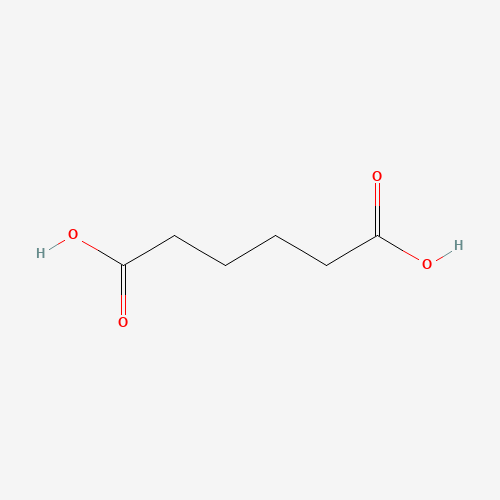
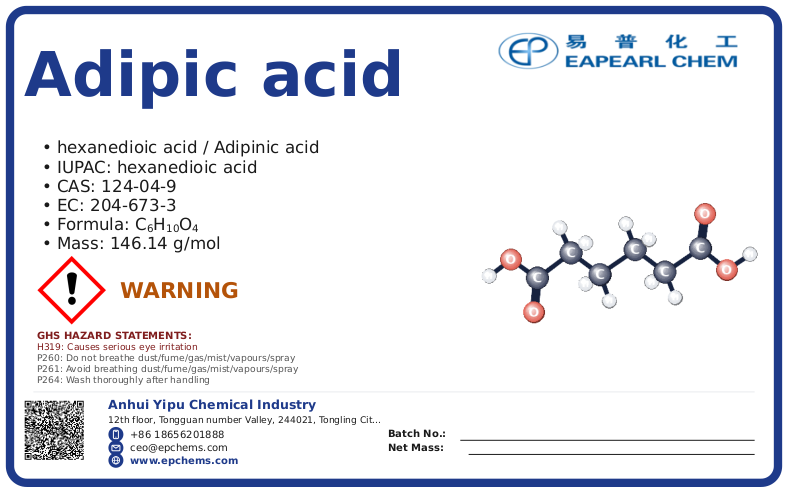
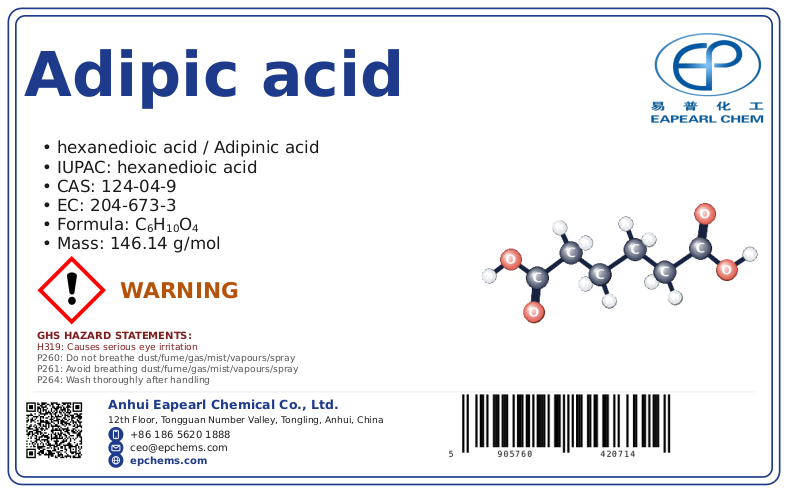
| Product Name | Adipic acid |
|---|---|
| Other Names | adipinic acid |
| CAS No. | 124-04-9 |
| EINECS No. | 204-673-3 |
| MF | C6H10O4 |
| Molecular weight | 146.14 |
| Purity | ≥99.5% |
| Appearance | Powder |
| Density | 1,36 g/cm3 |
| Melting point | 151-154°C (lit.) |
| Boiling point | 265°C100mm Hg (lit.) |
| Flashing point | 385°F |
Values are typical for the standard grade. Tighter specifications are available — state the target in your inquiry and we confirm against the production batch.
Hazard classification

- H319 Causes serious eye irritation
Precautionary statements (3)
- P264 Wash thoroughly after handling
- P261 Avoid breathing dust/fume/gas/mist/vapours/spray
- P260 Do not breathe dust/fume/gas/mist/vapours/spray
European Chemicals Agency. "adipic acid, Index No. 607-144-00-9." In Table 3 of Annex VI to Regulation (EC) No 1272/2008 (CLP Regulation), 23rd Adaptation to Technical Progress (harmonised list as of 2026-07-07). Helsinki: European Chemicals Agency, 2026. https://echa.europa.eu/information-on-chemicals/annex-vi-to-clp.
Substance identity verified against the registry entry on 2026-09-02.
Packaging and shipping
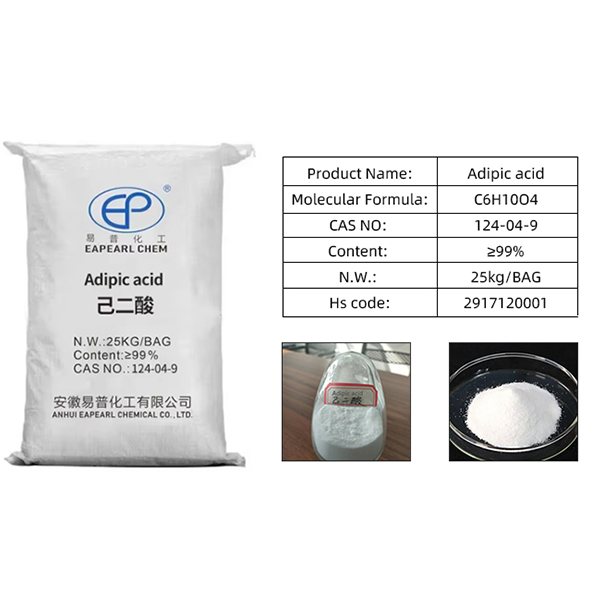
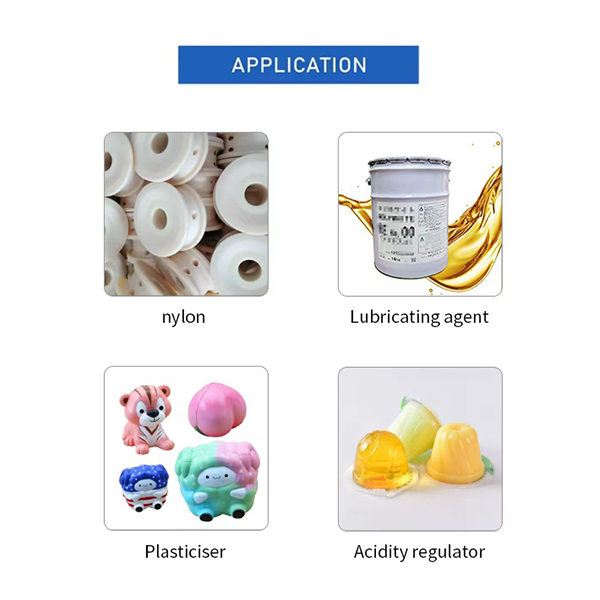
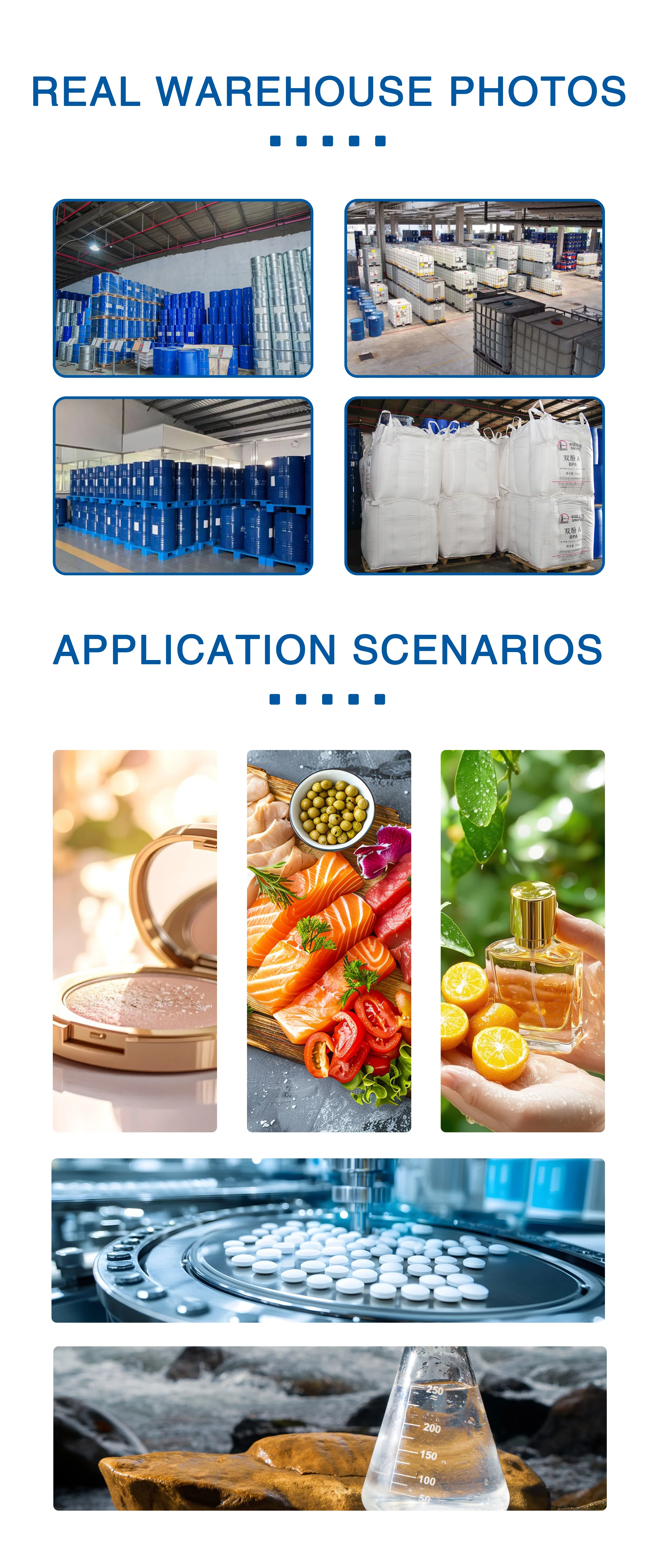
Adipic Acid is a high-volume industrial dicarboxylic acid widely used as a core raw material in the production of Nylon 6,6, polyurethane systems, and synthetic resins. It plays a critical role in improving the mechanical strength, flexibility, and durability of downstream products.
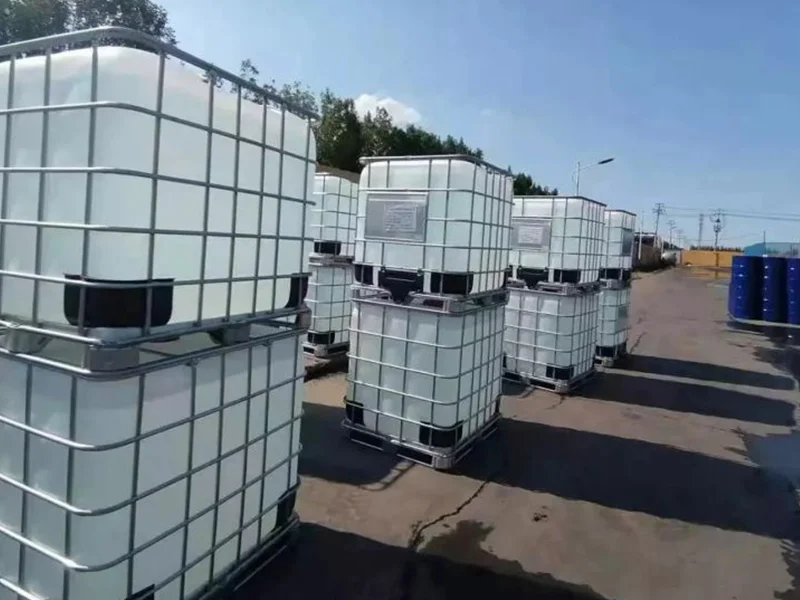
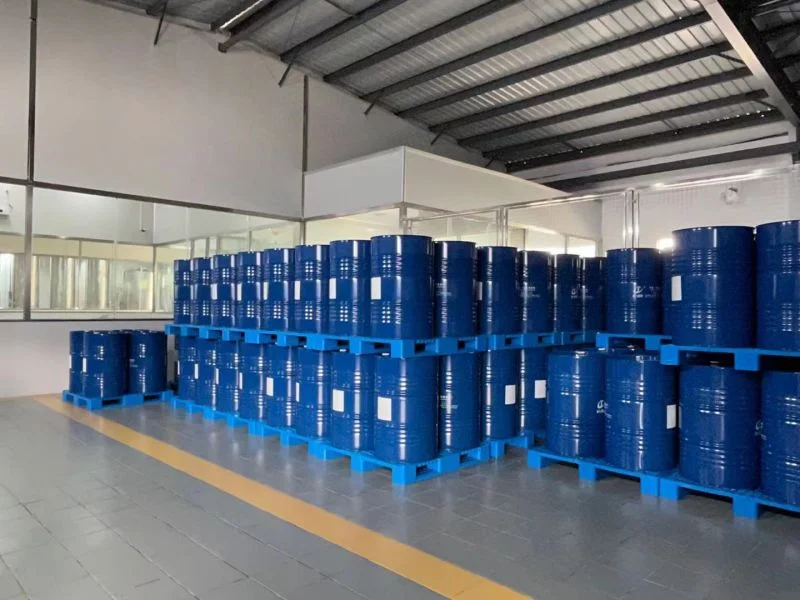
Product Description
Adipic Acid is a critical organic dicarboxylic acid widely utilized as a core raw material in multiple industrial value chains. From a procurement perspective, it is recognized for its stable chemical properties, consistent purity levels, and versatility across downstream manufacturing processes.
In industrial production, Adipic Acid is primarily used in the synthesis of nylon 6,6, where it plays a decisive role in determining polymer strength, durability, and thermal resistance. Beyond polyamides, it is also an essential intermediate for polyurethanes, plasticizers, resins, coatings, and synthetic lubricants.
For manufacturers focused on operational efficiency and product quality, Adipic Acid offers reliable reactivity, excellent compatibility with various chemical systems, and predictable performance in large-scale production environments.
From a supply chain standpoint, consistent quality control, standardized packaging, and stable global logistics are key factors influencing purchasing decisions. High-grade Adipic Acid ensures reduced impurity risks, improved batch consistency, and optimized downstream processing efficiency.
Delivery&Payment method

Frequently asked
In what packaging is Adipic acid shipped?
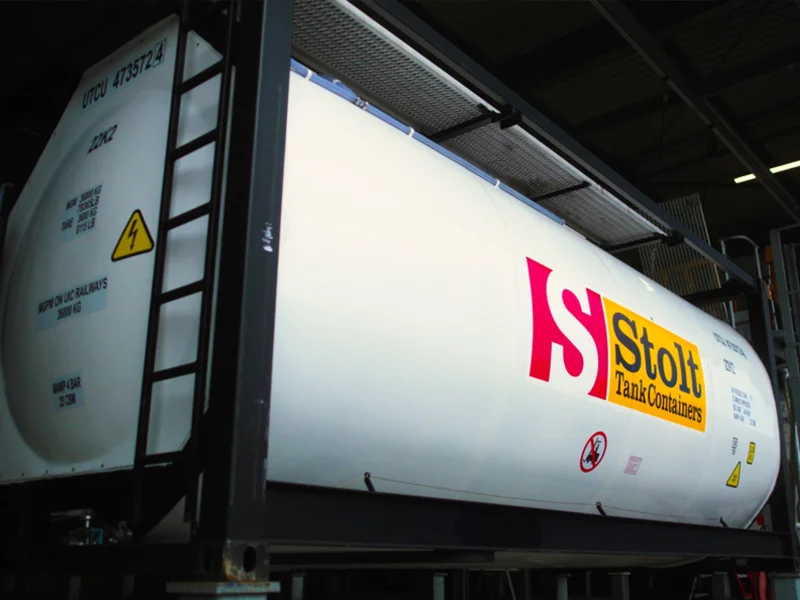
Standard formats are Drum (25kg/bag), IBC Drum (1000kg / bag), ISO tank (15–25m³). Other packaging can be arranged for full-container orders.
Is a safety data sheet available for Adipic acid?
Yes. A full safety data sheet for CAS 124-04-9 is published and linked from this page; a signed copy is issued with the shipping documents.
What purity do you supply?
The standard grade is ≥99.5%. Tighter specifications are confirmed against the production batch before shipment.
Technical reading on Adipic acid
Why adipic acid was once called a fat acid
The name is a fossil of an old manufacturing route. What it tells a buyer about grades, oxidation…
Neopentyl glycol: forms, grades and spec traps
Why NPG makes durable polyester coatings, how the two production routes differ, and which certificate figures decide a…
Adipic acid: which grade each value chain needs
Four unrelated industries buy the same white powder. What separates a polyamide lot from a polyol lot is…