
Epichlorohydrin
CAS 106-89-8 · C3H5ClO · MW 92.52 g/mol
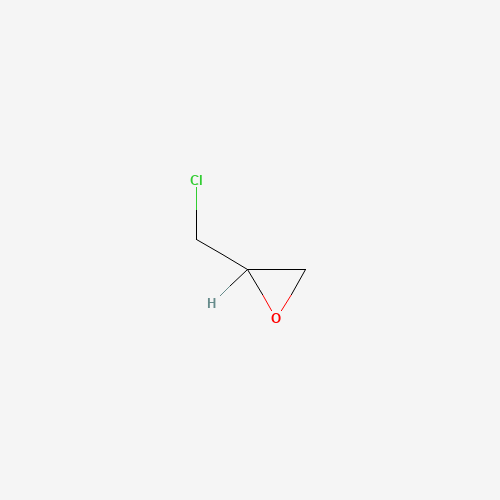
About Epichlorohydrin
Epichlorohydrin is a chemical compound registered under number CAS 106-89-8, with the molecular formula C3H5ClO, and a molar mass of 92.52 g/mol.
The molecule contains 10 atoms connected by 10 chemical bonds. The full systematic IUPAC name of this compound is 2-(chloromethyl)oxirane. The interactive 3D model above lets you view the spatial arrangement of the atoms — you can rotate it with the mouse, zoom with the scroll wheel, and switch between skeletal / Ball & Stick / Space Fill visualization modes.
In terms of physicochemical properties, the partition coefficient logP = 0.5 (positive value, a lipophilic compound), polar surface area PSA = 12.5 Ų, 0 donors and 1 hydrogen bond acceptors. These parameters are key when assessing bioavailability and interaction with biomolecules.
Chemical data for this compound comes from PubChem (NIH NLM NCBI), one of the world's largest chemical databases. All information is updated automatically and enriched with GHS hazard statement translations compliant with the CLP Regulation (EC 1272/2008). The widget above may be used for educational, research and commercial purposes.
Physicochemical properties
| Wzór sumaryczny | C3H5ClO |
| Masa molowa | 92.52 g/mol |
| IUPAC | 2-(chloromethyl)oxirane |
| SMILES | C1C(O1)CCl |
| InChIKey | BRLQWZUYTZBJKN-UHFFFAOYSA-N |
| logP (XLogP3) | 0.5 |
| PSA | 12.5 Ų |
| HBD / HBA | 0 / 1 |
| PubChem CID | CID 7835 ↗ |
GHS safety
Sygnał: Niebezpieczeństwo
H226 — Łatwopalna ciecz i pary
H350 — Może powodować raka
H331 — Działa toksycznie w następstwie wdychania
H311 — Działa toksycznie w kontakcie ze skórą
H301 — Działa toksycznie po połknięciu
H314 — Powoduje poważne oparzenia skóry oraz uszkodzenia oczu
H317 — Może powodować reakcję alergiczną skóry
Scientific literature
Literatura naukowa
18 artykułów · 1 open access · Źródła: PubMed, OpenAlex, Semantic Scholar
📈 Timeline publikacji (18 artykułów)
Wysokość słupka = liczba artykułów w roku. Hover dla szczegółów.
Dane z PubMed (NIH NLM), OpenAlex (CC0), Semantic Scholar (AI2). AI Summary wygenerowane przez Semantic Scholar TLDR. Artykuły z ikoną  wymagają płatnego dostępu.
Synonyms
Data sources
- 📊 PubChem CID 7835 — NIH
- 🔬 NIST WebBook — spektroskopia
- 🌐 Wikidata
- 💊 ChEMBL — bioaktywność